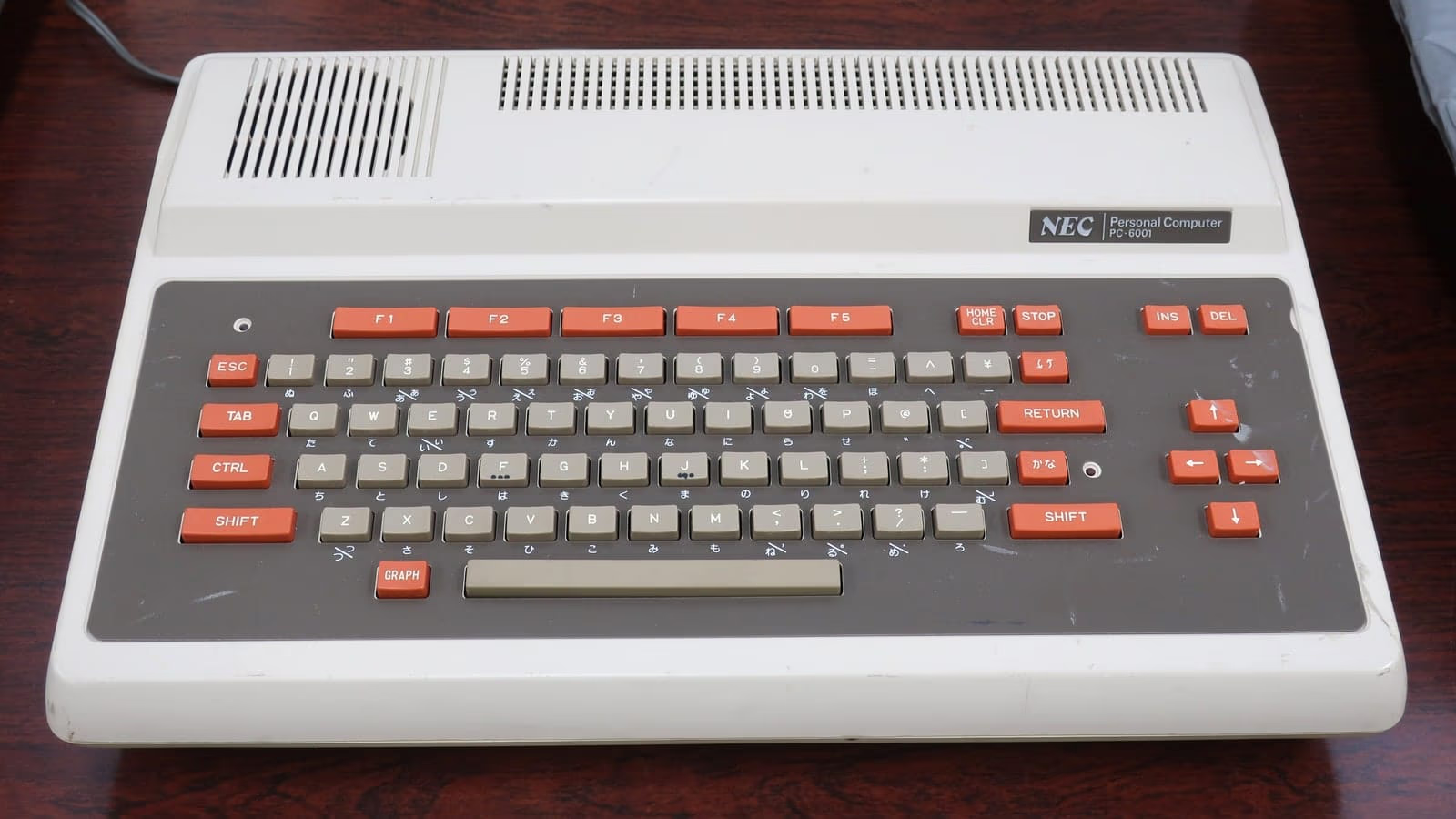
Image: NEC PC-6001, photo: Darklanlan, CC BY 4.0, Wikimedia Commons
NEC PC-6001 Gets a MiSTer Core, With the mkII, PC-6601 and mkIISR in Beta
NEC's PC-6001, the cartridge-slot home computer Japan knew as the Papicon, has a MiSTer core. Alan Steremberg published PC-6001_MiSTer to the MiSTer-devel organisation on GitHub on 8 November (00:31 UTC), with one release file, PC6001_20261107.rbf, and a commit titled "PC-6001 core: first release". The README rates the original 1981 PC-6001 as "complete except the printer and RS-232C ports" and lists the PC-6001mkII, the PC-6601 and the PC-6001mkIISR as beta. The first commit in Steremberg's own development repository is dated 31 October, so the public release came eight days after the core first appeared on GitHub.
Four machines, one of them finished
The README's model table gives the state of each machine: the PC-6001 (1981) complete apart from the two ports, and the PC-6001mkII (1983), the PC-6601 (1983, described as a mkII with a built-in floppy drive) and the PC-6001mkIISR (1984) all beta. The model is chosen under Machine > Model in the OSD, followed by Apply and reset.
The commit history on Steremberg's account shows the order they came in: the PC-6001 itself on 31 October, with the touch panel and the Composite (TV) video option the same day; the mkII on 1 November with the uPD7752 voice synthesiser; the PC-6601 on 2 November (its commit notes a "built-in uPD765 drive; ROMs kept in DDR3 for model switching"); the mkIISR on 3 November; and tape auto-start in the last two commits on 7 November.
The commit message of the MiSTer-devel release carries a "Co-Authored-By" trailer naming Claude Opus 5.5, with an anthropic.com address, and a link to a Claude Code session. The README says nothing further about how the core was developed.
Setting it up
No ROMs are included. The README asks the user to copy the newest releases/PC6001_*.rbf to _Computer/ on the SD card and to build the ROM files from a machine's own dumps, using the file names PC6001VX and MAME use. Each model gets one file in games/PC6001/, made by joining the individual ROMs with cat: boot.rom for the PC-6001 is BASICROM.60, CGROM60.60 and DISK.ROM, and boot1.rom, boot2.rom and boot3.rom serve the mkII, PC-6601 and mkIISR, with the recipes in the README.
DISK.ROM is the 2 KB firmware of the PC-6031 disk unit (CRC32 2158d307) and is optional: leaving it out gives a 20 KB boot.rom for a PC-6001 with no disk unit. The sub CPU's ROM is not needed, and the credits explain why: "There is no public good dump of the sub CPU (8049) ROM, so the core implements its behaviour, as the emulators do."
As of 8 November the core is not in the _Computer folder of the official MiSTer distribution repository, so the update scripts will not fetch it; users copy the RBF from the GitHub releases folder by hand until it is added.
Tapes, cartridges and disks
The PC-6001 boots to the prompt How Many Pages?, answered with Return or a number of graphics pages from 1 to 4. The mkII models start at a mode menu instead: options 1 to 4 are the PC-6001's BASIC, 5 is the model's own BASIC (N60m-BASIC, or N66-BASIC on the PC-6601) and 6 is N66SR-BASIC on the SR.
Tapes are .cas, .p6 and .p6t images mounted under Tape. With Tape auto-start on, the default, the core resets the machine, answers the mode and page questions, and types CLOAD and then RUN. A box at the bottom of the screen reports what it is doing, or what to type when it cannot work the setup out. The tape plays at 7x while the motor runs; Machine > Tape speed sets it back to Normal. For manual loading the README gives CLOAD, Return, then RUN once BASIC says Ok, and explains a convention many tape files carry in their names: {m2p3} means mode 2 at the menu and 3 pages. It warns that "A wrong page count often makes a game fail with no error." Machine-code tapes on the mkII, which the README says include Hudson Soft's games, load with MON then R0, and the hint box says when a tape needs this; the 7 November commit that finished the feature is titled "Tape auto-start: monitor tapes (MON, R0) and Hudson's self-starting loader".
Cartridges are .rom, .bin or .60 files up to 16 KB. Mounting one resets the machine into it, and Remove cartridge returns to BASIC. Disks are .d88 images in the 1D format. On the PC-6001 they need DISK.ROM in boot.rom plus the N60 Extended BASIC cartridge; the PC-6601 uses its built-in drive. Writes are saved back to the image on the SD card.
The keyboard follows the Japanese layout by default, with a US option, and letters typed without Shift come out in lower case, as on the real machine.
Video, sound and the touch panel
The OSD offers 16 or 32 KB of memory for the PC-6001, the larger figure standing in for a PC-6006 RAM cartridge. Video can be RGB or Composite (TV), which the README describes as "the NTSC artifact colours that mode 4 (SCREEN 4) games were drawn for"; a B/W colours option, for Composite only, picks which artifact colours the black and white set produces, because TVs differed. Port 2 can be a joystick or a Touch panel, in which case the MiSTer's mouse drives NEC's Touch Panel cartridge, with the left button held to draw. Both joystick ports have two buttons.
The artifact-colour option matters for this machine. Japanese Wikipedia says that because the PC-6001 was built for composite and television output its picture was not very sharp, and that software such as Portopia Renzoku Satsujin Jiken exploited the colour fringing of the two-colour mode to add colour, the same trick used on the Apple II. When the mkII added an RGB output, the same article says, programs that relied on the fringing turned black and white, and users wrote in to ask why the colour had gone. On the sound side the core credits Jose Tejada's jt49 and jt12 for the AY-3-8910 and the YM2203, the FM chip of the mkIISR; the Z80 is the T80 core and the composite decoder comes from Jamie Blanks' NES core.
The Papicon
Japanese Wikipedia dates the PC-6001 to 10 November 1981 at 89,800 yen, and says NEC's television division developed it entirely separately from the PC-8001 line that came out of the microcomputer division. Its design followed from that: a television for a display, and a cartridge slot that booted software straight from ROM, which the article says gave it a games-console side. The nickname Papicon fronted the television adverts, which pitched a computer the whole family could use by plugging in a cartridge, and the Japanese keyboard was a set of spaced-out rectangular keys meant to take overlay sheets for each program. English Wikipedia puts the launch in November 1981 under NEC Home Electronics (then New Nippon Electric), with a μPD780C-1 Z80 clone, 16 KB of RAM expandable to 32 KB, an AY-3-8910 sound chip and an M5C6847P-1 clone of the Motorola MC6847 video chip; its infobox, citing the Nikkei Sangyo Shimbun of June 1983, gives sales of 150,000 PC-6001s. North America got the machine as the NEC TREK or PC-6001A, with a typewriter keyboard instead of the Japanese chiclet keys.
The PC-6001mkII followed on 1 July 1983 at 84,800 yen, according to Japanese Wikipedia, which calls it a considerable hit in a market where mid-range 8-bit machines cost more than 100,000 yen. It had 64 KB of RAM, a 32 KB kanji ROM, RGB output with up to 15 colours on NEC's own monitor, a conventional keyboard, and the μPD7752 speech synthesiser as standard, driven from BASIC by a TALK command.

The PC-6001mkIISR arrived on 15 November 1984 at 89,800 yen with YM2203 FM sound, 640 by 200 graphics, 80-column text and a μPD780C-1 running at 3.58 MHz, and its speech synthesiser could sing over two octaves as well as talk. Japanese Wikipedia says it did not repeat the mkII's success, with MSX taking the hobby market and buyers who wanted more power moving to the PC-8800 series. MAME's driver header gives slightly different dates for the three machines (1981-09, 1983-07 and 1984-12), which it sources to a geocities.jp page rather than to NEC.
The series ended for reasons of company organisation rather than failure. English Wikipedia says NEC had four personal computer lines under separate teams in 1983, consolidated them into two divisions, and had NEC Home Electronics drop the PC-6000, PC-6600 and PC-8000 lines in favour of the PC-8800 series. Japanese Wikipedia, citing a book on chiptune, says the PC-6000 series was closed because it was too successful and threatened to compete with the PC-8800 line, and calls the result an unwilling end.
How it compares
The two software emulators the README names as references are the established ways to run this machine. PC6001VX is eighttails' cross-platform port of Yumitaro's PC6001V; its manual says it needs ROM files dumped from a real PC-6001 series machine, and that users without one can switch on a compatible ROM written by Akikawa that is embedded in the emulator, though in that mode the mkIISR and PC-6601SR can be selected but BASIC mode 6 is not supported.
MAME's pc6001 driver, by Angelo Salese, is the other reference, and its own TODO list shows where PC-6001 emulation is still rough. It wants to move its "MCU HLE simulation" (the same high-level stand-in for the undumped 8049 that the core uses) into a device, says the upd7752 voice device "is currently a skeleton" and names a tape that should talk before its title screen as the test case, and for the PC-6601 lists making the 3.5-inch floppy controller "actually load images". The core's README claims the mkII's TALK command works with text, with only the chip's built-in phrases outstanding, and that the PC-6601's built-in drive mounts D88 images, so on those two points the FPGA core is ahead of MAME's stated status. Takeda Toshiya's Common Source Code Project, also credited, lists PC-6001, PC-6001mkII, PC-6001mkIISR, PC-6601 and PC-6601SR emulators by Mr.tanam in its GPL archive.
On the FPGA side, the PC-6001 joins a run of Japanese home computers Steremberg has brought to MiSTer this autumn. Cart & Pixel covered his Sony SMC-777 core on 3 November and his Sharp MZ-2500 core on 4 November; a Hitachi Basic Master Level 3 core appeared in the MiSTer-devel organisation on 4 November as well. The PC-6001 README says its simulator harness comes from SMC777_MiSTer, so the cores share tooling. For readers new to FPGA cores, Cart & Pixel's explainer and MiSTer buying and setup guide cover the basics.
Who made it
Steremberg's GitHub account, alanswx, shows the Apple IIgs core (its MiSTer-devel releases folder runs to a build dated 20261108) alongside Geneve 9640, Macintosh Quadra 800, FujiNet and WebTV cores in progress. He also maintains a port of the Common Source Code Project emulators with "headless CLIs for automated testing", which fits the Verilator simulator shipped with the PC-6001 core: a headless build that runs a tape to a given frame without a MiSTer attached.
Not done yet, and what to watch
The README's own list of gaps: the printer and RS-232C ports; CSAVE, and loading tapes from WAV files or the audio input; a second disk drive, disks larger than 1D and booting system disks; the banked Senshi no Cartridge; the mkII voice chip's built-in phrases; and the SR's serial port and voice interrupt. The PC-6601SR, the disk-equipped sibling of the mkIISR, cannot be done at all because, the README says, its ROMs have not been dumped. Steremberg asks for reports of software that works or does not, "especially for the mkII, 6601 and SR".
What is not known: whether or when the core will be added to the official distribution so that update scripts pick it up, how much of the mkII, PC-6601 and SR libraries runs correctly in beta, and whether the beta models will reach the state of the original PC-6001. Nothing in the repository gives a timetable for any of those.
Sources
- MiSTer-devel on GitHub: NEC PC-6001 for MiSTer
- MiSTer-devel on GitHub: PC-6001_MiSTer commits
- alanswx on GitHub: PC-6001_MiSTer development repository and commit history
- MiSTer-devel on GitHub: Distribution_MiSTer, _Computer folder
- GitHub: alanswx repositories
- MiSTer-devel on GitHub: Sony SMC-777 for MiSTer
- MiSTer-devel on GitHub: Sharp MZ2500 Core for MiSTer
- MiSTer-devel on GitHub: Hitachi Basic Master L3 MiSTer core
- MiSTer-devel on GitHub: Apple IIgs core for the MiSTer
- Wikipedia: PC-6000 series
- Wikipedia (Japanese): PC-6000シリーズ
- MAME source on GitHub: pc6001.cpp
- eighttails on GitHub: PC6001VX Manual
- Takeda Toshiya: Common Source Code Project
More News
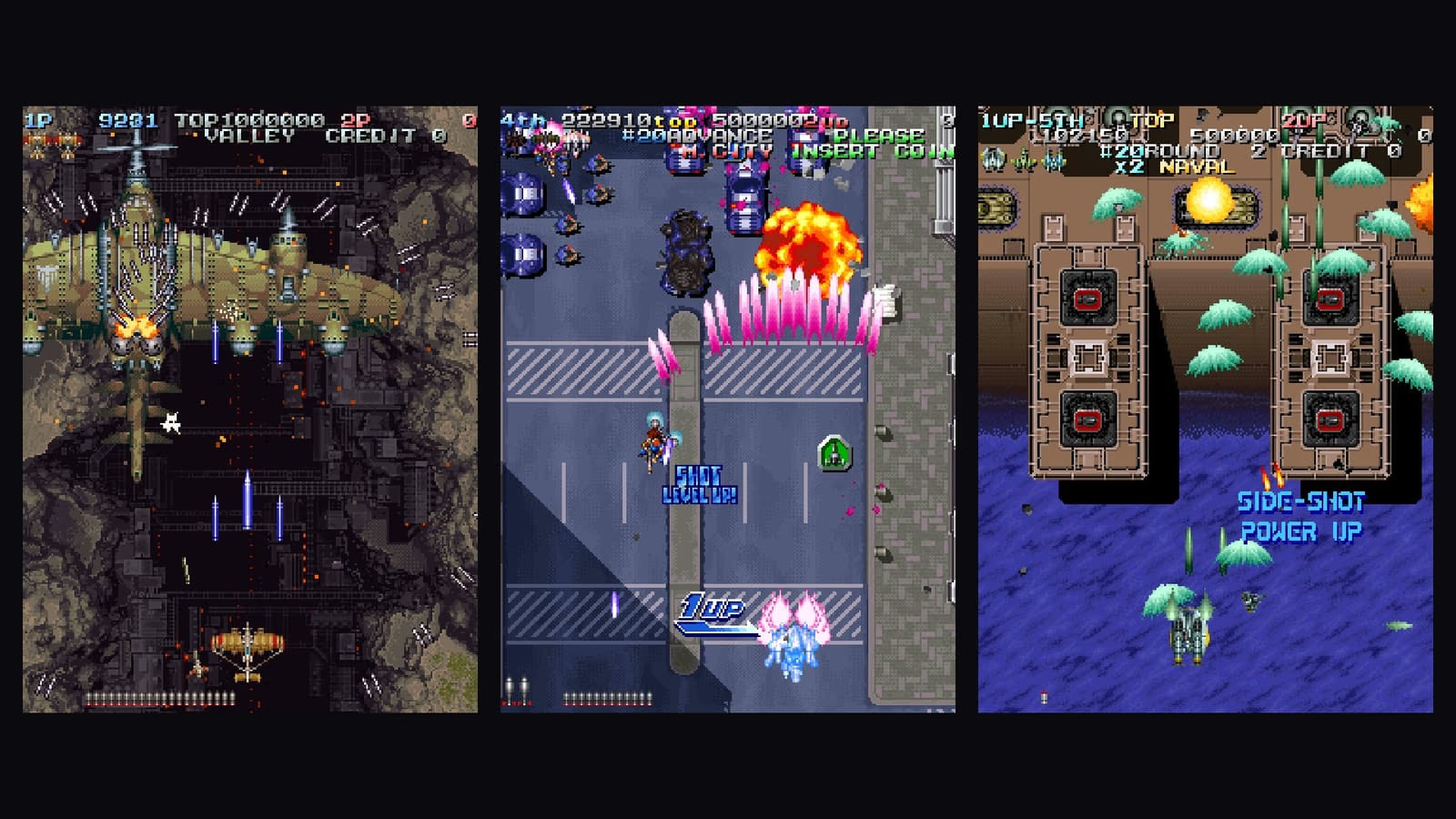
Arcade-RaizingMD Core Brings Battle Garegga and Batrider to MiSTer-devel
A rewritten open source core for Raizing's five Toaplan-based shooters, from Sorcer Striker to Battle Bakraid, was published to the MiSTer-devel organisation on 15 November. Its author says the old code was replaced and retuned against measurements from real boards.
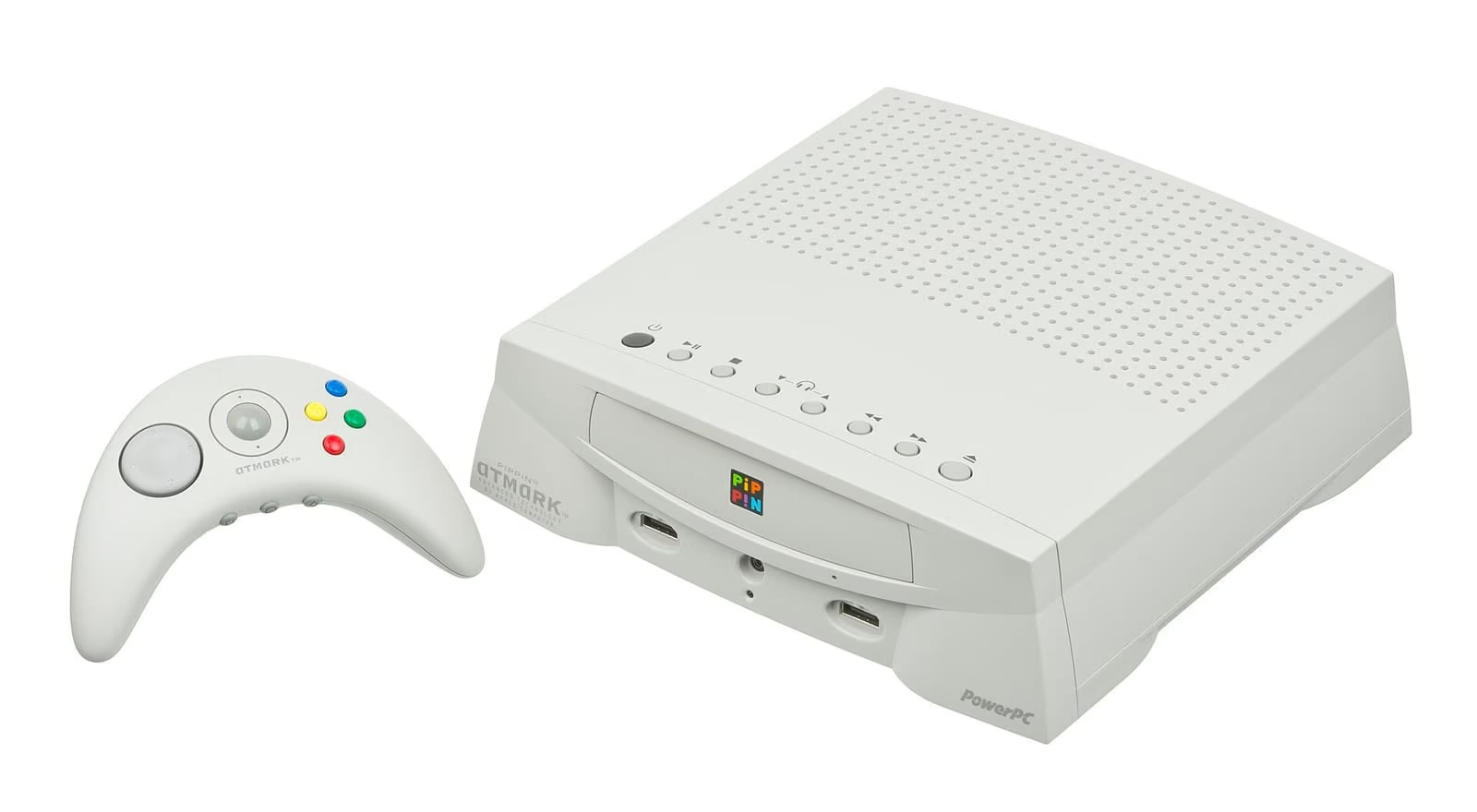
Bandai Pippin Gets a MiSTer Core
Dani Sarfati's BandaiPippin core, published to MiSTer-devel on 14 November, recreates Apple and Bandai's 1996 console down to its PowerPC 603. It boots the Pippin ROMs and four discs to their menus; playing titles through is not yet tested.
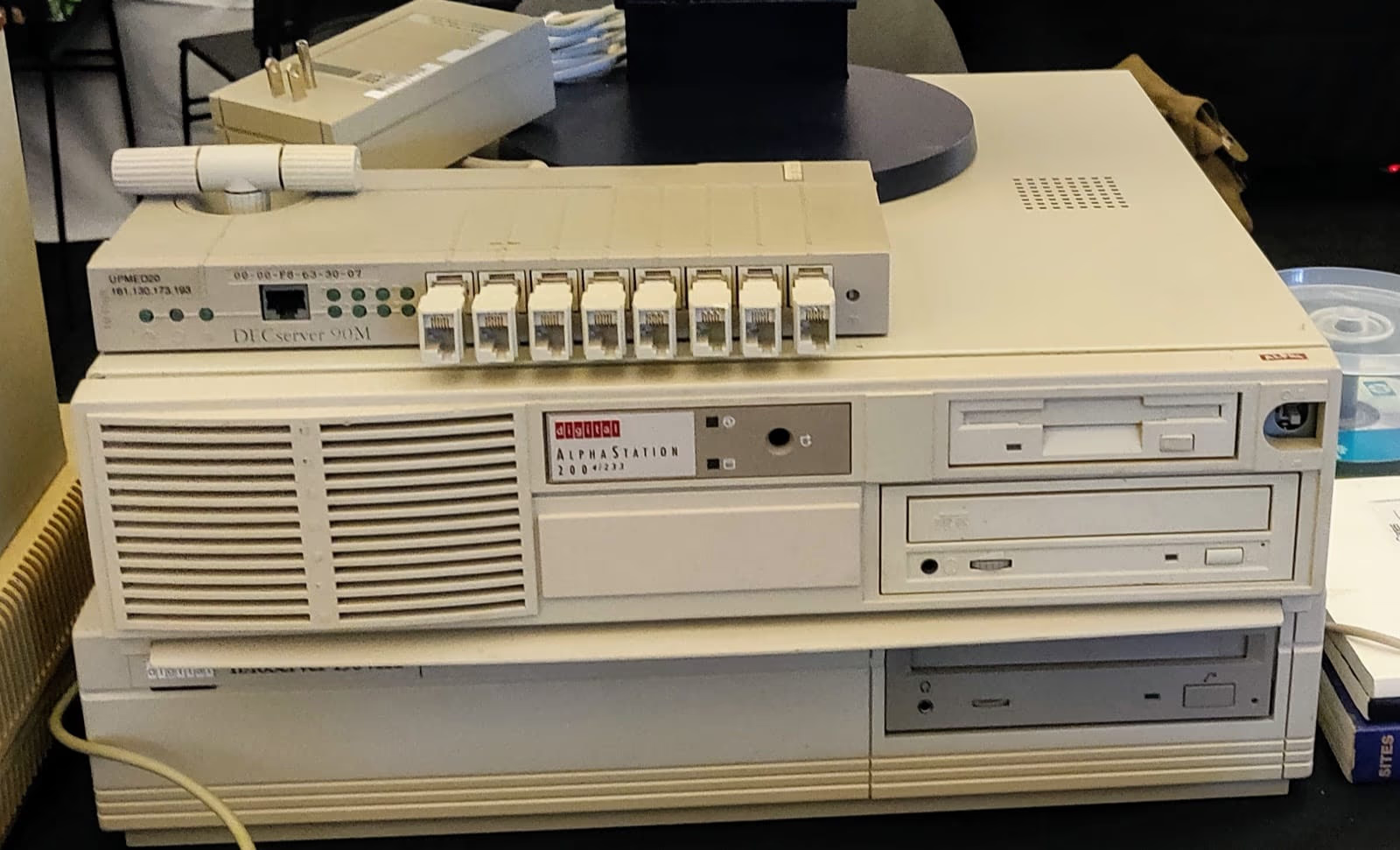
MiSTer Gets a DEC AlphaStation 200 Core That Runs OpenVMS, Tru64 and Windows NT
Dani Sarfati's DECAlphaStation200 core puts DEC's 1995 Alpha workstation on the MiSTer with its own SRM and ARC firmware, and boots OpenVMS, Tru64 UNIX, NetBSD, FreeBSD, Windows NT 4.0 and a Windows 2000 release candidate.