Image: Cart & Pixel
MiSTer Gets a Core for the Sony SMC-777, Sony's 1983 Home Computer With the 3.5-Inch Floppy Built In
Sony's SMC-777, the black home computer it launched in November 1983 with a 3.5-inch floppy drive built in, has a MiSTer core. Alan Steremberg published the SonySMC777 core to the MiSTer-devel organisation on GitHub on 3 November, as release 20261103, after two and a half weeks of hardware-tested builds on his own account. It boots Sony's disk system, runs the CP/M that Sony shipped for the SMC-70, loads games from disk or from cassette WAVs, and takes a MiSTer mouse as the SMC-777's own.
What the core covers
The README describes the machine the core recreates: a Z80A at 4.028 MHz, 64 KiB of RAM and a 16 KiB IPL ROM, an HD46505 CRT controller giving 80- or 40-column text with a programmable font, graphics at 640 by 200 in four colours or 320 by 200 in sixteen, the colour palette board of the later SMC-777C, the kanji ROM, an SN76489AN sound chip plus beeper, an MB8877A floppy controller with 3.5-inch drives, cassette, joysticks and mouse.
It needs one file the user supplies: games/SonySMC777/boot.rom, which is the 16 KiB IPL ROM followed by the 144 KiB kanji ROM, the same SMCROM.DAT and KANJIROM.DAT files the WinSMC and Common Source Code Project emulators use, joined with a single cat command. Without the kanji half, everything but kanji text works.
Disks are D88 images on drives A and B. The README notes that SMC-777 images circulating as .1dd files are D88 files already and mount as they are, that 40-track images are read in the 80-track drive as on the real machine, and that writes go back to the image on the SD card. System 1.1J, Sony's disk system with its menu and BASIC, boots from an image, though most games boot straight from their own disk. Sony's CP/M 2.2 for the SMC-70 runs as well.
Tapes are WAV files, PCM at 8 or 16 bits and anything from 4 to 192 kHz, mounted on the Tape slot. From BASIC, CLOAD "NAME" loads a named file and CLOAD "" the next one; the README warns that a bare CLOAD is a syntax error. The tape runs while BASIC has the motor on, "like a recorder with remote control", and an 8x tape speed, on by default, runs the CPU and the tape faster together while the motor is on so that BASIC sees the same timing. A status bar shows the tape position. With no tape image mounted, the MiSTer's line-in becomes the cassette input, so a real tape deck can be plugged in.
The keyboard maps by position, because the SMC-777's keyboard is ASCII layout. The function keys are F1 to F5, RUB OUT is on F6, F10 or the Japanese yen key, HOME is F11, LF is F12 and CLR is End. Joystick port 1 has four directions and one trigger; port 2 has two. The README offers a tip for Choplifter: tap the trigger to fire, hold it and push left or right to turn the helicopter, or hold it and push down to face the front. Switching port 2 to Mouse in the OSD puts the MiSTer's mouse on that port, which is what SMC Paint wants.
Two known issues are listed. System 1.1J's BASIC answers "Drive not available" for drive B, although CP/M uses it. The printer, RS-232, the expansion bus and the SMC-70's extra hardware, its clock and 640 by 400 graphics, are not modelled.
Sony's second computer, and the floppy that outlived it
Japanese Wikipedia, which cites the November 1983 issue of ASCII, dates the SMC-777 to 1 November 1983 at 148,000 yen, a price it describes as cheap for the time. NEC's PC-6601, also with a built-in 3.5-inch drive, followed on 21 November at 143,000 yen. The SMC-777 had 64 KB of RAM, 32 KB of graphics memory, one 3.5-inch drive of 280 KB with room for two more, a Centronics port, a non-standard 25-pin analogue RGB connector and two 9-pin joystick ports, in a case 490 by 95 by 189 mm weighing about 4.5 kg. The colour palette board, part number SMI-733, cost 12,800 yen extra and let the machine pick its 16 colours from 4,096. The SMC-777C of summer 1984, at 168,000 yen, built that board in, changed the case from black to pearl white and bundled graphics, sound and game software.
The software Sony shipped is the interesting part. The operating system, SONY FILER, and the DR LOGO that came with it were written by Digital Research, and the same article says Gary Kildall, Digital Research's founder, called the SMC-777 the best CP/M machine. The bundle also included 777-BASIC, an assembler, a debugger and a memo program, and the games listed for the machine include Lode Runner, Choplifter and A.E., a fixed-screen shooter ported from the Apple II.
Sony sold it under the HiTBiT brand with Seiko Matsuda as its face, and it did not sell. The general-market SMC-777 moved only several thousand units in 1984, about five percent of Sony's personal computer sales that year, against about 95 percent for the HB-55, the MSX machine Sony launched instead. The SMC series found a longer life in broadcasting, where it was used for captions and character generation until about 1990.

The SMC-777 descended from the SMC-70, announced in May 1982 and released that September, a CP/M machine with the same Z80A at 4.028 MHz and 64 KB of RAM, sold first for office use in the United States and later, as the SMC-70G, to video production. The English Wikipedia article on the SMC-70 says it was Sony's first computer to use the company's 3.5-inch micro floppy, introduced in 1980, after the Series 35 word processor of 1981; its disks held 280 KB formatted and spun at 600 rpm against the 300 rpm of other drives of the day. That drive format went on to outlive both computers by decades.
How it compares
MAME has an SMC-777 driver, written by Angelo Salese and marked with imperfect graphics. Its to-do list is in the source: convert the video to a proper mc6845 model, implement interlace, model the ROM and RAM bank switch properly rather than the current hack, add tape, fix a crash on .mfi floppy images, and find better reference material, since "available one lacks several pages". It currently emulates the SMC-777C, with the palette board, rather than the base model. Tape loading and interlaced text are two of the items on that list that the MiSTer core has: its OSD has an Interlace text option for the "525 I" screen mode offered by the SMC-70's CP/M setup, with a choice between showing it as a real SMC-777 would, with every other font line doubled, or as an SMC-70 would with the whole font.
The core's own ROM note points at the other two options on a PC, WinSMC and Takeda Toshiya's Common Source Code Project. Steremberg's commit messages say the core was checked in a headless simulation against the Common Source Code Project's emulator before any of the hardware-tested releases.
Who is behind it
The core has two authors. JasonA started it in May 2023, over 19 commits in a fortnight that got a 6845 model running under Verilator, wired up the address decoding, and added the sound and floppy Verilog before the repository went quiet with a README reading "WIP". Steremberg picked it up on 17 October 2026 with a commit covering floppy, keyboard, video, sound and the MiSTer top level, and over the following seventeen days pushed a run of dated releases: the mouse for SMC Paint the same day, keyboard and READ TRACK fixes on 18 October, SN76489 sound fixes on 25 October, the tape slot with its turbo and overlay on 2 November, and the interlace option on 3 November. Ten of his twelve commits on that fork carry a co-author line crediting Claude, Anthropic's AI model, as does the release commit in MiSTer-devel.
Steremberg's GitHub profile describes a computer engineer who co-founded Weather Underground and worked at Weather Channel and NOAA. On MiSTer he has spent this autumn on Japanese computers of the same era. His Sharp X1 core, covering the X1, X1 Turbo and X1 Turbo Z, went into MiSTer-devel on 29 October and had a second release on 3 November; his FM-7 and FM-77AV core had a release on 2 November adding T77 tape decoding, 16 MB D77 images and DRAM refresh timing; and a Hitachi Basic Master Jr. core, with the BASIC and monitor ROMs built in so no BIOS files are needed, appeared on 28 October. The credits on the SMC-777 core name the T80 CPU by Daniel Wallner, MikeJ and Sorgelig, the 6845 by Mike Stirling and David Banks, the WD1793 floppy controller by Viacheslav Slavinsky and Sorgelig, the SN76496 by MiSTer-X and the RAM modules by Jim Gregory.
What is not known yet
There is no compatibility list for the library beyond the games the README mentions by name, and no word on tape recording or on the SMC-70's own modes. Because the 1dd disk images need no conversion and the core needs only the two ROM files, the barrier to trying it is low, which is more than can be said for the hardware: Japanese Wikipedia's article still carries a request for a photograph of the machine. Readers unfamiliar with how a core differs from an emulator can start with the FPGA explainer.
Sources
- MiSTer-devel on GitHub: Sony SMC-777 for MiSTer
- alanswx on GitHub: SonySMC777_MiSTer commit history
- JasonA-dev on GitHub: SMC777_MiSTer
- GitHub: alanswx
- MiSTer-devel on GitHub: Sharp X1 for MiSTer
- MiSTer-devel on GitHub: FM-7 and FM-77AV MiSTer Core
- MiSTer-devel on GitHub: Hitachi Basic Master Jr. (MB-6885) for MiSTer
- Wikipedia (Japanese): SMC-777
- Wikipedia: SMC-70
- MAME source on GitHub: smc777.cpp
More News
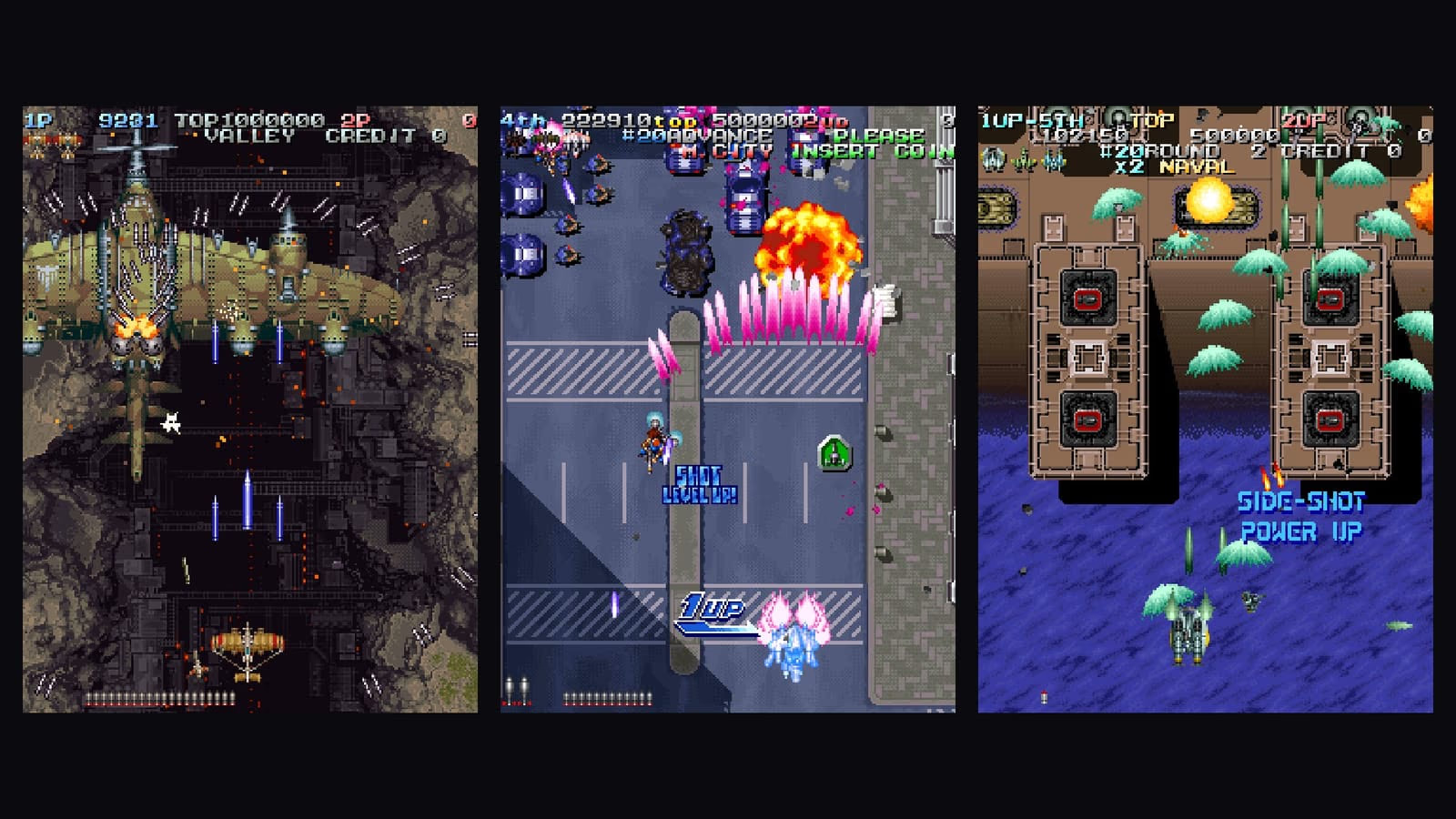
Arcade-RaizingMD Core Brings Battle Garegga and Batrider to MiSTer-devel
A rewritten open source core for Raizing's five Toaplan-based shooters, from Sorcer Striker to Battle Bakraid, was published to the MiSTer-devel organisation on 15 November. Its author says the old code was replaced and retuned against measurements from real boards.
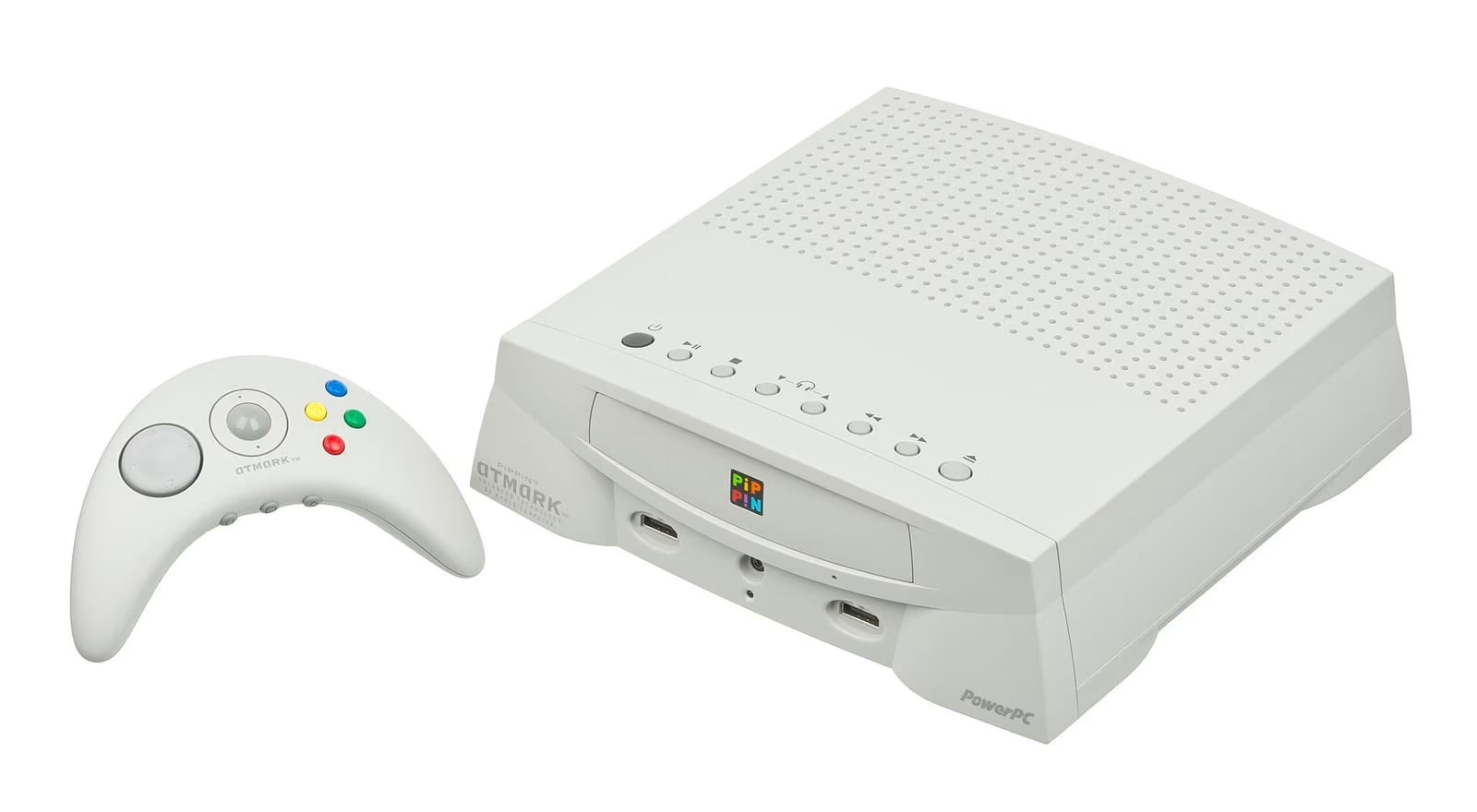
Bandai Pippin Gets a MiSTer Core
Dani Sarfati's BandaiPippin core, published to MiSTer-devel on 14 November, recreates Apple and Bandai's 1996 console down to its PowerPC 603. It boots the Pippin ROMs and four discs to their menus; playing titles through is not yet tested.
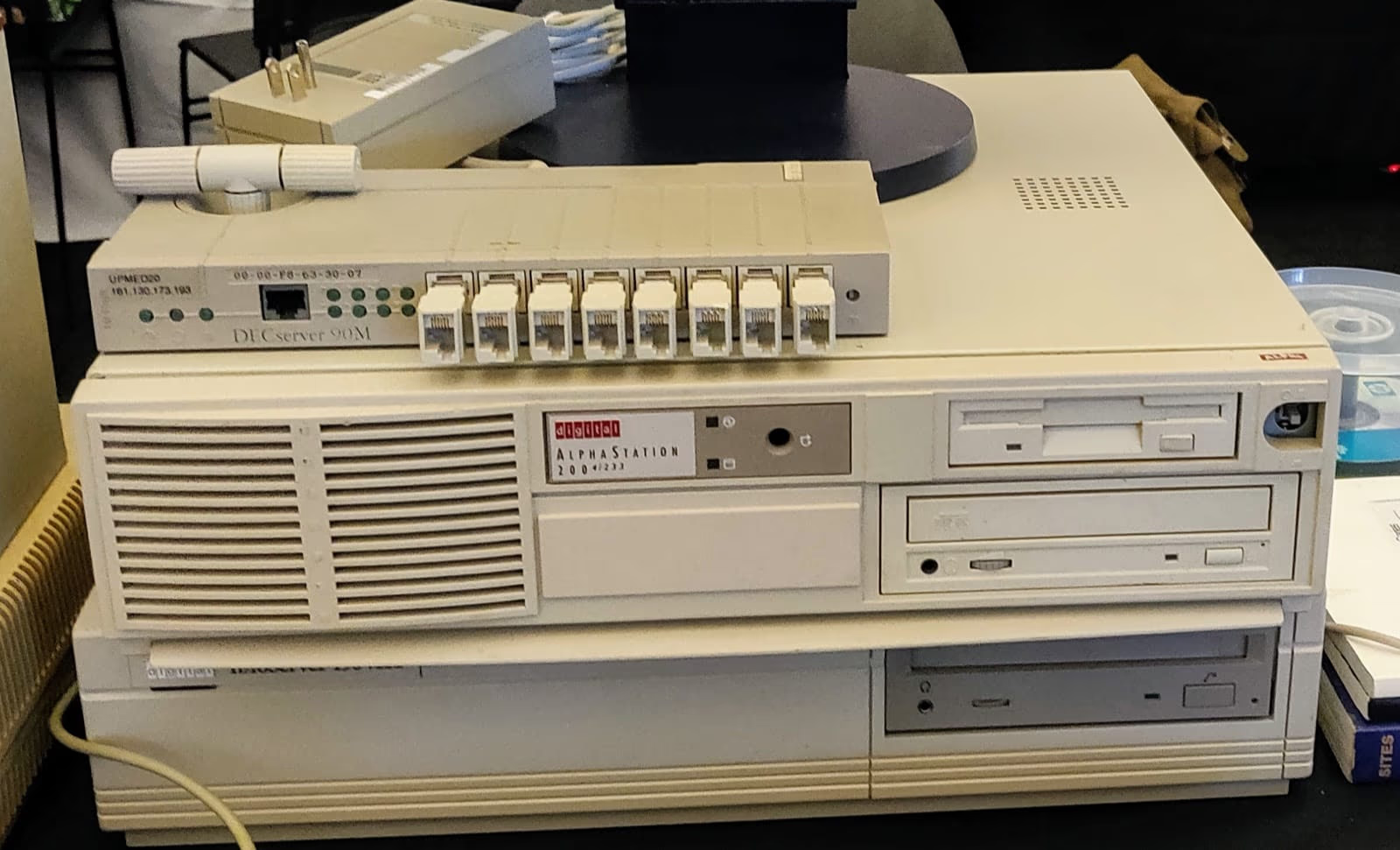
MiSTer Gets a DEC AlphaStation 200 Core That Runs OpenVMS, Tru64 and Windows NT
Dani Sarfati's DECAlphaStation200 core puts DEC's 1995 Alpha workstation on the MiSTer with its own SRM and ARC firmware, and boots OpenVMS, Tru64 UNIX, NetBSD, FreeBSD, Windows NT 4.0 and a Windows 2000 release candidate.