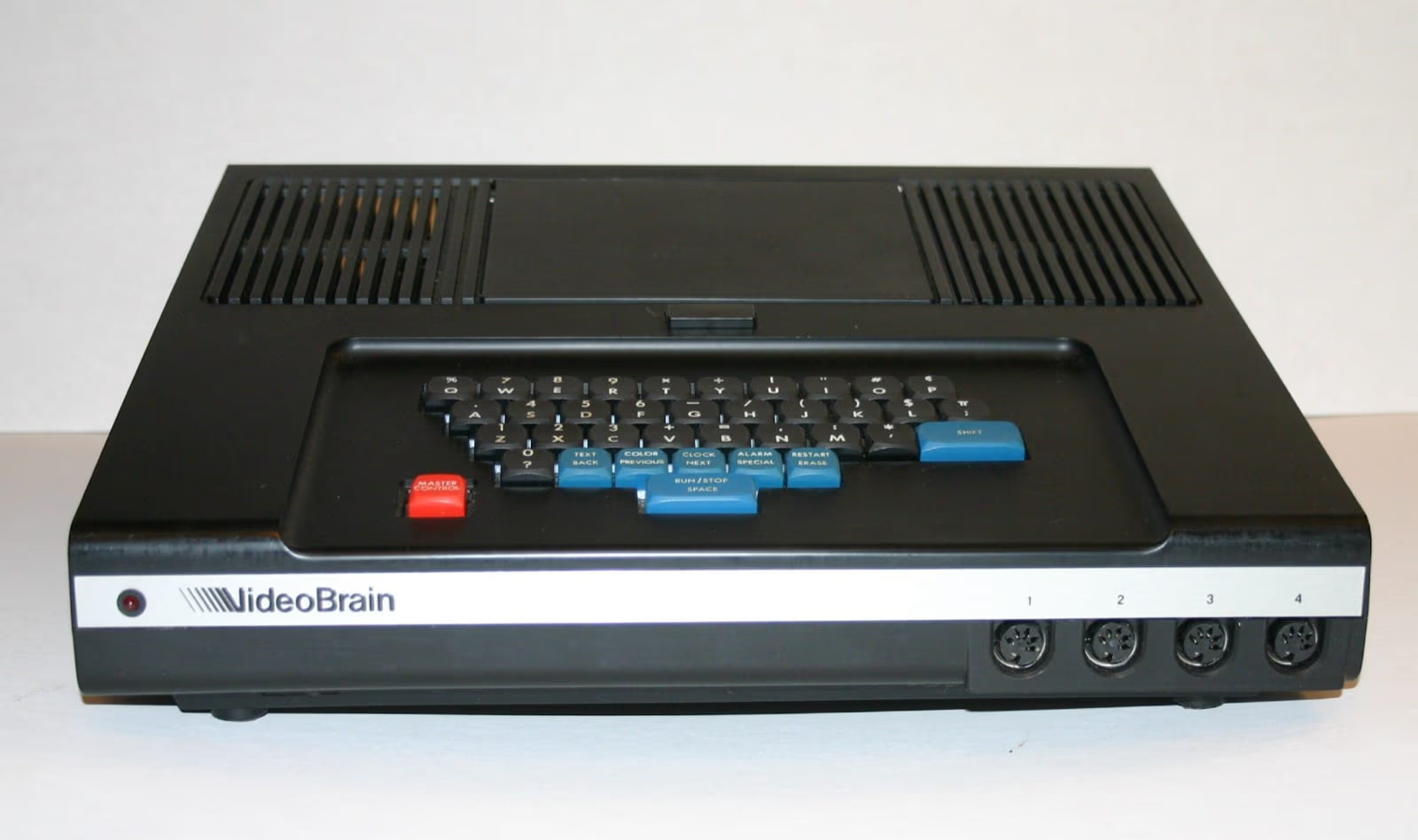
Image: VideoBrain Family Computer, photo: Burton2008, public domain, Wikimedia Commons
VideoBrain MiSTer Core Update Adds 480p, Tiny BASIC and a 32 Colour Mode
The MiSTer core for the 1978 Umtech VideoBrain Family Computer, a home computer that was made in only around 5,500 units, has a new release. Version 20261113 was committed to the MiSTer-devel organisation on GitHub on 15 November, and adds 480p output, support for a Tiny BASIC cartridge, two new cartridge mappers and an optional 32 colour palette. As of 16 November, VideoBrain_20261113.rbf is in the _Computer folder of the MiSTer core distribution, with the core's README under docs/VideoBrain.
It is not the core's first release. The repository's releases folder holds builds back to 20260921, and the release notes describe VideoBrain_20261027 as the "initial release build", shipped with the first MiSTer-devel release on 28 October 2026; earlier builds are labelled pre-release.
What the core runs
The README sums the core up in five lines: all 18 known cartridge dumps, four analog joysticks, Expander 1 and two cassette decks, Timeshare modem communication over UART, and printer capture over UART or to an SD image.
The cartridge list covers the whole surviving library: Blackjack, Checkers, Demonstration, Financier, Gladiator, Lemonade Stand, Math Tutor 1, Money Minder, Music Teacher 1, Pinball, Tennis, Timeshare, Vice Versa, VideoArtist, Wordwise 1 and 2, APL/S: The Computational Language, and Information Manager. Known dumps are recognised by CRC-32 and get the right memory mapping automatically. There is one known gap: Financier resets itself after the player presses NEXT or types for a while, which the documentation puts down to an incomplete dump, and "no good dump exists at time of writing".
Setup needs ROM files the user supplies. The BIOS comes as two 2,048-byte dumps that a bundled tool combines into a 4,096-byte boot0.rom, and the Expander 1 firmware goes in as boot1.rom. That second file is required for Information Manager, Timeshare and any tape use. APL/S and Information Manager survive as split chip dumps, and the documentation gives the exact order to join them in.

The original keyboard layout, reproduced in the core's documentation (VideoBrain_MiSTer, Elle Ball). Its function keys double as TEXT, COLOR, CLOCK, ALARM and RESTART for the built-in programs; the core maps them to F1 to F5.
What is new in 20261113
The release commit lists the changes since October. The headline additions:
- 480p output, alongside the native 480i and a 240p mode. Output changes only take effect after selecting
Apply Video Output, which the commit adding it says is there "to prevent 15.7 kHz CRTs blindly losing sync". - Tiny BASIC support with example programs. The documentation names it Tiny BASIC Enhanced 1.9, based on Tiny BASIC for F8 by Jerry D. Fox and continuing port work by Sean Riddle, with a 24 by 15 screen, 3,072 bytes for programs and arrays, and SAVE, LOAD and VERI commands for tape.
- A
BIOS Clock: Auto (RTC)option that sets the VideoBrain's clock from MiSTer's real time clock. - Fixed audio in 240p and 480p.
- Two new mappers, 4K RAM and BASIC, and a new VBC cartridge format with a RIFF-style header.
- An optional 32 colour palette.
- A reorganised on-screen menu with submenus, Music Teacher 1 shift state detection so entries no longer fail, and the PC keyboard's Caps Lock LED now following the VideoBrain's SHIFT state.
The 32 colour mode is the most speculative item and the documentation says so. Video > Colors defaults to 16 (Original). The 32 (Patent) setting uses a second intensity bit described in Umtech's patent, but the levels are "experimental and have not been matched to analog measurements", and "Whether the original machine supported four distinct intensities is unresolved."
Two features are built but hidden. Create New Tape and New Capture Image need a version of the MiSTer main binary with VideoBrain image creation support, which the commit notes "hasn't been released yet". Until then, users copy the blank tape and printer images from the repository's examples folder.
Tapes, Timeshare and a printer
The VideoBrain's Expander 1 box added a cassette interface and serial ports, and the core emulates it with two virtual decks. Tapes hold user data, not software: Money Minder accounts, Information Manager databases and APL/S workspaces, saved with each cartridge's own SAVE and LOAD commands to .vbt image files. The accuracy report says a Money Minder save recorded on Sean Riddle's original VideoBrain, converted to VBT, survives a load, edit, save, restart and reload on MiSTer.
Timeshare was the cartridge that made the VideoBrain a terminal. On original hardware it used the Expander 2 acoustic modem. The core routes it through MiSTer's serial port to Linux, which bridges it to the internet; a bundled telehack.sh script connects it to telehack.com at 300 baud. Dialling and the acoustic coupler are bypassed, not emulated. Live sessions are confirmed at 300 baud, and 110 baud is listed as unverified.
Printer output can be captured to a .vbp image while Timeshare stays connected. Physical printing is not implemented.
The release also ships a new document: a reconstructed owner's guide for Information Manager, a September 1978 prototype cartridge. The guide says that as of November 2026 no original manual has been located, "and one may never have been printed", so its functions were worked out from the program code. It warns that the prototype as found hangs when printing, and the core has an Info. Manager Fix option, off by default, that patches the loaded copy.
How accurate it is
The core implements the Fairchild F8 processor, the UV201 video chip, the UV202 clock and bus controller, the cartridge interfaces, keyboard, joystick timing, sound and Expander 1. The accuracy report is direct about its limits: "Direct access to an original VideoBrain is unavailable." Its evidence is preserved documentation, reverse engineering, board connection records, original software and cassette data, photos and recordings, MAME, and its own tests. The report says no core bugs are currently known, and names exhaustive tests of the UV201 on an original machine as the top priority for further work.
Joysticks are an approximation. The VideoBrain read analog pots, and the core's per-cartridge presets give usable centring and travel but are "not measured replicas of particular pots". A Relative analog mode lets a spring-centred modern stick hold its position for Tennis.
Who made it
The README credits the core to Elle Ball (meauxdal) with assistance from Alan Steremberg (alanswx), whose NEC PC-6001 core reached MiSTer-devel this month. It also says: "LLM assistance was used in the creation of this core." Development started in Elle Ball's own repository, where the first commit is dated 5 September 2026, before the project moved to MiSTer-devel.
The F8 CPU and its support packages derive from Grabulosaure's Channel F core. The connection is natural: Wikipedia lists the Fairchild Channel F as a console built on the same F8 CPU. The two machines were used very differently, though. The Channel F MiSTer core's README describes two joysticks and two games in ROM, Hockey and Tennis; the VideoBrain had a keyboard, four joystick ports and productivity software on cartridge.
The machine
Umtech, doing business as the VideoBrain Computer Company, made the VideoBrain, which Wikipedia credits to designers David Chung and Albert Yu. AtariProtos says it was introduced at the Consumer Electronics Show in January 1978 and sold for $300, with 1K of RAM, 4K of ROM and four built-in programs: a text editor, clock, alarm and colour bar generator. Wikipedia gives a price range of $500 to $1,100 depending on accessories, with later cuts to $300 for the computer alone.
It did not last. AtariProtos lists the reasons: a confusing keyboard, no BASIC (users got APL/S instead, a cartridge of which fewer than 100 were made), a small library, and sales mostly by mail order. Production stopped in March 1979 after around 5,500 units.
What is still unknown
The open questions are listed in the accuracy report: UV201 and UV202 timing on real hardware, joystick pot ranges, exact audio levels, and whether the 32 colour mode reflects anything the original could show. 1200 baud serial is a planned investigation, and spinner support and MIDI input for Music Teacher are optional future work. The tape and printer image creation menus wait on a MiSTer main update with no announced date.
Readers new to how cores like this work can start with the FPGA explainer.
New to MiSTer? Which MiSTer to buy and how to set it up covers the hardware, Update All and installing cores.
Sources
- MiSTer-devel on GitHub: VideoBrain Family Computer for MiSTer
- MiSTer-devel on GitHub: New release 20261113 (commit with release notes)
- MiSTer-devel on GitHub: VideoBrain_MiSTer release binaries (RELEASES.md)
- MiSTer-devel on GitHub: VideoBrain_MiSTer accuracy report (ACCURACY.md)
- MiSTer-devel on GitHub: VideoBrain_MiSTer cartridge status (CARTRIDGES.md)
- MiSTer-devel on GitHub: VideoBrain_MiSTer Expander 1 (EXPANDER1.md)
- MiSTer-devel on GitHub: VideoBrain_MiSTer video output (VIDEO.md)
- MiSTer-devel on GitHub: VideoBrain_MiSTer joystick timing (JOYSTICK.md)
- MiSTer-devel on GitHub: VideoBrain_MiSTer tape images (TAPE.md)
- MiSTer-devel on GitHub: VideoBrain_MiSTer printer capture images (PRINTER.md)
- MiSTer-devel on GitHub: VideoBrain_MiSTer Tiny BASIC (TINYBASIC.md)
- MiSTer-devel on GitHub: Information Manager Owner's Guide (reconstructed)
- MiSTer-devel on GitHub: VideoBrain_MiSTer commits
- meauxdal on GitHub: VideoBrain_MiSTer development repository commits
- MiSTer-devel on GitHub: Distribution_MiSTer, _Computer folder
- MiSTer-devel on GitHub: ChannelF_MiSTer
- Wikipedia: VideoBrain Family Computer
- AtariProtos.com: VideoBrain
More News
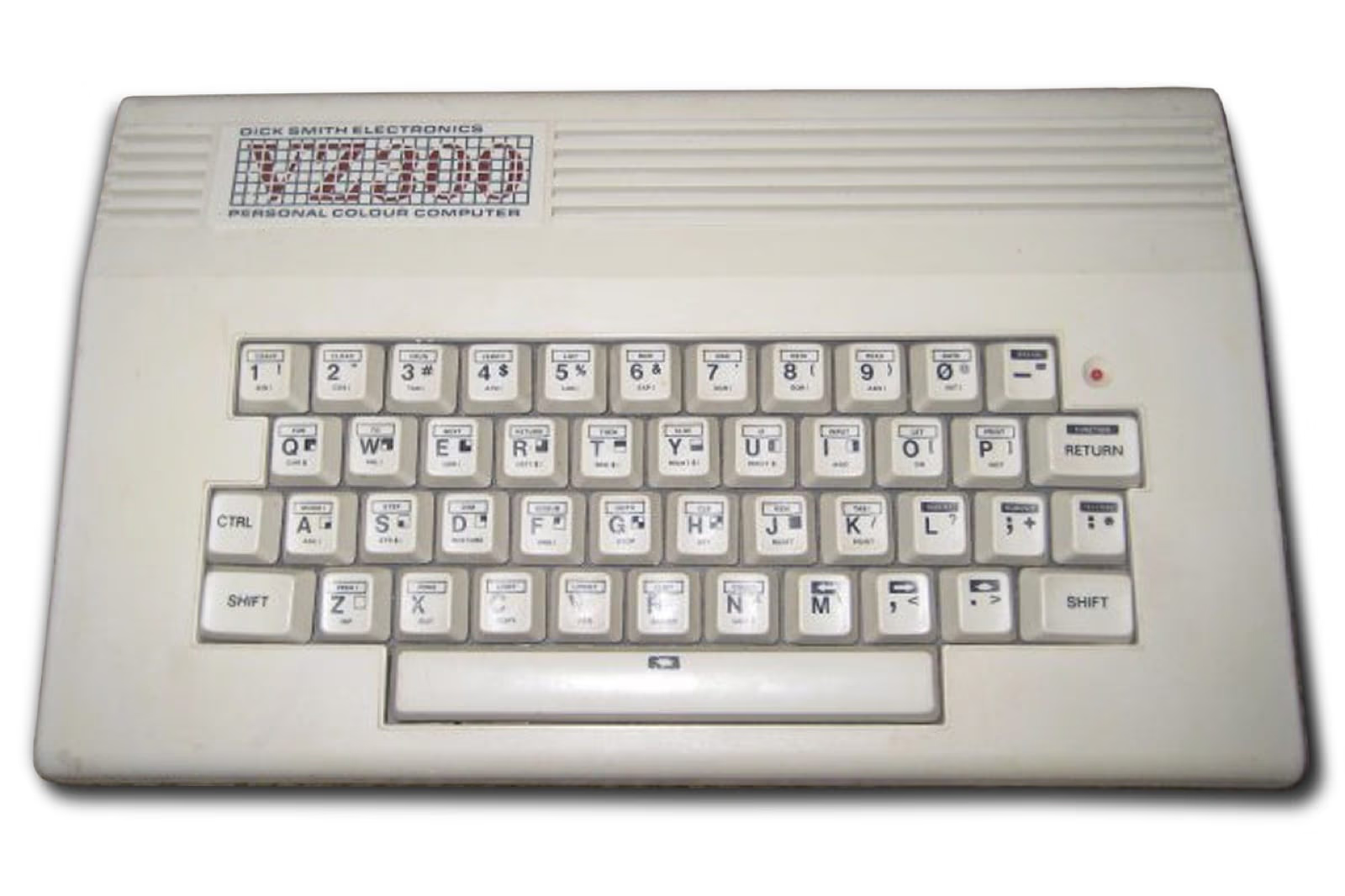
VTech Laser 310 MiSTer Core Gets Tapes, VZ DOS Disks and a Boot Fix
Release 20261118 of MiSTer's VTech Laser 310 core, by Alan Steremberg, adds a tape deck for WAV and CAS files, the VZ DOS floppy interface with two drives, PAL and NTSC timing, and a fix for a bug that kept the previous release from booting on a MiSTer at all.
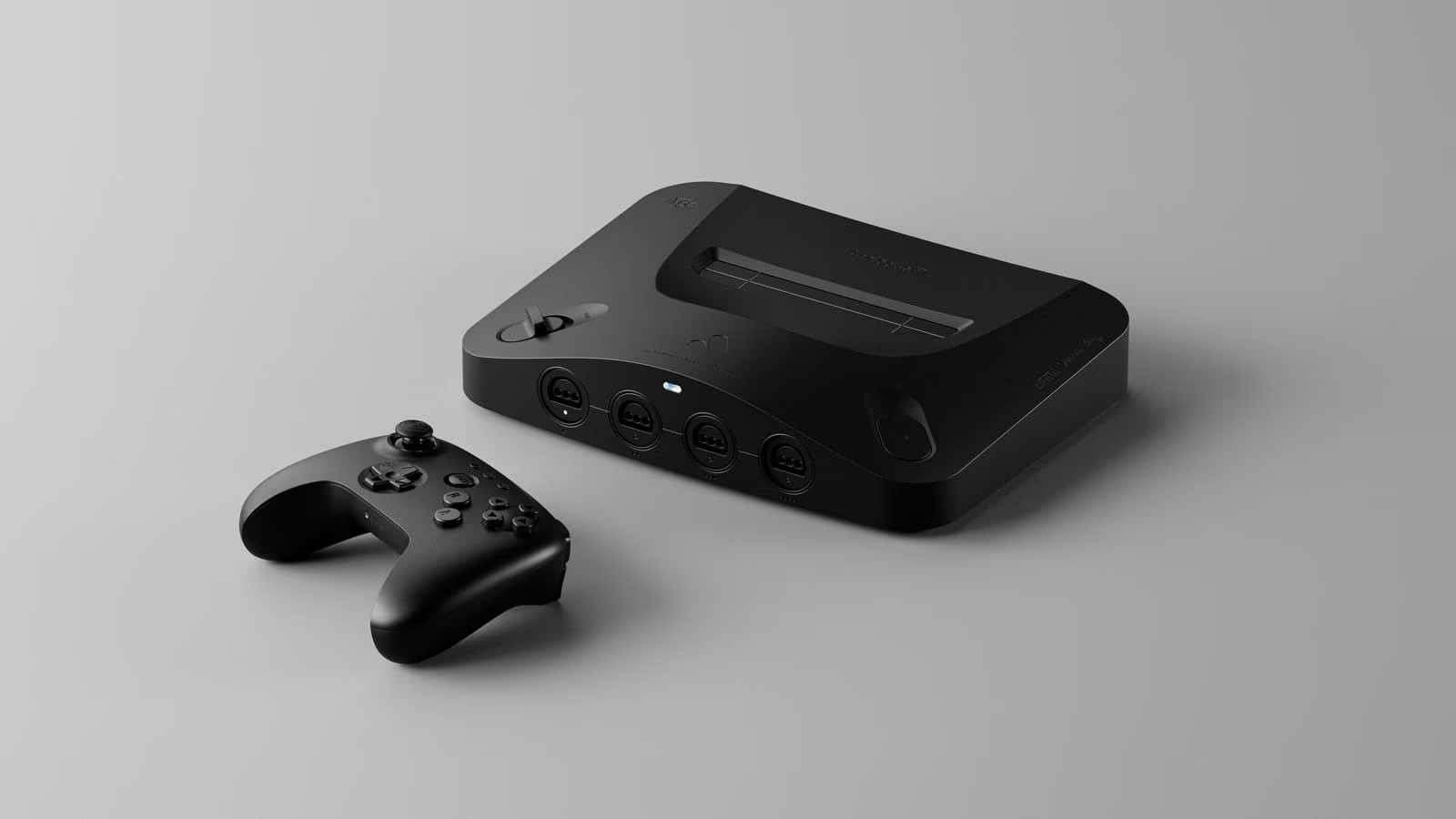
Analogue 3D Firmware 1.6.0 Adds Wi-Fi and Automatic Updates
3Dos 1.6.0, released on 18 November, switches on the Analogue 3D's dual-band Wi-Fi a year after launch, bringing over-the-air updates, network time and opt-in usage analytics.
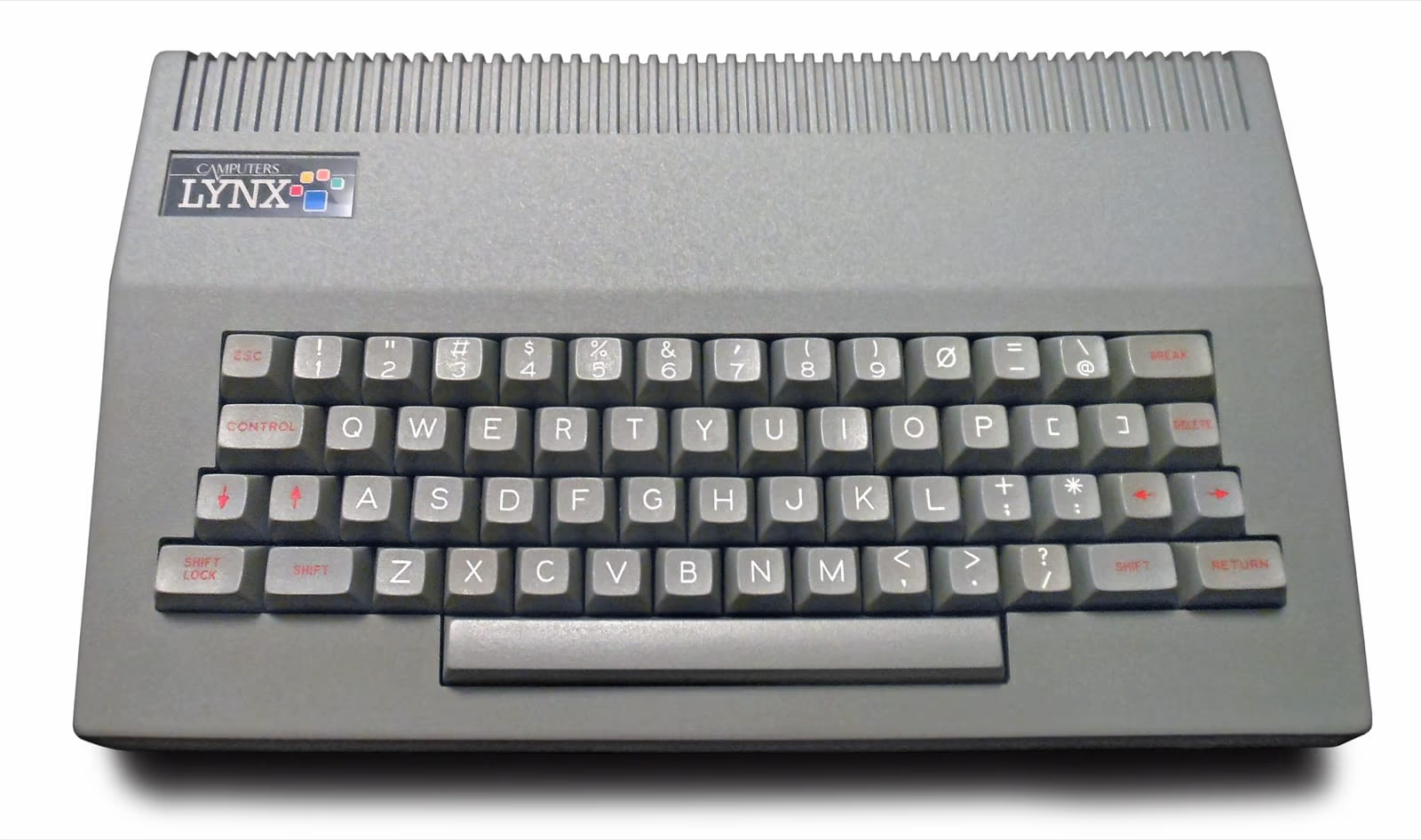
Camputers Lynx MiSTer Core Rebuilt With Disks, TZX Tapes and the 128K
Release 20261118 of MiSTer's Camputers Lynx core moves it onto Kyp's FPGA Lynx machines, covering the 48K, 96K, 96K Scorpion and 128K, and adds the LynxDOS disk interface, TZX and WAV tapes, a 4x tape turbo and on-screen loading hints.