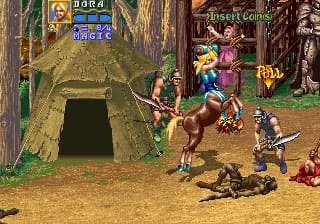
Image: Golden Axe: The Revenge of Death Adder (World, Rev B) in MAME, screenshot via libretro-thumbnails. Golden Axe: The Revenge of Death Adder © Sega 1992
MiSTer's Sega System 32 Core Grows to 17 Games as RetroShrimp Calls It Finished
RetroShrimp's Sega System 32 core for MiSTer now plays 17 of the board's games, after a run of additions between 3 and 4 November put Jurassic Park, Dragon Ball Z: V.R. V.S., F1 Super Lap, The J.League 1994, F1 Exhaust Note and Air Rescue on the list. The build dated 6 November is in the official MiSTer distribution, so update_all installs it, and on the same day the developer wrote on the MiSTer forum: "Decided to finish development of it."
What the 6 November build adds
The core lives in the MiSTer-devel organisation on GitHub, where RetroShrimp uploaded it on 16 October and posted a one-line forum announcement the same evening: "Here is the Sega System 32 core I have been working on." At that point the README described it as built around Golden Axe: The Revenge of Death Adder. Commits over the following three weeks added Super Visual Football, Arabian Fight, Burning Rival, Dark Edge, SegaSonic The Hedgehog, Rad Mobile, Slip Stream, Alien3: The Gun and Rad Rally, then the six games of 3 and 4 November, followed by sound and accuracy work and a framework update on 6 November.
The release folder holds one bitstream, Arcade-S32_20261106.rbf, and 18 MRA files covering the 17 games and their regional sets (Super Visual Football and The J.League 1994 are the same game in two editions). Every set in the README's table is marked "tested on hardware". The MiSTer distribution's database built in the early hours of 7 November lists the core as S32_20261106.rbf alongside the new Jurassic Park, Air Rescue and F1 Exhaust Note MRAs. On 7 November two further commits fixed a shaky picture on Direct Video output and renamed the bitstream to the Arcade- prefix, with rotation tags added to the MRAs.
The requirements are a DE10-Nano with a 32 MB or larger SDRAM module, which the README marks as required because tile and sprite graphics are read from it while a game runs, and MAME 0.288 ROM sets. Loading a game takes about two seconds. One warning deserves repeating: the MRAs ask for the core by the name S32, and MiSTer loads whichever matching file sorts last, so an older dated build left in _Arcade/cores/ can load instead of the new one.

A from-scratch V60
System 32 was Sega's first 32-bit arcade board and, by Wikipedia's account, its last major sprite-based one, with research and development beginning in 1988 and Rad Mobile (1990) as the earliest game on the list. Its main processor is the NEC V60, which NEC introduced in 1986 as the first 32-bit general-purpose microprocessor sold commercially in Japan. Sega used the same CPU in Model 1, its first board designed for 3D polygon graphics.
RetroShrimp's README says the V60 "was written from scratch for this core; as far as we know it is the first FPGA implementation of that CPU." The rest of the board is rebuilt chip by chip at its original clocks: the V60 at 16.10795 MHz, Sega's 315-5387 tilemap chip with four scrolling layers, the 315-5386 sprite chip drawing into a double frame buffer that the core keeps in the DE10-Nano's DDR3, the 315-5388 mixer and palette, and a sound board of a Z80, two YM3438 FM chips and an RF5C68-family PCM chip. The FM comes from jt12 and the Z80 from tv80. Golden Axe and Arabian Fight carry a protection module, an NEC V25 running an encrypted program that talks to the V60 through a dual-port RAM, and the core runs that too.
The games drive very different cabinets, and the README spends most of its length on how each is mapped. Golden Axe, Spider-Man and Arabian Fight take up to four players. SegaSonic's trackball is a mouse or a left analog stick. Rad Mobile, Slip Stream, Rad Rally, F1 Super Lap and F1 Exhaust Note read a steering wheel and pedals through an A/D converter, mapped to the left stick or the D-pad. Alien3: The Gun and Jurassic Park aim their mounted guns with the left stick, a USB lightgun reporting as one, or a mouse. Jurassic Park also checks its motion drive board for about five seconds at power-on; where MAME patches the program to skip that check, the core answers the board's eight test patterns as the drive board's own program would, so the game starts unmodified.
What has not been measured
The accuracy section is unusually frank. Its order of authority is the original Sega schematics, Charles MacDonald's System 32 hardware notes, then current MAME as a behavioural baseline, and every block was checked in simulation against MAME before going into the core. But it closes with this: "No real System 32 board was available to this project, so none of the behaviour above has been measured against one."
The known gaps follow from that. NEC never published per-instruction cycle counts for the V60, so timing comes from the core's bus and prefetch logic rather than a table; MAME charges a flat 8 clocks per instruction, which is why Super Visual Football reaches its title screen about a second later on the core. The video mixer's "gradation" edge-smoothing effect, used in parts of the attract modes of Burning Rival, Arabian Fight, Dark Edge and Slip Stream, is not drawn, because the hardware notes describe it only in words. Six games (Burning Rival, Dark Edge, SegaSonic, F1 Super Lap, Dragon Ball Z and The J.League) rely on FD1149 security modules whose programs have never been read out, so the core reproduces what MAME does in their place. The balance between FM and PCM sound was measured from a recording of a real board rather than the schematic, and the PCM chip keeps all 16 bits where MAME treats it as a 10-bit part.
The README also states how it was built: "The core was developed simulation-first, with AI assistance, under human review and testing on real MiSTer hardware." The first forum reply after the "finished" post, from fluxant, reported that the OSD's CRT Adjust controls do nothing; another asked for analog trigger support once MiSTer's main firmware allows it.
The other System 32 core
This is the second System 32 core for MiSTer this year. On 23 July developer meathax announced "Sega System 32 - Meatcore" on the same forum, with 14 games listed as fully supported, offered free through Patreon with a GitHub address for the source. That address returned Not Found when checked on 7 November. The thread became a long argument about AI-written cores, with one poster calling such projects "slopware" and meathax replying: "I'm using half of Anthropics datacenters and half the worlds water to get this v60 chip working, worth".
Meathax's reaction to RetroShrimp's thread on 6 November settles which core most people will end up with: "Great job! you should submit it to update all so everyone can play this system, mine wont be going there etc". RetroShrimp's core is already there. Golden Axe: The Revenge of Death Adder, the 1992 four-player sequel from Sega AM1, stayed an arcade exclusive until the Astro City Mini and an Arcade1Up cabinet in 2020, so an FPGA version installed by update_all is a notable way to get it.
Readers setting up a board for the first time can start with the MiSTer buying and setup guide. The last month's other arcade arrivals, Gaelco 3D and Konami M2, came from a different developer, decoryah.
What is still unknown
There is no versioned changelog beyond the dated bitstream and the commit log, and "finish development" is the developer's only statement about what comes next. Whether the CRT Adjust fault is in the core or the OSD has not been answered in the thread. And until someone with a real System 32 board compares the two side by side, the timing, sync and sound-level figures in the README remain the project's best reading of the documentation rather than measurements.
Sources
- MiSTer-devel on GitHub: Sega System 32 for MiSTer FPGA
- MiSTer-devel on GitHub: Arcade-SegaSystem32_MiSTer commit history
- MiSTer FPGA Forum: Sega System 32 (forum thread)
- MiSTer-devel on GitHub: Distribution_MiSTer
- MiSTer FPGA Forum: Sega System 32 - Meatcore (forum thread)
- Wikipedia: List of Sega arcade system boards
- Wikipedia: NEC V60
- Wikipedia: Golden Axe: The Revenge of Death Adder
More News
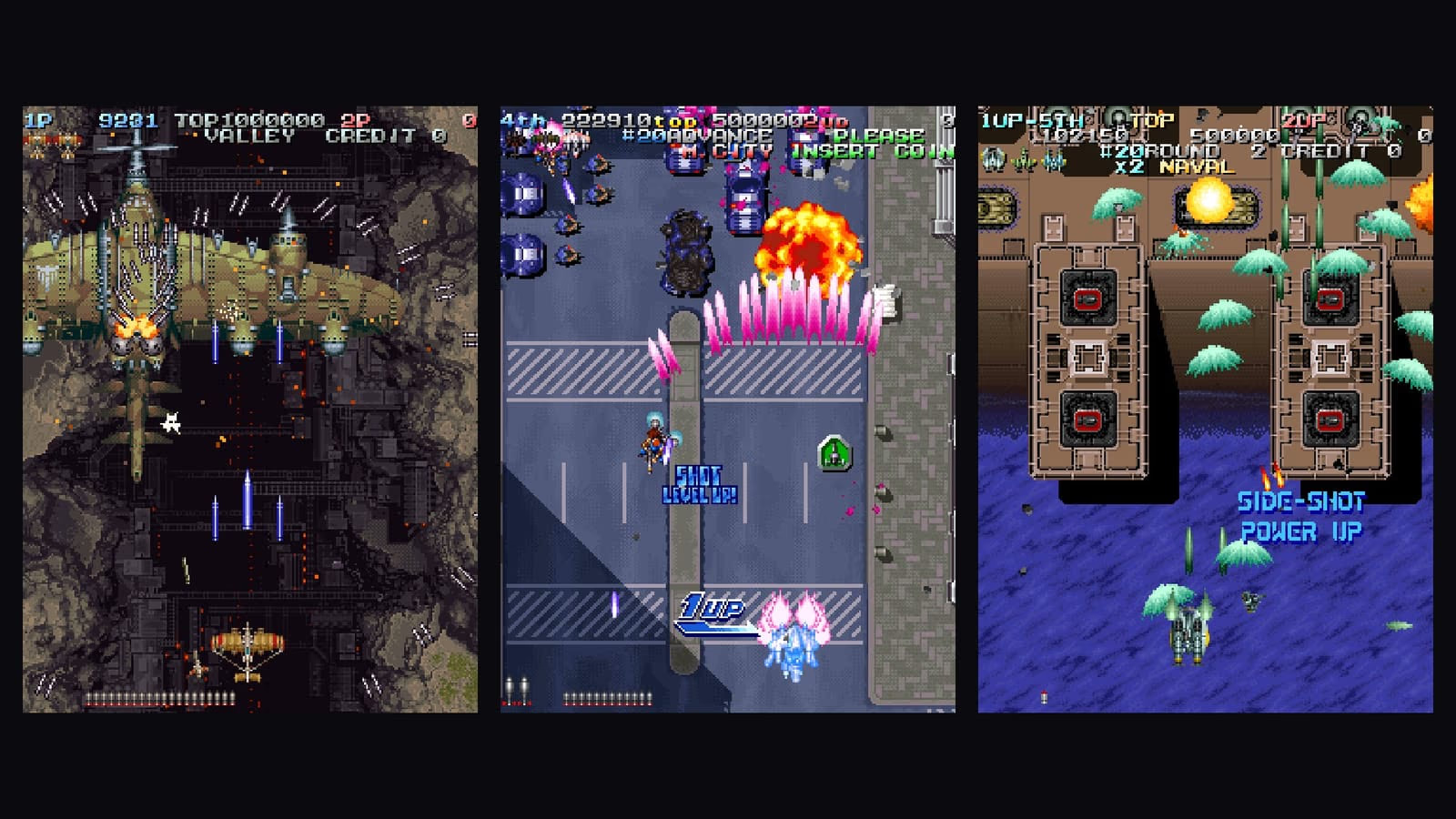
Arcade-RaizingMD Core Brings Battle Garegga and Batrider to MiSTer-devel
A rewritten open source core for Raizing's five Toaplan-based shooters, from Sorcer Striker to Battle Bakraid, was published to the MiSTer-devel organisation on 15 November. Its author says the old code was replaced and retuned against measurements from real boards.
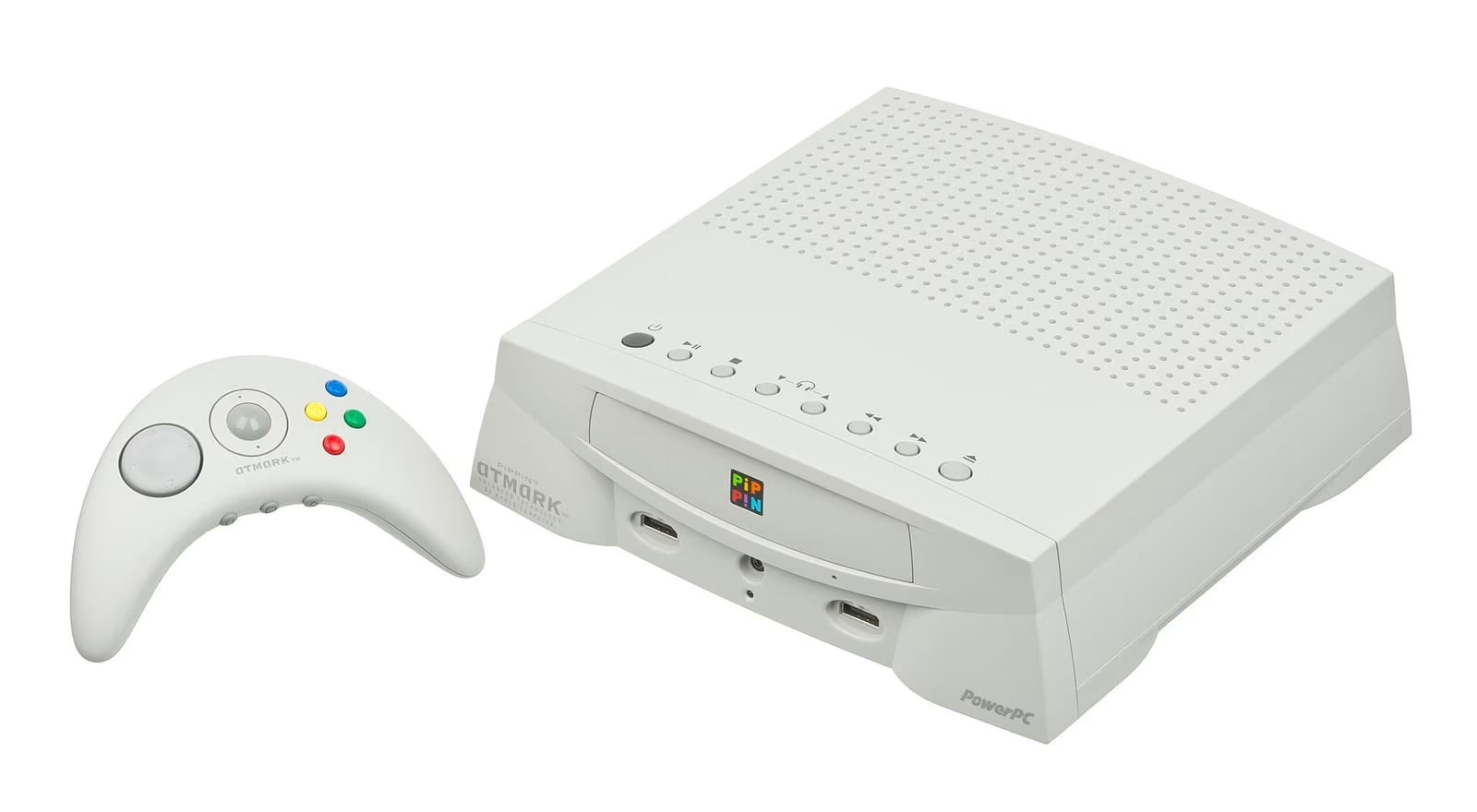
Bandai Pippin Gets a MiSTer Core
Dani Sarfati's BandaiPippin core, published to MiSTer-devel on 14 November, recreates Apple and Bandai's 1996 console down to its PowerPC 603. It boots the Pippin ROMs and four discs to their menus; playing titles through is not yet tested.
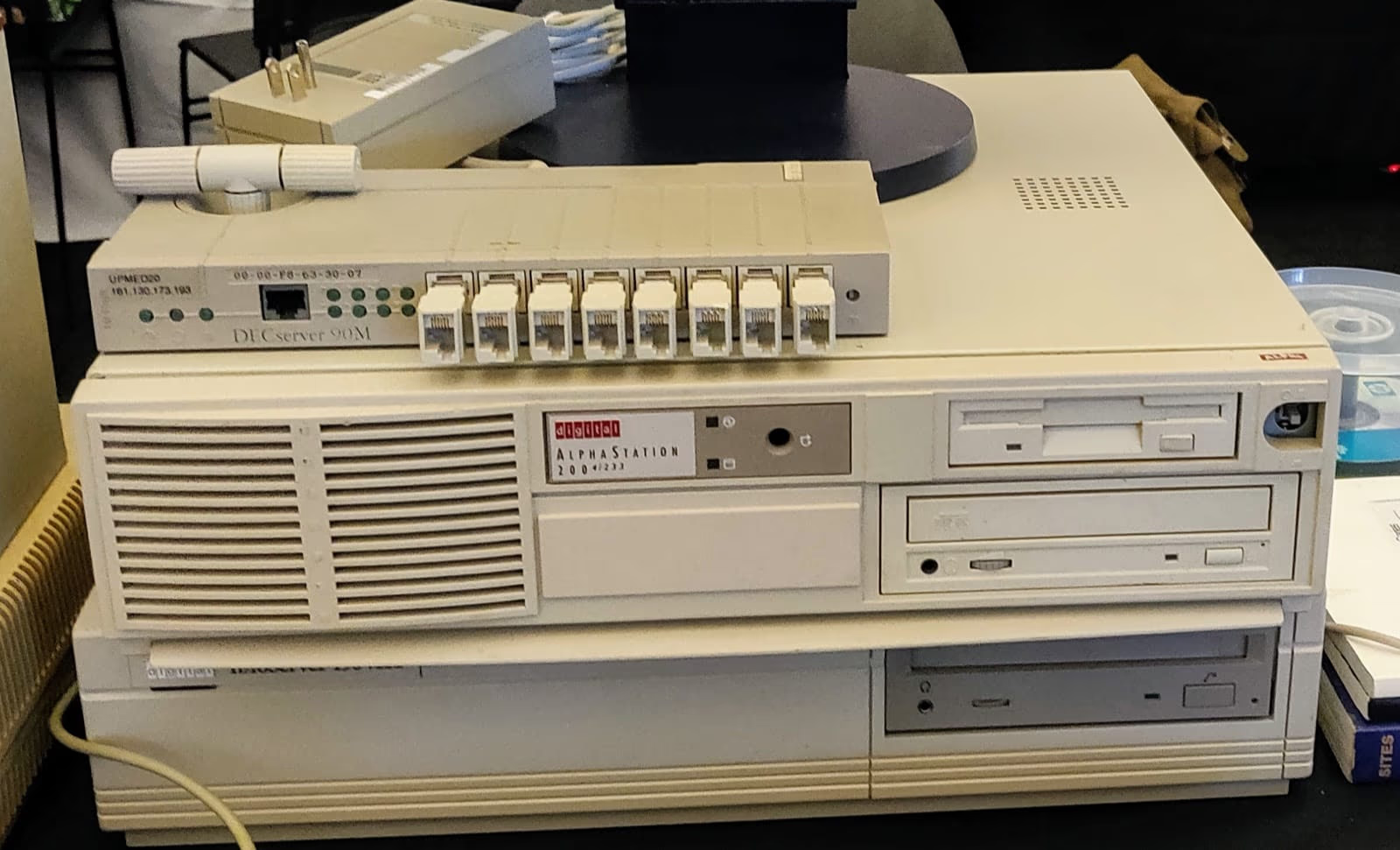
MiSTer Gets a DEC AlphaStation 200 Core That Runs OpenVMS, Tru64 and Windows NT
Dani Sarfati's DECAlphaStation200 core puts DEC's 1995 Alpha workstation on the MiSTer with its own SRM and ARC firmware, and boots OpenVMS, Tru64 UNIX, NetBSD, FreeBSD, Windows NT 4.0 and a Windows 2000 release candidate.