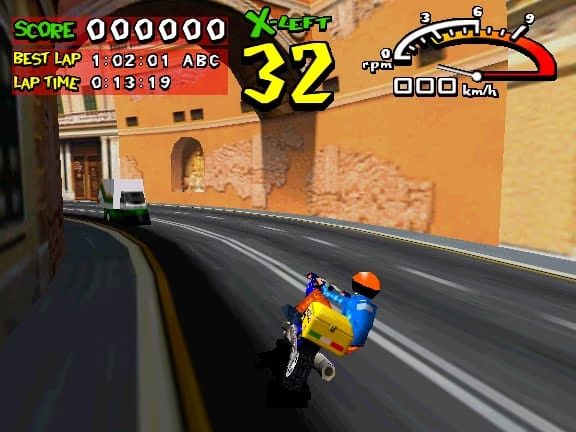
Image: Radikal Bikers in MAME 0.289, screenshot from the Arcade-Gaelco3D_MiSTer repository. Radikal Bikers © Gaelco 1998
Gaelco's 3D Arcade Board Reaches MiSTer With Speed Up, Surf Planet, Radikal Bikers and Football Power
Gaelco's 3D arcade hardware from the second half of the 1990s now runs on MiSTer. The developer who publishes as decoryah released a core for it on 2 November, tagged 20261102b, and it plays all four games of MAME's `gaelco3d` driver: Speed Up, Surf Planet, Radikal Bikers and Football Power. According to the release notes, all four start from a cold boot and play with sound on a real MiSTer. Like the same author's Block Hole core, it is distributed from decoryah's own repository and update database rather than the official MiSTer-devel collection.
What the release contains
The four games ran on two versions of the board that differ only in the main processor. Speed Up (1996) and Surf Planet (1997) use a Motorola 68000; Radikal Bikers (1998) and Football Power use a 68EC020. The FPGA has room for only one of them at a time, so the release ships two cores, `gaelco3d` and `gaelco3d020`, and each game's MRA file names the one it needs. The 68000 is Jorge Cwik's fx68k and the 68EC020 is Tobias Gubener's TG68K. The other three parts of the board were written for this core: the Texas Instruments TMS320C31 that handles geometry, the Analog Devices ADSP-2115 sound board, and Gaelco's own texture-mapping rasteriser.
Installation is manual or through the author's database for MiSTer's Downloader, which lists the core under `_Arcade/_Decoryah/_Gaelco3D`. The core needs the MiSTer SDRAM module, at any size from 32 MB, and MAME 0.289 romsets for the four games plus `tms320c31.zip`, MAME's set for the DSP's boot ROM. No ROMs are included. With a recent Main_MiSTer the ROM images are copied into memory in a few seconds; an older one loads them the slow way. Either way the games run their own ROM check first, so the screen stays black for a few seconds, as it did on the arcade board.
Controls map the original cabinets onto a pad. Speed Up's steering wheel, Surf Planet's tilting board and Radikal Bikers' handlebar sit on the left analogue stick, or on the d-pad, where the wheel centres itself when released. Football Power's cabinet had a ball for each player to kick instead of buttons; the core maps it to Shoot and Pass buttons and adds a Pass strength option with four settings. High scores and settings live in the board's EEPROM and are saved as the game's NVRAM file.

Why 3D hardware is hard to fit
The author's notes describe the board in detail. The 68000 versions run the main CPU at 15 MHz and the geometry DSP at 60 MHz; the 68EC020 versions run them at 25 MHz and 50 MHz. Every game has 32 MB of texture ROM, and the screen is 576 by 432. MAME counts up to 1,563 triangles in a single frame of Radikal Bikers' attract mode, with an average of 417.
The games make the rasteriser awkward to build. They never clear the frame buffer, they keep the depth buffer from one frame to the next, they blend at 50 percent transparency, and they change the palette part way through drawing. Reading and writing depth and colour for every pixel in the DE10-Nano's DDR3 memory would be too slow, and the whole depth buffer does not fit in the FPGA's block RAM: it needs 3.98 Mbit of the 5.66 available. The core's answer is to draw each frame in 14 horizontal bands of 32 lines, loading each band's depth and colour into block RAM, replaying the frame's list of polygons into it, and writing it back. The picture appears one frame later than in MAME as a result.
The arithmetic follows MAME exactly. The design notes say the rasteriser uses 32-bit floating point in the same order of operations as MAME's x86-64 build, so the results match "bit for bit". The fit is tight: the release notes put the 68000 core at 94 percent of the FPGA's logic and the 68EC020 core at 99 percent.
How it was checked
All of the testing is against MAME 0.289, which the author calls the oracle. In simulation, the rasteriser produced the same frame and depth buffers as MAME's renderer on every frame tried, for all four games. The DSP matched MAME's own TMS320C31 on random programs and on each game's real programs replayed from MAME, with every memory access identical over 600 to 1,000 frames per game. The whole board, simulated from power-on, produced the same display lists as MAME, entry for entry.
On hardware, the release notes say the repository owner ran all four games on a Multisystem 2 with a 128 MB SDRAM module. The one known difference from MAME is listed plainly: "Slight slowdowns here and there in busy scenes."
The games and the company
Gaelco was founded in Barcelona in October 1985 by Luis Jonama, Josep Quinglés and Javier Valero, and before the 3D board it released 2D arcade games including Big Karnak, Thunder Hoop and Alligator Hunt. Wikipedia's list of its games describes Speed Up as the first 3D Gaelco arcade game; Namco America distributed it in the US. Surf Planet and Football Power were developed for Gaelco by the third-party studio Zigurat Software.
Radikal Bikers is the best known of the four. It is a pizza delivery race through heavy traffic on an Italjet Dragster scooter, released in Europe in March 1998, in North America in June through Atari Games, and in Japan in December through SNK. Next Generation gave it four stars out of five and wrote that "There's nothing else quite like this gem in the arcades."
Who is behind it
decoryah's GitHub account now lists 27 public repositories, nearly all of them arcade cores created since the start of October 2026. Since Block Hole on 29 October, the author has also published cores for Taito's Slap Shot and Operation Wolf 3, Comad's Super Duck and, on the same day as Gaelco 3D, Atari's GX2 hardware. The Gaelco core credits MAME's driver, its TMS320C3x and ADSP-21xx emulation and its EEPROM code to Aaron Giles, the board's serial link to Couriersud, and its SDRAM controller and MRA builder to plasticbugs' Analogue Pocket Gaiapolis core.
Other ways to play
On PC, MAME emulates all four games through the driver Aaron Giles wrote, the same one this core was built from. Radikal Bikers also had a PlayStation port by Bit Managers, published by Infogrames in Europe on 23 June 1999, which drew lower scores than the arcade original: between 33 and 61 percent in the reviews Wikipedia lists. A Game Boy Color version that had been cancelled came out on Evercade in Piko Interactive Collection 3 on 31 May 2023. For how MiSTer recreates hardware in the first place, see the FPGA explainer, and for the author's previous release, the Block Hole core.
What is not known yet
This is a first release, tested on hardware by one person on one setup, and it is not in the MiSTer-devel repositories. The picture is 576 by 432 at 31.25 kHz, for HDMI or a 31 kHz monitor; the README says it does not support 15 kHz output. A RetroTINK 4K in direct video squashes the image while the MiSTer menu is open unless a `spd_quirk=2` line is added to `MiSTer.ini`, a workaround the author says is needed until a later build changes the core's blanking. The release notes also record that the framework's HDMI clock misses its timing target by 0.04 ns in the slowest case, and the dates of the games do not fully agree between sources: the README dates Football Power to 1999, while Wikipedia's list of Gaelco games gives 2000.
Sources
- decoryah on GitHub: Gaelco3D_MiSTer_20261102b
- decoryah on GitHub: Arcade-Gaelco3D_MiSTer
- decoryah on GitHub: Gaelco 3D hardware notes
- decoryah on GitHub: Core design: architecture and memory plan
- decoryah on GitHub: MiSTer_decoryah downloader database
- MAME on GitHub: gaelco3d.cpp: Driver for Gaelco 3D games
- Wikipedia: Gaelco
- Wikipedia: Radikal Bikers
More News
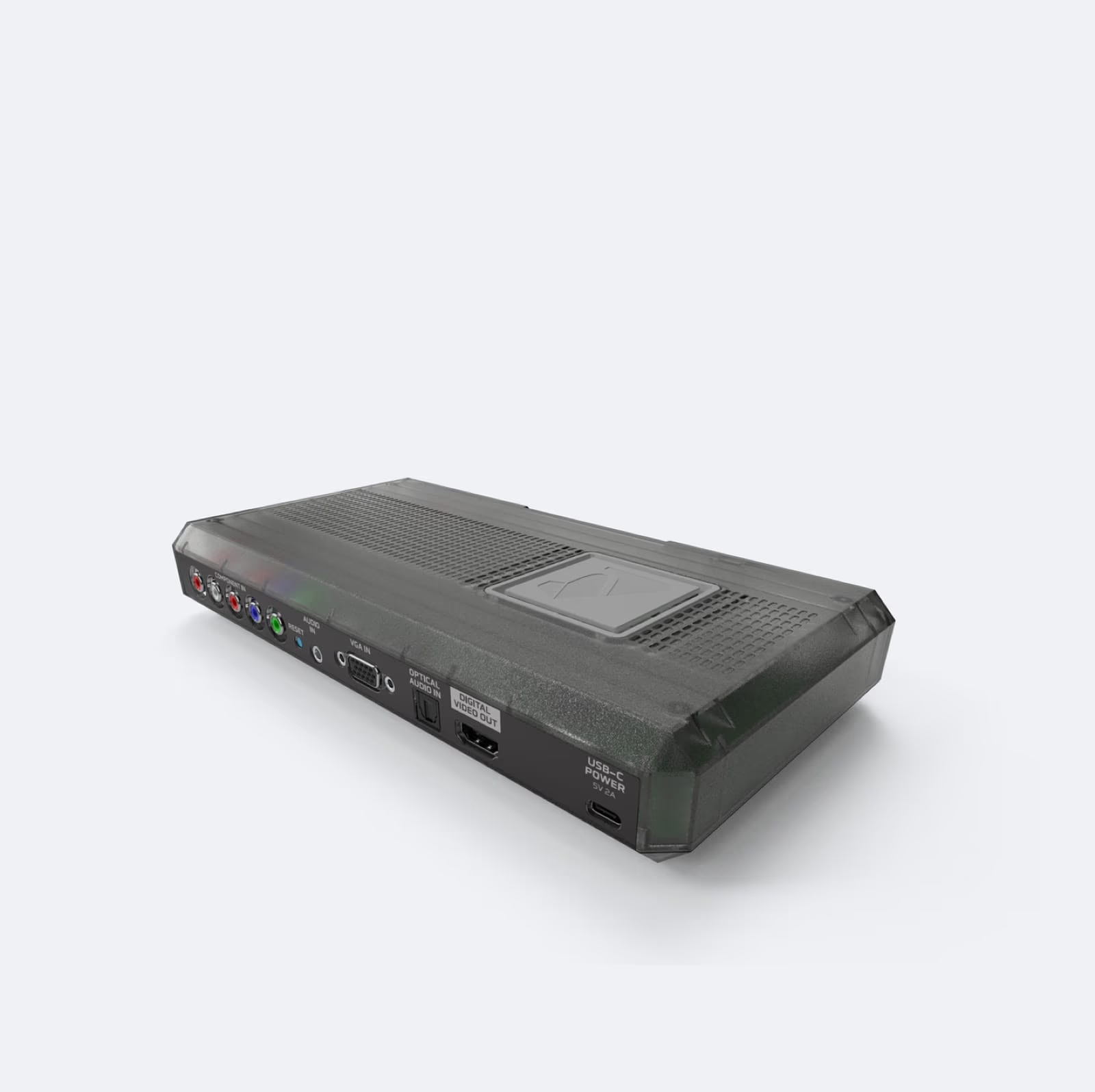
RetroTINK Firmware Adds Curved CRT Glass, Bezels and Composite Video Simulation
Experimental firmware 1.99.7 to 1.99.10 for the RetroTINK 4K and 6X adds an Advanced CRT Effects page with tube curvature, glass glow and a reflective bezel, plus composite video simulation on the 4K Pro and input and output screenshots.
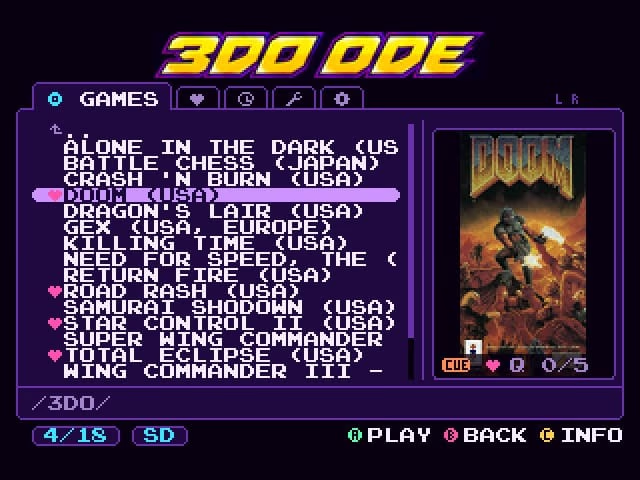
New 3DO ODE Menu Replaces Fixel's Stock Interface With Box Art, Favourites and Multi-Disc Queueing
Todd Gill has released a free replacement menu for Fixel's FZ-1 ODE, the XPort and SataTo3DO-based clones, built from a byte-exact reconstruction of Fixel's original and designed to make big game folders quick to browse.
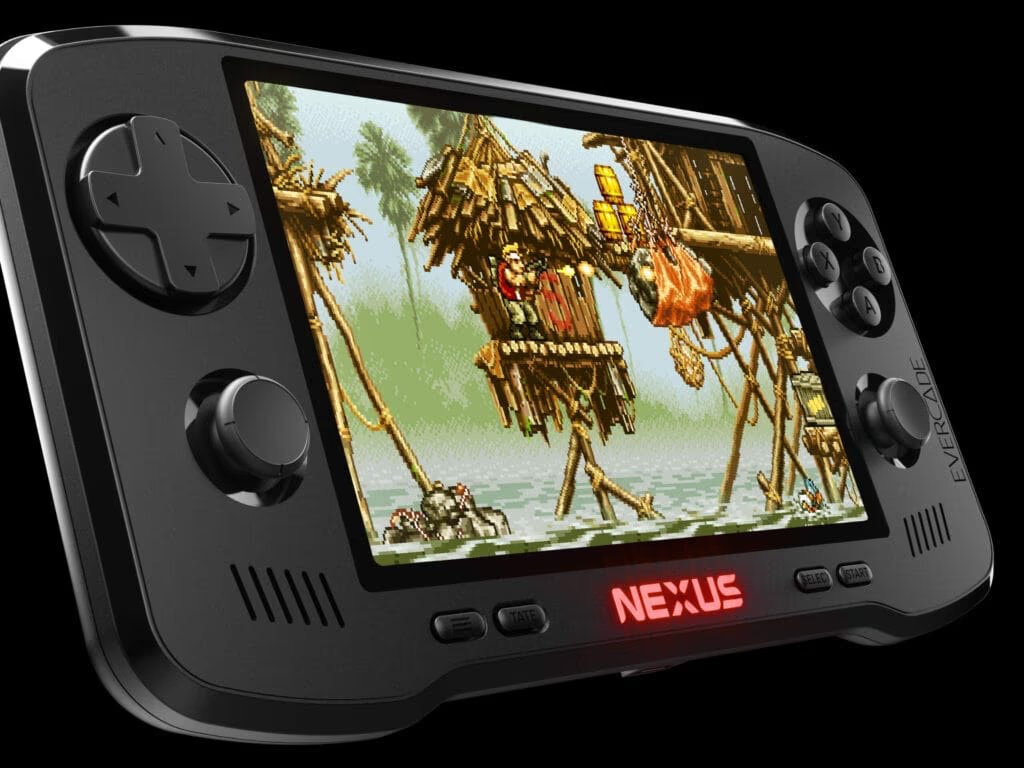
Evercade Nexus Goes on Sale With Analogue Sticks, a 5.89-Inch Screen and Banjo-Kazooie in the Box
Blaze Entertainment's Evercade Nexus launched on 30 October at £169.99, $199.99 or €199.99, with the largest screen of any Evercade, dual analogue sticks and a cartridge holding Banjo-Kazooie and Banjo-Tooie.