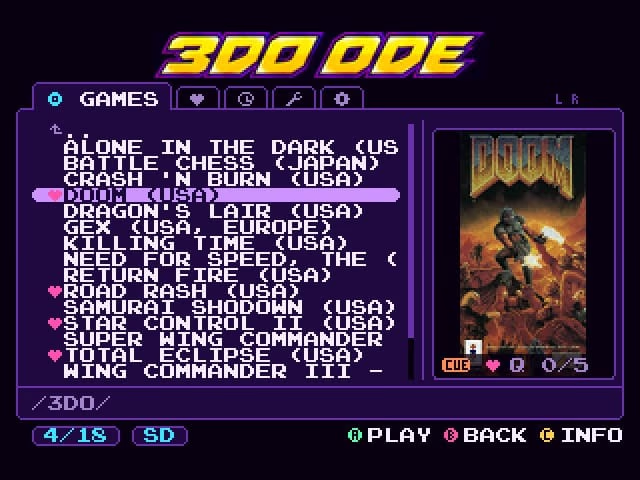
Image: Todd Gill / Retro Frog (3DO ODE Menu); Doom box art belongs to its publisher
New 3DO ODE Menu Replaces Fixel's Stock Interface With Box Art, Favourites and Multi-Disc Queueing
Owners of 3DO optical drive emulators have a new menu to boot into. Todd Gill of the accessory maker Retro Frog published a replacement for the menu disc used by Fixel's FZ-1 ODE and XPort on 30 October, followed by a fix release on 31 October and a feature update on 1 November. It is free, it installs by swapping one file on the SD card, and it also works on the cheaper clone ODEs that run firmware based on the open-source SataTo3DO project.
What the menu does
An optical drive emulator replaces a console's CD drive with an SD card or USB stick full of disc images. On a 3DO, the list of games the player scrolls through is not built into the ODE itself: it is a program on a disc image called `boot.iso`, which the console boots as a disc. Gill's menu is a replacement `boot.iso`. The README tells users to keep a copy of the original, then copy the new file to the root of the card; going back means copying the old one back.
The layout puts five tabs across the top (Games, Favs, Recent, Tools and Options), a game list on the left and an info pane with box art or a screenshot on the right. The feature list in the project's README includes:
- - folders sorted the way people expect, with `Disc 2` before `Disc 10`;
- - a game kept in its own folder (`Doom/Doom.cue` with its `.bin`) listed as the game itself, without opening the folder;
- - favourites, a recently played list and a play queue;
- - a random game on the X button, from the whole card after a card scan or otherwise from the current folder;
- - hiding demos and duplicates from the list without deleting them;
- - five colour themes (Synth, Navy, Moss, Wine and Grey), sound effects and a screensaver, all added in the 1 November release.
Everything on Fixel's original Tools screen is kept: NVRAM save and load, ROM and RAM dumps, ODE firmware updates and the Storage Manager.
Multi-disc games get special handling. When a player starts disc 1 of a game such as Wing Commander III, the menu offers to queue the remaining discs, provided they are named the same apart from the disc number. "Disc", "Disk" and "CD" all work, the menu looks for discs 2 to 9, and the queue holds five discs.

The release supports Fixel's internal FZ-1 ODE and the external XPort, both tested by Gill, and clones with SataTo3DO-based firmware, tested on one clone fitted to an FZ-1. It runs on NTSC and PAL consoles; the 31 October release fixed a black screen on the XPort and centred the menu on PAL televisions.
Why it was needed
Gill explained his reasons in a post he wrote for RetroRGB. He said he had generally been happy with Fixel's hardware, calling its compatibility great and its loading reasonably quick, but listed the problems with its menu: background music that cannot be turned off, "a garish background wallpaper (purple marble?)", a bare interface, and slowness.
The project's technical notes trace the slowness to the ODE firmware. For every entry the menu asks for, the firmware reopens the folder and walks it from the start, so showing a page near the end of a 1,500-file folder costs about 21,000 directory reads. The new menu reads a folder once and saves the sorted listing in a hidden `_odemenu.idx` file inside it. By Gill's simulation, a return visit to that 1,500-file folder costs about 3,800 reads, against about 1,130,000 to page through it in the stock menu. Before launching or entering anything, the menu re-checks the entry's position, and rescans if the card has changed behind the index.
Cover art follows the same rule of doing slow work elsewhere. The menu opens one small pre-made `.img` file per game and decodes nothing while browsing. Making those files on the console is slow, because the firmware accepts only 4 bytes per write command: the notes measure about 3.5 seconds to save a single 6.2 KB cover. So the project ships two Cover Maker tools that run on a computer instead, a web page for Chrome or Edge and a Python script, which scan the card, fetch box art, screenshots or title screens from the libretro-thumbnails collection, convert them and write the folder indexes in the same pass.
The notes also record fixes to Fixel's original tools. Loading an NVRAM file now checks that the file is exactly 32 KB and starts with an Opera volume label before writing it; according to the notes, the original wrote its buffer even after a failed read. Errors from the console's `ramp` device are now reported instead of being saved as good files.
Built on a reconstruction of Fixel's menu
Gill's menu exists because of another project published days earlier. On 26 October, a GitHub user called yesmorepain published a reconstruction of the programs on version 5 of Fixel's `boot.iso`: C source that, run through the original 1994 toolchain, rebuilds the original binaries byte for byte. A disc rebuilt from that source, with a small visible change, booted on a real FZ-1. Companion projects cover the ODE's firmware and its FPGA gateware. Gill credits the reconstruction as the starting point, and says so in his RetroRGB post.
Fixel's ODEs date back to an announcement in February 2022, when RetroRGB reported that Fixel, the main developer of the 3DO emulator FreeDO, was preparing two models: an internal drive replacement and the XPort, which plugs into the console's rear memory expansion port and leaves the original CD drive working. The clones came from a different direction. FCare's SataTo3DO, on GitHub since March 2022, began as a project to replace the drive in its author's NTSC FZ-1 with a low-cost ODE built around an RP2040 board. Gill's notes record that clones running it answer several commands differently from Fixel's firmware, from how they number folder entries to how file reads end, and the menu allows for every difference found so far.
The hardware all this runs on is the 3DO Interactive Multiplayer, launched in North America on 4 October 1993 as the Panasonic FZ-1 at US$699.99. The console's 320×240 picture is the canvas the new menu is laid out on, and its double-speed CD drive is the part the internal ODEs replace.
Credits, licensing and what is not known
The menu is credited to Todd Gill of Retro Frog, with Fixel credited for the FZ-1 ODE and the original menu. Its font is Press Start 2P by Cody Boisclair, and it uses tinf for PNG decoding and picojpeg for JPEG decoding. According to the RetroRGB post, the look comes from the menu Gill designed for an upcoming Sega Master System flashcart; no release details for that cart have been given.
The licence is split. The Cover Makers, tests and documentation are MIT licensed, but the menu's source, design and artwork are all rights reserved and not for reuse without permission. The released `boot.iso` is not in the repository, because it contains files from Fixel's disc and the 3DO SDK. The reconstruction it was built from has no licence yet, and the README notes that Fixel has said he means to open-source his menu.
Gill does not claim to be alone. In his words: "I am hardly the first to do this (there is at least 3 or 4 others designing their own menus)". Compatibility beyond the tested hardware is the main open question: other clone ODEs have not been tested, and Gill asks owners whose games will not start to run Tools > ODE Test and post photos of the results in an issue. The menu also shows names in capitals only, drops accents, shows Japanese characters as question marks and handles up to 4,096 entries per folder.
Sources
- thgill on GitHub: 3DO ODE Menu
- thgill on GitHub: 3DO ODE Menu releases
- thgill on GitHub: 3DO ODE Menu: technical notes
- RetroRGB: 3DO ODE Menu released
- yesmorepain on GitHub: FZ-1 ODE menu: reconstruction of the 3DO-side programs on boot.iso
- FCare on GitHub: SataTo3DO
- RetroRGB: New 3DO ODE Announced
- Wikipedia: 3DO Interactive Multiplayer
More News
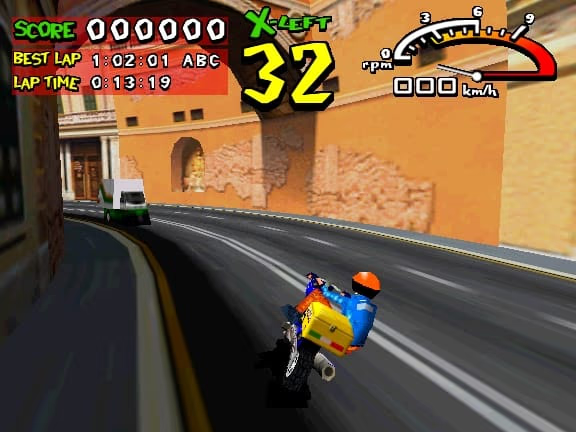
Gaelco's 3D Arcade Board Reaches MiSTer With Speed Up, Surf Planet, Radikal Bikers and Football Power
Developer decoryah released a MiSTer core for Gaelco's late-1990s 3D arcade hardware on 2 November, running all four games of MAME's gaelco3d driver with sound, from the author's own repository.
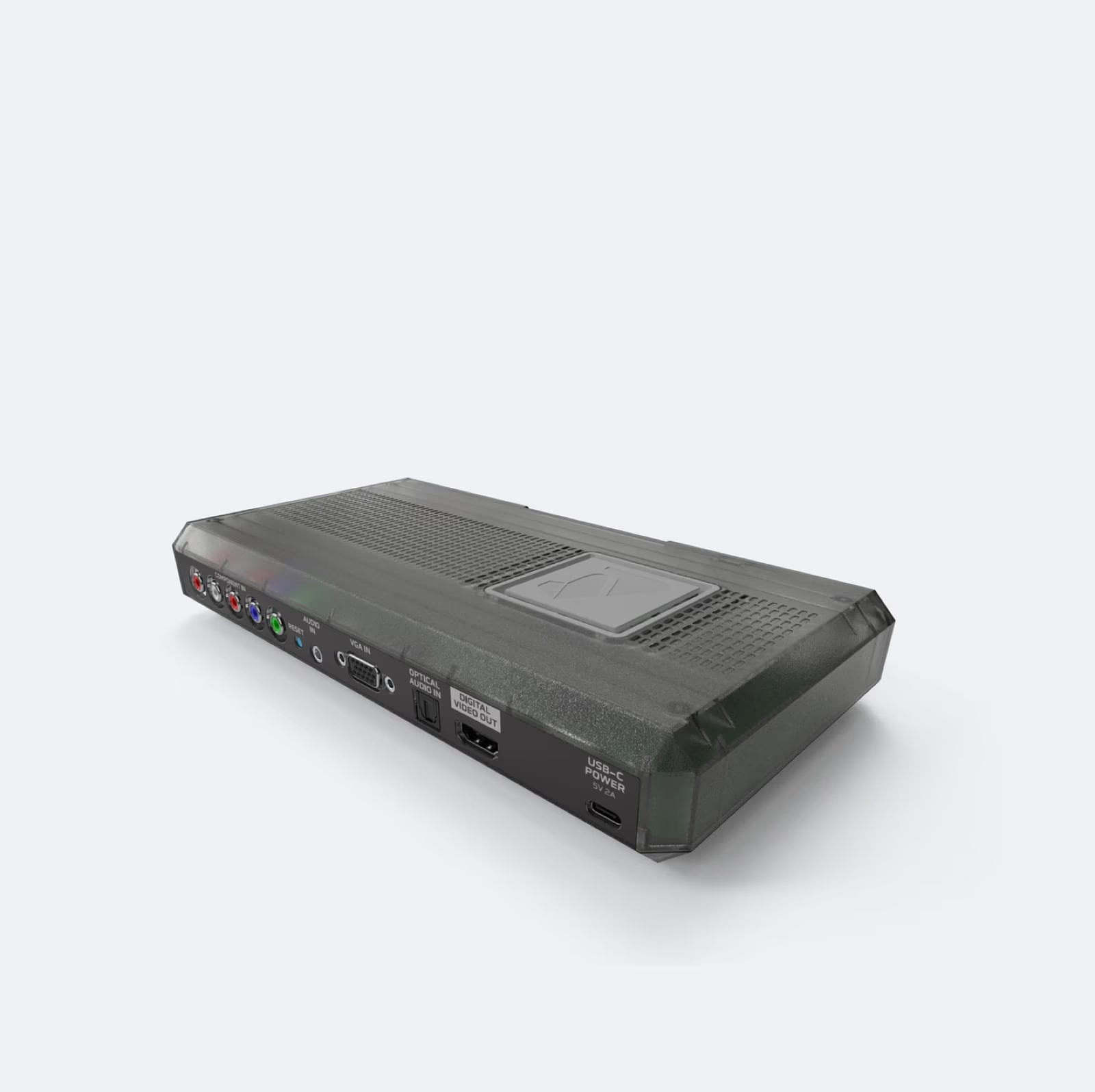
RetroTINK Firmware Adds Curved CRT Glass, Bezels and Composite Video Simulation
Experimental firmware 1.99.7 to 1.99.10 for the RetroTINK 4K and 6X adds an Advanced CRT Effects page with tube curvature, glass glow and a reflective bezel, plus composite video simulation on the 4K Pro and input and output screenshots.
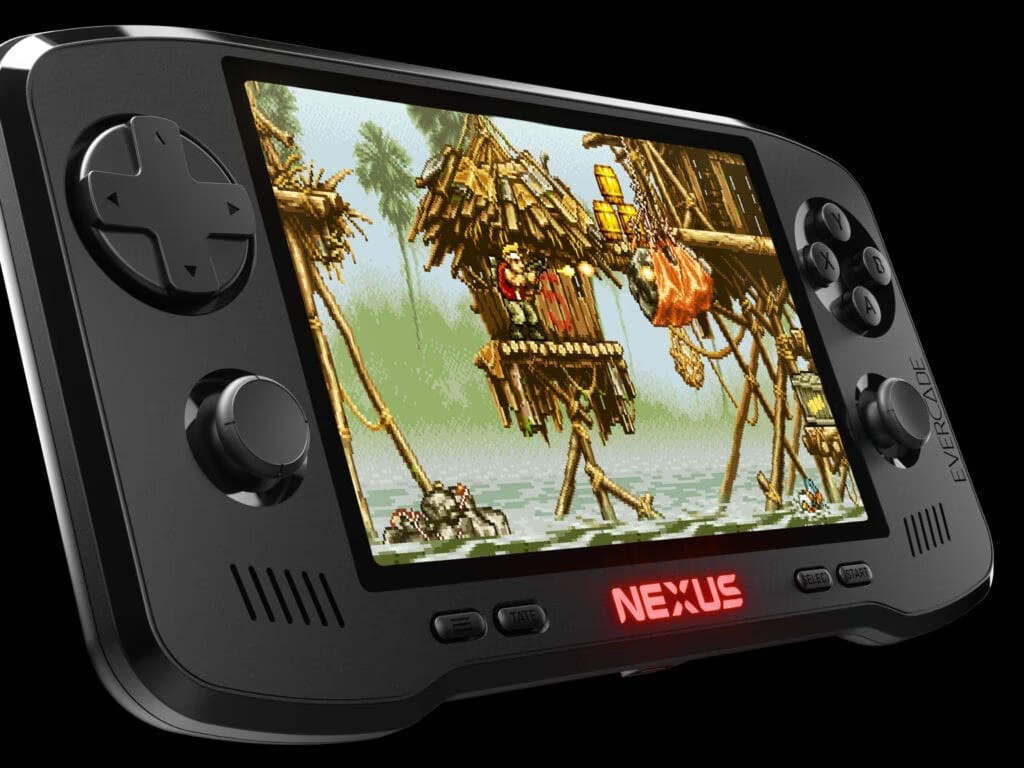
Evercade Nexus Goes on Sale With Analogue Sticks, a 5.89-Inch Screen and Banjo-Kazooie in the Box
Blaze Entertainment's Evercade Nexus launched on 30 October at £169.99, $199.99 or €199.99, with the largest screen of any Evercade, dual analogue sticks and a cartridge holding Banjo-Kazooie and Banjo-Tooie.