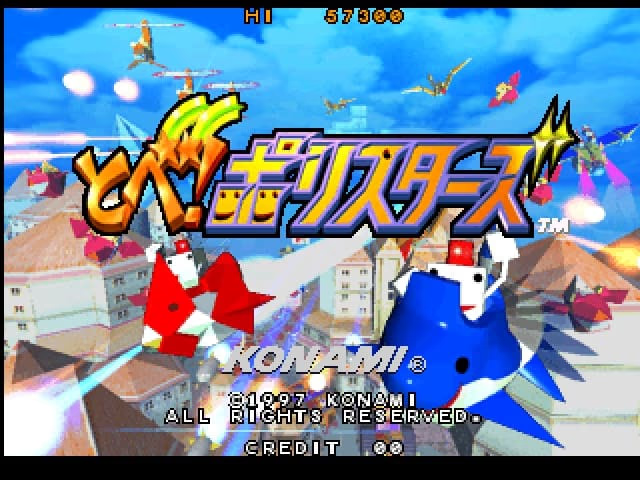
Image: Tobe! Polystars title screen in MAME 0.289, screenshot from the Arcade-KonamiM2_MiSTer repository. Tobe! Polystars © Konami 1997
MiSTer Gets a Konami M2 Core, Starting With Tobe! Polystars
Konami's M2 arcade board, the late-1990s hardware built on the 3DO company's cancelled M2 console technology, has a MiSTer core. The developer who publishes as decoryah released it on 5 November, tagged 20261105, with one game: Tobe! Polystars, Konami's 1997 3D shooter. According to the release notes it plays on a real MiSTer with its music and sound effects, but heavy scenes still run below the speed of the original board. It is distributed from decoryah's own repository and update database, not the official MiSTer-devel collection.
What the release contains
The core recreates the whole board as MAME 0.289 describes it: two PowerPC 602 processors at 66.67 MHz, the BDA chip that combines the memory controller, triangle engine, video and an audio DSP, the CDE that connects the CD drive, and Konami's own input and output hardware. The game's program and data sit on a CD rather than in ROM, which shapes how the core is installed.
No ROMs or disc images are included. Players need their own MAME 0.289 set for Polystars, including the disc image 623jaa02.chd, and have to turn that CHD into two files the core can read: a 24 MB data track (polystar_cd.zip) and a 546 MB raw image of the whole disc with its .cue, which carries the music. The README gives two ways to do it. One uses MAME's chdman tool and a Python script in the repository. The other is a converter that runs in a desktop browser (Chrome or Edge), needs about 2 GB of free memory, and, according to the README, does the conversion locally without uploading the CHD.
The MRA file and core go in the usual arcade folders. The first time the game starts, the player opens the on-screen menu and picks polystar_full.bin under CD audio image; Main_MiSTer remembers the choice after that. Without it the game runs without its music. The notes add that Main_MiSTer releases up to 20261010 do not act on the MRA's own request for the audio image, which is why the manual step exists. With a recent Main_MiSTer, the ROM and data track are copied into the DDR3 memory in one go; an older one streams them using the same files.
The core is also in decoryah's database for MiSTer's Downloader, which lists it under _Arcade/_Decoryah/_KonamiM2, so update_all users who have added that database get it with the rest of the author's cores.
Controls are a joystick and three buttons plus Start, Coin and Service, for two players. The buttons have generic names for now; an open issue on the repository proposes naming them Shoot and Bomb. The menu offers the usual aspect ratio and integer scaling options, a service mode switch and a reset.

Speed, and why the chip is full
The release is open about its main limit. Measured at the start of stage 1, the core draws about 30 pictures a second where the real board manages about 44.6, and because the game's timing follows the pictures, the game itself slows down with them. The notes call fixing this "the next job". They also explain why the comparison is with the real board and not with MAME: MAME only estimates the triangle engine's timing. The author's hardware notes say MAME runs each list of drawing commands to completion inside the processor write that starts it, so no drawing time passes at all in the emulator. MAME's own source still lists "Fix incorrect speed in Tobe! Polystars" among its open items.
The fit is very tight. Built with Quartus 17.0, the core uses 41,273 of the DE10-Nano's 41,910 adaptive logic modules, 98 percent, along with 461 of 553 M10K memory blocks and 69 of 112 DSP blocks. Timing is 0.264 nanoseconds short on the machine's clock and met on the HDMI clock. Because there is no room left, the core has no CRT Adjust, no Scandoubler Fx and no volume control, and the board's MPEG video hardware is not included.
The video signal itself is close to the arcade original: 640 by 240 visible on a raster of 857 by 262, at 15.56 kHz and 59.39 Hz, against MAME's 768 by 262 at 59.36 Hz. The notes say it is meant for CRTs as well as HDMI, and the author tested on both, with a Sony CRT.
How it was checked
The testing is described in detail. On a real MiSTer, the author let the attract mode loop for 60 minutes without a freeze and then played a game with its music, sound effects, fades and song changes. In simulation, the core was compared with MAME 0.289: from power-on it loads the operating system from the CD image and shows the same boot checks and title screen; both processors were checked against MAME's instruction traces; and the triangle engine's writes match MAME's "byte for byte" on drawing lists dumped from the game. The README is equally plain about what was not checked: stages beyond those played, and a complete game to its end.
The first user report backs the release up with one caveat. In an issue opened on 6 November, a user wrote that the game boots and plays with music on their MiSTer, but that their copy of the CHD stores the data track in 2,048-byte sectors, which the repository's conversion script scrambles because it assumes 2,352-byte sectors. The issue proposes a fix; it was still open at the time of writing.
A console that became an arcade board
The M2 was designed by The 3DO Company as the successor to the 3DO Interactive Multiplayer, with hardware co-designed by Dave Needle and RJ Mical, and was shown at E3 in 1995. Panasonic agreed in October 1995 to buy exclusive rights for $100 million, and its parent Matsushita cancelled the console in 1997, with the decision made public that July. The hardware lived on elsewhere: as a Konami arcade board and in interactive kiosks.
The arcade games are the part that matters to players. MAME's driver, written by Phil Bennett, lists five: Tobe! Polystars and Total Vice in 1997, and Battle Tryst, Evil Night (released elsewhere as Hell Night) and Heat of Eleven '98 in 1998. The driver also records a mild protection scheme against swapping games between boards, which checks that the EEPROM and NVRAM hold the same data, byte-swapped.
So far only Polystars has been run on the core. The README lists Total Vice and Evil Night / Hell Night as "not tried", and notes that Battle Tryst, Heat of Eleven '98 and several Total Vice versions do not work in MAME 0.289 either, which matters because MAME is the core's reference for every comparison.
Who is behind it
decoryah has been releasing arcade cores at a fast rate this autumn. The Downloader database lists 27 repositories, and The author's Gaelco 3D core came out three days before this one, and the Atari GX2 core the same week. The M2 core reuses the Gaelco 3D core's platform layer, test benches and release packaging. Its credits name MAME's konamim2 driver and 3DO M2 devices by Phil Bennett, the PowerPC core by Aaron Giles and R. Belmont, and the MiSTer framework by Sorgelig and contributors. The core is licensed GPL-3.0 or later.
What is not known yet
The big open question is speed: whether the triangle engine can reach the real board's rate in the space left on the FPGA, which is almost none. After that comes the rest of the library. Total Vice and Evil Night are light gun games, and the release does not say how, or whether, they would be supported. The release notes also leave untested whether a whole game of Polystars can be played to its end. Readers new to how an FPGA core differs from an emulator can start with the FPGA explainer.
Sources
- decoryah on GitHub: KonamiM2_MiSTer_20261105
- decoryah on GitHub: Konami M2 for MiSTer
- decoryah on GitHub: The Konami M2 board
- decoryah on GitHub: cdimage.py: a CHD whose data track is 2048 bytes a sector
- decoryah on GitHub: Buttons
- decoryah on GitHub: MiSTer_decoryah downloader database
- MAME on GitHub: konamim2.cpp: Konami M2 Hardware
- Wikipedia: Panasonic M2
More News
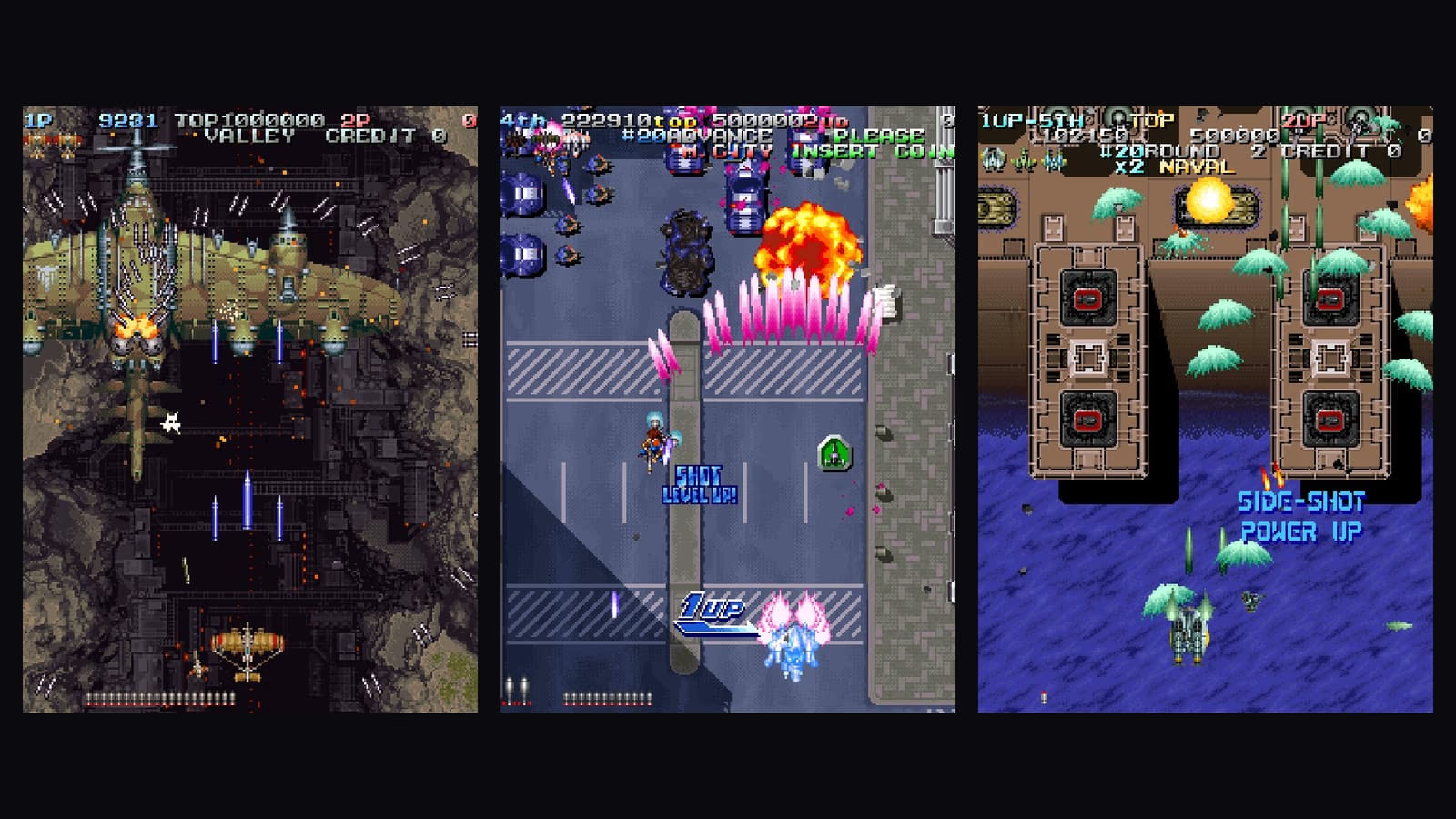
Arcade-RaizingMD Core Brings Battle Garegga and Batrider to MiSTer-devel
A rewritten open source core for Raizing's five Toaplan-based shooters, from Sorcer Striker to Battle Bakraid, was published to the MiSTer-devel organisation on 15 November. Its author says the old code was replaced and retuned against measurements from real boards.
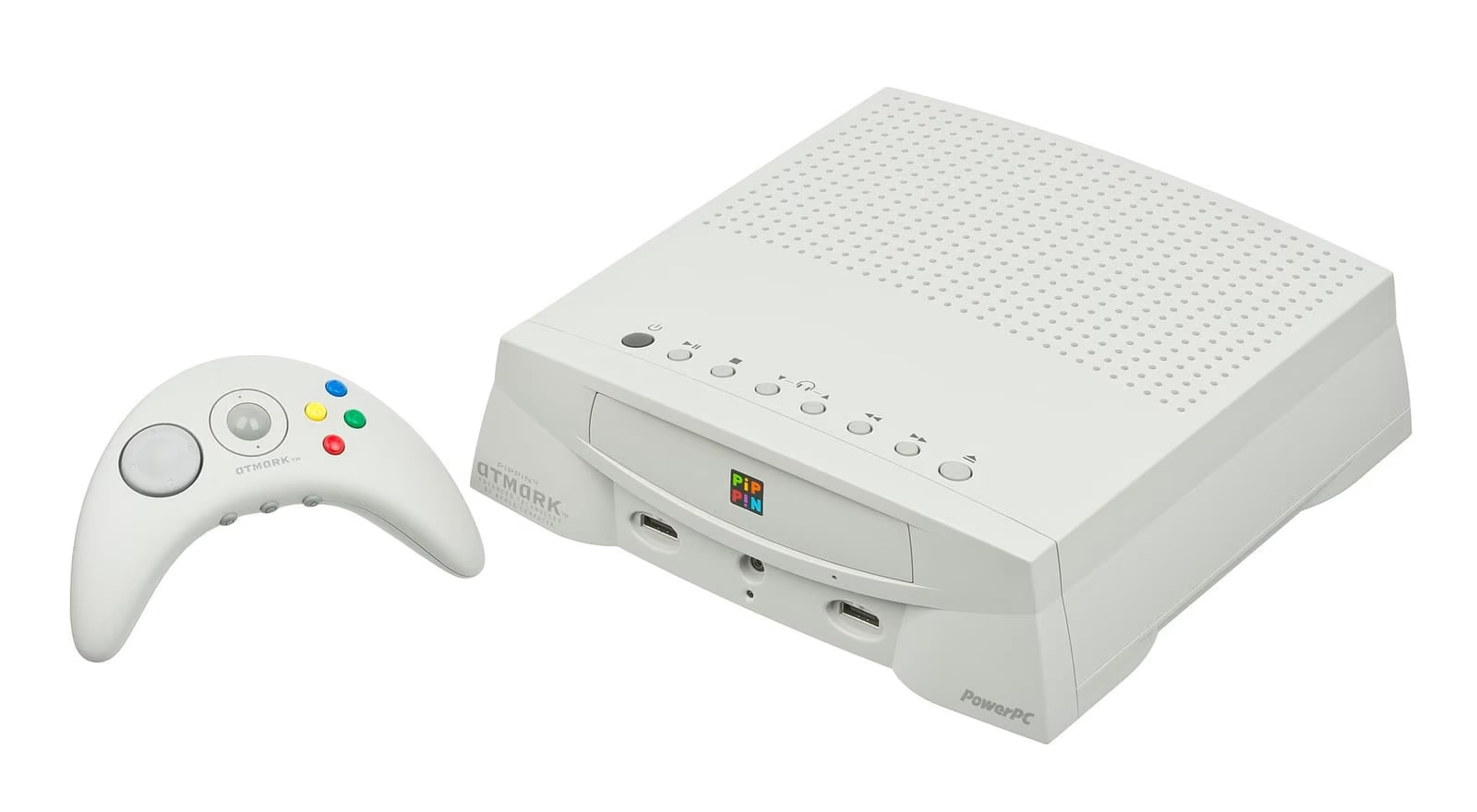
Bandai Pippin Gets a MiSTer Core
Dani Sarfati's BandaiPippin core, published to MiSTer-devel on 14 November, recreates Apple and Bandai's 1996 console down to its PowerPC 603. It boots the Pippin ROMs and four discs to their menus; playing titles through is not yet tested.
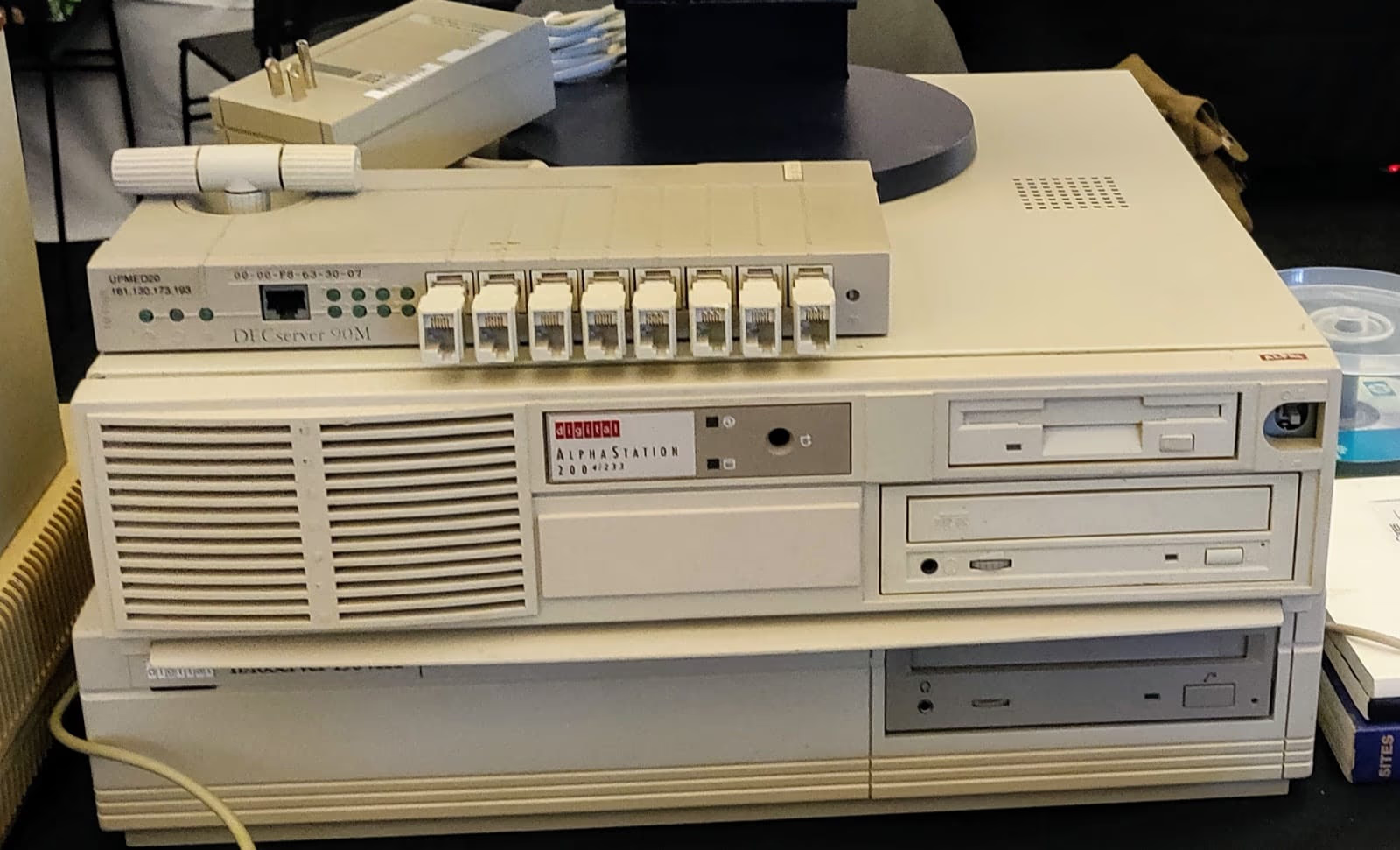
MiSTer Gets a DEC AlphaStation 200 Core That Runs OpenVMS, Tru64 and Windows NT
Dani Sarfati's DECAlphaStation200 core puts DEC's 1995 Alpha workstation on the MiSTer with its own SRM and ARC firmware, and boots OpenVMS, Tru64 UNIX, NetBSD, FreeBSD, Windows NT 4.0 and a Windows 2000 release candidate.