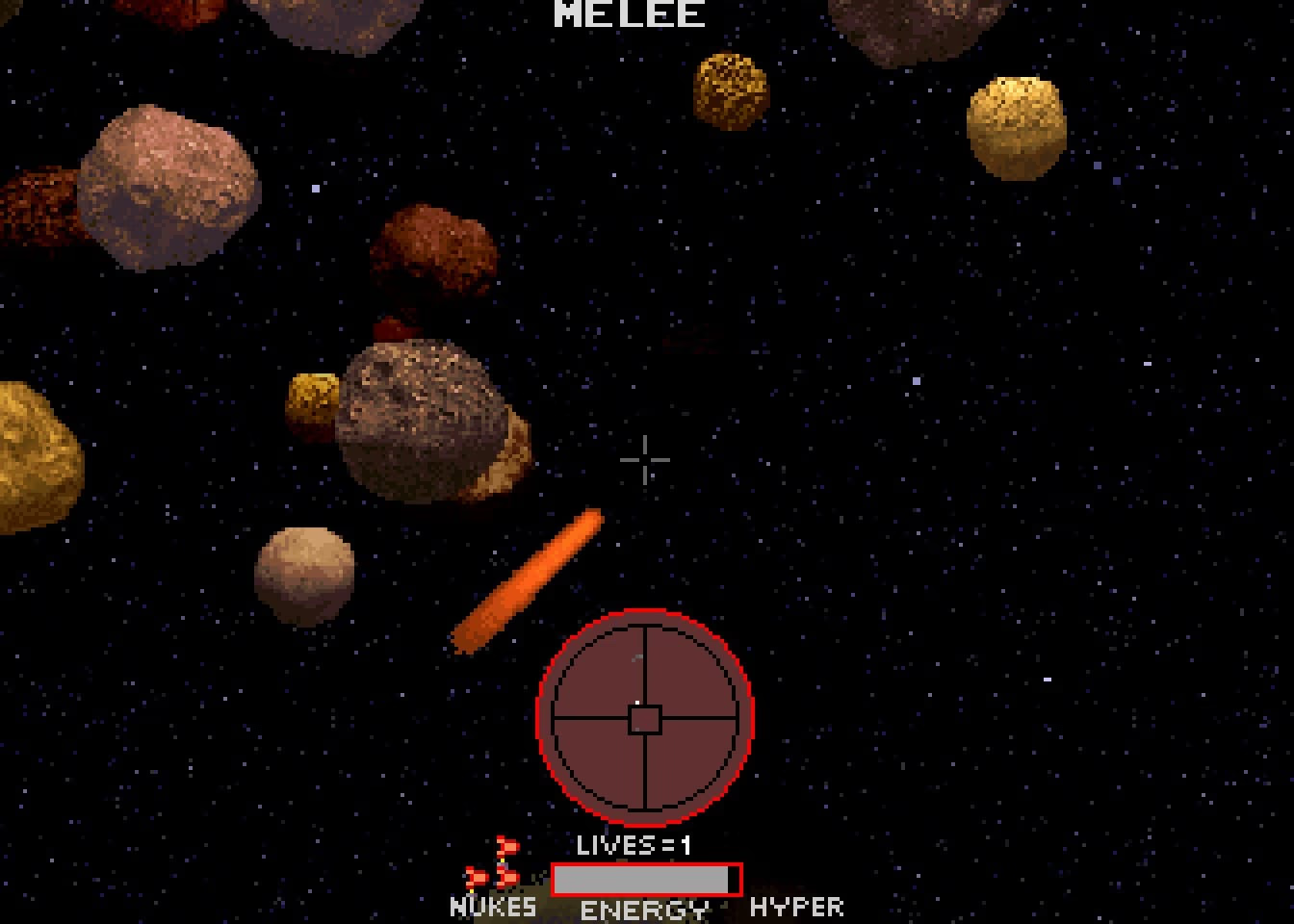
Image: Space Lords in MAME 0.289, screenshot from the Arcade-AtariGX2_MiSTer repository. Space Lords © Atari Games 1992
MiSTer Gets an Atari GX2 Core With Space Lords and Moto Frenzy
Atari Games' GX2 arcade board of 1992 now runs on MiSTer. The developer who publishes as decoryah released a core for it on 2 November, tagged 20261101, and it plays the two GX2 games that work in MAME: Space Lords, Ed Logg's first-person space combat game, and the motorcycle racer Moto Frenzy. It arrived on the same day as the author's Gaelco 3D core, and like that one it is distributed from decoryah's own repository and Downloader database rather than the official MiSTer-devel collection.
What the release contains
The core ships nine MRA files: Space Lords rev C, with rev B, rev A and a German rev A in _alternatives, and Moto Frenzy, with the Mini Deluxe version and three field test builds. Road Riot's Revenge, the board's third game, is left out because it does not run in MAME 0.289: its protection has not been emulated there either.
According to the release notes, the core implements the whole board: the 68EC020 main processor, the XGA protection chip, the playfield and alphanumerics layers, Atari's run-length-encoded motion objects, the analogue-to-digital converter that reads the controls, the EEPROM, and the JSA IIIs sound board with its 6502, YM2151 and two OKI6295 sample chips. The README puts numbers on the hardware: the 68EC020 runs at 14.318 MHz, the sound 6502 at 1.79 MHz, the playfield is 128 by 64 tiles of 8 by 8 pixels at 6 bits per pixel, and the motion object graphics run to 5 to 7 MB of ROM.
Installation needs the MiSTer SDRAM module, at any size from 32 MB, and MAME 0.289 romsets for spclords.zip and motofren.zip in games/mame/. No ROMs are included. The MRAs carry an address= attribute, so a recent Main_MiSTer copies the ROM image into the DDR3 memory and the core loads from there in a few seconds; an older Main_MiSTer ignores the attribute and loads the slow way. Both games run their self-tests first, as the arcade board did. Space Lords shows plain colour screens for a few seconds, and Moto Frenzy shows CALIBRATING MOTOR and WHEELIE MOTOR MALFUNCTION, the cabinet's motor check, before the title, exactly as it does in MAME.
The board has no DIP switches. Coinage, difficulty and the rest live in the game's EEPROM and are changed through its own test menu, which the core's Service Mode option opens. Settings are saved as the game's NVRAM file. The picture is 336 by 240 at 15.7 kHz and 59.92 Hz, for a 15 kHz CRT or HDMI through the scaler, and the OSD carries rmonic79's CRT Adjust module for the analogue output.
Flight yokes and handlebars on a pad
Both games had analogue cabinets. Space Lords gave each player a flight yoke, and Moto Frenzy had handlebars with a twist-grip throttle. The core maps those to a d-pad, which moves the virtual control the way MAME's keyboard does, with options for speed and what happens on release; to either analogue stick, with dead zone and sensitivity settings; or to a paddle, a spinner or a mouse. An Auto setting follows whichever control was used last. Only the buttons the games read are mapped: Space Lords gets Laser, Nuke, Throttle Fwd, Throttle Rev and Rear View, with Start doubling as Hyperspace for the pilot and Cloak for the co-pilot. Moto Frenzy gets Fire and Throttle, plus the operator's AUX1 to AUX3 buttons, which the game ignores in play but which drive its test menu.
One quirk is documented rather than hidden. Moto Frenzy's race select keeps scrolling while the handlebars are off centre, even slightly, and it does the same in MAME. With MAME's d-pad behaviour the handlebars take a moment to return after the d-pad is released, so the selection runs on; a D-Pad Release option set to Snap to Centre stops it the instant the d-pad is let go.
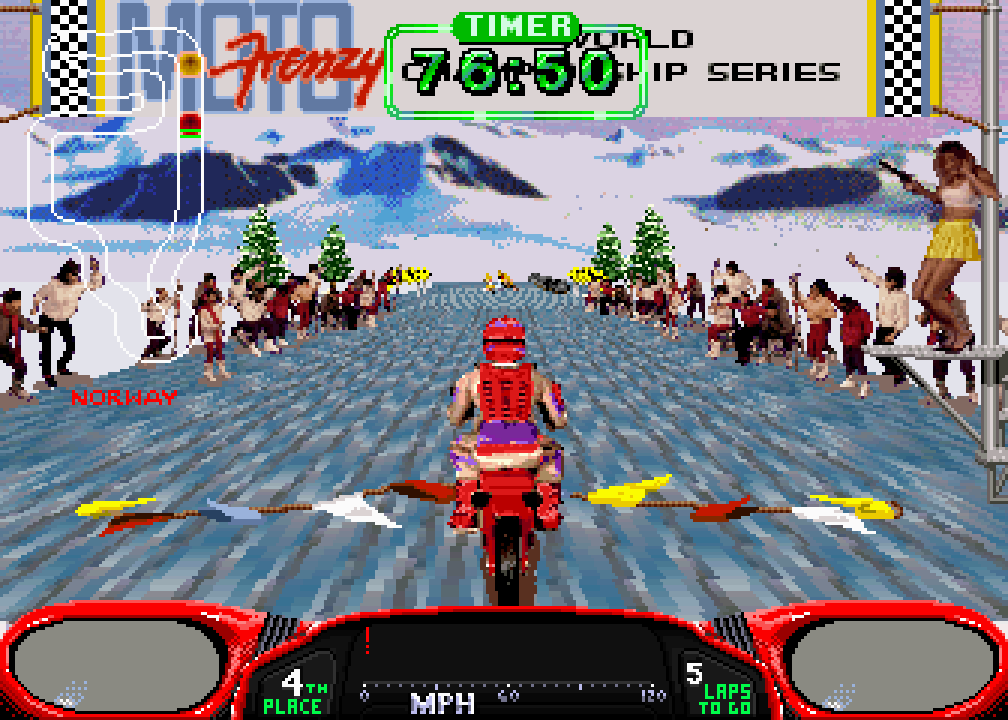
There is also a CPU Speed setting, and the reason for it is a good illustration of why arcade cores are hard. The core's 68EC020, a TG68K with a ROM cache, runs 1.7 to 2.5 times as fast as MAME's. Moto Frenzy's sound watchdog expects the board's real pace: at full speed the game reset its sound board every six seconds in the attract mode and menus, and the music cut out. Auto therefore runs Moto Frenzy paced to the board's speed and Space Lords, which keeps its processor busy anyway, at full speed.
How it was checked
The release notes say the repository owner tested build 20261031b on a real MiSTer, on a CRT and on a RetroTINK 4K over direct video, and that both games play with picture, sound, controls and the OSD options. The status document lists what the earlier hardware tests found: music cutting out, which was traced to the sound board's timing constraints, its command interrupt and the watchdog; Moto Frenzy's d-pad steering working at half range; its service menu buttons unmapped; and a button name long enough to hang Main_MiSTer's Define Buttons page. All were fixed by 20261031b. The 20261101 release adds one more fix, checked in simulation: Moto Frenzy's motion objects are now drawn from a copy of the object RAM taken as the draw begins, as in MAME, where before a few objects, most likely the crowd's animation, could show a frame early.
The simulation work is against MAME 0.289, which the author calls the oracle. The ROM images assembled from the nine MRAs are byte-identical to the images built from MAME's ROM tables. Space Lords' boot colour test is pixel-identical to MAME's, both attract modes run through MAME's sequence, Moto Frenzy's race runs at MAME's steady 30 Hz, and its test menu is pixel-identical. The sound board alone, replaying MAME's logged commands from a 45 second Moto Frenzy session, loses no command, and its output envelope correlates with MAME's recording at 0.94 and 0.90 for the left and right channels. The build, in Quartus Prime Lite 17.0.2, uses 18,938 ALMs, 45 percent of the FPGA's logic, and meets timing on every clock.
Two differences from MAME are listed plainly. In Moto Frenzy's race the YM2151's engine sound is about 8 dB quieter against the samples than in MAME. And the cabinets' network boards, DSPCOM and Clarn, are not emulated, in MAME either, so the core runs one cabinet only. The status document also keeps one item open: the owner found Moto Frenzy's driving "sometimes jumpy and choppy" on the 20261031b build, on CRT and RetroTINK alike, and the bench has not reproduced it.
The board and the games
MAME's driver for the hardware was written by Aaron Giles, with the protection on Moto Frenzy and Space Lords reverse engineered by Morten Shearman Kirkegaard, Samuel Neves and Peter Wilhelmsen. The driver supports Space Lords (1992), Moto Frenzy (1992) and Road Riot's Revenge Rally (1993), and its known bugs are the Road Riot protection and the missing DSPCOM and Clarn boards, both based on an ADSP2105. The Road Riot sets in MAME are prototypes dated January and September 1994.
Space Lords is the better documented of the two games. Wikipedia dates its North American release to November 1992 and credits Ed Logg as designer, with Logg and Bob Flanagan programming, Sam Comstock on art and Don Diekneite and Brad Fuller on music. Logg's earlier Atari work includes Asteroids (1979), Centipede (1981), Gauntlet (1985) and Steel Talons (1991). The game was built around linked play: each cabinet had two screens, each screen took a pilot and a co-pilot, and two cabinets could be cabled together for four screens and up to eight players. Museum of the Game lists the dedicated machine with two 25-inch monitors and stereo sound, and records six machines in the hands of its active members. The trade magazine RePlay ranked Space Lords the seventh most popular upright arcade game in its January 1993 issue. On MiSTer, with the network link absent, the core gives one screen's pilot and co-pilot on two pads, with a Swap Players option.
Moto Frenzy has a thinner paper trail. Museum of the Game lists it as a 1992 Atari Games motorcycle racer "with several different tracks including the Arctic where polar bears attack", playable by one person, with an 84 page manual for the Mini Deluxe cabinet. The core's README adds that its screenshot shows the Norway race.
Who is behind it
The core is built on Nortido's Primal Rage core in the MiSTer-devel organisation, which runs Primal Rage and T-MEK on the Atari GT board, the same family of hardware. According to the GX2 README, its 68EC020 bus, run-length object renderer, tilemap engine, DDR3 fast loading and NVRAM handling come from there, with the GX2's own palette, three-layer mixer and memory map added. The JSA IIIs sound board was written from MAME's atarijsa.cpp, with the 6502 wiring following d18c7db's Atari System 1 core. The 68EC020 is Tobias Gubener's TG68K.C, the 6502 is T65, and the YM2151 and OKI chips are Jose Tejada's jt51 and jt6295. The licence is GPL-3.0-or-later.
decoryah's Downloader database, updated on 3 November, now lists 26 repositories and 375 files, including the Metro, Seta 2 and IGS PGM2 boards, Taito's L System with 39 MRAs, and a run of Konami fighters and brawlers. Adding the database to downloader.ini installs the cores through update_all like any other. For the author's previous releases, see the Block Hole core and the Gaelco 3D core; for how MiSTer recreates a board in the first place, the FPGA explainer.
What is not known yet
This is a first release, tested on hardware by one person on one setup, and it is not in the MiSTer-devel repositories. The jumpy driving the owner saw in Moto Frenzy is still open. Road Riot's Revenge will need MAME to crack its protection before any FPGA core can follow. And the eight-player link that made Space Lords an event in 1992 is not coming back on a single DE10-Nano: the core, like MAME, is one cabinet.
Sources
- decoryah on GitHub: AtariGX2_MiSTer_20261101
- decoryah on GitHub: Arcade-AtariGX2_MiSTer
- decoryah on GitHub: Status: tests against MAME 0.289
- decoryah on GitHub: MiSTer_decoryah downloader database
- MiSTer-devel on GitHub: Arcade-PrimalRage_MiSTer
- MAME on GitHub: atarigx2.cpp: Atari GX2 hardware
- Wikipedia: Space Lords
- Museum of the Game: Space Lords
- Museum of the Game: Moto Frenzy
- Wikipedia: Ed Logg
More News
Arcade-RaizingMD Core Brings Battle Garegga and Batrider to MiSTer-devel
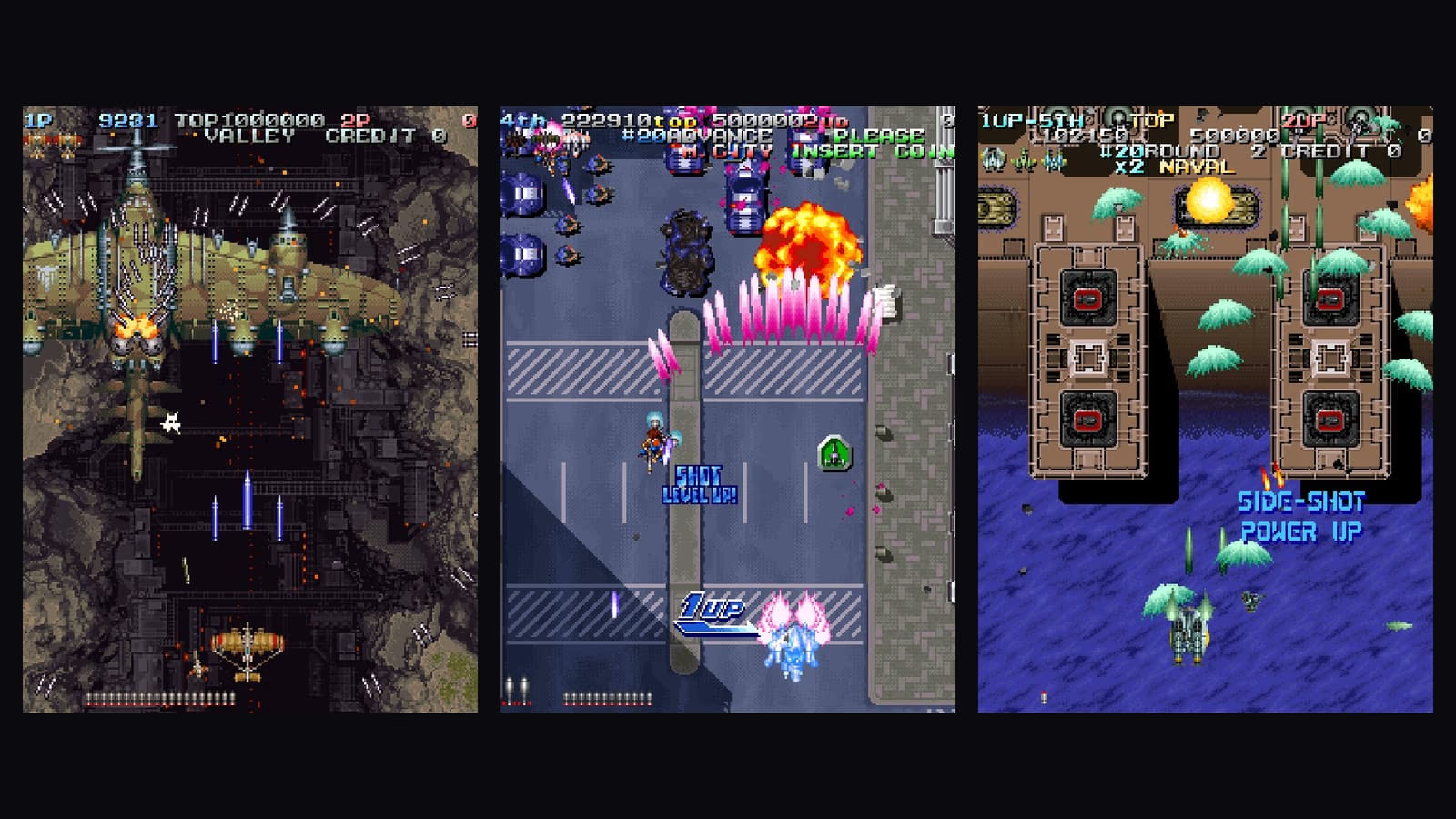
A rewritten open source core for Raizing's five Toaplan-based shooters, from Sorcer Striker to Battle Bakraid, was published to the MiSTer-devel organisation on 15 November. Its author says the old code was replaced and retuned against measurements from real boards.
Bandai Pippin Gets a MiSTer Core
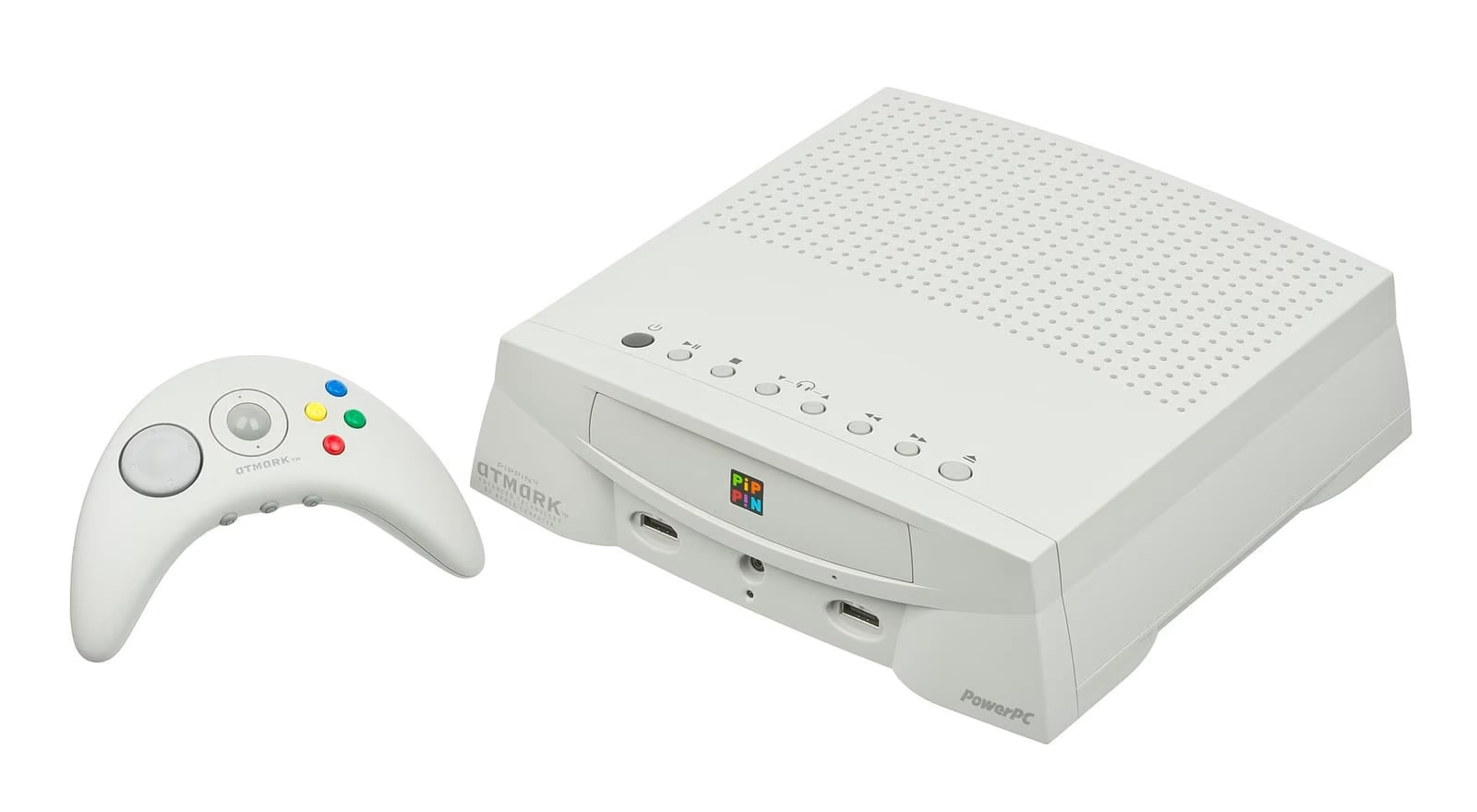
Dani Sarfati's BandaiPippin core, published to MiSTer-devel on 14 November, recreates Apple and Bandai's 1996 console down to its PowerPC 603. It boots the Pippin ROMs and four discs to their menus; playing titles through is not yet tested.
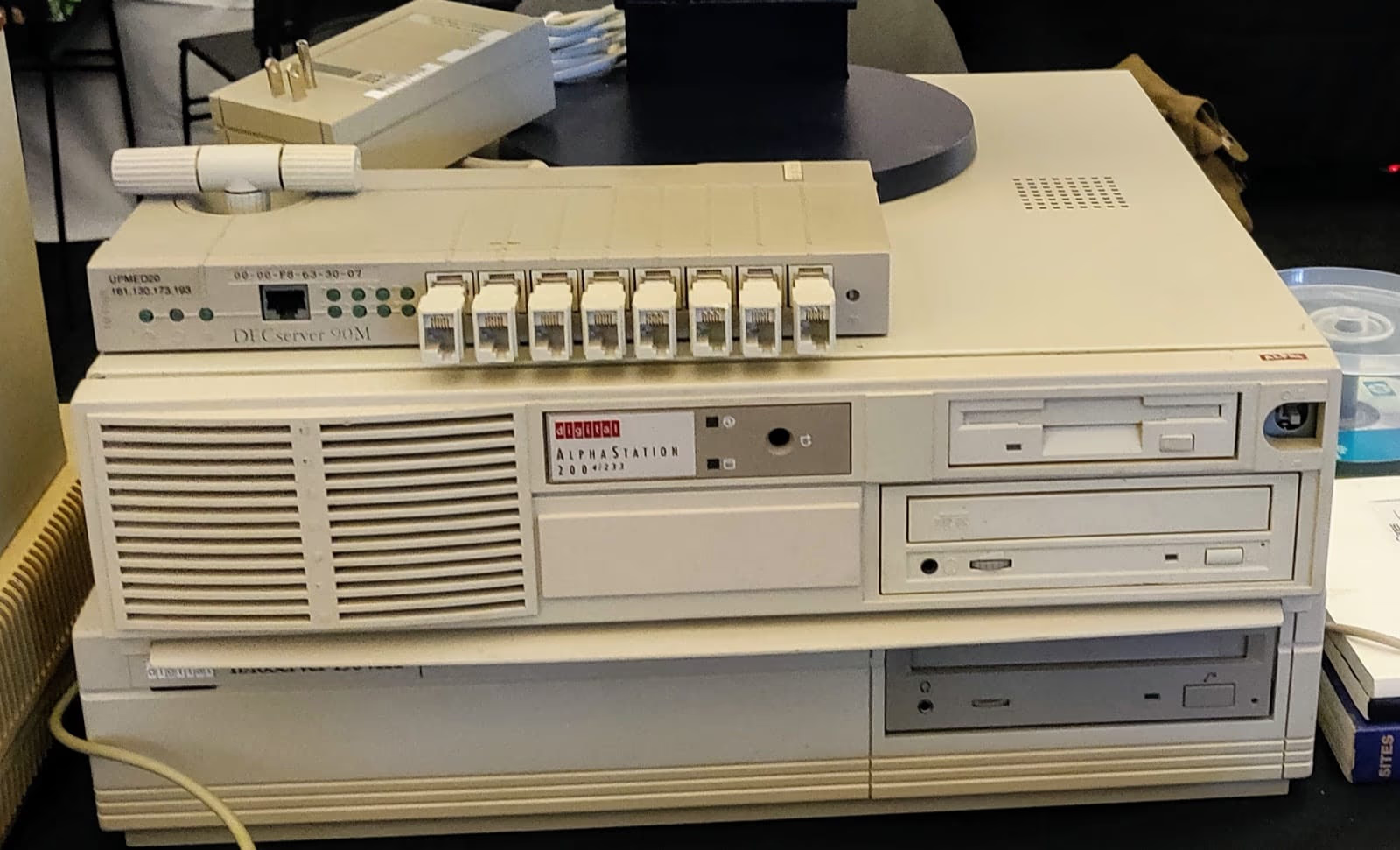
MiSTer Gets a DEC AlphaStation 200 Core That Runs OpenVMS, Tru64 and Windows NT
Dani Sarfati's DECAlphaStation200 core puts DEC's 1995 Alpha workstation on the MiSTer with its own SRM and ARC firmware, and boots OpenVMS, Tru64 UNIX, NetBSD, FreeBSD, Windows NT 4.0 and a Windows 2000 release candidate.