Image: Cart & Pixel
MiSTer's Apple IIgs Core Gets Four Releases in a Week, With an Uthernet II Card and Floppy Fixes
The Apple IIgs core for MiSTer has had four releases in five days. Alan Steremberg pushed builds dated 4, 5, 7 and 8 November to the MiSTer-devel repository, and the 7 November one is the largest: it adds an emulated a2RetroSystems Uthernet II Ethernet card, makes the serial ports run at the speed the IIgs programs them to, and folds in a set of floppy, CPU and keyboard corrections from Henri Asseily's Multitini One port of the same core. The Ethernet card comes with a catch the changelog states plainly: it needs a matching MiSTer Main build that has not been released, so for now the option has to stay Off.
Four builds, one after another
The run started on 4 November with a release the changelog describes as matching the core's memory management unit to captures from physical ROM 01 and ROM 03 machines. Its MMUPROBE test agrees with the real hardware in all 45,824 cases on each ROM; before, 2,128 differed. The same build reworked the 5.25-inch WOZ floppy path so that First Math Adventures, Wings of Fury, Commando and Bouncing Kamungas boot, and loaded each 3.5-inch track side in multi-block SD requests of up to 16 KB, which removed a timeout that broke Alien Mind after a track change. That change had a cost: the first 20261104 build broke every zipped image and every .po, .2mg, .dsk, .do and .nib floppy with a "Check startup device!" message, and was rebuilt into the same file the same day.
The 5 November build brought in a second contributor. A GitHub user named slaapliedje sent three pull requests: WAI now waits until an interrupt is actually asserted, NMI edges are no longer lost, the $C010 soft switch reports any key held down, and the Ensoniq ES5503's Oscillator Interrupt Register reports each interrupting oscillator once, oldest first, an order the changelog says was measured on a ROM 03 machine. The any-key-down fix is the one players will notice: unreliable held keys in Prince of Persia were reported on 13 July, the day after the core's first release. The same build fixed a left-edge strip in Double Hi-Res, the brown band in the Delta Demo, and got the TransWarp GS desk accessory to install at boot on both ROMs.
The 7 November build is the one with the headline features, covered below. The 8 November build changes nothing in the IIgs itself: it swaps the core's copy of the MiSTer framework for the current template, bringing the Y/C output fixes, the scaler reset at vsync and analog trigger support that every core picks up from it.
An Ethernet card that is waiting on Main
The Uthernet II is a real card. a2RetroSystems sells it for $75 as an Apple II Ethernet card built on the WIZnet W5100 chip, which has a hardware IP stack on board, and the product page says Contiki, IP65, Marinetti and ADTPro were updated to work with it. It is "Fully compatible with all models of the Apple IIe and IIgs." The core now emulates one in slot 3 or 4, chosen from OSD → System → Uthernet II.
The way it is split is the reason it does not work yet. According to the pull request that added it, the FPGA side holds the W5100's mode register and address pointer, an 8-byte read line and a doorbell for socket commands, and keeps the chip's 32 KB of memory in a DDR3 window at 0x1FF00000, the same window the A2065, Mac and Sun network bridges use. The chip model itself and the bridge to a real network run in MiSTer Main, the ARM-side program, and that part is Main_MiSTer pull request #1416, opened by Steremberg on 7 November. It adds an OSD → System → Network setting with four choices, eth0, macvlan, tap0 and eth1, and its chip model covers soft reset, socket open and close, and raw MAC send and receive on socket 0, which is what Marinetti's UthernetII link layer uses.
As of 9 November that pull request is open and unmerged, and the most recent entry in Main's releases folder is MiSTer_20261010. The core's pull request puts it bluntly: "Until a Main release includes #1416, the option does nothing useful." The changelog gives the same instruction: "Until a MiSTer Main release includes the IIgs Uthernet II support, leave the option Off." With a Main build that has the support, the changelog records a DHCP lease from the LAN, 20 of 20 pings at a 29 ms average, and HTTP fetched from a DE10-Nano.
The software on the IIgs side is Marinetti, which its home page describes as the only TCP/IP stack available for the IIgs, clean-room developed from the RFCs and written entirely in 65C816 assembly language. The core's pull request gives the setup: in the TCP/IP control panel choose the UthernetII link layer, set the LAN slot to match the OSD, and turn DHCP on. The MAC address is built from the prefix 00:08:DC and a single user-set byte, so two IIgs cores on one LAN need different bytes.
Floppies, serial ports and the fixes from Multitini
The floppy work in the 7 November build has an unusual origin. Henri Asseily's Multitini One is a project that turns the Appletini One, an Apple IIe expansion card built around a Xilinx Zynq-7020 FPGA, into a stand-alone computer running C64, Game Boy Color, Vectrex, Mega Drive, NES, Amiga and Apple IIgs cores from a shared menu. Its IIgs core is a port of this one, and the corrections Asseily made to the IWM floppy controller and Sony 3.5-inch drive emulation have now come back upstream. The changelog lists them: the one-second motor-off delay, drive-present, write-protect and tachometer status, the step acknowledge and track-0 settle, spin-up timing, and an asynchronous write under-run. With them in place the IWMTest suite passes all 67 of its checks, in simulation on ROM 3 and on a DE10-Nano on ROM 01, and a System 6.0.2 installation from floppies with disk swaps through the OSD now runs to the end and boots, closing an issue open since 15 July. The CPU, keyboard and interrupt-vector fixes that Doom GS depends on came from the same port.

A hardware burn-in of 232 bootable 3.5-inch WOZ disks on a DE10-Nano had 197 reach the game and 35 stop at a loader or text screen; the seven that looked like failures turned out to be slow loaders, a disk swap or a different launch sequence, and behave the same way in GSSquared.
The serial fix is a correction to a shortcut. The ROM self-test sets fast baud rates to test the Zilog SCC quickly, and the core had applied those shortcuts to normal operation too, so the slot firmware's 1200 baud actually ran at about 3.6 megabaud and nothing on the MiSTer UART could decode it. The shortcuts now apply only in local loopback, and the changelog reports GS/OS and The Print Shop IIgs printing at 9600 baud through a printer emulator. A smaller fix will matter to anyone who has used the core: saved OSD settings for CPU speed, serial port and accelerator are no longer wiped when the core loads.
On the Main side, a related pull request from Steremberg, #1410, was merged on 6 November. It makes Main's IIgs disk layer return as many blocks as the core asks for instead of one 512-byte block per round trip, and stops a partial final block in a WOZ1 image coming back as zeros; the pull request names a zipped Karateka image that lost the end of track 34 and booted to a black screen.
The machine and its accelerator
The Apple IIgs went on sale in September 1986 as the fifth and most powerful Apple II, with a 16-bit WDC 65C816 at 2.8 MHz, 256 KB to 1 MB of RAM expandable to 8 MB, the Apple Desktop Bus, and a Super Hi-Res mode of 320 by 200 or 640 by 200 pixels. The "GS" stands for Graphics and Sound, and the sound is the part people remember: a 32-oscillator Ensoniq 5503 wavetable chip designed by Bob Yannes, who also designed the Commodore 64's SID. Faster 65C816s running at 5 to 14 MHz were readily available, but Apple kept the machine at 2.8 MHz until production ended on 4 December 1992. The last official system software, System 6.0.1, came in 1993; the unofficial 6.0.2 to 6.0.4 releases that the core's installer test uses came from a computer group in France from 2015 on.
That fixed speed is why accelerator cards were a business. Applied Engineering of Carrollton, Texas, followed its TransWarp cards for the IIe with a TransWarp GS carrying a faster 65C816. The core offers a TransWarp GS option, and what the 5 November build fixed is its CDA, the desk accessory the card's software installs, so that it appears in the Desk Accessories menu and its Quick Self-Test passes all nine tests. The core's own speed control is modelled on the ZipGS accelerator instead, with OSD speeds of 2.8, 3.6, 4.8, 7.2 and 14.3 MHz, the top one validated on hardware according to the README.
The other ways to run IIgs software
The core's README names the emulators it was checked against, and they are the alternatives. KEGS, by Kent Dickey, is the one the README calls the gold standard, and GSplus is a cross-platform fork of it. Clemens IIGS, by Sam Kusin, is an emulator and debugger for Windows, Linux and macOS. GSSquared, by Jawaid Bazyar, reached version 1.0 and runs the Apple II, II+, IIe and IIgs on Mac, Windows and Linux and in the browser; its site describes it as, to its author's knowledge, the only emulator besides MAME to model both the 8-bit line and the IIgs. The README says the core "has been heavily optimized for hardware simulation accuracy, compatibility, and cycle-exact timing by studying Clemens, KEGS, MAME, and real Apple IIGS hardware."
The other FPGA route is the one the floppy fixes came from: Multitini One runs the same IIgs design on the Appletini One card, with ROMs the user supplies.
Who is behind it
The repository credits five developers: Pierre Cornier, Steven A. Wilson, Alan Steremberg, Frank Bruno, and Jim Gregory for the debugger. The CPU is adapted from srg320's VHDL 65C816 in the MiSTer SNES core, and the whole thing is GPLv3 because of the MiSTer framework, Sorgelig's SDRAM controller and the AppleWin hard disk controller it incorporates. Apple's ROMs are not included; the user builds boot.rom and boot1.rom from MAME's apple2gs set.
The MiSTer-devel repository was created on 12 July 2026 with a single initial release, and every commit since then, apart from slaapliedje's two, is Steremberg's. His GitHub profile describes a computer engineer who co-founded Weather Underground, and this autumn he has published a run of cores covered here, including the Sony SMC-777 on 3 November and the Sharp MZ-2500 a day later. slaapliedje's pull request for the CPU fixes says its code and description were written with Claude Code, and leaves the repository's checklist boxes unticked for that reason.
What is not known yet
The main unknown is when a MiSTer Main release will include pull request #1416, and with it the Uthernet II support; until one does, the card option does nothing and should stay Off. Four issues remain open on the core: Hi-Res and colour Double Hi-Res sit four pixels right of text, the Delta Demo's music still degrades over a long run, a request for multiple floppy drives from July is unanswered, and the Prince of Persia keyboard report has not been closed even though the 5 November changelog addresses it. The changelog also notes that the TransWarp GS desk accessory is not installed if no startup disk boots, and that copy-protected images must stay write-protected, because Qix rejects its disk once its own startup has written to it.
New to MiSTer? Which MiSTer to buy and how to set it up covers the hardware, Update All and installing cores.
Sources
- MiSTer-devel on GitHub: Apple IIGS for MiSTer
- MiSTer-devel on GitHub: Apple-IIgs_MiSTer CHANGELOG
- MiSTer-devel on GitHub: Release 20261107: serial baud fix, Uthernet II Ethernet card (PR #17)
- MiSTer-devel on GitHub: 65C816: WAI waits for IRQ low, and NMI edges are not lost (PR #12)
- MiSTer-devel on GitHub: Apple IIgs: Uthernet II (W5100) Ethernet card (Main_MiSTer PR #1416)
- MiSTer-devel on GitHub: Apple IIgs/IIe: serve whole SD requests and partial final blocks in iigs_read (Main_MiSTer PR #1410)
- MiSTer-devel on GitHub: Main_MiSTer releases folder
- hasseily on GitHub: Multitini One: stand-alone FPGA system for the Appletini ONE card
- hasseily on GitHub: Appletini One firmware and documentation
- a2RetroSystems: a2RetroSystems Products
- Marinetti Open Source Project: Marinetti: TCP/IP for the Apple IIgs
- Wikipedia: Apple IIGS
- Wikipedia: Applied Engineering
- GSSquared: GSSquared: Apple II and Apple IIgs emulator
- samkusin on GitHub: Clemens IIGS emulator
- GitHub: alanswx
More News
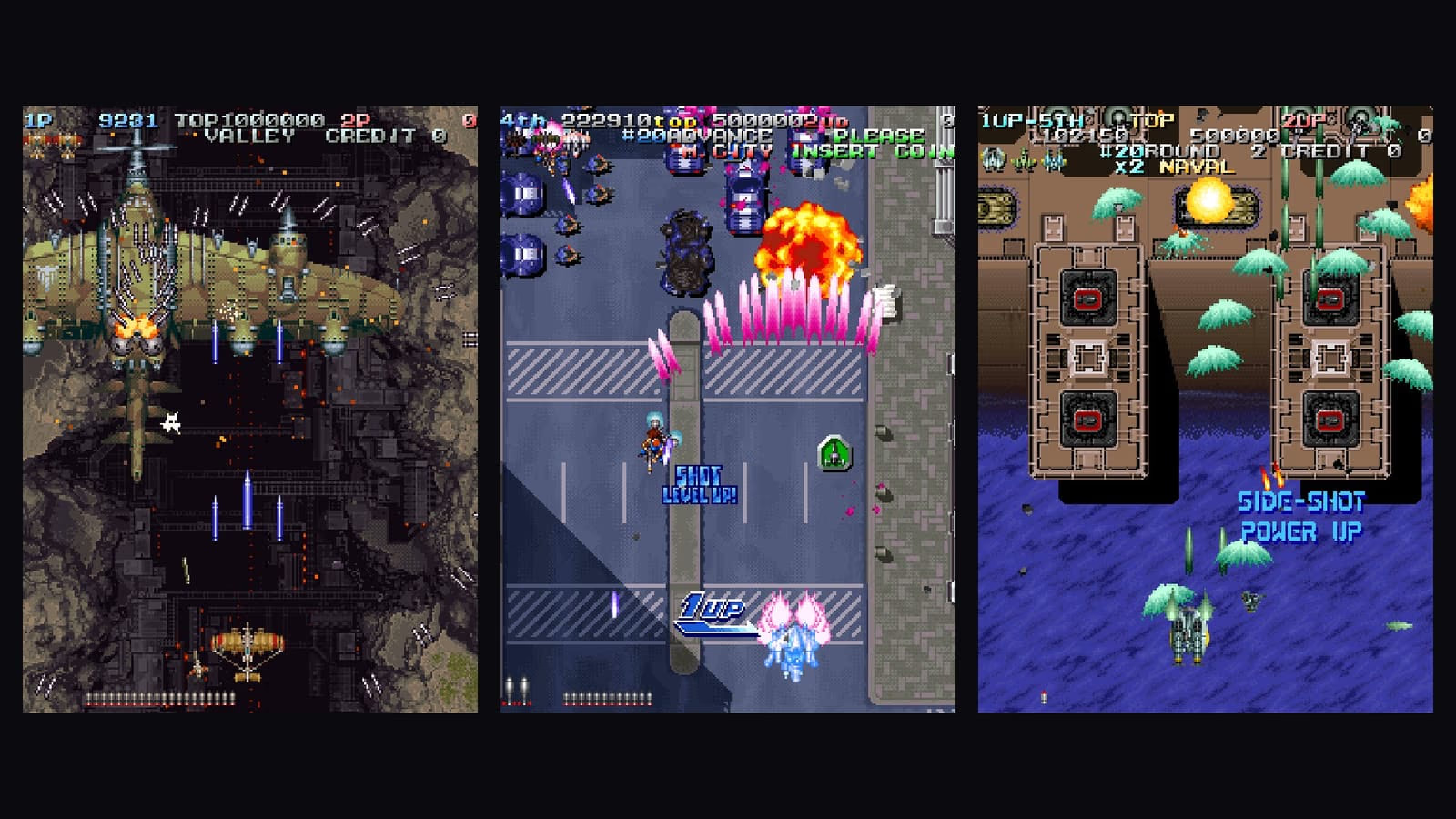
Arcade-RaizingMD Core Brings Battle Garegga and Batrider to MiSTer-devel
A rewritten open source core for Raizing's five Toaplan-based shooters, from Sorcer Striker to Battle Bakraid, was published to the MiSTer-devel organisation on 15 November. Its author says the old code was replaced and retuned against measurements from real boards.
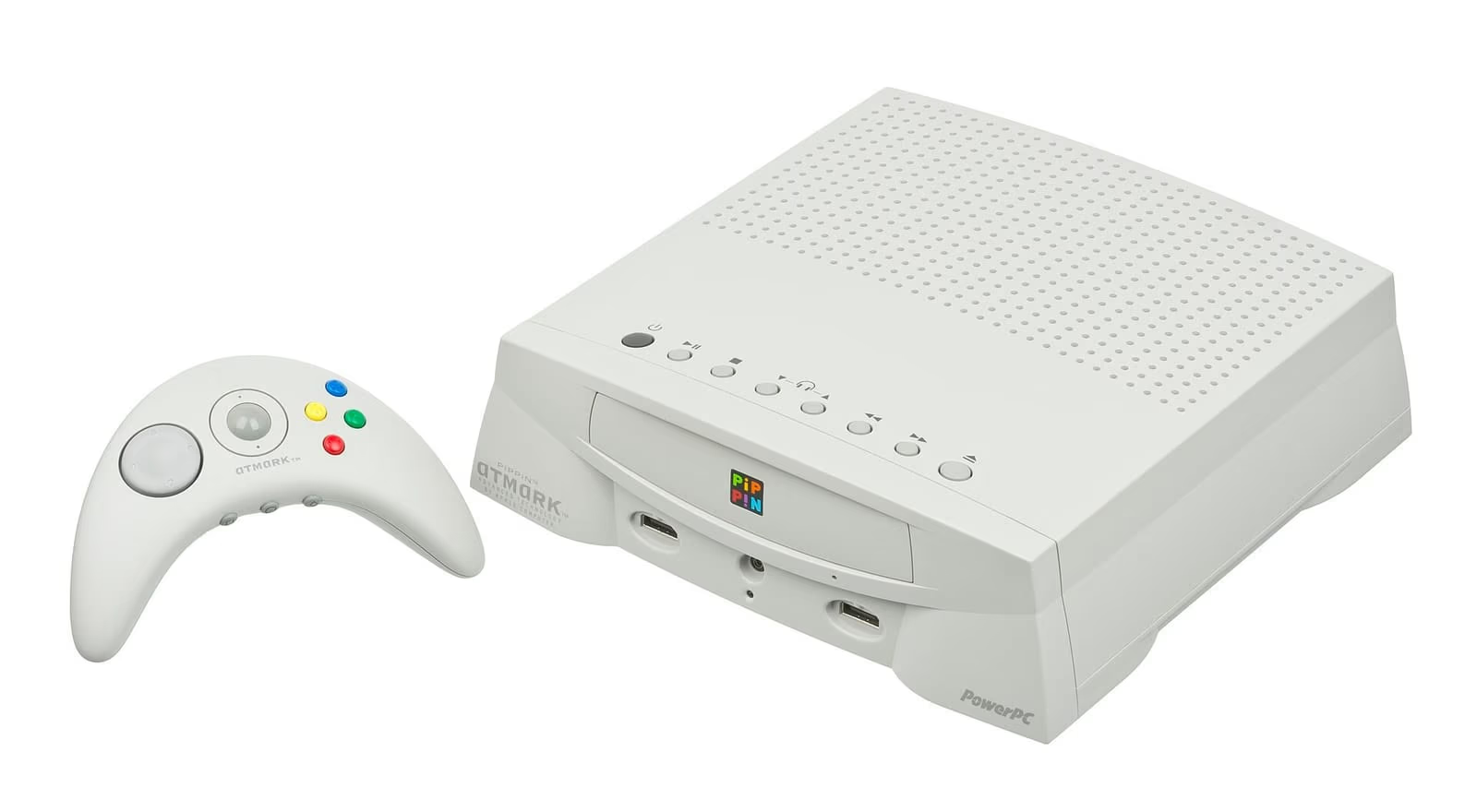
Bandai Pippin Gets a MiSTer Core
Dani Sarfati's BandaiPippin core, published to MiSTer-devel on 14 November, recreates Apple and Bandai's 1996 console down to its PowerPC 603. It boots the Pippin ROMs and four discs to their menus; playing titles through is not yet tested.
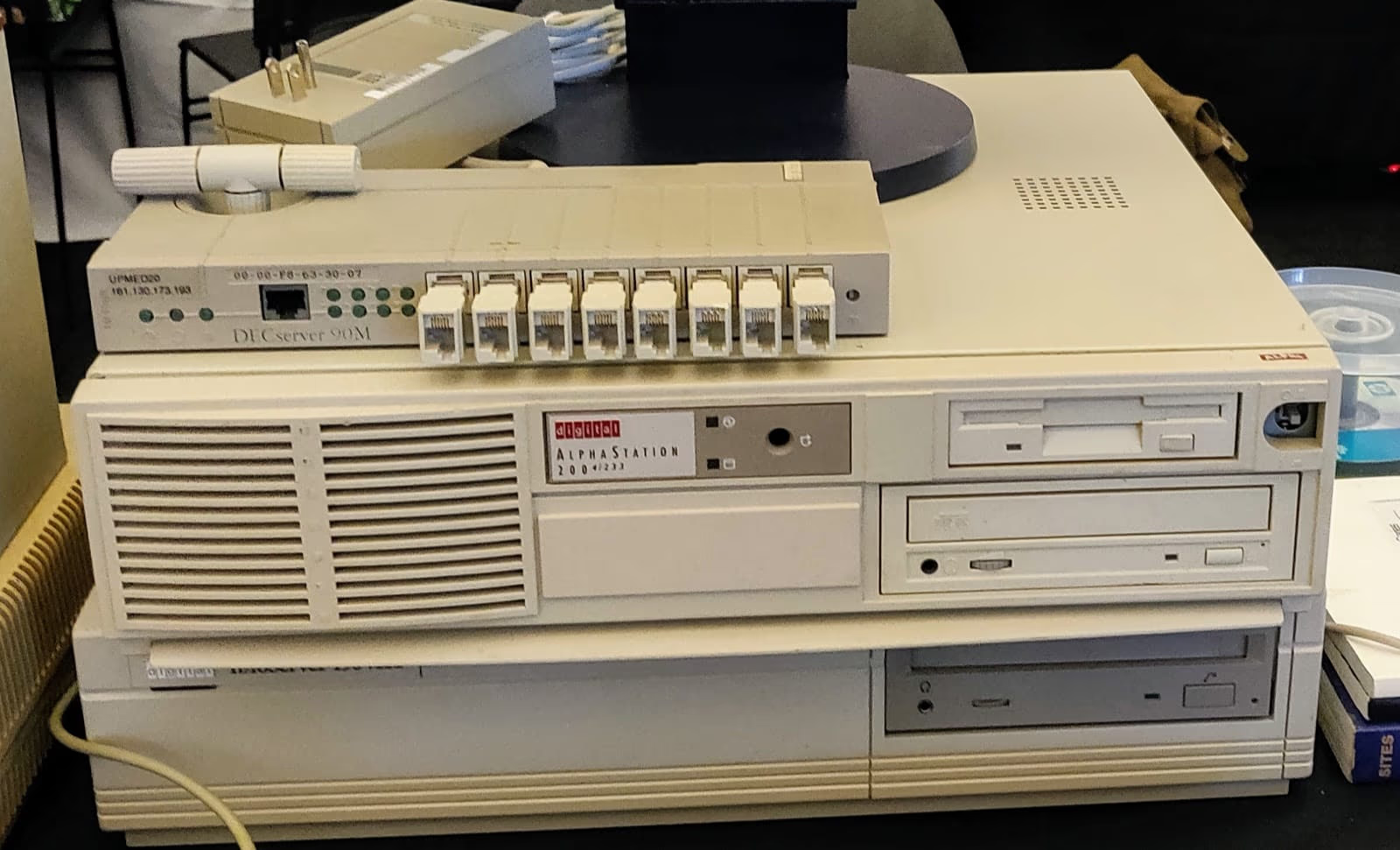
MiSTer Gets a DEC AlphaStation 200 Core That Runs OpenVMS, Tru64 and Windows NT
Dani Sarfati's DECAlphaStation200 core puts DEC's 1995 Alpha workstation on the MiSTer with its own SRM and ARC firmware, and boots OpenVMS, Tru64 UNIX, NetBSD, FreeBSD, Windows NT 4.0 and a Windows 2000 release candidate.