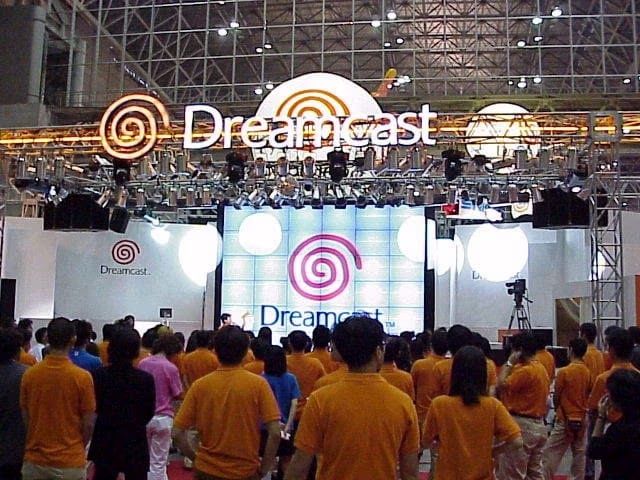
Image: Colin Williamson / Video Game History Foundation
Video Game History Foundation Opens a Photo Archive of Japanese Game Culture From 1999 to 2005
The Video Game History Foundation has added hundreds of photographs of Japanese game culture from the turn of the millennium to its free Digital Archive. The Colin Williamson photography collection, announced on 21 October by library director Phil Salvador, covers trade shows, launch events, arcades and game shops in Japan from 1999 to 2005, the years of the Dreamcast, the PlayStation 2 launch and the arrival of the Game Boy Advance.
What is in the collection
Williamson was a game journalist based in Japan from 1999 through the mid-2000s, writing for IGN, Official U.S. PlayStation Magazine and PC Gamer, among others. According to the foundation, he covered Tokyo Game Show and the JAMMA Show for arcade games, and interviewed Hideo Kojima and the composer Nobuo Uematsu. He took the photos on a digital camera, which the foundation's post points out was itself a new technology in 1999.
The foundation highlights several sets:
- - Tokyo Game Show, which Williamson attended in 1999 and 2000, when it still ran twice a year. His photos include promotional exhibits for Shenmue, Space Channel 5 and Gran Turismo 3: A-Spec.
- - Nintendo Space World 2000, where Nintendo showed products including the Game Boy Advance and Pokémon Crystal.
- - The Electroplankton launch event for Nintendo DS in 2005, where Shigeru Miyamoto and Satoru Iwata joined the game's designer, Toshio Iwai, for a retrospective of his career.
- - Everyday game culture: street kiosks, billboards and game stores in Tokyo's Akihabara district, arcades such as Sega's Kyoto Joypolis, the Sega Freaks merchandise store, and what Williamson described as "a Pokemon kids’ exhibit of questionable quality somewhere in Osaka."
The post also points to a photo of Space Channel 5 producer Tetsuya Mizuguchi playing celebrities in a score competition, and an arcade installation of Sega Touring Car Championship built around an entire full-sized car.

The collection is free to browse in the VGHF Digital Archive. Williamson has also given permission for researchers to reproduce the photos for educational purposes, such as a video or blog post about the period, with credit to Colin Williamson and the Video Game History Foundation. That permission is what allows the images on this page.
Why these photos matter
The foundation calls the photographs "an exciting document of the state of video games in Japan at the turn of the millennium", and singles out how much of everyday game culture Williamson photographed, beyond the show floors.
The events themselves explain part of the value. Tokyo Game Show began in 1996 and was held twice a year, in spring and autumn, until 2001; it has been annual since 2002. Nintendo Space World ran from 1989 to 2001 and was where Nintendo launched hardware including the Super Famicom, Nintendo 64, Game Boy Advance and GameCube. Space World 2000, held from 24 to 26 August, carried the dual announcement of the Game Boy Advance and the GameCube. After 2001 Nintendo stopped holding the show and moved to online publishing and industry-wide events such as E3.
Some of the games in the photos have their own histories. Space Channel 5, a 1999 Dreamcast rhythm game conceived by Mizuguchi, sold poorly at release despite generally positive reviews. Sega Touring Car Championship was a 1996 arcade racer from Sega's AM Annex on the Model 2 board. Electroplankton was released in Japan in 2005, and its launch exhibition ran at the Laforet Museum in Harajuku from 8 to 14 April; the Williamson photo of Miyamoto and Iwata is dated 8 April 2005 in the foundation's file name. Readers who want the long view of one of the showcased games can start with the Shenmue review.

How it fits the foundation's archive
The Video Game History Foundation is a non-profit founded by Frank Cifaldi and launched in February 2017. Its stated focus goes beyond games to source code, design documents, press kits, posters, video tapes and photographs, with particular attention to promotional ephemera. Cifaldi has said: "I think that the greatest discoveries we're going to find are on materials that people don't know are important." Early access to its digital library opened to the public in January 2025.
The Williamson collection follows other event collections the foundation has published this year. In July it launched collections on the history of E3, including more than 1,000 pages of ephemera donated by Carolyn Rauch, who oversaw the show for almost its entire run as senior vice president of the IDSA. In September it highlighted a gallery of more than 1,600 promotional photos from E3 2009 within that collection. The difference is the source: the E3 2009 photos were taken for promotional purposes, while Williamson's were taken by a journalist on the beat.
The new collection also follows the foundation's first step into Japanese-language material. On 24 September it announced that its digital archive had passed 5,000 magazines, nearly 600,000 pages spanning 1981 to 2026, and launched research access to Neo Geo Freak, a Japanese magazine that covered Neo Geo home and arcade games from 1995 to 2000, as a pilot for Japanese magazines.
Hearing it from the photographer
Williamson appeared on episode 166 of the foundation's podcast, the Video Game History Hour, published the same day. According to the episode notes, he talks about interviewing developers including Kojima, dealing with corporate PR handlers and forming friendships with developers, and the episode closes with an attempt to track down missing footage of the 2005 Electroplankton exhibition. A longer bonus episode on the collection is available to the foundation's paid Patreon members. The foundation wrote that the podcast recordings alone turned up details in the photos that neither the hosts nor Williamson had noticed before.
What is not known yet
The foundation says Williamson took hundreds of photos, but its announcement does not give an exact count, a full list of events, or whether Williamson's JAMMA Show coverage and interviews are represented in the photos as fully as the Tokyo Game Show and Space World sets. It also does not say whether more material from Williamson, such as notes or recordings, will follow. The foundation says it can't wait to see what else researchers will discover in the galleries.
Sources
- Video Game History Foundation: Explore 2000s Japanese game culture in the Colin Williamson photography collection
- Video Game History Foundation: Episode 166: Colin Williamson Photography Collection of Japanese Game Culture
- Video Game History Foundation: VGHF Digital Archive passes 5000 magazines. Here's what's next.
- Video Game History Foundation: Revisit E3 like you've never seen it before
- Video Game History Foundation: Library Highlight: Exploring E3 2009 through 1600 photos
- Wikipedia: Video Game History Foundation
- Wikipedia: Tokyo Game Show
- Wikipedia: Nintendo Space World
- Wikipedia: Electroplankton
- Wikipedia: Sega Touring Car Championship
- Wikipedia: Space Channel 5
More News
Namco's Ace Driver: Victory Lap Comes Home Through Arcade Archives, With Four Players on Newer Consoles
Hamster is releasing Namco's arcade sequel Ace Driver: Victory Lap on 22 October for Switch, PS4, Switch 2, PS5 and Xbox Series X|S, at $14.99 or $16.99, five months after the original Ace Driver.
MiSTer Gets a Cray X-MP Core That Boots the Supercomputer's Own Operating System
A new MiSTer core recreates a one-processor Cray X-MP and boots COS 1.17, the only Cray operating system known to survive for the machine. It reached MiSTer's official distribution on 20 October, and a companion project runs Cray Blitz, the 1983 and 1986 world computer chess champion, on it.
Retroid Publishes a Linux 7.3 Kernel for the Pocket 6, Pocket Nova and Pocket Duo
Retroid has put a Linux 7.3 kernel for three of its Android handhelds on GitHub, with display, controls, Wi-Fi, GPU and audio support. It is a patched kernel for developers to build on, not an operating system owners can install.