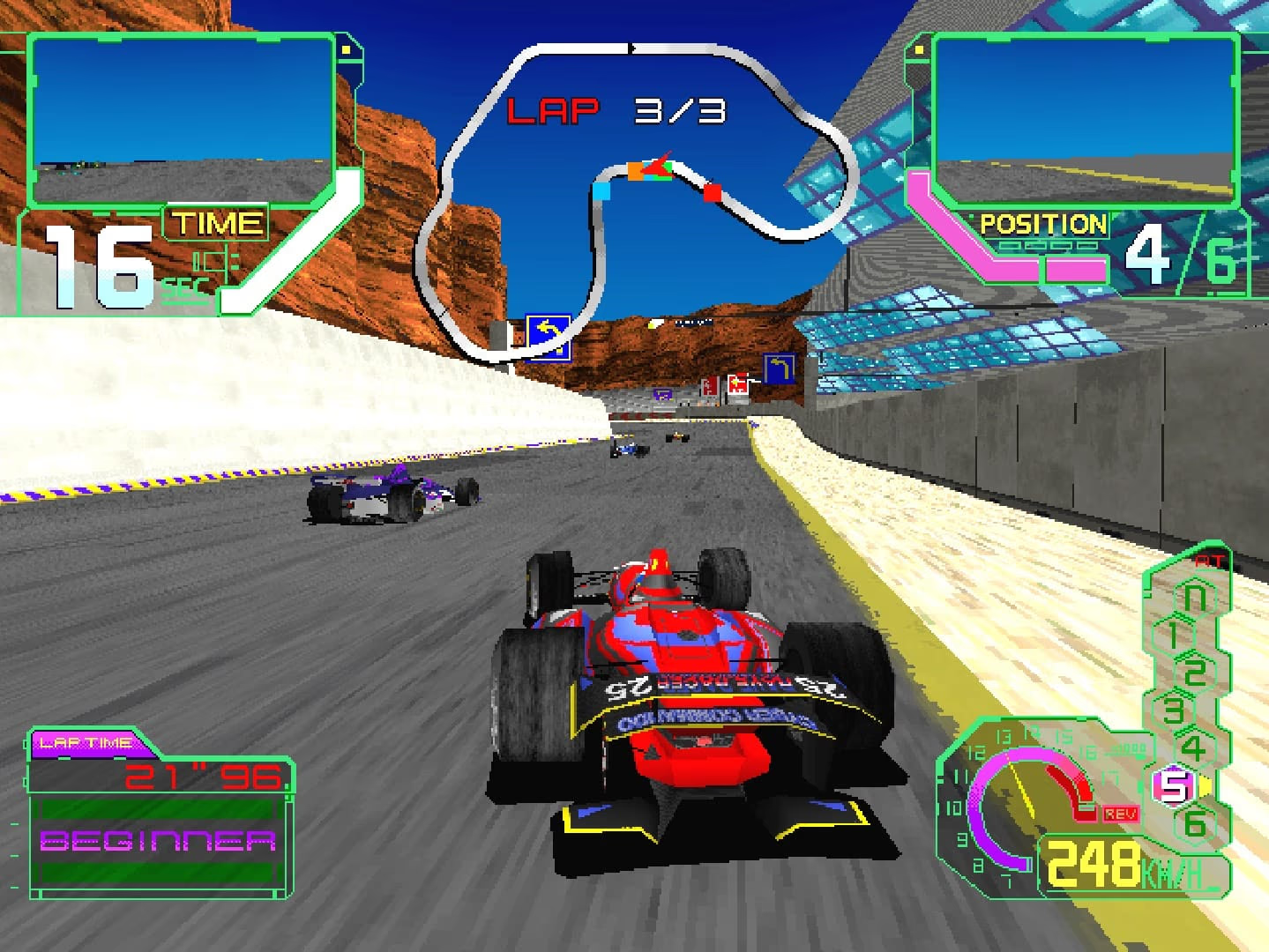
Image: HAMSTER Corporation press screenshot. ACE DRIVER VICTORY LAP © Bandai Namco Entertainment Inc.
Namco's Ace Driver: Victory Lap Comes Home Through Arcade Archives, With Four Players on Newer Consoles
Namco's 1990s arcade racer Ace Driver: Victory Lap is coming to modern consoles. Hamster Corporation announced on 21 October that the game joins its Arcade Archives and Arcade Archives 2 lines on 22 October, as a digital release for Nintendo Switch, PlayStation 4, Nintendo Switch 2, PlayStation 5 and Xbox Series X|S. It follows the original Ace Driver, which Hamster released in the same two series in May.
What Hamster is releasing
There are two versions, split by console generation. Arcade Archives Ace Driver Victory Lap is for Switch and PlayStation 4 and costs $14.99. Arcade Archives 2 Ace Driver Victory Lap is for Switch 2, PlayStation 5 and Xbox Series X|S and costs $16.99. Hamster lists the first as one player and the second as one to four players, rates both ESRB Everyone, and files them under racing. Its release carries the usual note that the titles available at each online store vary by country or region.
Hamster's own description is short. It says the game was released by Namco Limited, now Bandai Namco Entertainment, in 1996, and that "The hit arcade racer ACE DRIVER returns", with brand-new tracks, "fully redesigned machines" and "enhanced gameplay".

That 1996 date does not match other records. The Wikipedia article on the series, citing the US Copyright Office and Masumi Akagi's arcade game list, says Victory Lap was released in 1995, in Japan on 29 September and in North America in December. The title screen in Hamster's own screenshots reads "© 1994, 1995 NAMCO LTD." The difference may come down to when the game reached particular markets, but Hamster's release does not explain it.
What Arcade Archives 2 adds
Hamster introduced Arcade Archives 2 in June 2025 with Ridge Racer, another Namco racer, and described it then as a line with "a completely redesigned user interface". It keeps the original series' Original Mode, High Score Mode and Caravan Mode and adds Time Attack Mode and Network Mode, although Hamster warned that those two "may not be implemented in some games". Arcade Archives 2 also brings multiple save slots instead of one, a rewind feature, a quick start option and variable refresh rate support, which Hamster said enables "more accurate reproduction of the original arcade game's experience".
The player count is the clearest difference for this game. Ridge Racer was single player on both versions. Victory Lap, like the original Ace Driver, Rave Racer and Cyber Cycles before it, is listed as one player on the older consoles and one to four on the newer ones. Hamster's release does not say whether those four players race on one console, over a network, or both.

The original Ace Driver and its sequel
Ace Driver first appeared in Japan as a limited release on 6 August 1994, followed by a nationwide release that November. Players drove a Formula One car over three laps, with the car decided by the seat taken at the cabinet. Like Namco's earlier Final Lap games, cabinets could be linked, and two linked machines allowed eight people to race at once. Namco made a basic sit-down SD cabinet and a DX version whose seats rotated with the action on screen.
The game was designed by Tatsuro Okamoto, known for Metro-Cross (1985), with help from Shinichiro Okamoto, the designer of Pole Position. Its cabinet, designed by the mechanical engineer Junichiro Koyama, was heavier than Namco's other cabinets, which made shipping it difficult. It won the "Best Coin-Operated Game" award at the 76th IAAPA trade show in November 1994. Edge magazine wrote that it easily outperformed Sega's Daytona USA, a comparison readers can weigh against the site's Daytona USA review.
Victory Lap was the sequel, adding tracks and vehicles and a new Championship mode. A third game, Ace Driver 3: Final Turn, was shown at the AOU trade show in 2008 and released later that year. Hamster's release does not mention it.
The hardware behind it
The first Ace Driver ran on Namco's System 22 board, the same hardware as the original Ridge Racer. According to Wikipedia's list of Namco arcade boards, System 22 used a Motorola 68020 processor at 24.576 MHz and Namco's own TR3 graphics chip, supported texture mapping and Gouraud shading, and could process 240,000 polygons per second.
Victory Lap moved to Super System 22, a variant with largely similar hardware, a slightly higher polygon rate and extra effects. Hamster's own release for Air Combat 22 describes that board, which it calls "System Super 22", as "an upgrade of the 'System 22' architecture used for a wide range of legendary 3D games".
Hamster has now released a run of Namco's 3D racers from those boards. Ridge Racer arrived in June 2025, Rave Racer (1995) in February 2026, Ace Driver (1994) in May and Cyber Cycles (1995) in August. All five, Victory Lap included, carry the same prices: $14.99 for Arcade Archives and $16.99 for Arcade Archives 2.
Earlier attempts at a home version
The series came close to a console release once before. A PlayStation port of the original Ace Driver was announced in August 1995 but never released, and the first game's next appearance on home hardware was Hamster's release in May 2026. None of the sources cited here records an earlier home version of Victory Lap, and Hamster's announcement does not say whether this is the first.
What is not known yet
Hamster's announcement leaves a few questions open. It does not say whether Network Mode or Time Attack Mode is in the Arcade Archives 2 version, or how its four-player mode works. It does not say whether the original's eight-player linked play is reproduced in any form. It does not explain the 1996 date, or confirm which regional version or versions of the game are included. It lists no PC release, and its regional note means availability on each store may differ.
Sources
- HAMSTER Corporation: "Arcade Archives ACE DRIVER VICTORY LAP" and "Arcade Archives 2 ACE DRIVER VICTORY LAP" now available!
- HAMSTER Corporation: "Arcade Archives ACE DRIVER" and "Arcade Archives 2 ACE DRIVER" now available!
- HAMSTER Corporation: "Arcade Archives" Series Announces First Simultaneous Five-Platform Release with "Arcade Archives RIDGE RACER"
- HAMSTER Corporation: "Arcade Archives AIR COMBAT 22" and "Arcade Archives 2 AIR COMBAT 22" now available!
- HAMSTER Corporation: "Arcade Archives Rave Racer" and "Arcade Archives 2 Rave Racer" now available!
- HAMSTER Corporation: "Arcade Archives CYBER CYCLES" and "Arcade Archives 2 CYBER CYCLES" now available!
- Wikipedia: Ace Driver
- Wikipedia: List of Namco arcade system boards
More News

Video Game History Foundation Opens a Photo Archive of Japanese Game Culture From 1999 to 2005
The Colin Williamson photography collection, now free in the VGHF Digital Archive, documents Tokyo Game Show, Nintendo Space World and the streets of Akihabara at the turn of the millennium.
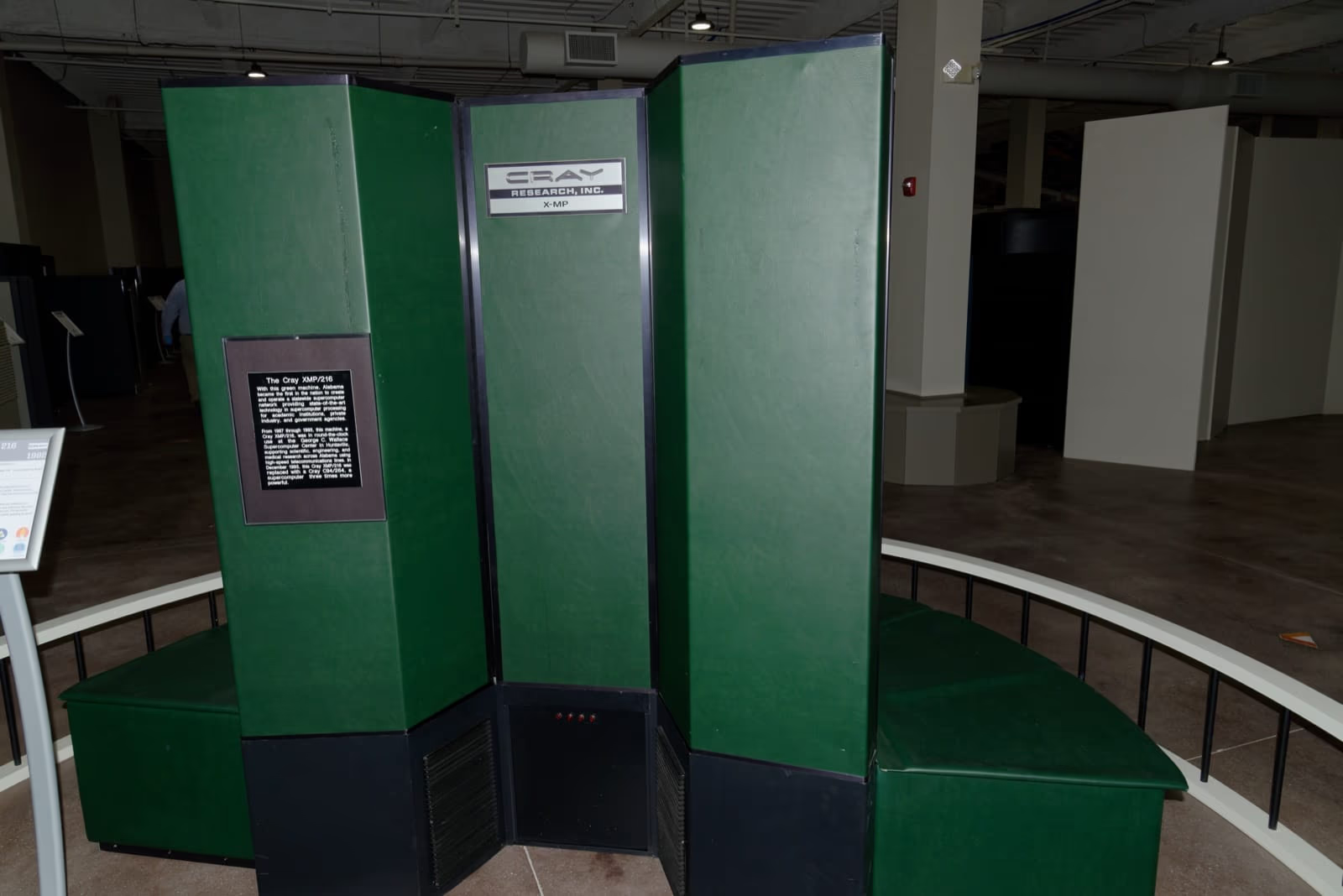
MiSTer Gets a Cray X-MP Core That Boots the Supercomputer's Own Operating System
A new MiSTer core recreates a one-processor Cray X-MP and boots COS 1.17, the only Cray operating system known to survive for the machine. It reached MiSTer's official distribution on 20 October, and a companion project runs Cray Blitz, the 1983 and 1986 world computer chess champion, on it.
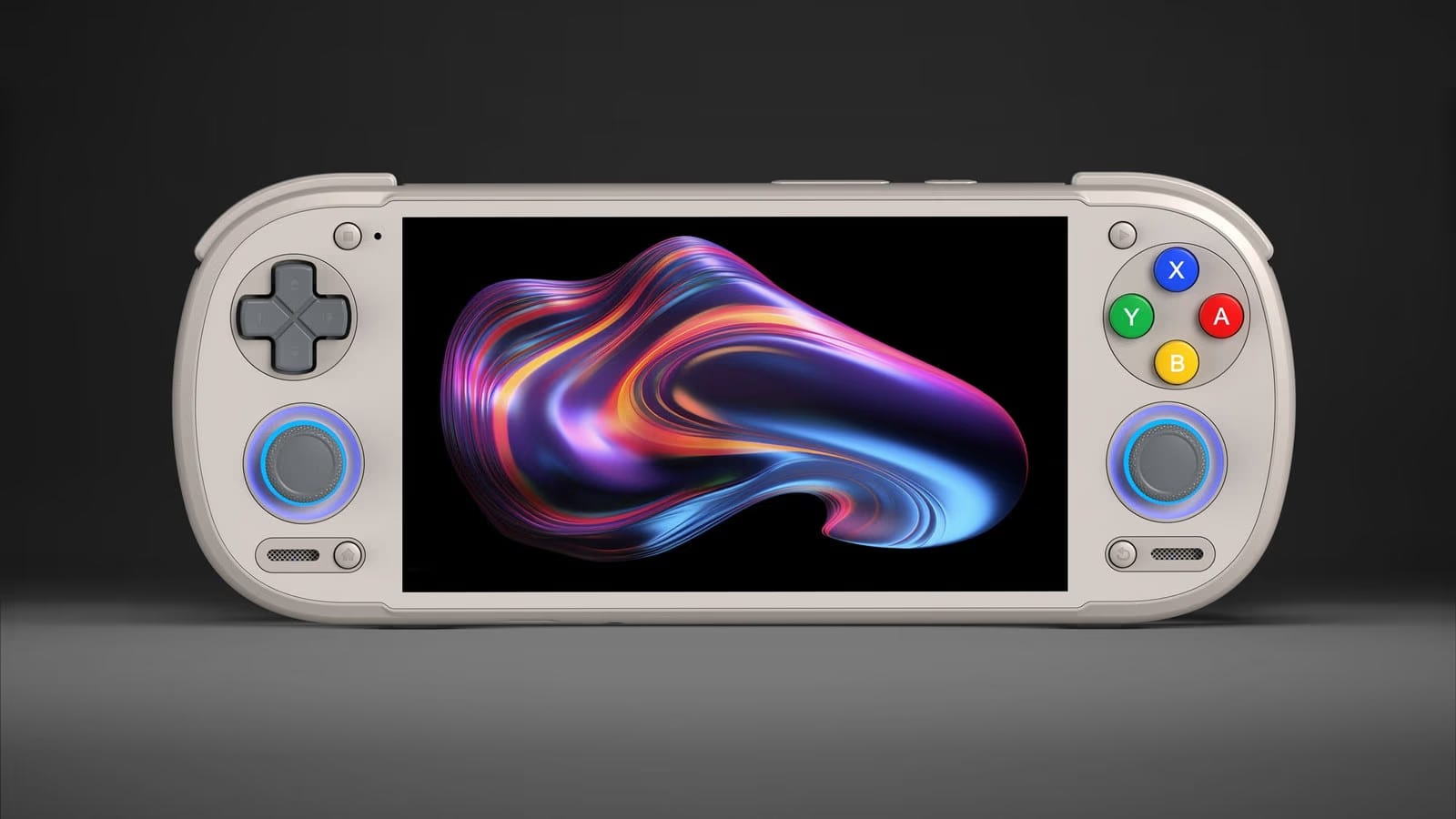
Retroid Publishes a Linux 7.3 Kernel for the Pocket 6, Pocket Nova and Pocket Duo
Retroid has put a Linux 7.3 kernel for three of its Android handhelds on GitHub, with display, controls, Wi-Fi, GPU and audio support. It is a patched kernel for developers to build on, not an operating system owners can install.