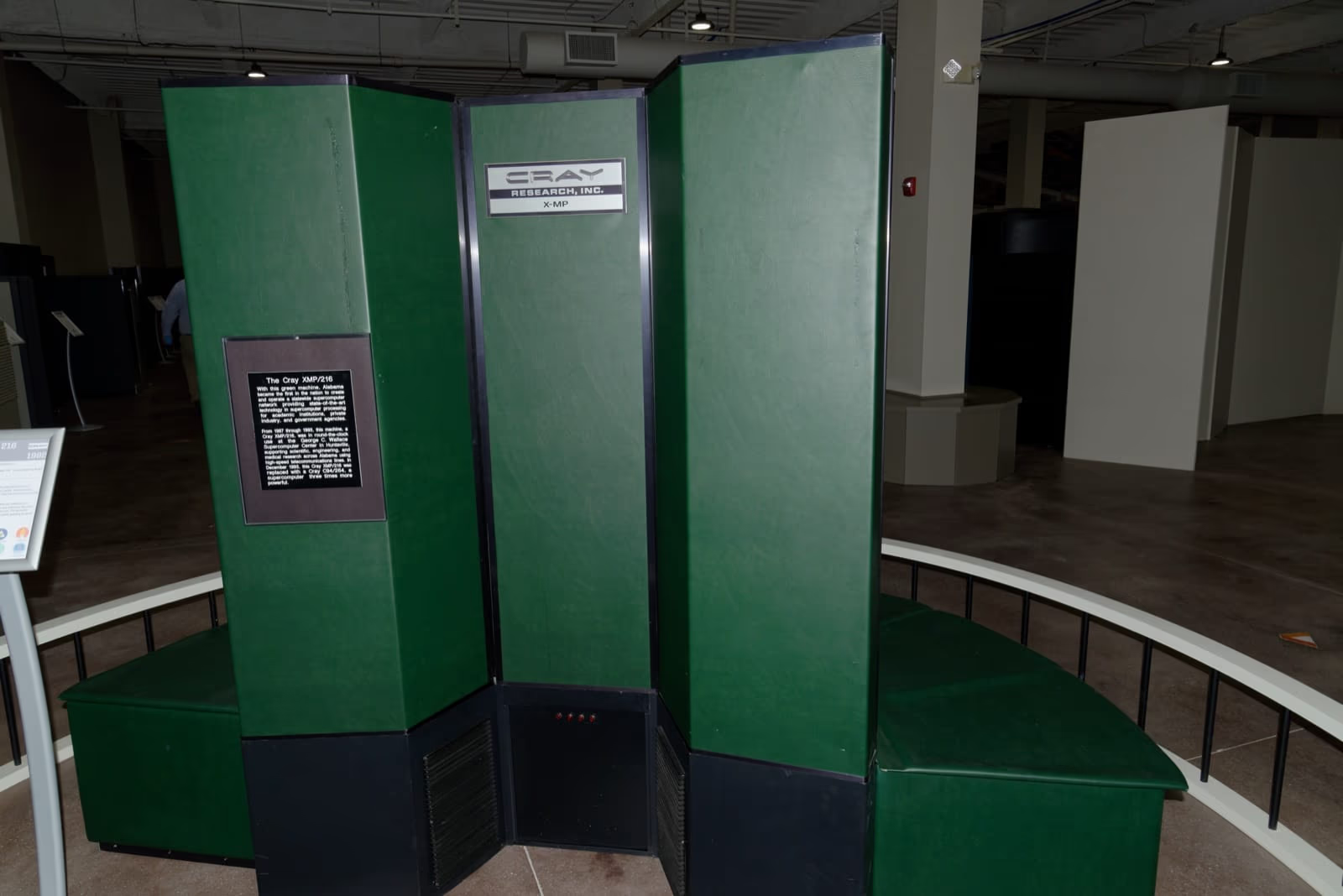
Image: Cray X-MP/216 at the Computer Museum of America, photo by Bubba73 (CC BY-SA 3.0, Wikimedia Commons)
MiSTer Gets a Cray X-MP Core That Boots the Supercomputer's Own Operating System
MiSTer can now run a Cray supercomputer. A core recreating a one-processor Cray X-MP, the machine that held the title of world's fastest computer from 1983 to 1985, was added to MiSTer's official distribution on 20 October. It boots COS 1.17, the Cray Operating System, from an image of a real disk pack, and a companion project by the same developer builds two games for it: Super Star Trek and Cray Blitz, the chess program that won the World Computer Chess Championship on X-MP hardware in 1983 and 1986.
What was released
The core is the work of Jacob Jewell, whose name is on its commits, and lives in the MiSTer-devel organisation on GitHub as `Cray-XMP_MiSTer`. The distribution commit that brought it in adds two files: the core itself, `Cray-XMP_20261010.rbf`, filed under `_Computer`, and `Cray-XMP_COS-1.17.zip`, the operating system and its disk images, under `games/Cray-XMP`. The README opens with a plain statement: "This was developed using AI."
The requirements are modest for a machine that cost about $15 million in its four-processor form in 1984. The core needs a MiSTer with a keyboard, no SDRAM module, and 700 MB free on the SD card.
Starting it is a reenactment of an operator's shift. The core boots to a message asking for a boot file, and four files have to be chosen from the menu in order: an expander disk, the disk drives, a printer file, and finally `cos117.ios`, which starts the machine. The operator's console then asks for a date, and the year has to fall between 80 and 99. After `START COS_117 DEADSTART` and a short sequence of station commands, the system reports `STARTUP COMPLETE` and accepts work.
There are three screens. F1 is the operator's console, F2 the station where users log on, and F3 the printer, whose output also lands in a text file on the SD card. The consoles mimic an Ampex Dialogue 80 terminal, and F4 to F11 act as that terminal's own keys. Menu options choose white, green, amber or cyan text, an 8x8 font on 15 kHz lines for CRTs or a sharper 8x16 font on 31 kHz lines for HDMI and VGA, and "Device times", which can make the disk drives, tape, printer and consoles run at the speed of the real ones. With "Real" selected a disk seek takes 15 ms and up to 80 ms across all cylinders, the consoles run at 9,600 baud, and the boot tape's 152 records take 12 seconds.
The README walks through submitting batch jobs that compile and run a small FORTRAN program (`SUBMIT,JFTN`), an assembly language program (`SUBMIT,JCAL`) and a few lines of LISP (`SUBMIT,JLISP`), and through writing programs interactively in COS's text editor, TEDI.
Chess and Star Trek on a supercomputer
The games are not in the distribution. They live in a separate repository, `Cray-COS-Games`, which also says it was developed using AI, and putting them on the core takes a computer with Docker, Python 3 and git to build them and copy them onto the core's expander disk image.
Super Star Trek is the University of Texas game by David Matuszek and Paul Reynolds, in its Prime FORTRAN version of 1983. Cray Blitz is the bigger draw. Written by Robert Hyatt, Albert Gower and Harry Nelson, it won two consecutive World Computer Chess Championships, in New York City in 1983 and in Cologne in 1986, and its successor, Crafty, is still in development. The version on the core is 49h of 1991, as Hyatt released it, with its original assembly language search routines.
On a DE10-Nano it examines about 5,000 positions a second, according to the project's notes. It has a blitz mode at five seconds a move and a tournament mode at 40 moves in two hours, and in both it thinks on the player's time. One limit is stated plainly: it searches on one processor, because the released source has the multiprocessing search switched off. Its opening book is rebuilt from the authors' own collection of 2,458 games.

Why an operating system was the hard part
Recreating Cray hardware has been tried before. Chris Fenton documented building what he called a "1/10-scale, binary-compatible, cycle-accurate Cray-1" on a Xilinx Spartan-3E 1600 board, running at about 33 MHz with about 4 kilowords of memory. The problem was software. "Without a real software stack (compilers, operating systems, etc.), the machine isn’t terribly useful," he wrote.
The software came from a disk. Fenton obtained a Cray Operating System backup disk through a former Cray employee and read it on the disk reading machine he had built for an earlier recovery project. It held what he described as "COS 1.17, the last version Cray released of the ill-fated operating system", and it had belonged to a single-processor X-MP. Andras Tantos recovered the operating system from the image and wrote a simulator that boots it, cray-sim, which now also covers the X-MP, YMP-el, J90 and SV1 families.
Tantos's own account shows what was still missing. The kernel alone was not enough: "I need a full OS. I need SW to run on it." He also described an FPGA version that he and Fenton had started as stuck in "an endless loop" of days-long simulation runs and fixes. The tools arrived later. kej715's COS-Tools supplies a cross-assembler for Cray Assembly Language, a FORTRAN 77 cross-compiler, a linking loader and a LISP F4 interpreter for programs that run under COS 1.17, and those are what the new core's disk carries.
The core's documentation describes COS 1.17 as "the only operating system that survives for these machines". The X-MP, announced in 1982 with Steve Chen as principal designer, initially ran COS; a Unix derivative, UNICOS, became its main operating system from 1986.
How close it is to the real machine
The core's CPU started as the X-MP branch of Fenton's cray-1x project, but it needed work. "The upstream CPU did not run programs correctly as found," the technical notes say, and they list the repairs. The core was checked against cray-sim, and its CPU is tested against a reference model that, together with a model of the I/O Subsystem, dead starts COS 1.17 and runs batch jobs. Zorislav-Shoyat's Cray-on-FPGA and CAL translator are credited as a second opinion on the CPU and the assembler, and the fonts and video timing come from MiSTer's VT52 terminal core.
The machine is a one-processor X-MP with four million words of memory and an I/O Subsystem of three I/O processors. Its CPU meets a 9.5 ns clock period, which is the original X-MP's 105 MHz cycle. Fitting it took nearly the whole DE10-Nano: 87 percent of the logic and 547 of 553 memory blocks. The notes record how sensitive that is: with the released placement seed, 13, the CPU's clock is met, seeds 1, 2 and 3 missed it by 0.4 to 0.6 ns, and one seed in twelve did not fit at all.
The documentation is specific about where it differs from real hardware. Central memory lives in the MiSTer's DDR3 and is slower and less steady than the X-MP's. The real machine had three memory ports, two for loads and one for stores; the core has one, so vector transfers run one after another. Interrupts take effect right after the instruction that raised them, where the X-MP let the instructions already queued issue first. Memory errors never occur, and the 100 Mbyte channels are absent. The consoles use the VT52 core's fonts rather than the Dialogue 80's own character cells. The I/O processors execute one instruction at a time rather than overlapping them.
For other MiSTer computer cores released this week, see the PCAT-286 story, and the FPGA explainer covers how MiSTer recreates hardware.
What is not known yet
The core has no versioned release or changelog: the distribution carries a single build dated 10 October, and the repository had no open issues when this story was written. The games project's build is not part of MiSTer's updater, so players who want Cray Blitz or Super Star Trek have to build and copy them by hand. The technical notes also record that one of the MiSTer framework's own HDMI timing constraints is missed by 0.04 ns in this build, and say some builds of the same sources meet it and others miss by about that much. The notes do not say whether the memory differences will change in later builds.
Sources
- MiSTer-devel on GitHub: Cray-XMP_MiSTer
- MiSTer-devel on GitHub: Cray-XMP_MiSTer: The machine (docs/MACHINE.md)
- MiSTer-devel on GitHub: Distribution_MiSTer commit d1cfb48 (adds Cray-XMP_20261010.rbf and Cray-XMP_COS-1.17.zip)
- jakesjews on GitHub: Cray COS Games: Super Star Trek and Cray Blitz for COS 1.17
- jakesjews on GitHub: Cray Blitz for COS
- Chris Fenton: Homebrew Cray-1A
- Chris Fenton: COS Recovery
- Andras Tantos, Modular Circuits: The Cray Files
- andrastantos on GitHub: cray-sim: Cray PVP Simulator
- kej715 on GitHub: COS-Tools: Tools for classic Cray supercomputers running the COS operating system
- Wikipedia: Cray X-MP
- Wikipedia: Cray Blitz
More News
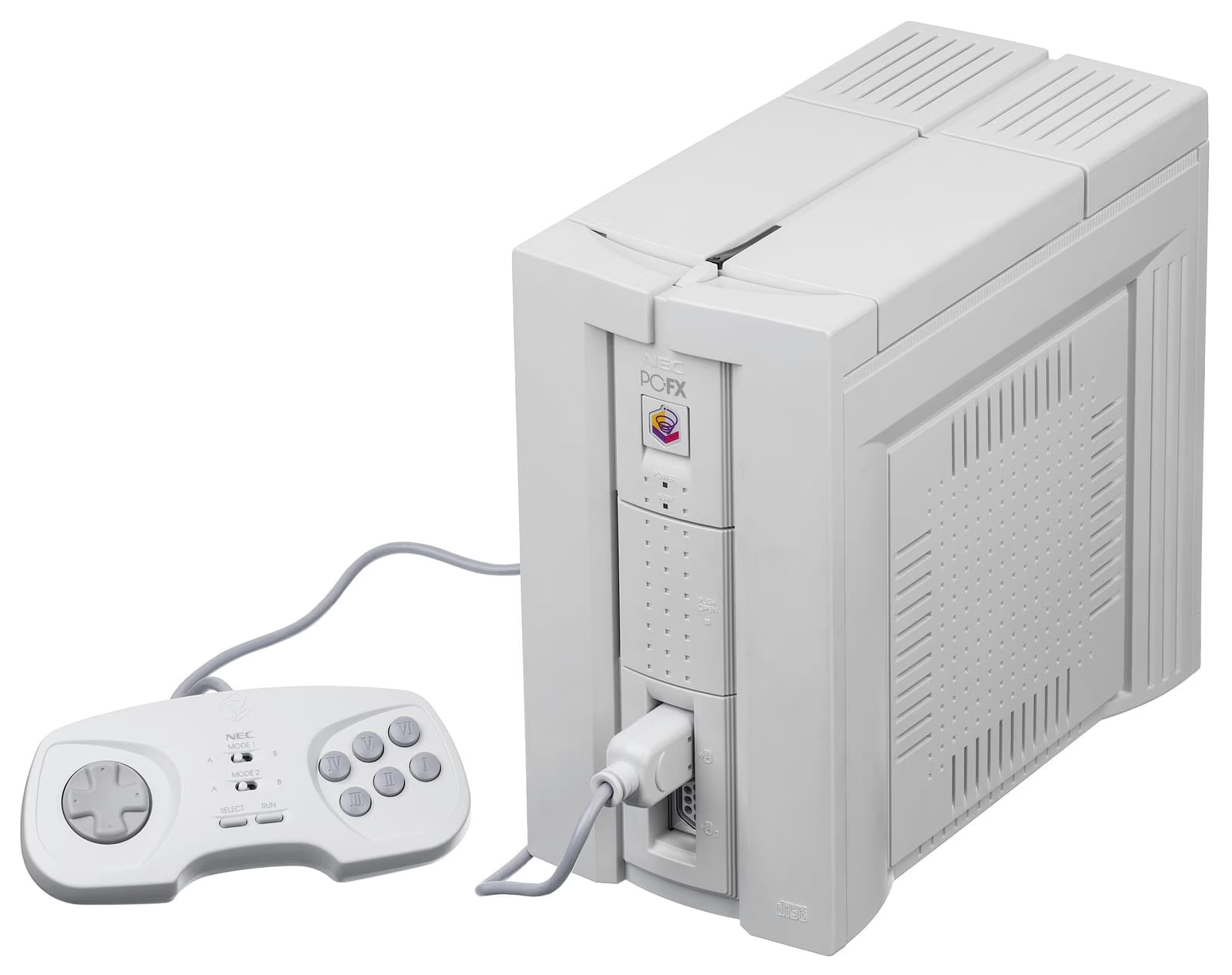
Kitrinx Releases a PC-FX Core for MiSTer That Aims to Run the Whole Library
Jamie Blanks (Kitrinx) published a NEC PC-FX core to the official MiSTer-devel organisation on 18 October, a day after the matching CD and memory card support was merged into the MiSTer main binary. It is the second PC-FX core in the project, alongside David Hunter's work in progress.
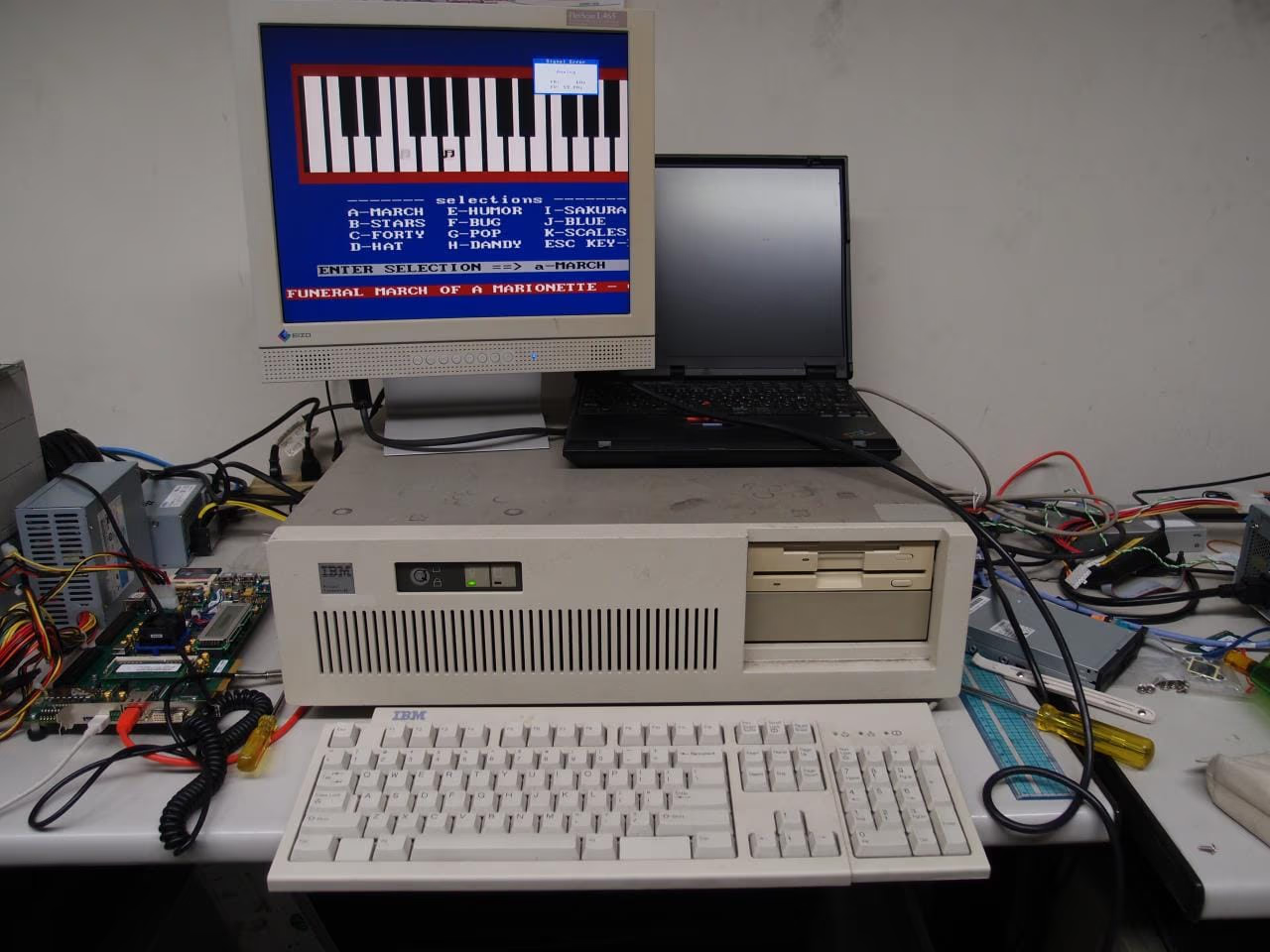
MiSTer Gets a 286 PC/AT Core, Built on a New 80286 CPU Written With AI Agents
PCAT-286, an IBM PC/AT-compatible core by spark2k06, was released on 18 October with EGA video, Sound Blaster audio and eight CPU speeds from 6 to 25 MHz. It fills the gap between MiSTer's PC/XT and 486 cores, and its CPU was written with AI coding agents and checked against captures from real 286 chips.
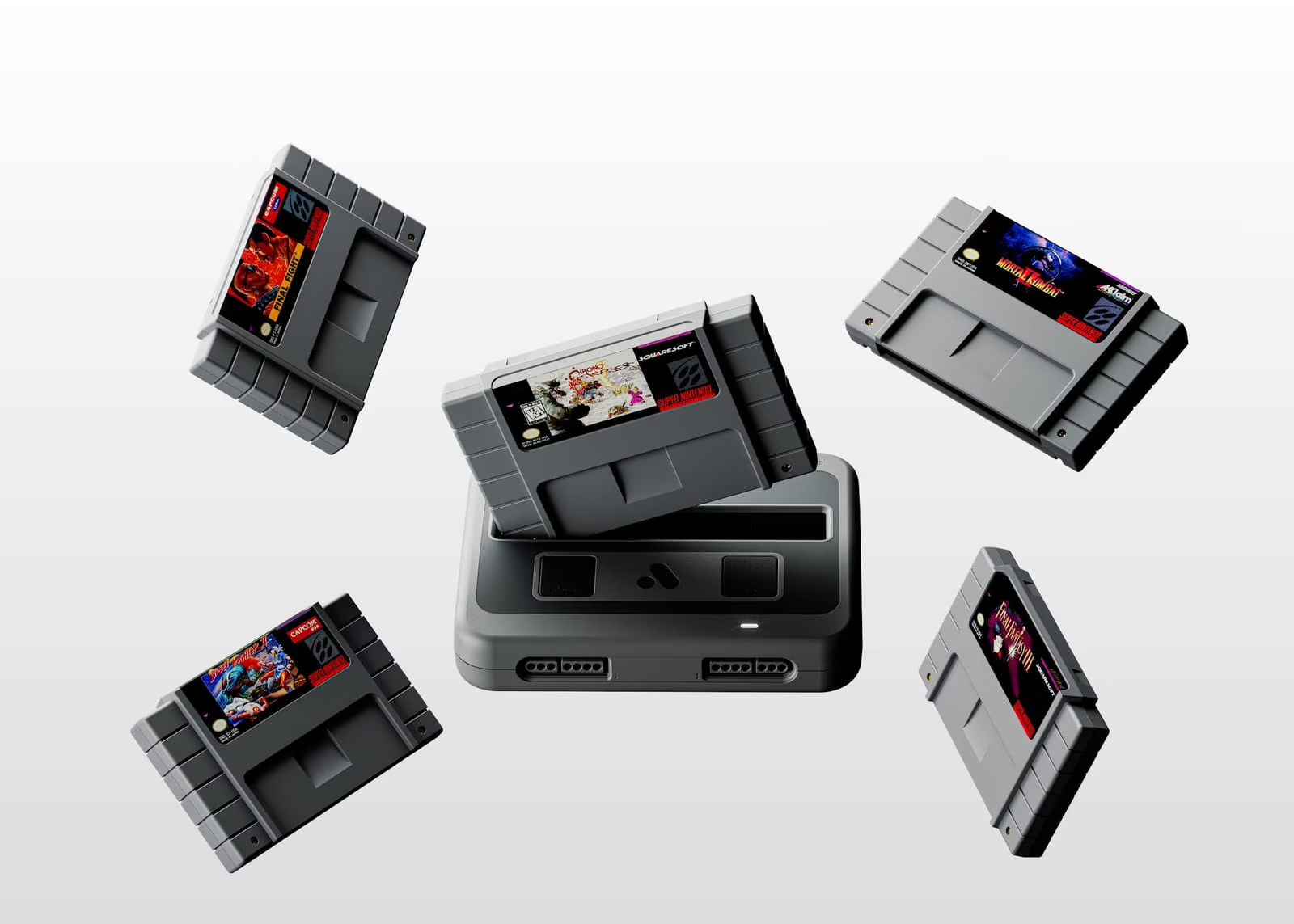
Analogue Announces Super Nt+ and Mega Sg+, With Wireless Controllers and USB-C, for $219.99
Analogue's FPGA Super Nintendo and Mega Drive consoles return as the Super Nt+ and Mega Sg+, adding Bluetooth and 2.4 GHz controllers, USB-C power and hot-swappable cartridges. Preorders open on 19 October at 8am PDT, and both ship in December.