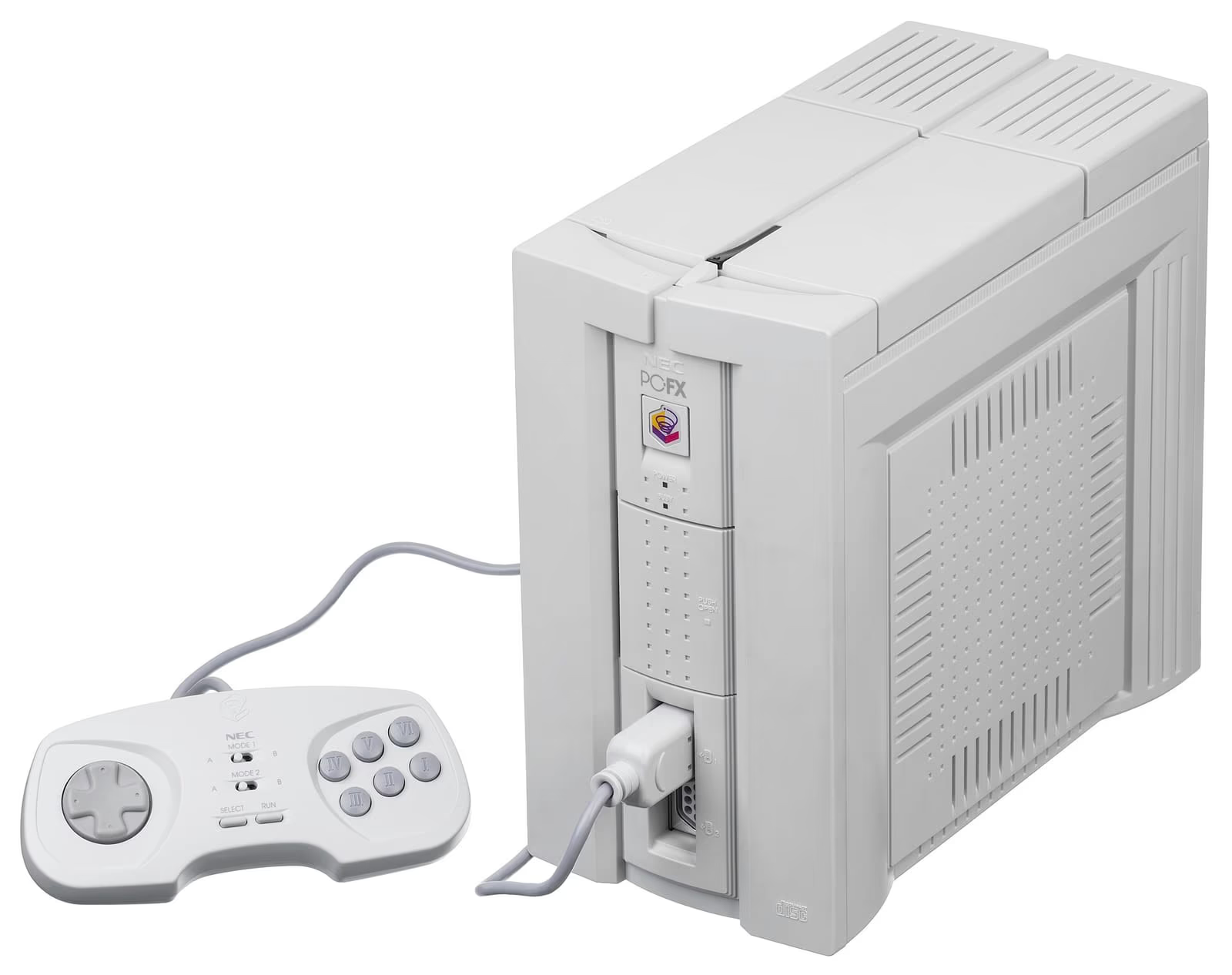
Image: NEC PC-FX with controller, photo by Evan-Amos (public domain, Wikimedia Commons)
Kitrinx Releases a PC-FX Core for MiSTer That Aims to Run the Whole Library
The NEC PC-FX has a new MiSTer core from Jamie Blanks, the developer known on GitHub as Kitrinx, and its author says it runs the console's entire library. The core was published to the official MiSTer-devel organisation on 18 October 2026 under the commit message "first release", a day after the support code it needs was merged into Main_MiSTer, the program that runs the MiSTer's menus and loads games. It is the second PC-FX core in the project: David Hunter has had one in development under MiSTer-devel since December 2025.
What the core does
Setup is short. The README asks for version 1.00 of the PC-FX BIOS, renamed `boot.rom` and placed in a `PCFX` games folder. Discs load as CUE, CHD or ISO images. The console's FX-BMP backup memory card is emulated: the menu can create a new card file, mount it or eject it, and the README suggests one card is likely all anyone will need. There are four save state slots, which can be written to the SD card.
The options menu goes further than the original hardware did. A `CD Speed` setting offers `Original`, `Fast (4x)` and `Faster (8x)`. Port 1 takes a pad, the PC-FX mouse or a multitap; port 2 takes a pad or a mouse. Each pad's two mode switches can be set to A or B, matching the A/B switches on the original controller. Video options cover aspect ratio, integer scaling, scandoubler effects from HQ2x to a 75 percent CRT filter, overscan cropping of 8 or 16 lines, a 216p vertical crop for 5x scaling, and a colour saturation control. Two audio options deal with the ADPCM sound hardware: an encoder compatibility switch, and a choice between `Hardware` and `Smoothed` for the clicks the chip makes when it resets. There is also a stereo mix control.
The groundwork went in first. Pull request #1365 to Main_MiSTer, merged on 17 October, adds what Blanks called "Pretty standard CD and memory card support code for PCFX core". That puts the core's disc and memory card handling in the official main program; Hunter's core, by contrast, has needed a forked one. The repository's history is brief: a first commit on 13 October, "many fixes" on 15 October, and the release on 18 October with a build dated 16 October. The code is licensed under the GPL version 2.

Why the PC-FX is hard
The PC-FX was the successor to the PC Engine, co-developed by NEC and Hudson Soft, and released only in Japan on 23 December 1994 at ¥49,800. It is built around NEC's 32-bit V810 processor, the same CPU Nintendo used in the Virtual Boy. Unusually for its generation, it had no polygon graphics processor. NEC's argument was that the polygon hardware of the day made figures look blocky and that pre-rendered graphics were better. Instead, the console's video chips can decompress 30 JPEG pictures a second while playing digital audio, which is in effect Motion JPEG, and NEC steered Hudson toward games built on anime footage.
That design is what makes the console hard to recreate. The core's source tree has separate modules for each Hudson chip, the HuC6230, HuC6261, HuC6270, HuC6271 and HuC6272, plus the V810 itself. The most difficult is the HuC6271, nicknamed RAINBOW, which decodes the video. Blanks writes that the RAINBOW chip is "the hardest to characterize" because it is poorly studied and hard to probe either with test programs or with hardware, given its unusual internal behaviour when decoding video.
On the rest, the README is confident but specific. The V810 "isn't super well understood", Blanks writes, but the CPU passes the existing tests and "is more accurate than other representations of it have been". The chips the PC-FX shares with the TurboGrafx-16, Blanks adds, "are already pretty accurate". The README's summary is that "the system to the best of my knowledge runs the full library accurately", with one stated caveat: DMA and writes to the KING video RAM "may be slightly too fast because the contention behavior is only partially understood".
Two PC-FX cores, at different stages
MiSTer-devel now hosts two PC-FX projects with almost the same name. The older, `PCFX_MiSTer` by David Hunter, was created on 29 December 2025 and its most recent release is dated 12 September 2026. Its README describes it as being in "Phase 1: Make it work". At that point it supported CUE+BIN and CHD images, internal and FX-BMP backup memory and two controllers, required Hunter's own fork of Main_MiSTer for CD support, and listed one game, Return to Zork, as playable, with the rest of the library marked unknown. Hunter is candid about the processor: "The CPU is definitely not cycle-accurate." Where documentation for the RAINBOW chip ran out, Hunter used the software emulator Mednafen as a reference. As of that September update, its to-do list still included background layers on the KING chip, the wavetable sound generator and CD audio playback.
Blanks's core, `PC-FX_MiSTer`, arrived with those pieces in place and with its main binary support already merged. The repositories do not say whether the two projects will be combined or continue side by side.
On PC, Mednafen has emulated the PC-FX for years. Its documentation lists emulation of both the motion decoder's RLE and JPEG-like modes, internal and external backup memory, the mouse and CD+G playback, and recommends BIOS version 1.00, the same version the new core asks for.
Who is behind it
Earlier this year Blanks released a Virtual Boy core with real stereoscopic 3D output, covered in Cart & Pixel's Virtual Boy core story, and that core also had to model a V810. Readers new to NEC's hardware can start with the Analogue Duo review, which covers the PC Engine and its CD games, and the FPGA explainer on how MiSTer cores work.
What is not known yet
As of 19 October, neither PC-FX core appears in the console folder of the MiSTer distribution, so neither is installed by the standard update scripts yet. The release has no changelog or compatibility list beyond the README's claim of full-library accuracy, and the README itself names the open questions: how the RAINBOW decoder really behaves, and the exact memory contention timing. The PC-FX library is small, 62 games released between December 1994 and April 1998, so wider testing should show quickly whether the claim holds.
Sources
- MiSTer-devel on GitHub: PC-FX_MiSTer: PCFX Core for MiSTer
- MiSTer-devel on GitHub: Adds PCFX system support (#1365)
- MiSTer-devel on GitHub: PCFX_MiSTer: NEC PC-FX core for MiSTer
- MiSTer-devel on GitHub: Distribution_MiSTer: _Console folder
- MiSTer-devel on GitHub: VirtualBoy_MiSTer: The Nintendo Virtual Boy portable 3D console
- GitHub: Kitrinx (Jamie Blanks)
- Wikipedia: PC-FX
- Wikipedia: Virtual Boy
- Mednafen: Mednafen PC-FX documentation
More News
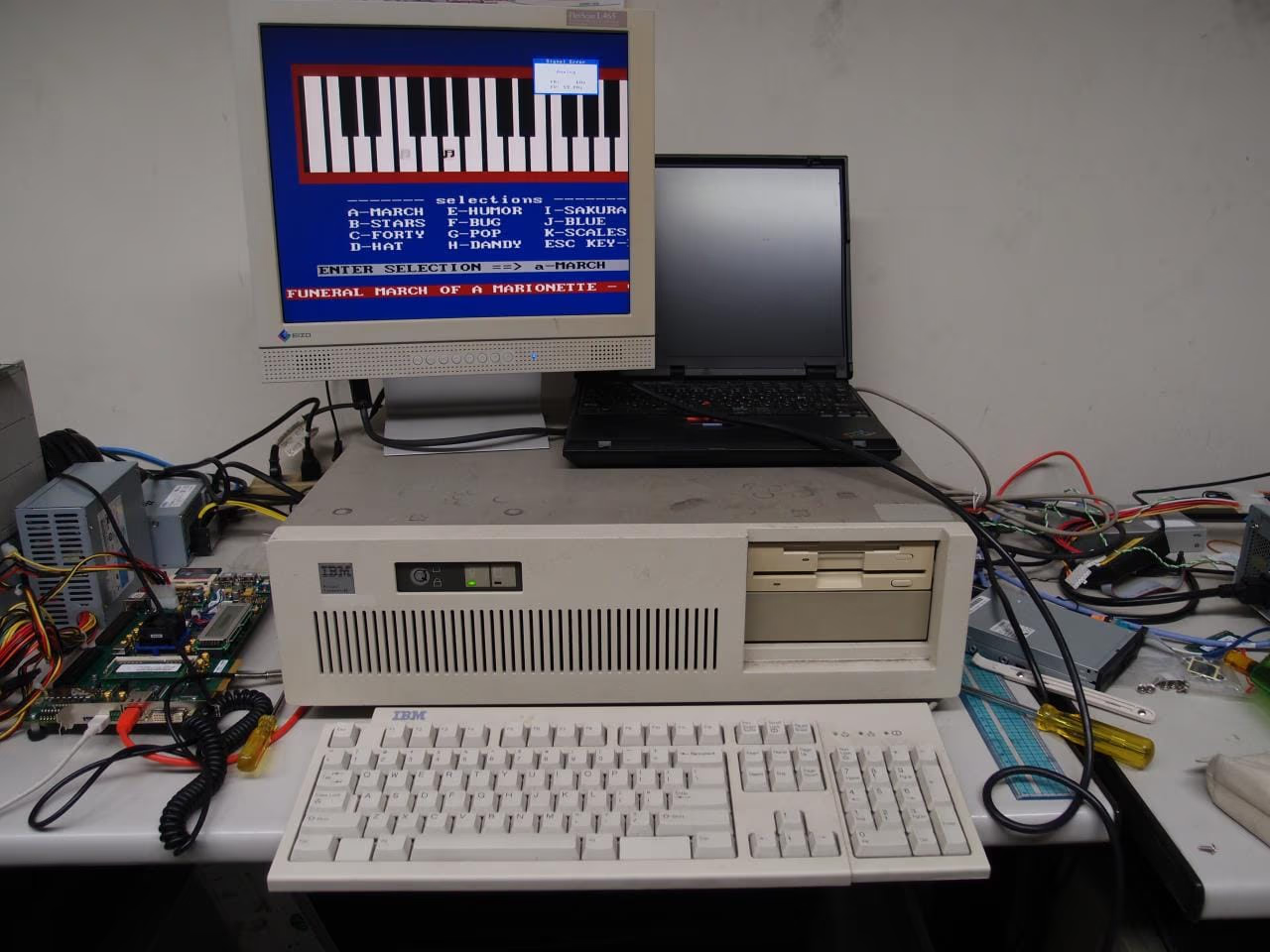
MiSTer Gets a 286 PC/AT Core, Built on a New 80286 CPU Written With AI Agents
PCAT-286, an IBM PC/AT-compatible core by spark2k06, was released on 18 October with EGA video, Sound Blaster audio and eight CPU speeds from 6 to 25 MHz. It fills the gap between MiSTer's PC/XT and 486 cores, and its CPU was written with AI coding agents and checked against captures from real 286 chips.
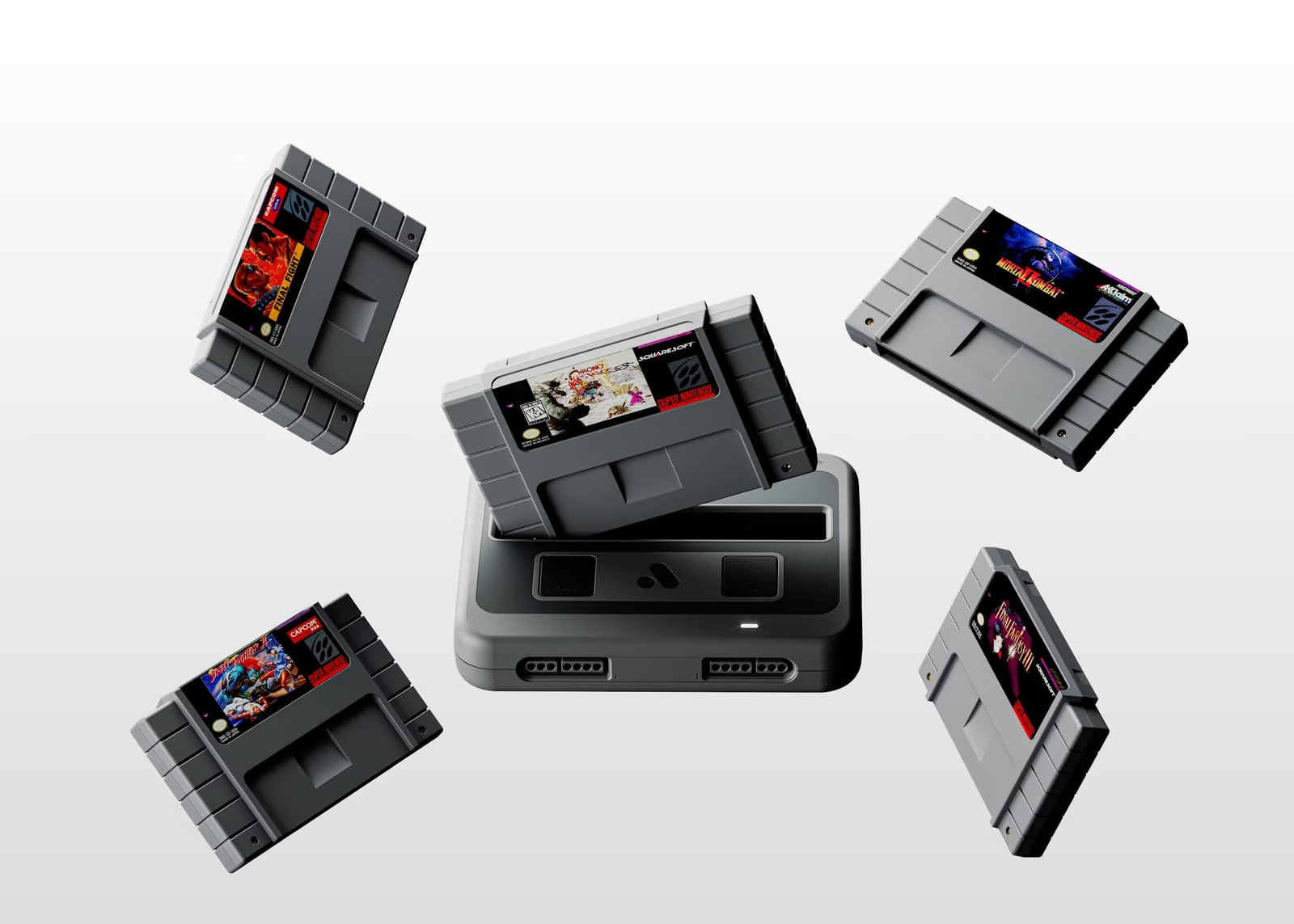
Analogue Announces Super Nt+ and Mega Sg+, With Wireless Controllers and USB-C, for $219.99
Analogue's FPGA Super Nintendo and Mega Drive consoles return as the Super Nt+ and Mega Sg+, adding Bluetooth and 2.4 GHz controllers, USB-C power and hot-swappable cartridges. Preorders open on 19 October at 8am PDT, and both ship in December.
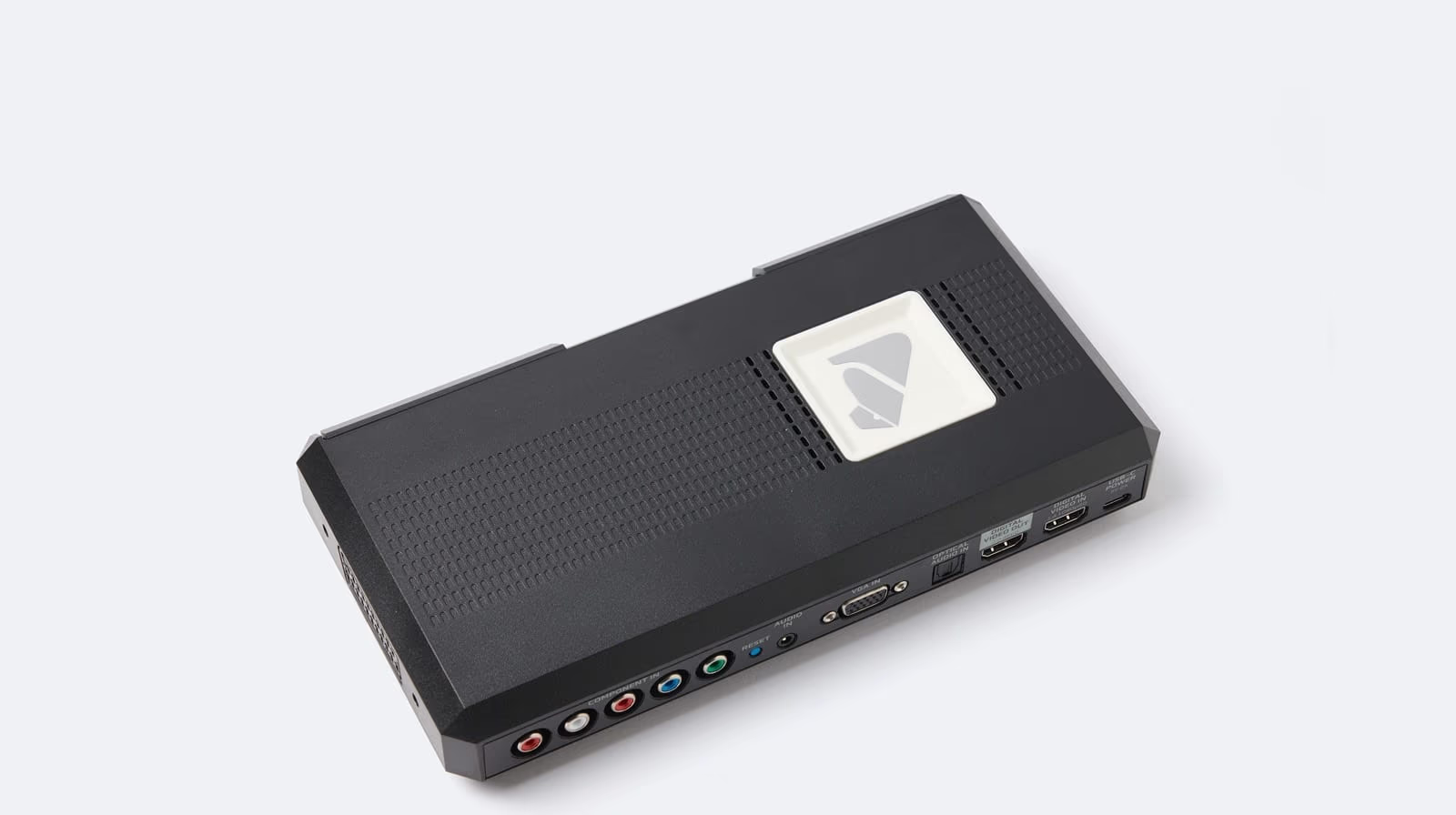
RetroTINK 4K Firmware 1.99 Brings Its CRT Beam Simulation in Line With Blur Busters' Reference Shader
Experimental firmware 1.99.0 and 1.99.1 for the RetroTINK 4K add a Multi-frame Glow option and a Motion Clarity control that match the open-source CRT beam simulator by Blur Busters and Timothy Lottes, capping a month of builds that also brought true VRR, a new inverse telecine engine and steadier Lumacode.