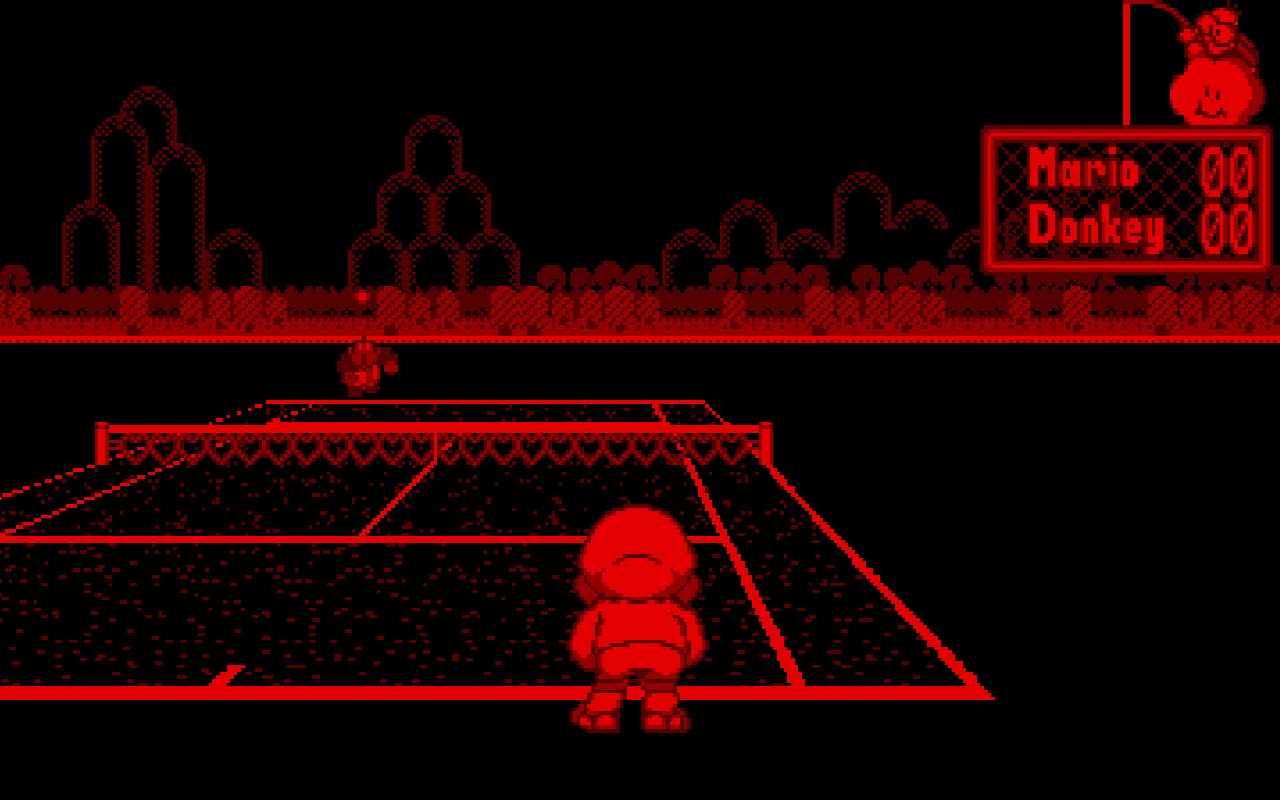
Image: Mario's Tennis (Nintendo, 1995), screenshot via libretro-thumbnails
MiSTer Gets a Virtual Boy Core With Real 3D and Colour Modes
The Virtual Boy finally has a MiSTer core. Developer Kitrinx published it to the MiSTer-devel organisation on GitHub in the first week of August, and it does the two things the console was built around: it shows the library in real stereoscopic 3D, on a 3DTV or through anaglyph glasses, and it plays all of it. It also does something the original hardware never could, which is show those games in colours other than red.
What Kitrinx released
The first build, dated 3 August, was followed a day later by a fix for an occasional hang when using save states. The repository's commits are signed by Jamie Blanks, the name on Kitrinx's GitHub account, whose earlier work includes commits to the MiSTer NES, SNES, Game Boy, Game Boy Advance and Atari 7800 cores. RetroRGB reported the release on 6 August after testing it on an OLED television and a 3DTV.
Installation is the usual MiSTer routine: run `update_all`, then load ROMs. No BIOS file is needed. The core supports save states, cheats and third-party rumble, and has an option to load tool-assisted speedrun files. On 10 August a change contributed by MisterAddons added SNAC support, so an original Virtual Boy controller can be plugged in through a level-shifting adapter by setting `Advanced > User IO` to `SNAC`.

On compatibility, the core's documentation says every retail title and all known homebrew "was tested for accuracy until no defects were found in any of the video". It warns that the common ROM sets come in padded and unpadded forms and may contain bad dumps, and that some homebrew was written against inaccurate emulators and will not run on real hardware either.
Real 3D, two ways
The Virtual Boy was never a flat red screen. Each eye had its own display: a column of 224 red LEDs swept across the field of view by an oscillating mirror, a design Nintendo licensed from Reflection Technology. The depth came from the difference between the two images, so any way of playing that shows one image is showing half of the game.
The core's `Eye Drawn` setting chooses what reaches the screen: `Left`, `Right`, `Both`, or `Side-by-side`. Side-by-side is for 3DTVs and projectors; it needs the television's own 3D mode switched on and the core's `Scale` set to `Normal`. For any other display there is anaglyph output for coloured glasses, with three schemes to choose from: plain `Anaglyph`, `ColorCode` and `TriOviz`. A `Stereo Scale` setting narrows the gap between the two views to reduce ghosting. RetroRGB used 50 to 75 percent for anaglyph and left it at 100 percent on a 3DTV, and warned readers to keep their expectations realistic, since anaglyph "it'll never compare to a real 3DTV". The core's documentation adds one limit: stereo scale cannot move background textures that the games themselves baked into the image.
Played in 2D, the core shows one eye by default.
Colour on a console that was only ever red
The setting that will surprise people is `Color Mode`, with options for `Red`, `Multicolor`, `Palette`, `Custom` and the anaglyph schemes. `Palette` loads Game Boy palette files: according to the documentation, a four-colour `.gbp` file becomes a colour table for 2D play.
That fits the hardware neatly. The Virtual Boy drew in four shades of a single colour, so a four-colour palette maps onto it one for one. Red was a deliberate choice. Gunpei Yokoi, who led the project at Nintendo R&D1, defended it on the grounds that "red uses less battery and red is easier to recognize".
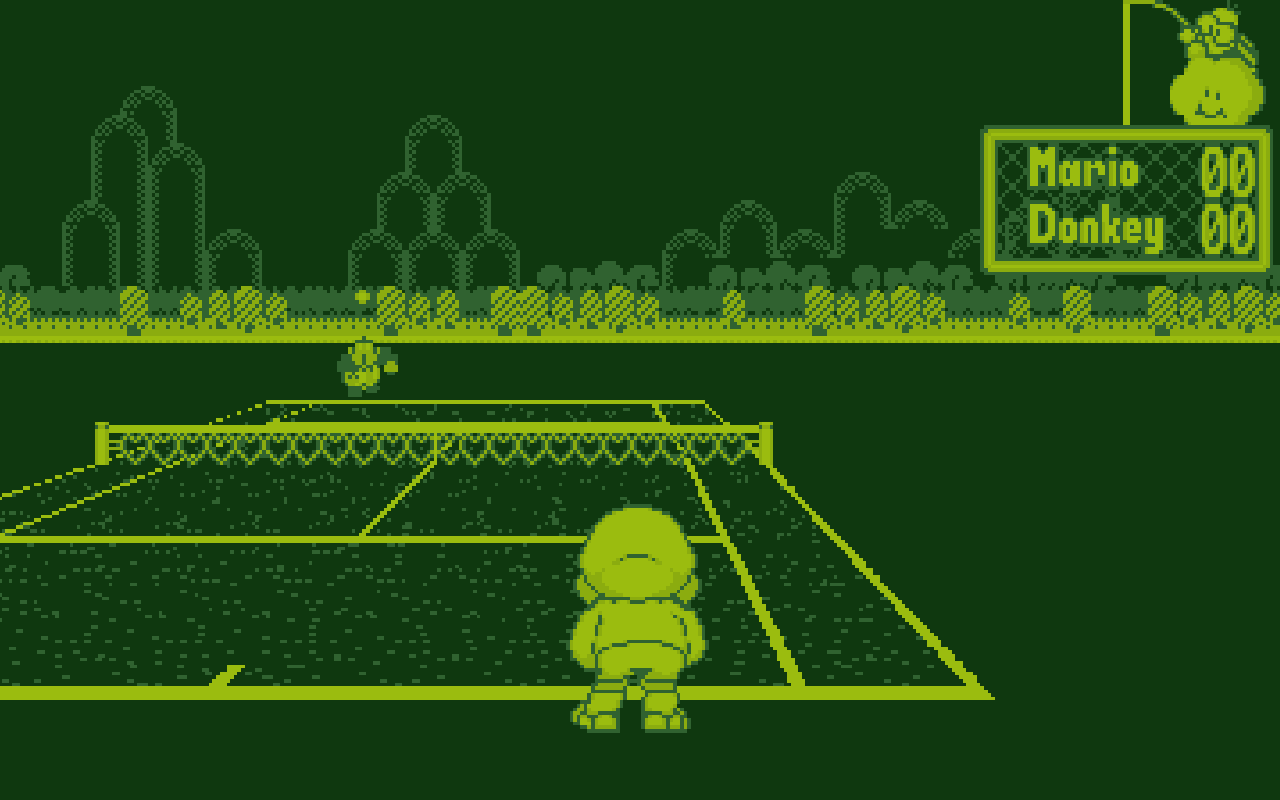
Nintendo, as it happens, did the same thing the same week, in its own Virtual Boy app on Switch. Version 1.3.0 of Virtual Boy - Nintendo Classics, released on 3 or 4 August depending on region, added a "Change Screen Color" option, and the same update added Zero Racers and D-Hopper, two games that were announced for the original console but never released. Nintendo's instructions say the replica headset's lens cover has to be removed to use the feature.
How accurate it is
The core runs at the console's native rate of close to 50.1 frames per second. Displays that cannot handle that can use MiSTer's variable refresh options or a `Buffered 60Hz` mode, which the documentation warns may have uneven frame pacing. CRTs that accept PAL frequencies should be fine.
The documentation is unusually specific about testing. On a CPU timing test that runs on real hardware, the core matches the console's cycle timing, though the author says it is "likely not 100% cycle accurate" because the processor's pipelining is not well understood. Bus timing is close but imperfect, and closer than any other emulator the author tried. The video chip, the author writes, "is largely a black box", which is why the whole library was played through looking for defects. Audio was compared programmatically against recordings from real hardware, and the hardest voice samples, in Virtual Boy Wario Land, Virtual Bowling and Galactic Pinball, match in pitch and quality.
The documentation is also open about how it was built. The core began as hand-written code, and the author later used AI tools for refactoring, auditing and improvements, and to write test programs that probed the CPU and video chip on a real Virtual Boy. Those results fed back into the implementation. The author acknowledges this is a controversial topic and calls AI "an invaluable and game-changing tool for development of this nature".
For picture quality, RetroRGB recommends setting `Brightness Map` to `HDR HLG` because games look dim otherwise, or adding `hdr=1` under a `[VirtualBoy]` section in `MiSTer.ini` to apply it to this core alone. A `Vertical Crop` option labelled `1080p5x` scales the picture to 1920 by 1120 on a 1080p output, filling the width by trimming a little from the top and bottom rather than stretching the image.
The other ways to play in 2026
Original hardware is the obvious one, and the scarcest. The Virtual Boy launched in Japan on 21 July 1995 and in North America on 14 August 1995 at $179.95, sold 770,000 units, and was discontinued within about a year. Its library is 22 games, 19 of them released in Japan and 14 in North America. Nintendo's Howard Lincoln said simply that it "just failed". In 2018 the hobbyist Furrtek released a board that replaces a console's display circuitry so it can drive a VGA monitor or television.
Nintendo's own route arrived on 17 February 2026: Virtual Boy - Nintendo Classics, for Nintendo Switch Online + Expansion Pack members, launched with seven games and requires one of two headsets for its 3D, a $99.99 replica of the original or a $24.99 cardboard model.
On the Nintendo 3DS, the homebrew emulator Red Viper uses the handheld's own stereoscopic screen. It was first released in February 2024 and reached version 1.3.4 in September 2026.
On PC, Mednafen has offered several 3D output modes for years: its `vb.3dmode` setting covers anaglyph (the default), CyberScope, side-by-side, and vertical or horizontal line interlacing, with configurable anaglyph colour pairs. An earlier version of this story wrongly said most software emulators show only a flat single image.
What the MiSTer core adds to that list is hardware-level timing on a platform that drives CRTs natively, takes the original controller, and outputs true side-by-side 3D to a 3DTV. Readers new to the console can start with the Virtual Boy Wario Land review, on the best game it ran, and the FPGA explainer on how MiSTer works.
What is not known yet
The core has no versioned releases or changelog beyond dated builds, and as of 12 October the repository's most recent change was the SNAC support on 10 August, with four issues open. RetroRGB found the `Crop Offset` setting not yet functional. The documentation lists the remaining limits plainly: imperfect bus timing, ROM sets of uneven quality, and frame pacing in 60Hz mode.
Updated 12 October 2026: expanded with the core's settings, accuracy testing, Nintendo's colour update and the other ways to play, and corrected an earlier claim that most software emulators show only a single flat image.
Sources
- MiSTer-devel on GitHub: VirtualBoy_MiSTer: The Nintendo Virtual Boy portable 3D console
- RetroRGB: Virtual Boy MiSTer Core Released!
- Nintendo: Virtual Boy - Nintendo Classics has landed on Nintendo Switch Online + Expansion Pack
- Perfectly Nintendo: Virtual Boy - Nintendo Classics: all the updates
- Game Informer: Nintendo Announces Virtual Boy Classics For Switch Will Include Unreleased Games, Customizable Colors, And More
- Mednafen: Mednafen Virtual Boy documentation
- skyfloogle on GitHub: Red Viper: a Virtual Boy emulator for the 3DS
- Wikipedia: Virtual Boy
More News
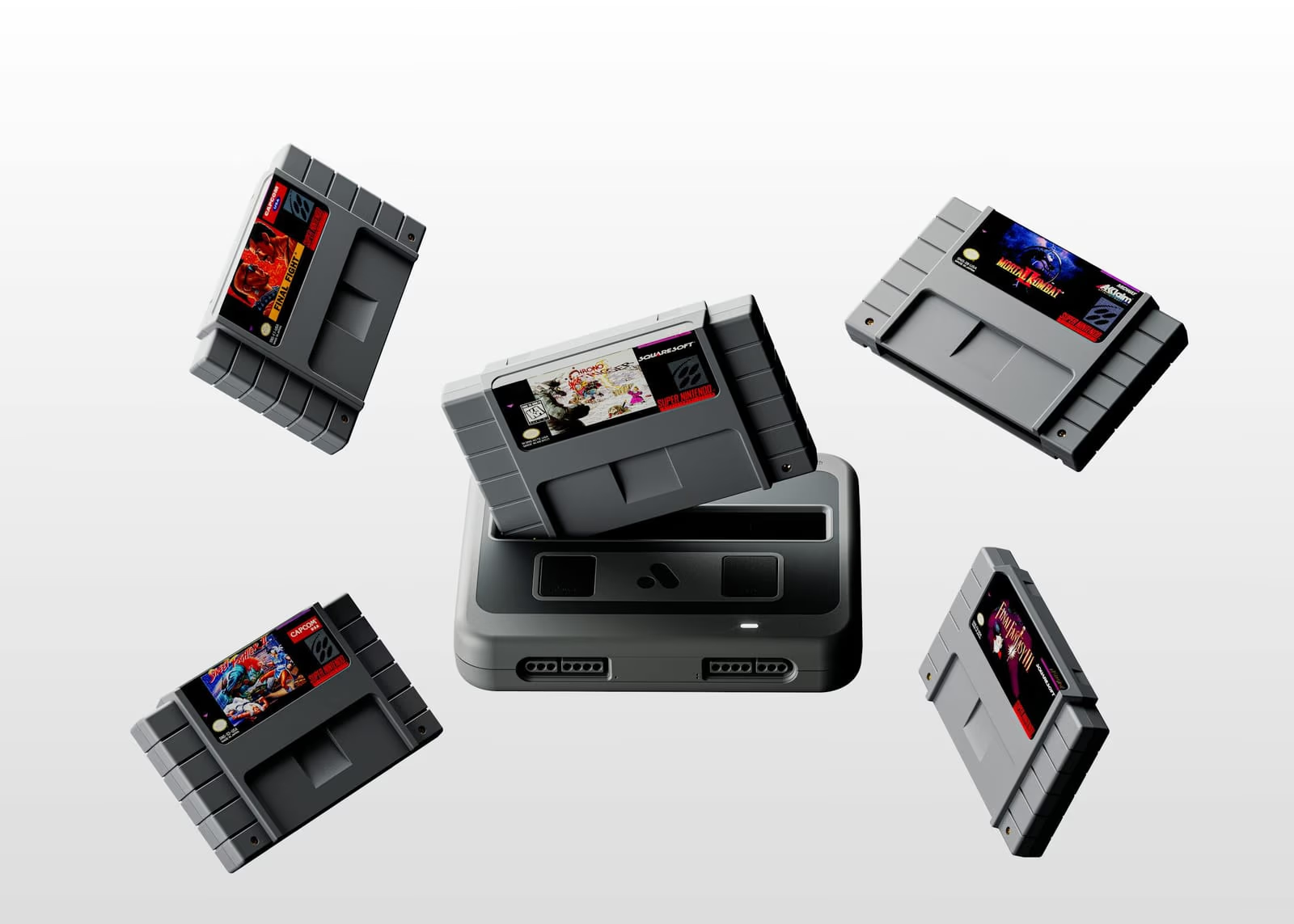
Analogue Announces Super Nt+ and Mega Sg+, With Wireless Controllers and USB-C, for $219.99
Analogue's FPGA Super Nintendo and Mega Drive consoles return as the Super Nt+ and Mega Sg+, adding Bluetooth and 2.4 GHz controllers, USB-C power and hot-swappable cartridges. Preorders open on 19 October at 8am PDT, and both ship in December.
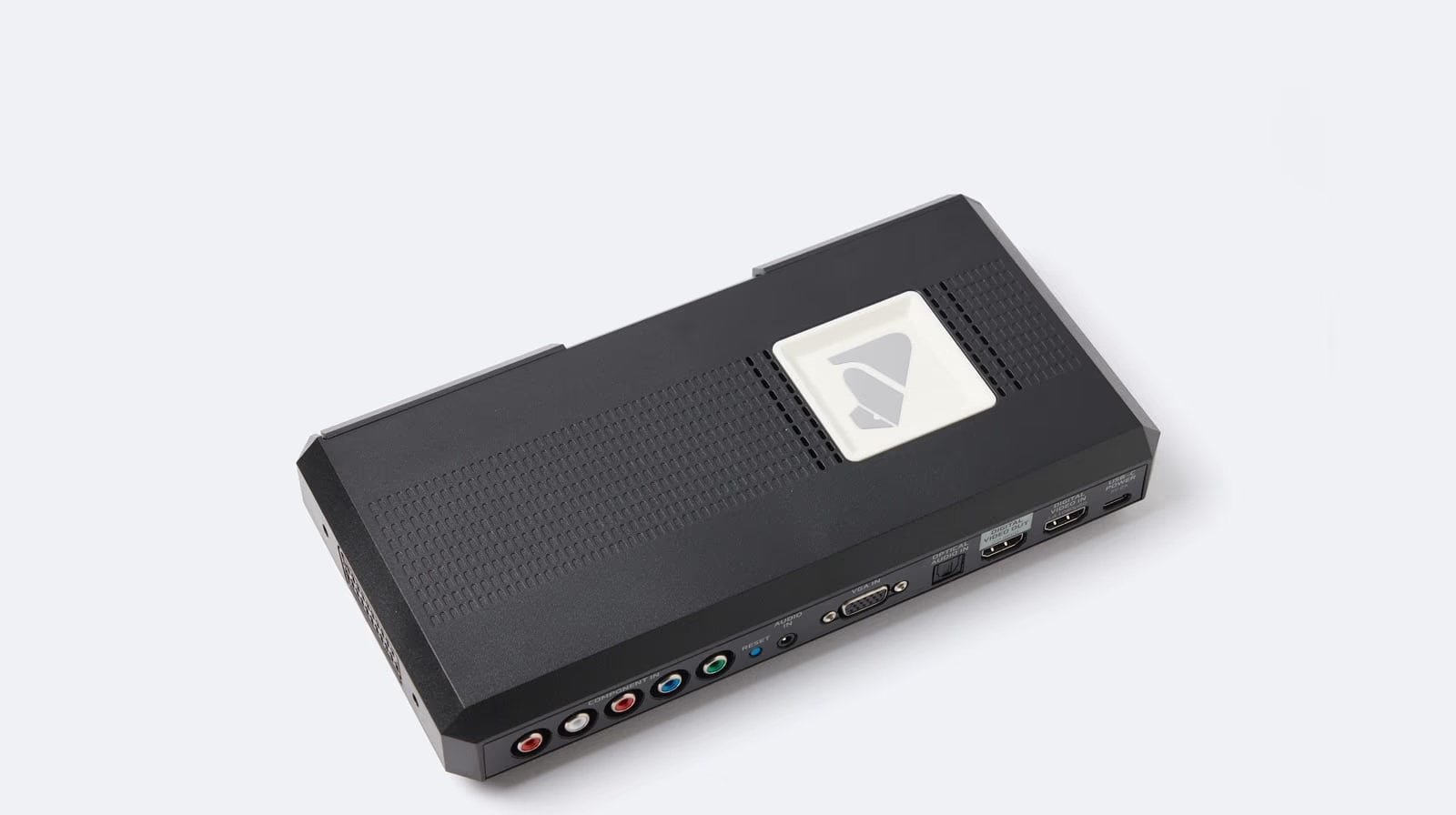
RetroTINK 4K Firmware 1.99 Brings Its CRT Beam Simulation in Line With Blur Busters' Reference Shader
Experimental firmware 1.99.0 and 1.99.1 for the RetroTINK 4K add a Multi-frame Glow option and a Motion Clarity control that match the open-source CRT beam simulator by Blur Busters and Timothy Lottes, capping a month of builds that also brought true VRR, a new inverse telecine engine and steadier Lumacode.
Kururin Paradise Reaches the West for the First Time as Switch Online Adds Three GBA Games
Nintendo added Kururin Paradise, Metal Slug Advance and Monster Rancher Advance to Game Boy Advance - Nintendo Classics on 14 October, giving the 2002 Kururin sequel its first release outside Japan.