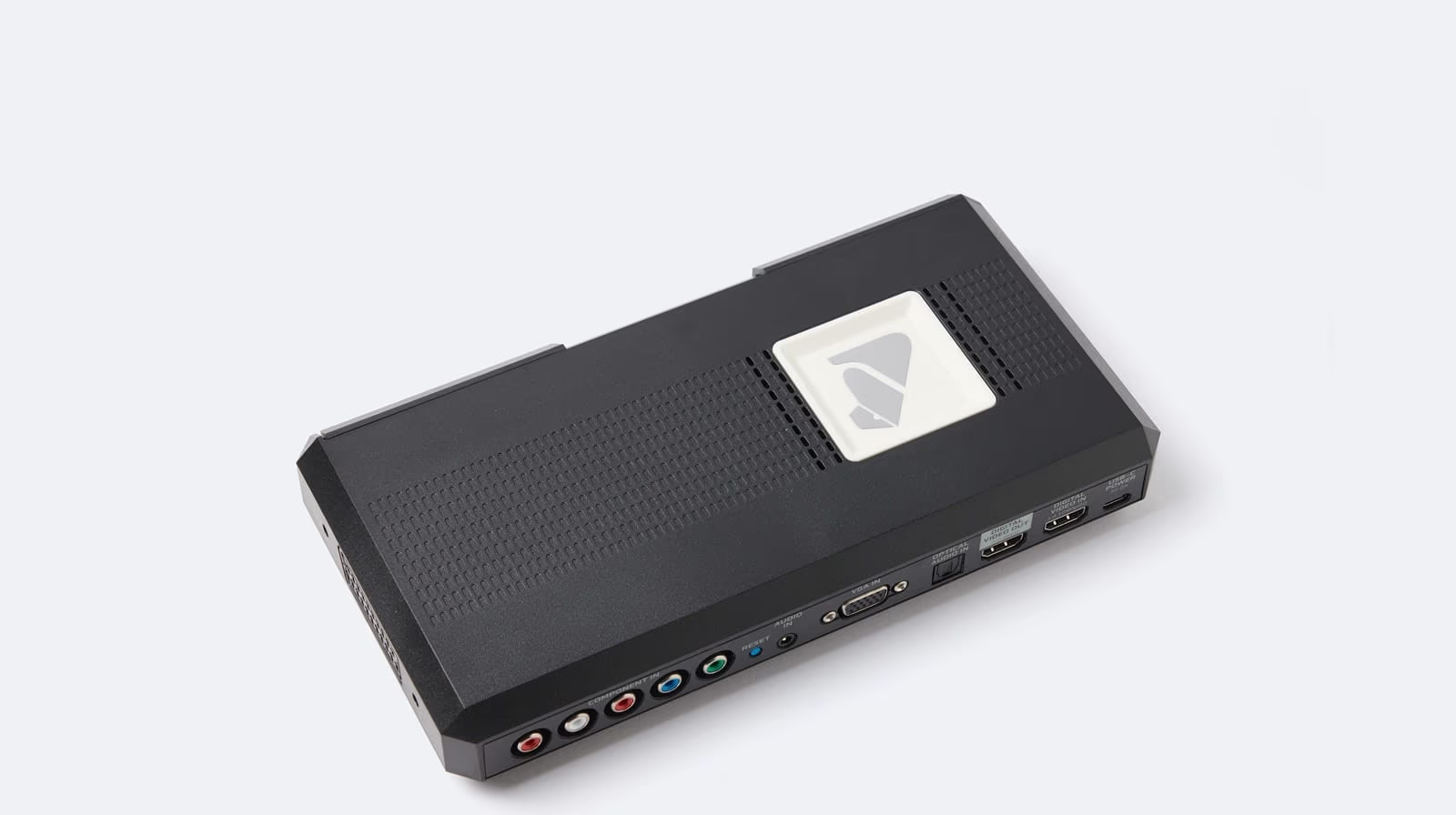
Image: RetroTINK (RetroTINK-4K Pro product image)
RetroTINK 4K Firmware 1.99 Brings Its CRT Beam Simulation in Line With Blur Busters' Reference Shader
The CRT beam simulation in the RetroTINK 4K now follows the open-source shader it was modelled on. Experimental firmware 1.99.0, posted on 15 October, adds a Multi-frame Glow option to the scaler's CRT Beam black frame insertion mode and renames its strength control to Motion Clarity. With Multi-frame Glow on, the changelog says, CRT Beam "aligns with the Blur Busters / Timothy Lottes reference GPU shader". Version 1.99.1 followed on 16 October with wider variable refresh rate support. RetroRGB covered the builds on 17 October.
The two releases end a busy stretch. RetroTINK's firmware repository lists 17 experimental builds dated September 2026 and 11 so far in October, covering true VRR output, a rebuilt inverse telecine engine for the 4K Pro and a third version of its Lumacode decoder.
What 1.99.0 and 1.99.1 change
CRT Beam is one of the scaler's black frame insertion (BFI) modes. Instead of showing each game frame for the full refresh, it draws the frame across several faster output refreshes as a moving band of light, the way a CRT's electron beam swept down the tube. Version 1.99.0 makes three changes to it:
- - Multi-frame Glow, for the 4K Pro only and off by default. In the changelog's words, "the previous frame keeps trailing below the beam while the new frame is scanned in at the top, like taking a photograph of a CRT".
- - Motion Clarity, the new name for the setting previously called Beam Gain, running from 0 to 12. The default of 0 matches the default `GAIN_VS_BLUR` value of the Blur Busters shader. Raising it "reduces blur at the expense of brightness".
- - With Multi-frame Glow on, the mode matches the reference shader.
Version 1.99.1 lets Motion Clarity go negative, down to -12, for a brighter but blurrier picture. The changelog warns that this "falls outside the reference GPU shader" and may cause visible seams depending on the beam pattern and BFI rate.
The same build adds support for HDMI 2.1 style extended EDID, and variable refresh no longer depends on the strict video modes (VICs) declared in the display's EDID: true VRR pacing engages whenever the frame rate is inside the display's declared minimum and maximum. The changelog cautions that displays which strictly enforce their declared modes may reject the resulting signal.
RetroRGB's explanation of the controls says Motion Clarity "essentially dictates how much of the screen is black space", and that Beam Steepness, whose settings run from Smooth through Sharp 1 to 6 to Hard, adjusts how much each frame blends into the next. It added a caution that applies to all of it: "all of these will look different on every display and all are best used with HDR enabled."
Where the beam simulation comes from
The reference is a shader created by Mark Rejhon of Blur Busters and Timothy Lottes, published on GitHub under the MIT licence. Its README states that it "successfully reduces display motion blur, if configured correctly", and gives the trade-off in refresh rates: for 60fps content, a 120Hz display can cut motion blur by up to 50 percent, a 240Hz display by up to 75 percent and a 480Hz display by up to 87.5 percent. It is available in software through TestUFO, Shadertoy and RetroArch's subframe shaders, among others.
The RetroTINK has been working towards it for almost two years. CRT Beam first appeared as a BFI blending mode in experimental firmware 1.7.1 on 6 January 2025. Version 1.7.2, five days later, added the Beam Steepness and Phosphor Glow controls, and 1.8.1 in May 2025 raised the limit so the output frame rate could be eight times the input. Firmware 1.9.9.3 in November 2025 added a Variable MPRT BFI mode with "credit to Timothy Lottes for the algorithm". In 1.98.1, dated 13 October 2026, Phosphor Glow was replaced and the Smooth steepness setting brought closer to the Blur Busters reference, the step that 1.99.0 completes. RetroTINK's product page says the device "benefits from Blur Busters' expertise with Black Frame Insertion (BFI) and CRT simulation techniques".

A month of other changes
True VRR. Version 1.92.0 on 30 September added true VRR, enabled by choosing FreeSync or VESA in the HDMI output menu and promising "minimal lag, glitch-free resolution changes and a perfectly stable clock", for the 4K Pro, the 4K CE and the 6X CE. At first it did not work with BFI, because "a significant rework of the BFI engine is required". Version 1.93.0 on 2 October made the two work together, and 1.98.1 lets sources slower than the output mode run at their own rate instead of showing "VRR Out of Range".
Inverse telecine. Version 1.96.0 on 9 October brought a second-generation inverse telecine engine to the 4K Pro. RetroRGB says it helps 24p video content and 480i games locked at 30fps. It no longer needs manually tuned thresholds, which have been removed from the menu. The changelog's example: "Final Fantasy X cutscenes should be nearly free of artifacts".
Lumacode. Lumacode is a signal standard by the developer c0pperdragon for getting clean digital video out of computers and consoles that never offered it. A small board fitted to the machine generates the signal, which leaves through a standard RCA jack (often the old RF output) and encodes the picture in four voltage levels, two bits per sample. The Commodore 64's 16 colours fit in two samples. The project's wiki lists digitizers for machines including the C64, C128, VIC-20, Atari 2600, 7800 and 8-bit computers, NES, Master System, ZX Spectrum, Intellivision, ColecoVision and MSX. An external scaler then decodes it: c0pperdragon's own RGBtoHD, the OSSC, and the RetroTINK 4K, which the wiki says supports "some variants of lumacode, with others being still experimental".
RetroTINK's support began with 1.51.0 on 7 July 2026, when only the NES presets had been tested. A second-generation decoder followed in 1.82.1 on 18 September and a third in 1.87.3 on 25 September, with all systems "recalibrated against the reference implementation". RetroRGB's setup notes for the current build: copy the Lumacode folder from the 1.87.3 package to the SD card, install the latest experimental firmware, connect the machine to a green input, then enable Lumacode under Advanced Settings and Sample Rate Detection and load the preset for the system.
Which devices get what
The experimental page serves the RetroTINK-4K and the RetroTINK-6X together. The 4K Pro costs $750 on RetroTINK's store and is built on a Cyclone V A7 FPGA. The 6X CE, which went on sale at $230 with fulfilment starting on 24 August 2026, outputs up to 1440p and, according to RetroTINK's announcement, is designed "to keep full lockstep with the RetroTINK-4K CE in features, just at a lower resolution". Multi-frame Glow and the new inverse telecine engine are marked for the 4K Pro only; true VRR is listed for all three models. RetroRGB describes the inverse telecine and CRT Beam updates as Pro-only features.
RetroRGB credits the builds to Mike Chi, and the firmware repository is maintained by SquidHominid for RetroTINK LLC. For background on FPGA hardware in retro gaming, see the FPGA explainer.
What is not known yet
All of this is pre-release. The experimental page says "PROPER FUNCTIONALITY IS NOT GUARANTEED, AND FEATURES MAY STILL BE IN DEVELOPMENT". The latest official RetroTINK 4K release is still 1.9.6, dated 4 November 2025, and RetroTINK has not said when the work since then will reach an official build. The firmware notes do not list which displays reject the relaxed VRR modes, and RetroRGB's verdict on the beam settings is that how they look depends on the viewer's display, refresh rate and content.
Sources
- RetroTINK Firmware Repository: RetroTINK-4K / 6X Experimental Firmware
- RetroTINK Firmware Repository: RetroTINK Firmware Repository
- RetroRGB: RetroTINK 4K Pro: Lumacode, CRT Beam and IVTC Updates
- RetroTINK: RetroTINK-4K Video Processor & Scaler
- RetroTINK: Introducing the RetroTINK-6X CE
- Blur Busters on GitHub: crt-beam-simulator
- c0pperdragon on GitHub: LumaCode: Overview
More News
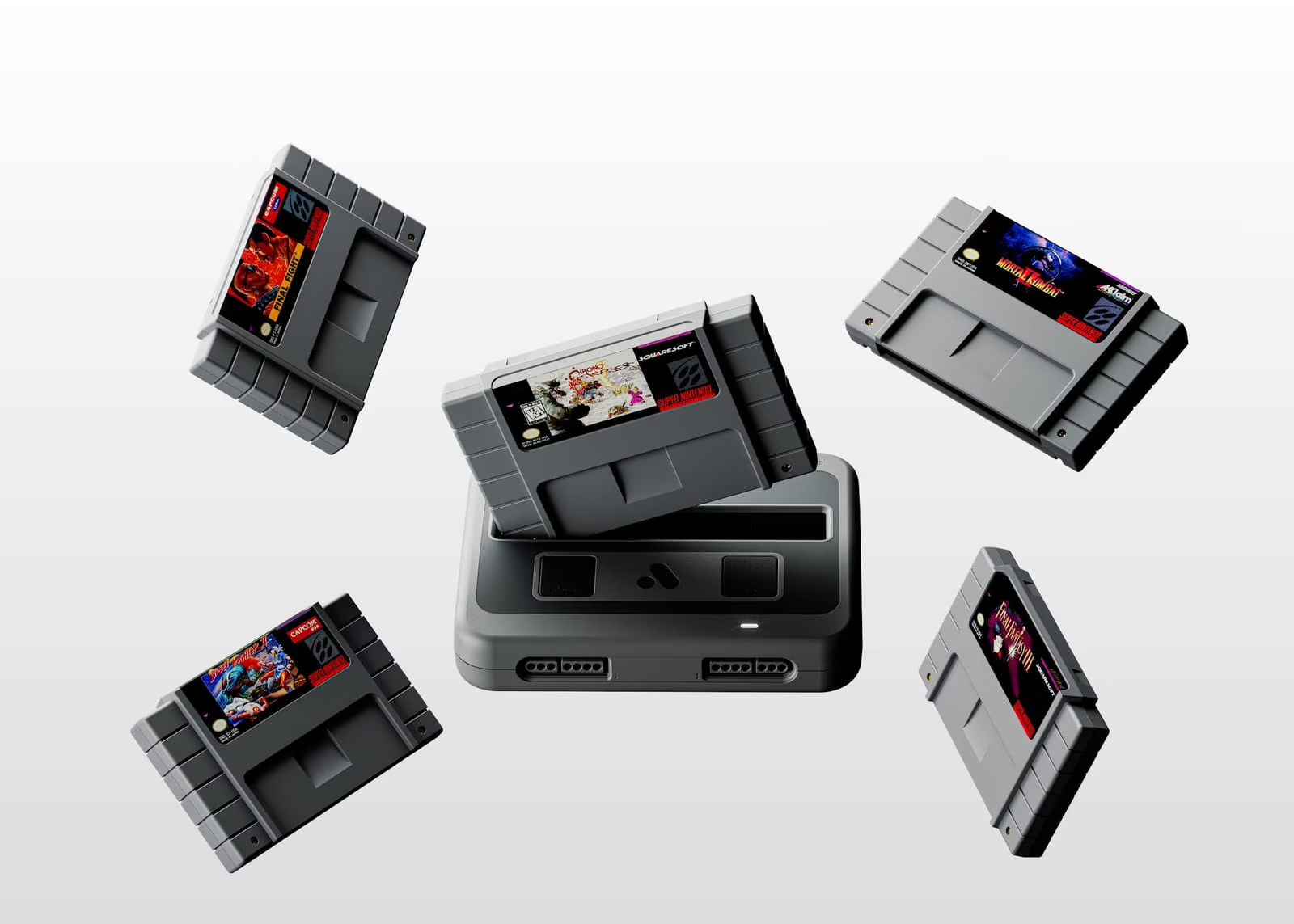
Analogue Announces Super Nt+ and Mega Sg+, With Wireless Controllers and USB-C, for $219.99
Analogue's FPGA Super Nintendo and Mega Drive consoles return as the Super Nt+ and Mega Sg+, adding Bluetooth and 2.4 GHz controllers, USB-C power and hot-swappable cartridges. Preorders open on 19 October at 8am PDT, and both ship in December.
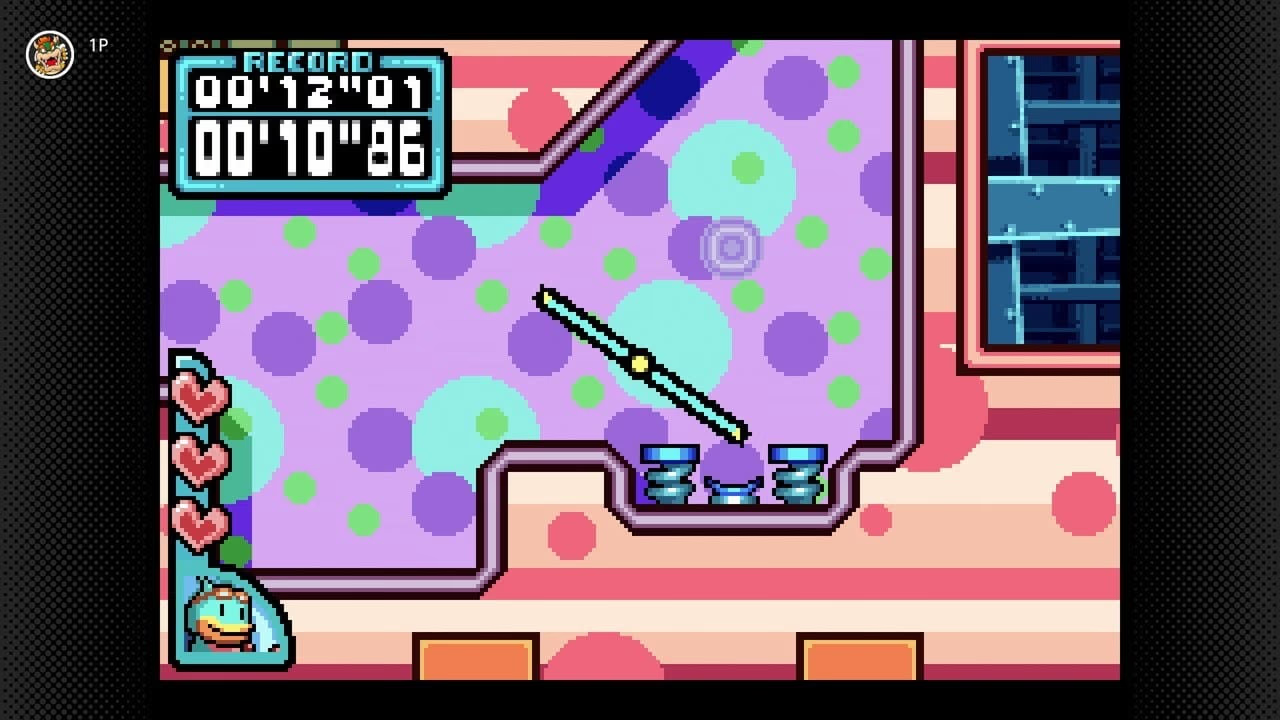
Kururin Paradise Reaches the West for the First Time as Switch Online Adds Three GBA Games
Nintendo added Kururin Paradise, Metal Slug Advance and Monster Rancher Advance to Game Boy Advance - Nintendo Classics on 14 October, giving the 2002 Kururin sequel its first release outside Japan.
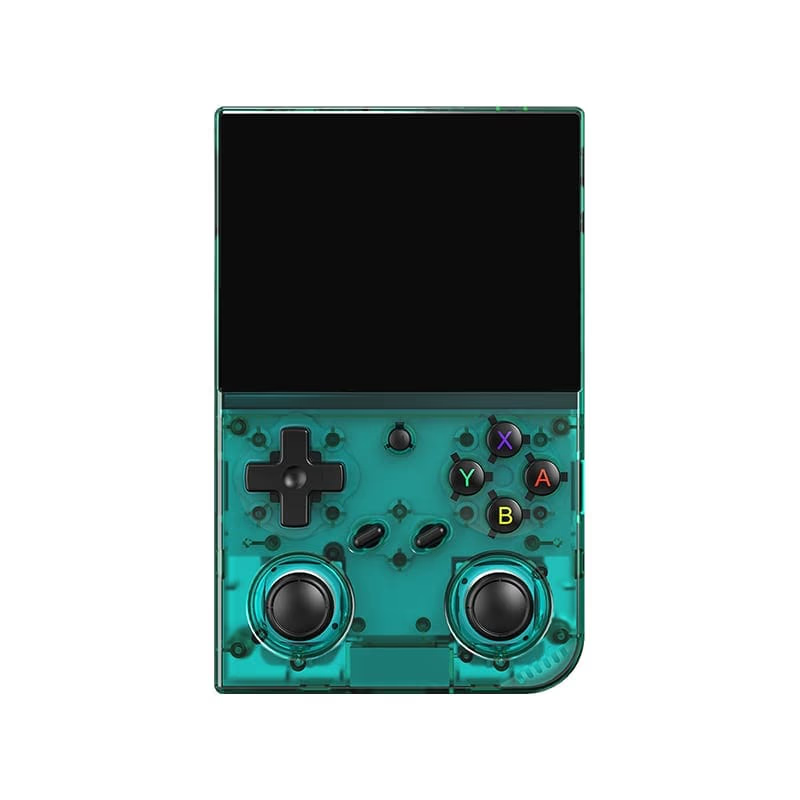
Game Industry Group Asks US Trade Office to List Anbernic as a Notorious Piracy Market
The Entertainment Software Association has nominated Anbernic's store for the US Trade Representative's 2026 Notorious Markets List, calling handhelds sold with preloaded game cards the industry's version of superfakes.