Image: Retroid
Retroid Publishes a Linux 7.3 Kernel for the Pocket 6, Pocket Nova and Pocket Duo
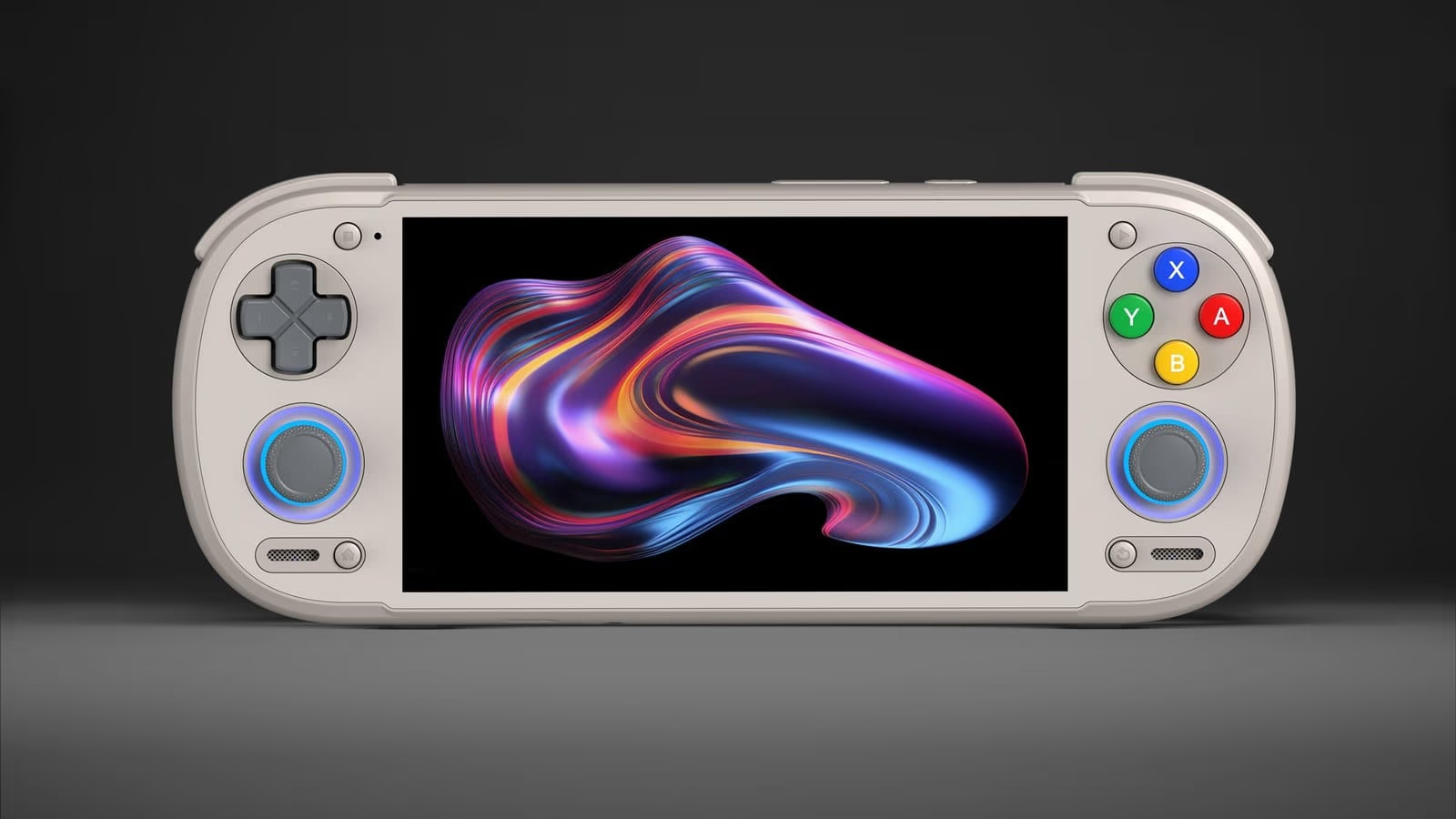
Retroid has published a Linux kernel for three of its current handhelds, the Retroid Pocket 6, the Pocket Nova and the dual-screen Pocket Duo. The company announced it on its Discord server on 20 October and put the code on its GitHub account: a kernel branch called `retroidpocket/v7.3`, plus matching audio configuration. Retroid's announcement calls it "Mainline Linux" support. What it has actually released is Linux 7.3 with 71 extra patches on top, a base for developers and Linux distributions rather than something a Retroid owner can install and play on.
What Retroid released
All three devices ship with Android. According to Retroid's store, the Pocket 6 runs Android 13 and the Pocket Duo runs Android 16. The new code gives anyone building a Linux system for them the drivers that system needs.
There are three parts, each a branch in a repository under Retroid's GitHub organisation:
- - The kernel, `RetroidPocket/linux` on branch `retroidpocket/v7.3`.
- - An audio topology, `RetroidPocket/audioreach-topology` on branch `retroidpocket/v1.0.5`, with topology files for the Pocket 6 and Nova and for the Duo.
- - An ALSA UCM configuration, `RetroidPocket/alsa-ucm-conf` on branch `retroidpocket/v1.2.16`, which tells Linux sound software how the devices' speakers, headphone jack and microphones are wired.
Retro Handhelds, which quoted the Discord announcement, reports the setup steps: the topology `.bin` file goes in `/lib/firmware/qcom/`, the UCM files go in `/usr/share/alsa/ucm2/`, and audio only works with both installed. The article gives no instructions for building or booting the kernel itself, and its editor-in-chief was blunt about who it is for: "this isn’t really an adventure that the average user should consider taking." Retro Dodo read it the same way, as Retroid enabling the community to bring Linux to these devices rather than shipping Linux itself.
The working-features list both outlets reported covers the displays (including both of the Duo's screens), touchscreens, the built-in gamepad, the joystick RGB lights on the Pocket 6 and Nova, Wi-Fi and Bluetooth, the GPU, hardware video decoding and encoding, USB-C with DisplayPort output, UFS storage, the microSD slot and the cooling fan. Both outlets list audio for the Pocket 6 and Nova. The kernel code includes an audio setup for the Duo as well, but the reports do not say how complete it is.
What is in the code
The kernel branch is built on Linux 7.3, which Linus Torvalds tagged on 18 October. A comparison against that tag on GitHub shows exactly what Retroid added: 71 commits, all on top of the official release. Fifty-five of them are by Teguh Sobirin, whose commits describe each device in turn.
The Pocket 6 and Nova share one hardware description, written for the Qualcomm QCS8550: the GPU and display system, USB-C with role switching, UFS and microSD, Wi-Fi over PCIe through a Qualcomm WCN7850, speaker amplifiers, a headset codec, on-board microphones, the gamepad, and a fan driven by the CPU and GPU temperature readings. The differences sit in small per-device files. The Pocket 6 gets a panel based on the Visionox VTDR6130; the Nova gets a 4:3 panel based on the Ilitek IL97680A, plus inverted stick axes and trigger dead zones in its gamepad settings.

The Duo is the newer and harder machine. Retroid's store lists its processor as the Qualcomm Dragonwing Q-7790, and the kernel commits describe it as based on Qualcomm's Eliza platform. Its top screen uses the same Visionox-based panel as the Pocket 6 and its bottom screen the same Ilitek-based type as the Nova, each with its own FocalTech touchscreen. The Eliza description adds haptics, a hall sensor for the lid, charging and status LEDs and a different headset codec. Its Wi-Fi chip, the WCN7750, accounts for the largest share of the work: 21 of the commits change the Linux `ath12k` Wi-Fi driver, most of them to add support for it.
Two smaller drivers deal with what makes these machines game consoles. `rsinput` reads the gamepad, which is a separate microcontroller talking to the main chip over a serial line at 115200 baud and reporting the buttons, two analogue sticks and two triggers. The commit says the driver covers both AYN and Retroid Pocket handhelds and credits its tuning settings to "the ROCKNIX rsinput driver by Philippe Simons and Jacob Cook". The other drives the HEROIC HTR3212, a 12-channel LED controller, which the Pocket 6 and Nova use in pairs for the RGB lights around their sticks.
Mainline or not
To Linux developers, "mainline" means Linus Torvalds' official kernel. Retroid's branch is not that: it is the official 7.3 release with 71 patches on top that are not part of it.
The commit history shows a little of both worlds. Fifteen of the 71 commits are by authors with Qualcomm email addresses, and most of those add support for parts of the Eliza platform, such as its GPU and clock controllers. One commit, by Aaron Kling, registers "Retroid Pocket" as a hardware vendor name; it carries an acknowledgement from Krzysztof Kozlowski and a sign-off from Bjorn Andersson, and links to a patch posting whose identifier marks it as version 3 of an "rp-qcs8550" series. Teguh Sobirin's commits carry only his own sign-off. Neither the code nor the reporting says whether his patches have been sent for review upstream.
Two years after the first promise
This is not Retroid's first word on Linux. In September 2024, GamingOnLinux reported a Retroid post promising that the Pocket 5 would get official Batocera and Armbian support and an "open Linux kernel for community developers". Retroid's GitHub organisation was created at the end of that month. It holds a fork of Batocera, a fork of the Armbian build framework and a U-Boot bootloader tree described as "Retroid Pocket SM8250"; none of those has been updated since May 2025.
The community got there first in the meantime. ROCKNIX, a community-developed Linux distribution for handheld gaming devices, already lists the Pocket 6, a Pocket 6 variant with the D-pad on top, and the Pocket Nova in its 1 October release, on the same SM8550 image as AYN's Odin 2 family and several Ayaneo handhelds. Its SM8250 image covers the older Pocket 5, Pocket Flip 2 and Pocket Mini. The Pocket Duo is not on the list. Retro Handhelds drew the same line, contrasting Retroid's kernel with complete systems such as ROCKNIX, Armada and GammaOS.
That leaves the Duo, the newest of the three, as the one ROCKNIX does not yet list. Retroid's store lists it at $269 for the only configuration, 8GB of memory and 128GB of storage, with shipping from mid-October. The Pocket 6 starts at $244 and the Nova at $239.
What is not known
Retroid has not said whether it will publish a ready-made Linux image or keep to supplying kernel code, and it has not said whether Teguh Sobirin's patches will be offered for the official kernel or carried forward on Retroid's own branches. Nobody has yet said whether ROCKNIX or Batocera will adopt Retroid's work, which is the step that would put Linux on a Duo for players rather than developers. The reports of the announcement mention no older models such as the Pocket 5, the Flip 2 or the Mini, whose Linux support still comes from the community.
Sources
- Retroid Pocket on GitHub: RetroidPocket/linux, branch retroidpocket/v7.3
- GitHub: Comparing Linux v7.3 with RetroidPocket:retroidpocket/v7.3
- Retroid Pocket on GitHub: Input: rsinput - add AYN and Retroid Pocket UART gamepad driver
- Retroid Pocket on GitHub: RetroidPocket/audioreach-topology, branch retroidpocket/v1.0.5
- Retroid Pocket on GitHub: RetroidPocket/alsa-ucm-conf, branch retroidpocket/v1.2.16
- Retroid Pocket on GitHub: Retroid Pocket on GitHub
- torvalds/linux on GitHub: Linux 7.3
- Retroid: Retroid Pocket 6 Handheld
- Retroid: Retroid Pocket Nova Handheld
- Retroid: Retroid Pocket Duo Handheld
- Retro Handhelds: Retroid Announces Mainline Linux Support for a Few of Its Latest Handhelds
- Retro Dodo: Retroid Announces Linux Support For Pocket 6, Nova and Duo Handhelds
- GamingOnLinux: Retroid Pocket 5 and Retroid Pocket Mini will have Linux support
- ROCKNIX on GitHub: ROCKNIX 20261001
More News
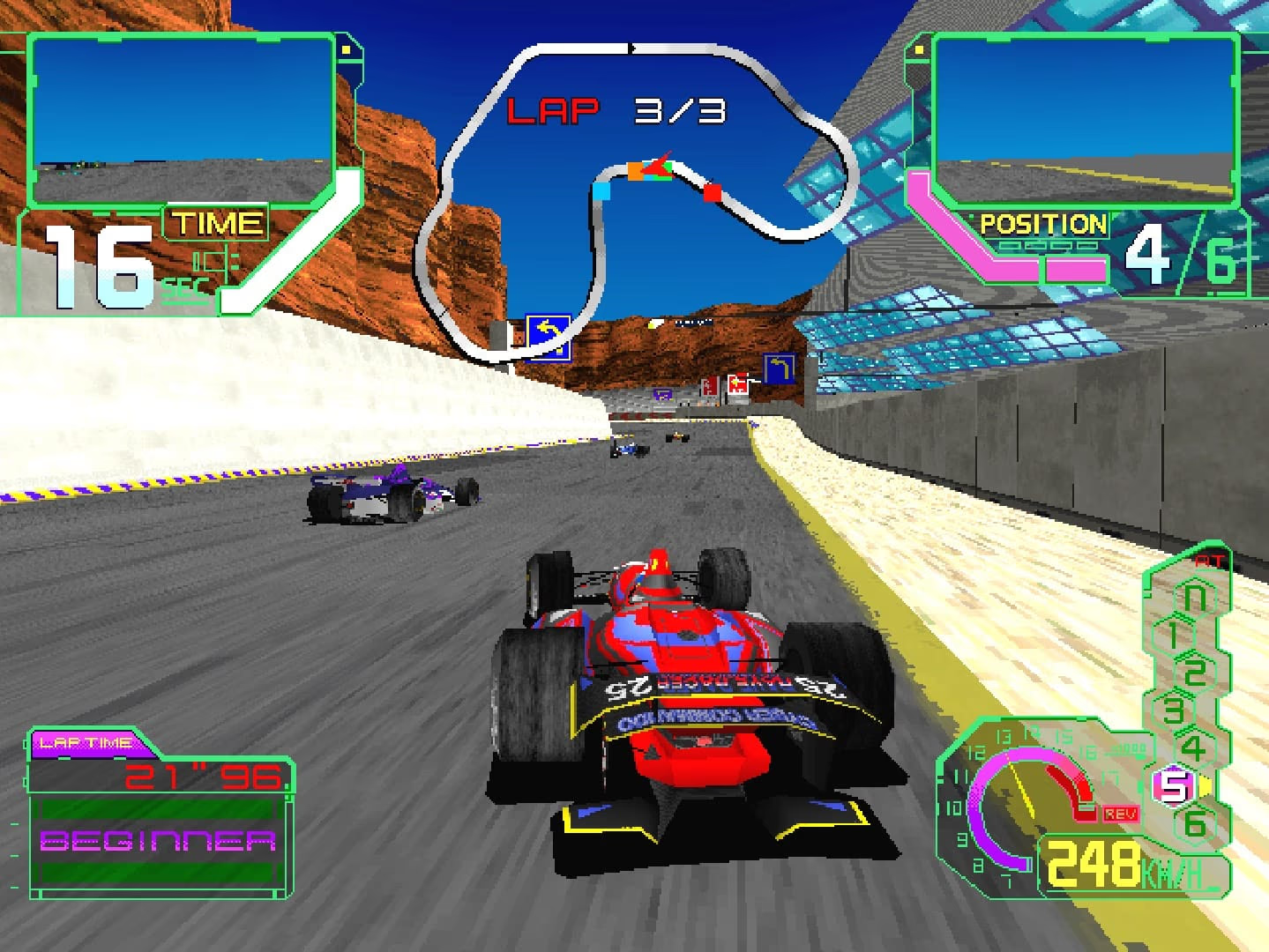
Namco's Ace Driver: Victory Lap Comes Home Through Arcade Archives, With Four Players on Newer Consoles
Hamster is releasing Namco's arcade sequel Ace Driver: Victory Lap on 22 October for Switch, PS4, Switch 2, PS5 and Xbox Series X|S, at $14.99 or $16.99, five months after the original Ace Driver.

Video Game History Foundation Opens a Photo Archive of Japanese Game Culture From 1999 to 2005
The Colin Williamson photography collection, now free in the VGHF Digital Archive, documents Tokyo Game Show, Nintendo Space World and the streets of Akihabara at the turn of the millennium.
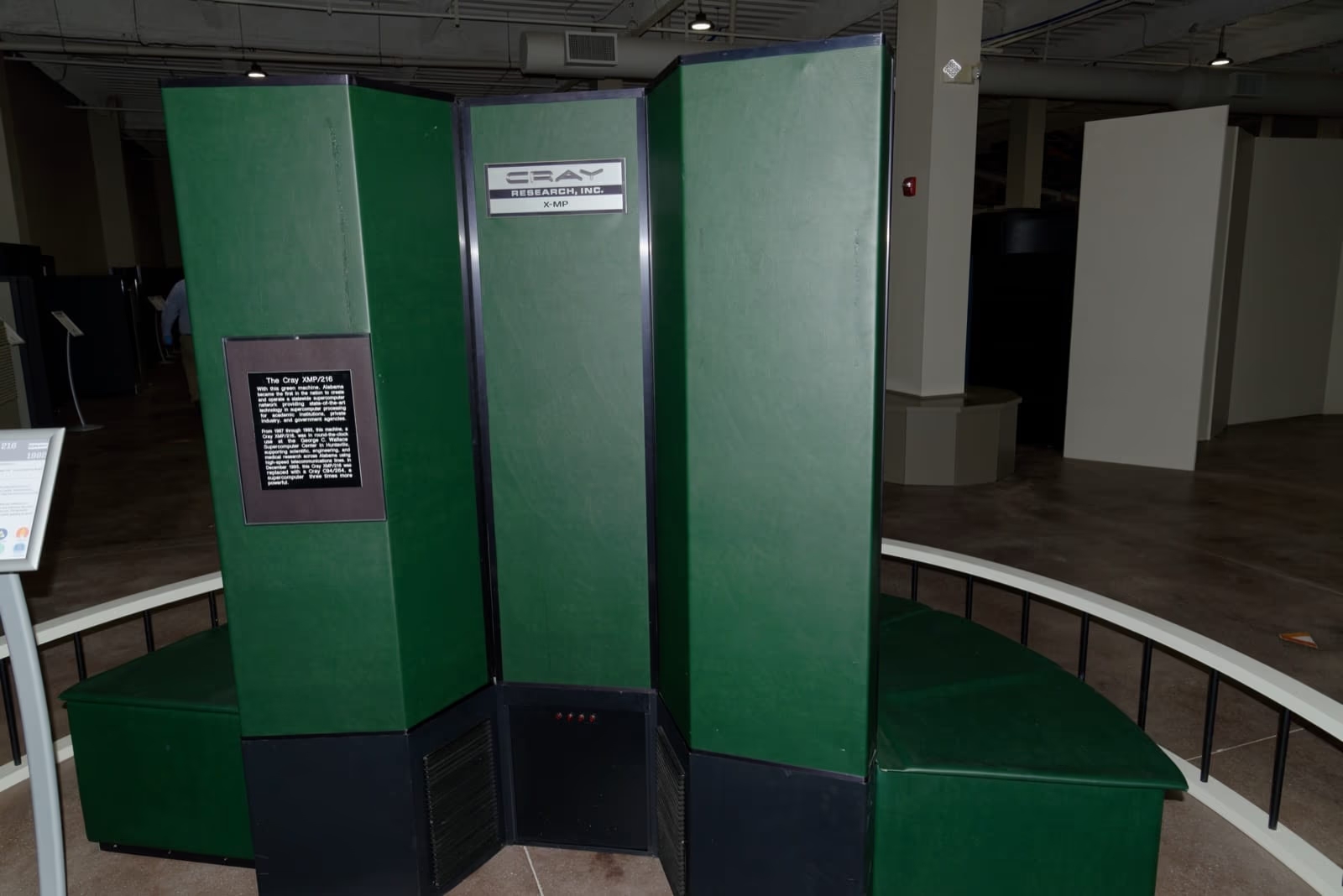
MiSTer Gets a Cray X-MP Core That Boots the Supercomputer's Own Operating System
A new MiSTer core recreates a one-processor Cray X-MP and boots COS 1.17, the only Cray operating system known to survive for the machine. It reached MiSTer's official distribution on 20 October, and a companion project runs Cray Blitz, the 1983 and 1986 world computer chess champion, on it.