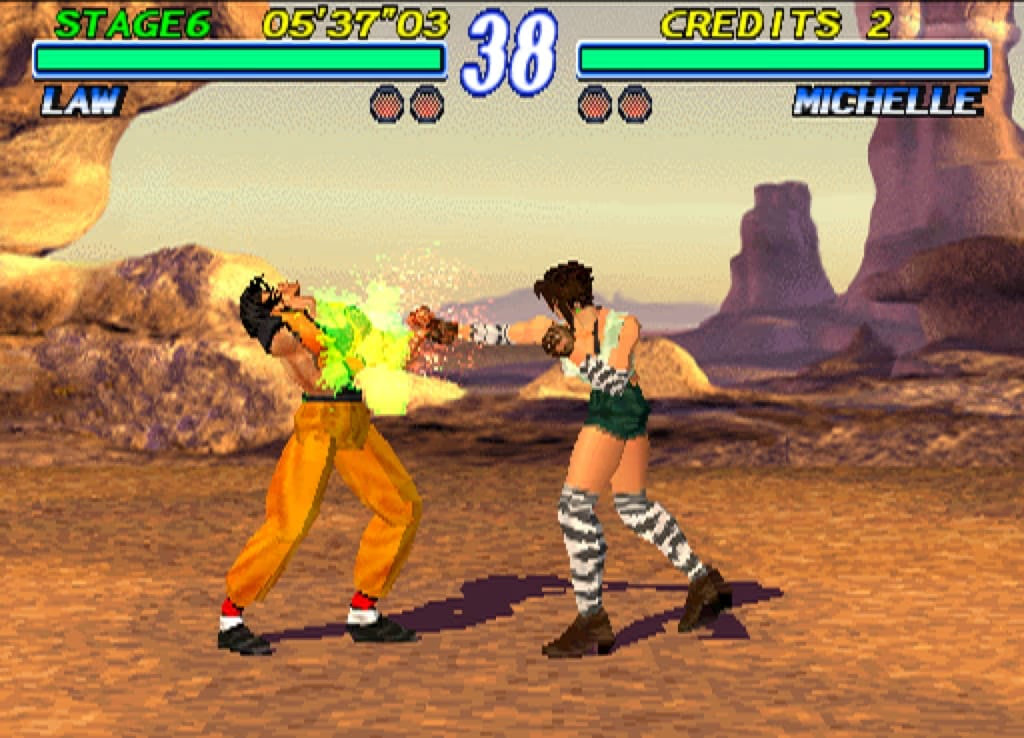
Image: Tekken 2 (Namco, 1995), arcade screenshot via libretro-thumbnails
Namco System 11 Core for Analogue Pocket Reaches v0.3.0 With Tekken, Tekken 2 and Soul Edge
McNast13's openFPGA port of the Namco System 11 arcade board, which plays the arcade versions of Tekken, Tekken 2 and Soul Edge on the Analogue Pocket, reached version 0.3.0 on 12 November, adding analog stick control for the fighting games, a week after the previous release declared it a beta with every game in its list tested working on a real Pocket.
What v0.3.0 changes
The new release is small but aimed squarely at the games people will load first. On a Dock controller with an analog stick, pushing the left stick more than about halfway now also presses the d-pad, diagonals included, so Tekken, Tekken 2, Soul Edge and the core's other d-pad games can be played on the stick. It works for players one and two. Point Blank 2 and Gunbarl, the two shooting games, still aim proportionally with the stick, and handheld play is unchanged because the Pocket itself has no stick.
The groundwork came in v0.2.2 on 6 November. That release marked the core as a beta, with every game in the list tested on a Pocket, including Dunk Mania, Star Sweep and the alternative versions of Tekken, Tekken 2 and Point Blank 2; the notes add that King's 10-hit combo in Tekken 2 works. It also made game settings stick: changes made in a game's test menu (difficulty, rounds, coinage) are saved to a .sav file per game when the core is closed. And it fixed the core's own settings, which had never taken effect because, the release notes explain, the core "read the setting values with their bytes in the wrong order". Those settings are DIP1 Test, which opens a game's test menu at start-up, DIP2 Freeze, a held Service button for service credits, and a gun aim speed for the shooting games.
The games, and how to load them
The README lists 35 MAME sets across the board's library: Tekken, Tekken 2, Soul Edge, Xevious 3D/G, Dancing Eyes, Dunk Mania, Point Blank 2 and its Japanese release Gunbarl, Star Sweep, Pocket Racer, Prime Goal EX and Kosodate Quiz My Angel 3. Main versions sit at the top of the list and other revisions in an _alternatives folder.
No ROMs or BIOS are included. Owners need their own current MAME romsets plus c76.bin, the BIOS for the board's C76 sound processor, from namcoc76.zip. Because the Pocket cannot read MAME zips, the files are built once on a computer, either with the project's plugin for Pocket Sync and pupdate, which finds files by CRC so renamed or merged sets still work, or with a Python script. The core then appears under openFPGA, Arcade Multi.
Point Blank 2 and Gunbarl are played with a pad rather than a light gun: each player moves an on-screen sight with the stick or d-pad and fires with any face button. Pocket Racer steers with the d-pad as a virtual wheel or with an analog stick on the Dock.

Why System 11 fits on a Pocket
System 11 was the arcade twin of the original PlayStation. Namco's research managing director, Shegeichi Nakamura, met Sony's Ken Kutaragi in 1993 to discuss the console's early specifications, and Namco built System 11 as a low-cost board on PlayStation hardware. Tekken was its first game, in arcades on 9 December 1994, and it reached the PlayStation in Japan by 31 March 1995. Soul Edge followed on the same board in February 1996, with Ver. II in May.
The MiSTer core this port comes from describes the board in detail: an R3000A-compatible MIPS CPU and a System 11 GPU with 2 MB of video memory, combined with hardware the console never had. Game code sits in banked ROM instead of on a CD, a Namco C76 microcontroller handles sound and cabinet controls, a Namco C352 provides 32 voices of PCM sound, and each game carries its own protection chip.
That shared design is what makes the port possible. It stacks three projects: XelaNotPu's SYSTEM11_MiSTer core, which is itself derived from Robert Peip's PSX_MiSTer PlayStation core, ported onto the Pocket through GuardianSoul's openfpga-PlayStation core, which the README credits with "the proof that a PlayStation-class design can fit the Pocket's FPGA". It also uses Laxer3a's compact PS-GTE geometry engine to save space. Video memory lives in the Pocket's PSRAM at full speed, which the README says fixed polygons and HUD elements that had been dropping out.
It is a tight fit. The v0.3.0 build summary reports 18,190 of the FPGA's 18,480 logic modules in use, 98 percent, with 237 of 308 RAM blocks. To make room, release builds leave out the bring-up diagnostic screen.
Who is behind it, and how
McNast13 started the repository on 18 October and published the first beta, v0.1.0, on 24 October. The same account also hosts openFPGA ports of the MiSTer ZX Spectrum and Dragon 32 cores.
The README is direct about how the work is done: "This port is being built with heavy use of AI, and we want to be upfront about that." McNast13 sets the goals, makes the decisions and tests every build on a real Pocket, while most of the code, scripts and documentation are written by Anthropic's Claude through Claude Code. The upstream cores are included unmodified, with every change kept as a separate patch script that can be switched off. The README asks readers to "treat the core as experimental", since the checks are simulation and hardware testing rather than an expert line-by-line review.
How it compares
On MiSTer, XelaNotPu's SYSTEM11_MiSTer core covers the same twelve primary titles, with Family Bowl left out of scope, and has options the Pocket port lacks, including light-gun support for Point Blank 2. The Pocket port's advantage is simply that it is portable, and on the Dock it runs two-player with analog sticks. For the PlayStation versions of the same games, GuardianSoul's PlayStation core for the Pocket is the other route, and it reached v0.5.10 on 14 November.
What is not known yet
The README lists the limits. Changing game means quitting the core and opening it again, because loading a new game does not restart these boards cleanly. Of the alternative versions, only those of Tekken, Tekken 2 and Point Blank 2 have been tried. There is no light-gun support. On 12 November McNast13 also opened a Tekken 3 repository, described as a Namco System 12 arcade core for the Pocket and a work in progress, with no release yet.
Choosing more cores? The Analogue Pocket openFPGA cores guide covers what is worth installing and how to keep it updated.
Sources
- McNast13 on GitHub: Namco System 11 v0.3.0
- McNast13 on GitHub: Namco System 11 for Analogue Pocket (openFPGA)
- McNast13 on GitHub: Namco System 11 v0.2.2
- McNast13 on GitHub: NamcoSystem11-Pocket releases
- McNast13 on GitHub: Namco System 11 games plugin for Pocket Sync and pupdate
- XelaNotPu on GitHub: Namco System 11 for MiSTer
- GuardianSoul on GitHub: openfpga-PlayStation
- McNast13 on GitHub: Tekken 3 (Namco System 12) arcade core for the Analogue Pocket
- Wikipedia: Tekken (video game)
- Wikipedia: Soul Edge
More News
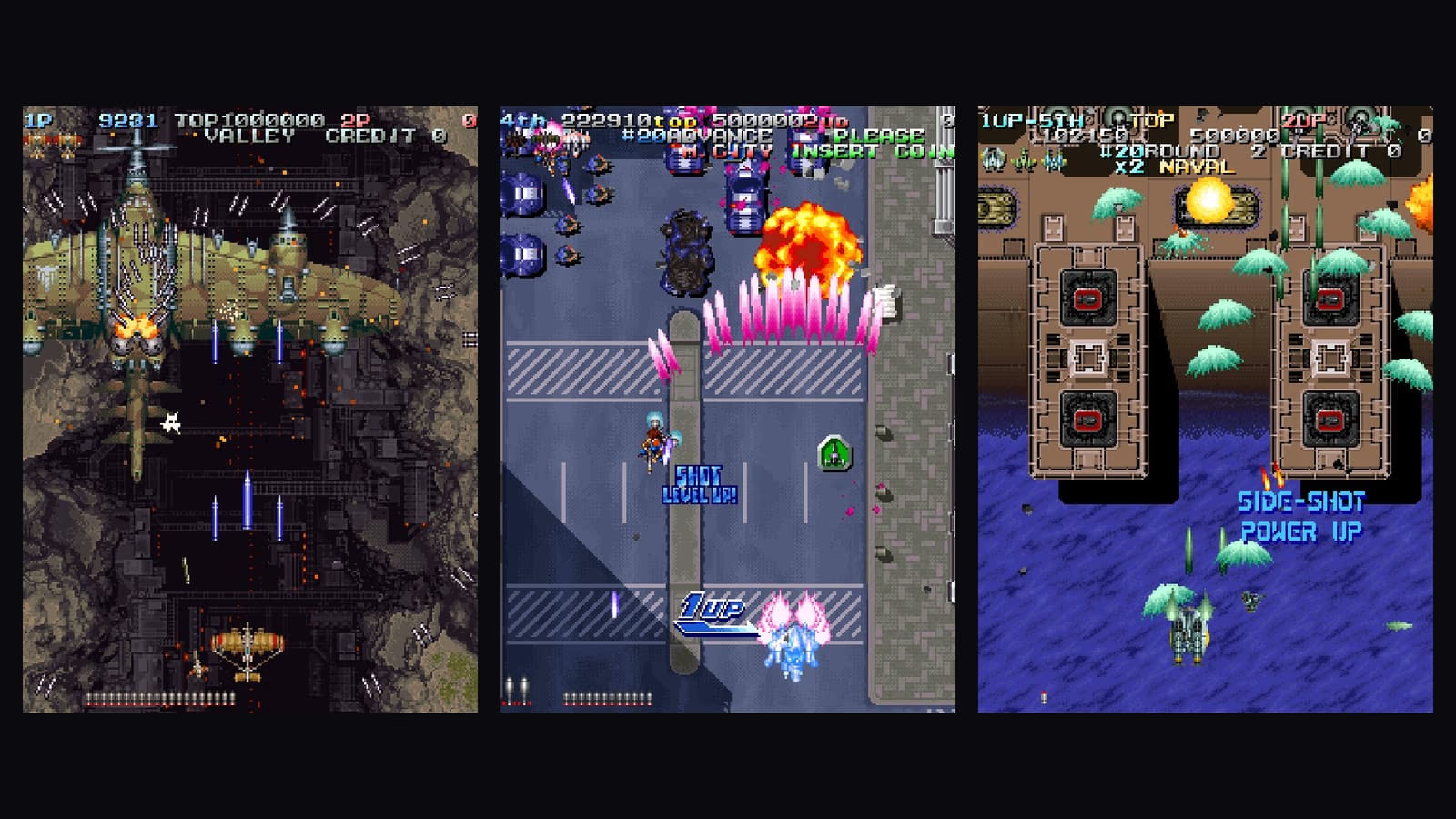
Arcade-RaizingMD Core Brings Battle Garegga and Batrider to MiSTer-devel
A rewritten open source core for Raizing's five Toaplan-based shooters, from Sorcer Striker to Battle Bakraid, was published to the MiSTer-devel organisation on 15 November. Its author says the old code was replaced and retuned against measurements from real boards.
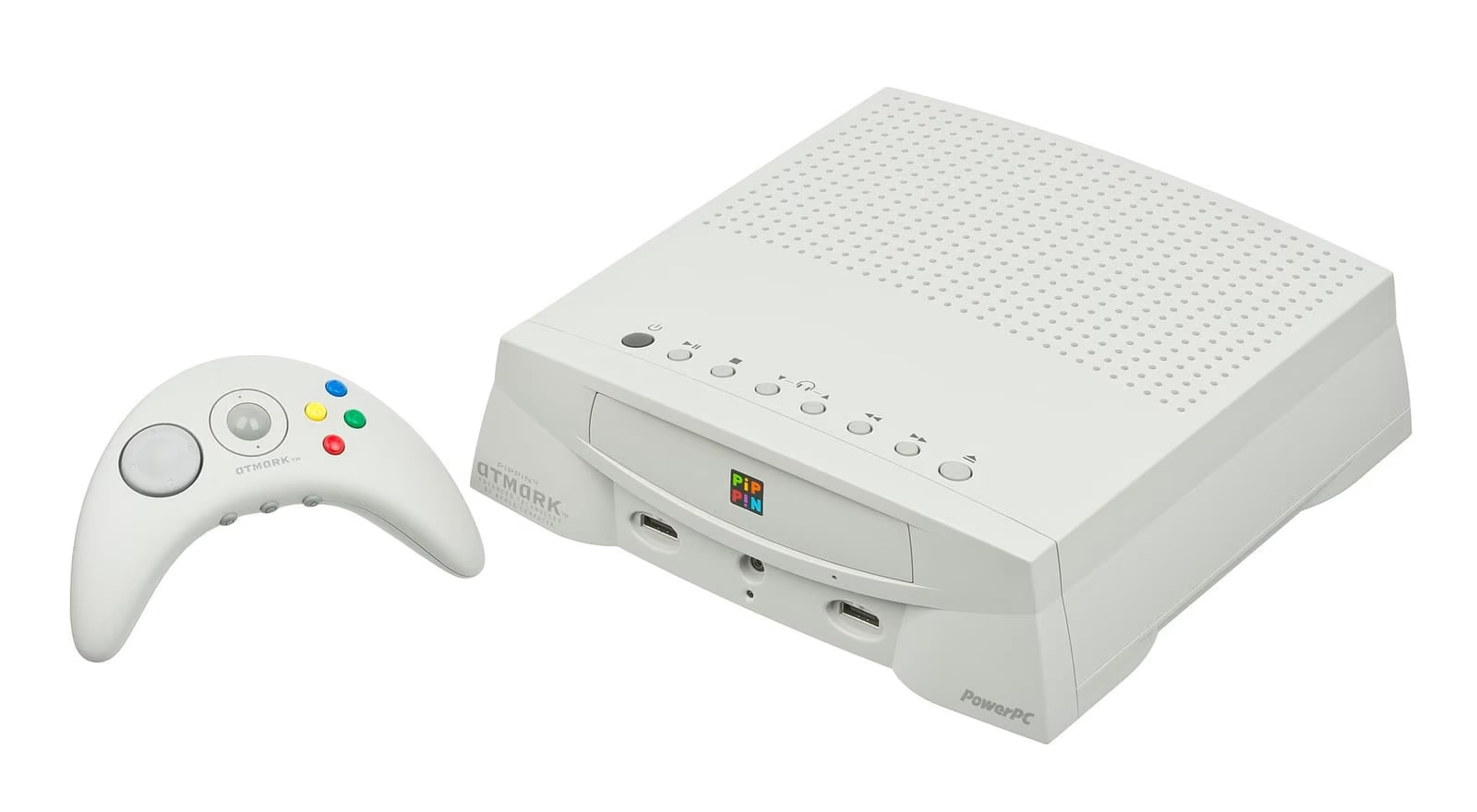
Bandai Pippin Gets a MiSTer Core
Dani Sarfati's BandaiPippin core, published to MiSTer-devel on 14 November, recreates Apple and Bandai's 1996 console down to its PowerPC 603. It boots the Pippin ROMs and four discs to their menus; playing titles through is not yet tested.
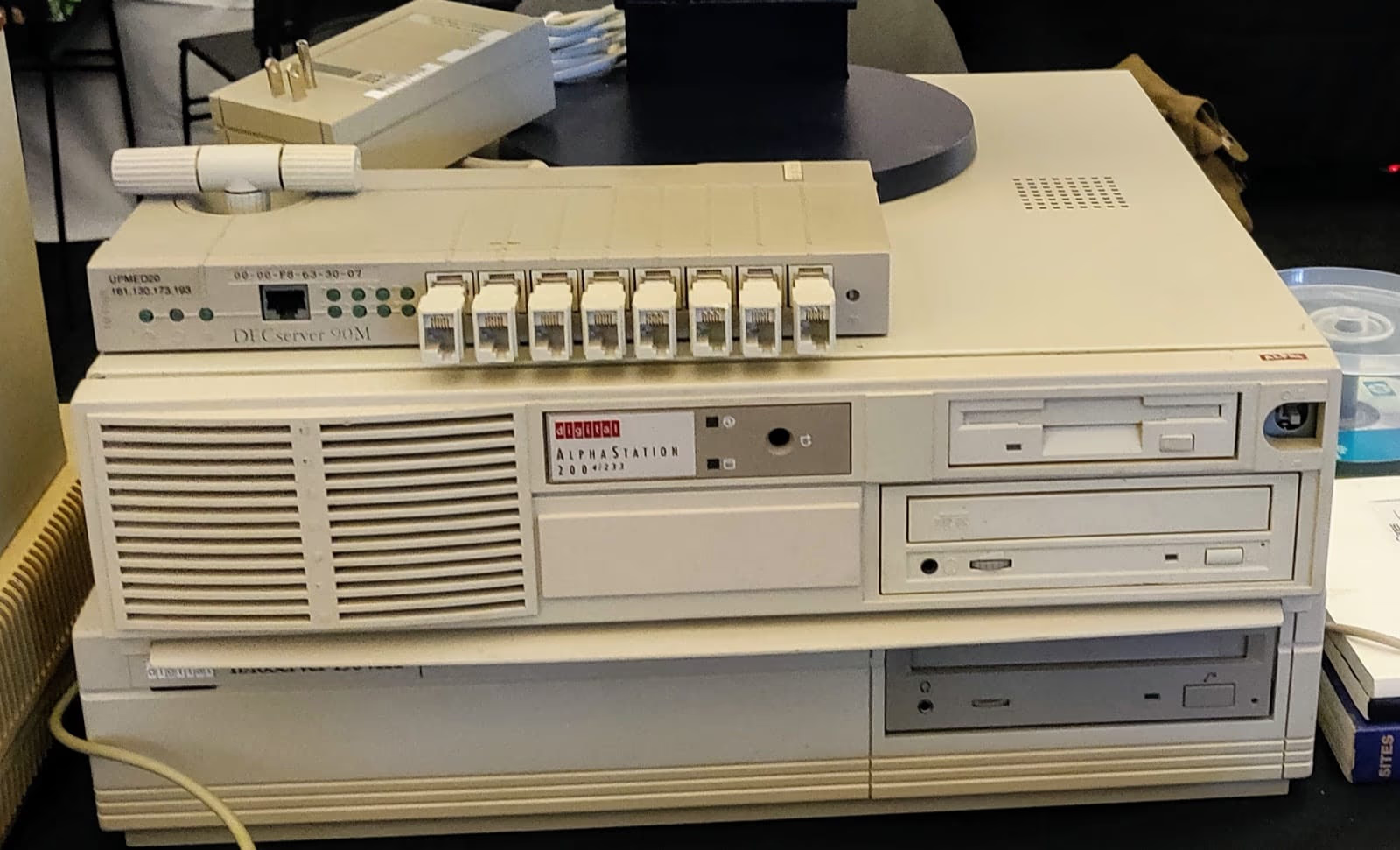
MiSTer Gets a DEC AlphaStation 200 Core That Runs OpenVMS, Tru64 and Windows NT
Dani Sarfati's DECAlphaStation200 core puts DEC's 1995 Alpha workstation on the MiSTer with its own SRM and ARC firmware, and boots OpenVMS, Tru64 UNIX, NetBSD, FreeBSD, Windows NT 4.0 and a Windows 2000 release candidate.