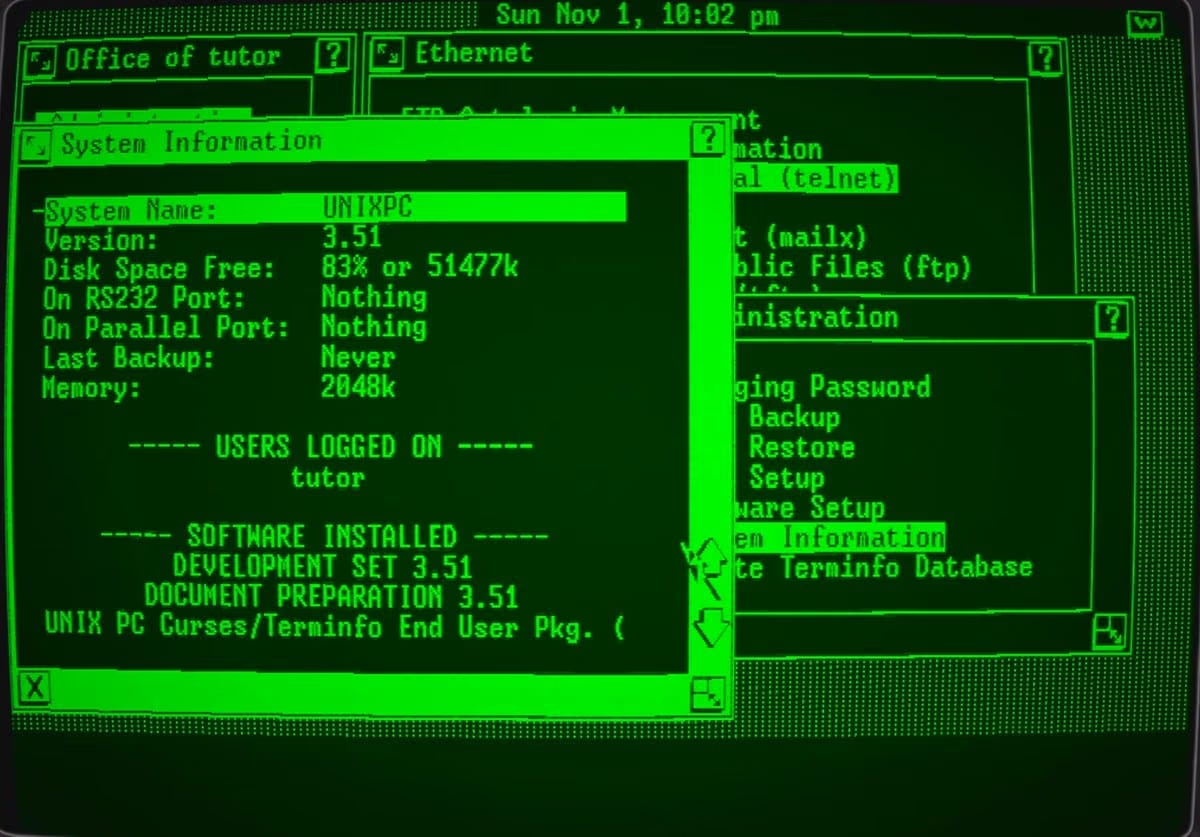
Image: Hrvoje Čavrak, MiSTer-devel 3B1 repository (GPL-3.0)
MiSTer Gets an AT&T UNIX PC (3B1) Core, Modem and Phone Included
The MiSTer now has a core for the AT&T UNIX PC, the 1985 office workstation also sold as the PC 7300 and the 3B1. Hrvoje Čavrak published it to the MiSTer-devel organisation on GitHub on 9 November, with a first build dated the same day, and it boots AT&T's own System V UNIX 3.51 from a disk image. It goes further than most computer cores in recreating the machine around the processor: the memory management unit, the disk controllers, a printer, the Ethernet card and the built-in telephone, whose modem the core turns into a telnet client.
What the core does
The README lists the parts. The CPU is a 68010 core, "mostly cycle exact", with the original memory management unit and page map around it. RAM can be set from 512 KB to 4 MB, with parity checking. The WD1010 hard disk and WD2797 floppy controllers are there, with the DMA path, in the README's words, "modelled chip by chip", reading images from the SD card. There is a keyboard with shortcuts for the keys a PC keyboard lacks, a mouse, a real-time clock set from the MiSTer's date, a serial port, the front panel LEDs, a virtual line printer, Ethernet through the machine's LANCE expansion card, and a working telephone with hook, dialler, ringer and modem. The machine's own boot diagnostics and diagnostic floppy also run.
The hardware requirement is stricter than for most cores. The core needs a DE10-Nano with the SDRAM add-on board, because the machine's RAM lives there: the README notes that the FPGA's own memory is under 1 MB and the UNIX PC can have 4 MB. The dated file, 3B1_20261109.rbf, sits in the core's releases folder and has also been added to the computer folder of the official Distribution_MiSTer repository.
No ROM or software comes with it, since both are still under copyright. The boot ROM is two 8 KB EPROM dumps from Bitsavers, one supplying the high byte of each 16-bit word and the other the low byte, saved as boot0.rom and boot1.rom in a 3b1 folder. Without them the screen reads NO BOOT ROM FOUND. For the hard disk, the README points to two ready-made images with UNIX System V 3.51 installed, one made by David Gesswein for the VCF Museum and one by Arnold Robbins loaded with extra software, each needing a particular disk geometry chosen in the core's menu. Installing UNIX from the Foundation Set floppies, also on Bitsavers, is the long way round.

A telephone that dials the internet
The UNIX PC was sold as a telephone as much as a computer, and the core takes that seriously. Wikipedia's entry lists an internal 300/1200 bit/s modem and three phone jacks. The README explains that the logic board has a hook relay, a touch-tone dialler chip, a ringer and a 1200 baud modem, with no Hayes AT command set: the kernel dials through its own driver. The core watches the kernel dial, reads the number as an IP address and port, and connects to that address over telnet. Dialling 192168010254*23 reaches port 23 at 192.168.010.254, with the dial tone, touch tones, ringing and handshake played through the HDMI audio. The line has to be switched to tone dialling first, because left at its defaults the kernel pulse-dials by clicking the hook relay and the core never sees the digits.
Ethernet is bridged the way the MiSTer's Sun2, A2065 and Mac cores already do it, according to Čavrak's pull request. The README explains the split: the FPGA stops at the edge of the frames, and a small module in Main_MiSTer, the program running on the board's ARM side, carries them to the local network. AT&T's WIN/3B LAN 1.4 software drives the card unmodified, and the README walks through loading the driver, setting an address and starting the telnet and FTP servers. It warns that these "speak 1980s protocols with no encryption" and should never be exposed to the internet. The printer, on the parallel port, has its own view: Alt+F2 shows a scrolling sheet of fan-fold paper, and Alt+F1 returns to the screen.
A CRT without a frame buffer
The UNIX PC's 12-inch monitor showed a 720 by 348 monochrome picture in green phosphor, per Wikipedia. The core redraws that bitmap as a CRT at 1280 by 720, with phosphor persistence, glow, curvature, rounded corners, a rolling band, line wobble and noise, all switchable in the menu, and green, white, amber or mint phosphor.
Čavrak explains in the README why it needs no frame buffer. A full 1280 by 720 frame is close to 900 KB, and the DE10-Nano's FPGA has around 700 KB of block RAM. Both the machine's 20 MHz clock and the video's 75 MHz clock come from one 600 MHz PLL, so each machine line maps to exactly two output lines and the output frame stays a fixed distance behind the machine. Only the lines the curvature needs are kept, in a 64-line, 64 KB ring buffer, which also means the picture cannot tear. Persistence fades each pixel over eight frames, about 133 ms.
The machine and the developer
AT&T Information Systems launched the UNIX PC on 26 March 1985. Convergent Technologies developed it under the codename "Safari 4". The base model had a 10 MHz Motorola 68010, 512 KB of RAM and a 10 MB hard drive, and cost between $5,095 and $7,290. The 3B1, introduced in October 1985 from $8,495, added a full-height 67 MB drive, a better power supply and 1 or 2 MB of memory on the board. Its operating system, UNIX 3.51, was based on System V Release 2 with additions from BSD. Čavrak's README puts the price at roughly $17,000 once adjusted for inflation, and frames the project around the "we have UNIX at home" meme.
Software emulation has been limited. Phil Pemberton's FreeBee emulator, on GitHub since 2019, describes itself as a work in progress that boots the operating system and runs the standard C compiler. MAME's driver, credited to Dirk Best and R. Belmont, is described in its own source as a skeleton and is flagged as not working.
Čavrak lists Munich as home and describes himself on GitHub as a production engineer and a retro computing enthusiast. His best-known project is DeskHop, a device built from two Raspberry Pi Pico boards that shares one keyboard and mouse between two computers, with nearly 8,000 stars on GitHub. The UNIX PC work first appeared in his own unixpc repository on 6 November. The README also shows Linux 2.6.25 booting on the core, which took removing instructions the 68010 lacks from the m68k port, a job Čavrak blames on "a widespread assumption that every 68k is a 68020".
What is not known yet
Ethernet depends on Main_MiSTer support. Čavrak's pull request adding the bridge was opened on 7 November and was still open on 10 November, so whether a stock MiSTer can use the network card now, or only after that change is merged, is not stated. The README's install link to a 3b1_project releases page does not load; the build is in the MiSTer-devel repository instead. There is one dated build and no compatibility list beyond the operating system, the networking package and the diagnostics the README describes, and the keyboard shortcuts were, by the author's own account, assigned without careful planning and may change.
New to MiSTer? Which MiSTer to buy and how to set it up covers the hardware, Update All and installing cores. Another workstation reached the platform last week: the IBM RS/6000 43P 7248 core.
Sources
- MiSTer-devel on GitHub: UNIX PC (3B1 / PC7300) for MiSTer
- MiSTer-devel on GitHub: 3B1 core releases
- MiSTer-devel on GitHub: Distribution_MiSTer: _Computer folder
- MiSTer-devel on GitHub: Add AT&T UNIX PC (3B1) Ethernet bridge (pull request #1413)
- hrvach on GitHub: unixpc: Unix PC Implementation in FPGA
- hrvach on GitHub: DeskHop: Fast Desktop Switching Device
- philpem on GitHub: FreeBee: AT&T 3B1 / 7300 UNIX PC emulator
- MAME on GitHub: MAME unixpc.cpp driver
- Wikipedia: AT&T UNIX PC
More News
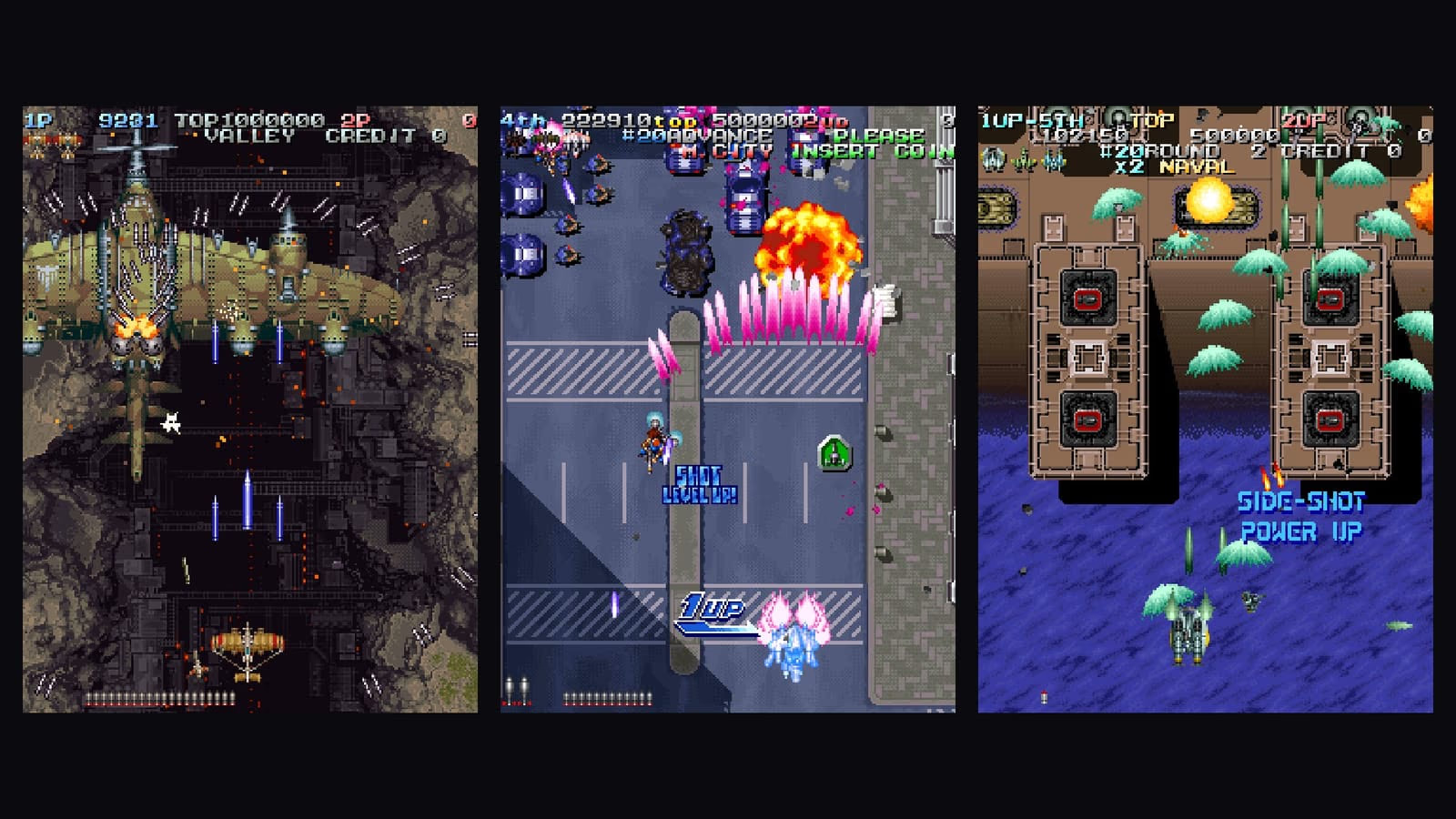
Arcade-RaizingMD Core Brings Battle Garegga and Batrider to MiSTer-devel
A rewritten open source core for Raizing's five Toaplan-based shooters, from Sorcer Striker to Battle Bakraid, was published to the MiSTer-devel organisation on 15 November. Its author says the old code was replaced and retuned against measurements from real boards.
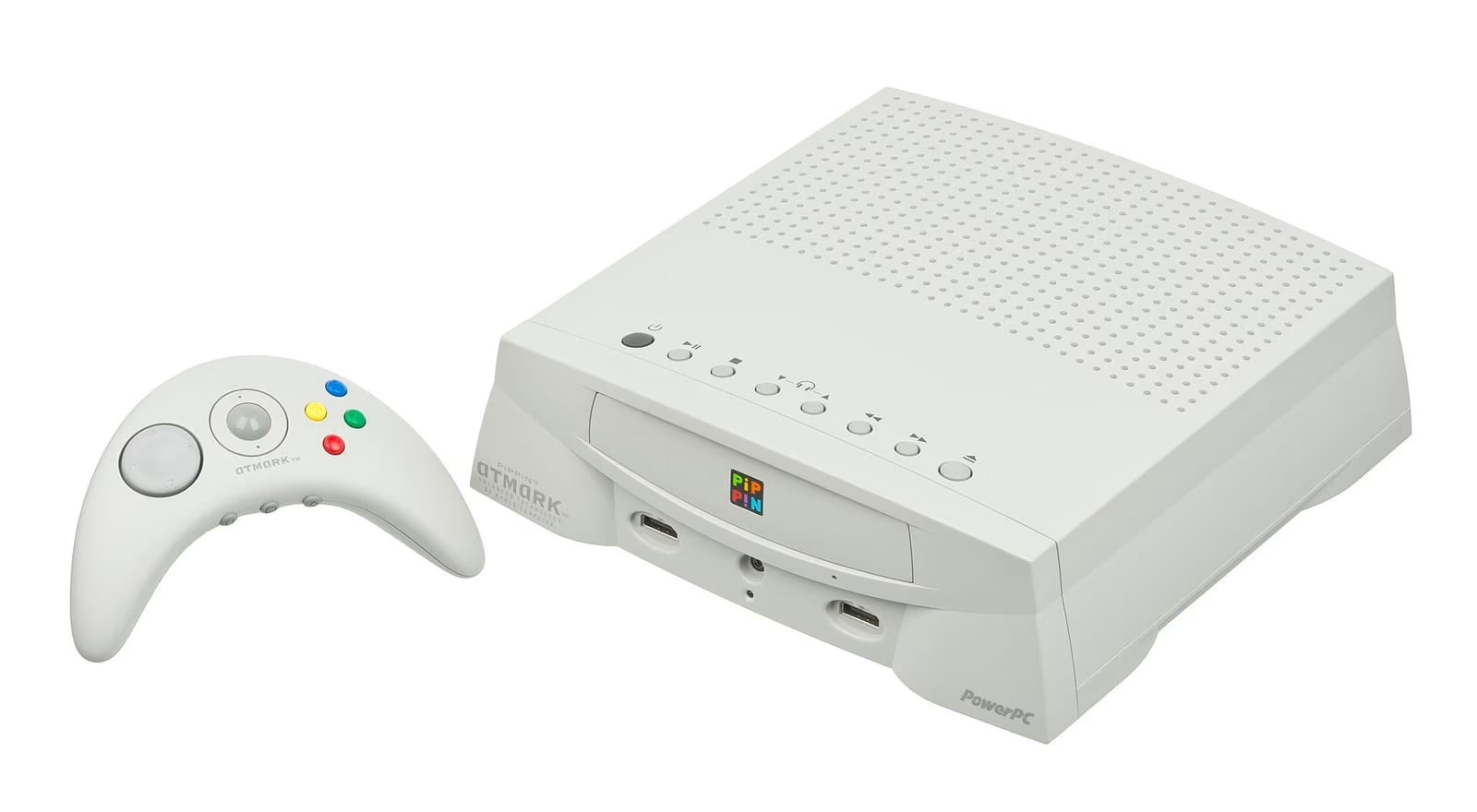
Bandai Pippin Gets a MiSTer Core
Dani Sarfati's BandaiPippin core, published to MiSTer-devel on 14 November, recreates Apple and Bandai's 1996 console down to its PowerPC 603. It boots the Pippin ROMs and four discs to their menus; playing titles through is not yet tested.
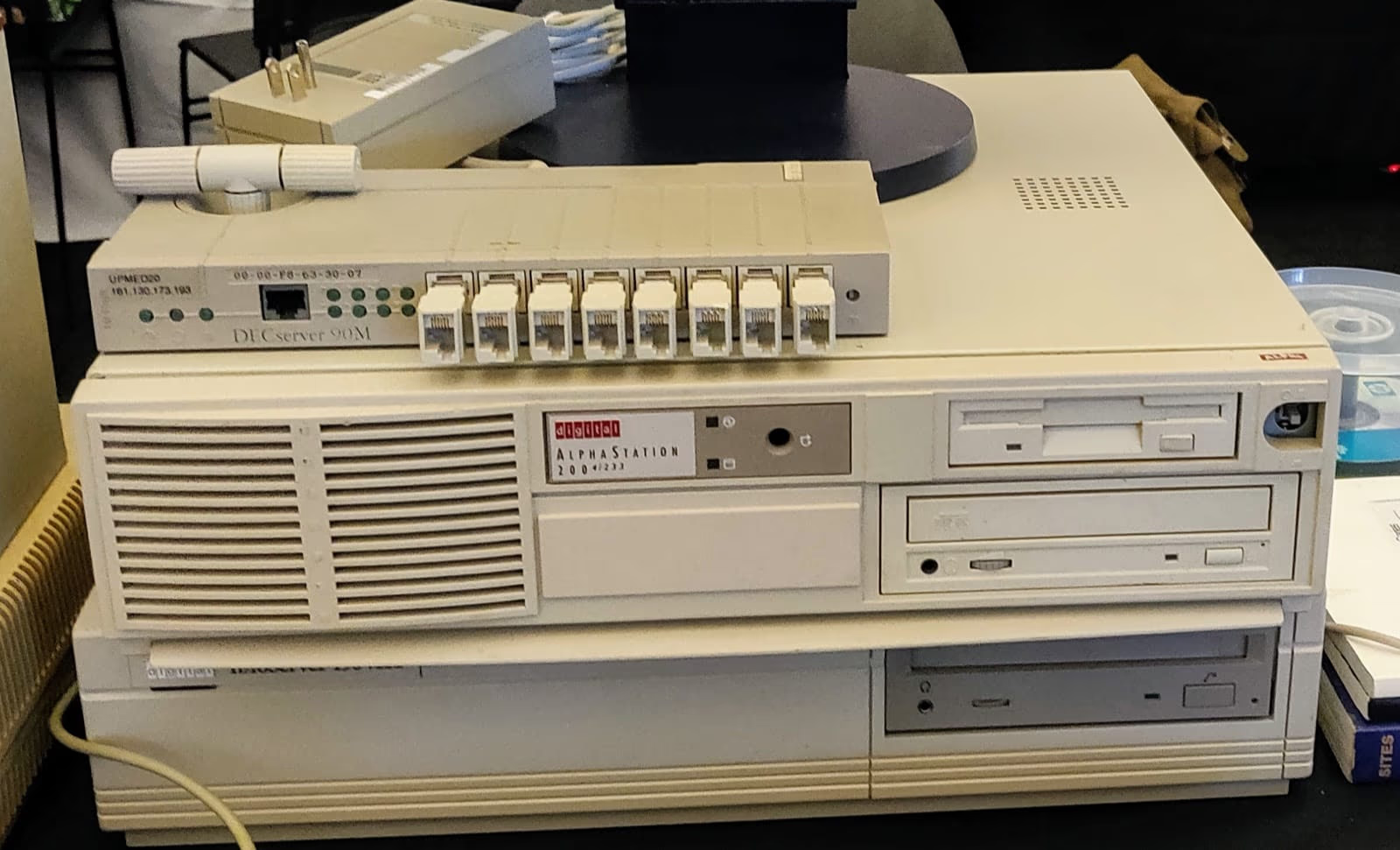
MiSTer Gets a DEC AlphaStation 200 Core That Runs OpenVMS, Tru64 and Windows NT
Dani Sarfati's DECAlphaStation200 core puts DEC's 1995 Alpha workstation on the MiSTer with its own SRM and ARC firmware, and boots OpenVMS, Tru64 UNIX, NetBSD, FreeBSD, Windows NT 4.0 and a Windows 2000 release candidate.