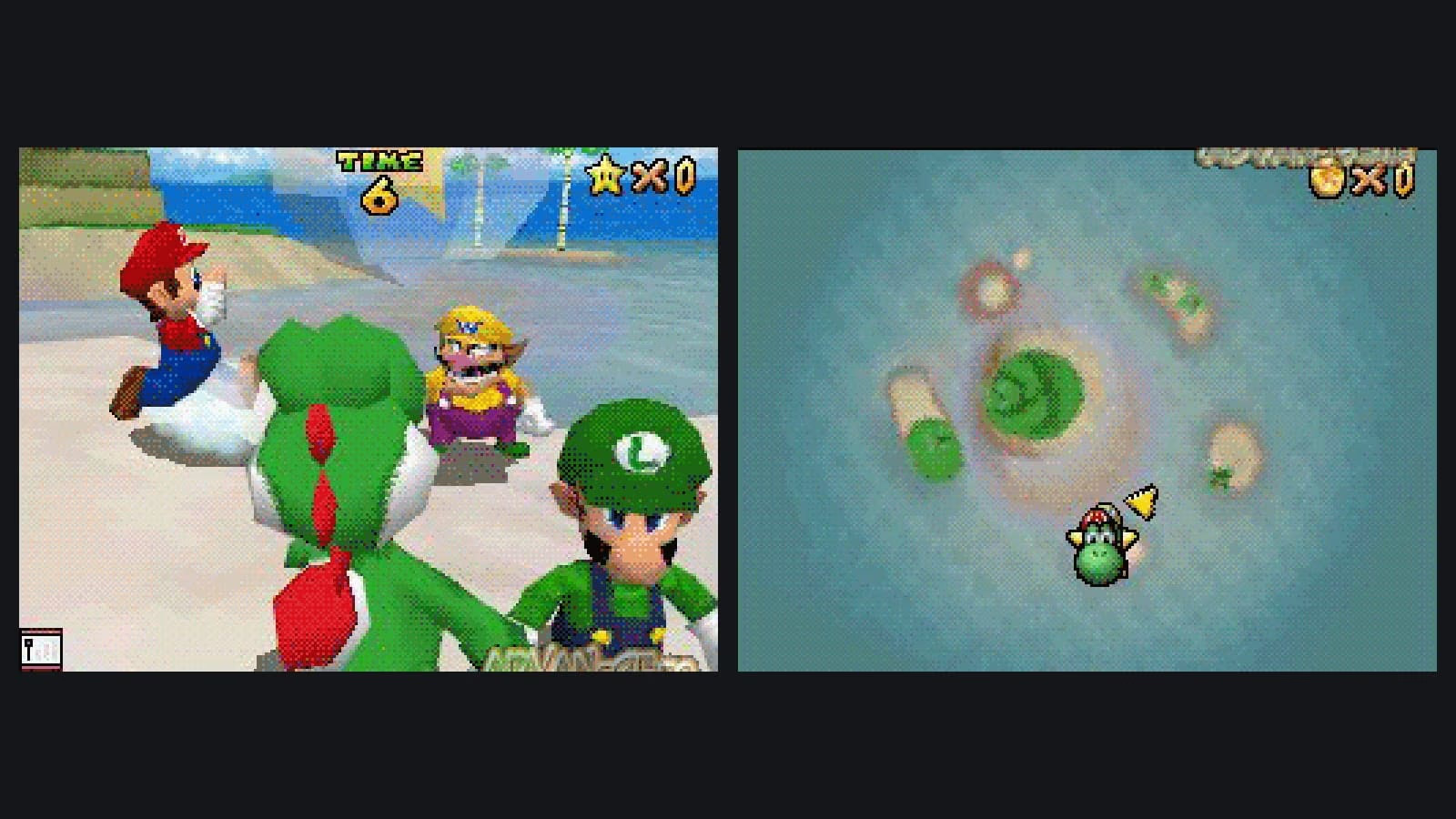
Image: Super Mario 64 DS (Nintendo, 2004), both screens, screenshot via libretro-thumbnails
Experimental Nintendo DS Core for Analogue Pocket Released, Written Mostly by AI Assistants
An experimental Nintendo DS core for the Analogue Pocket was published on GitHub on 6 November by a developer using the name GuardianSoul, as version 0.5.0, with 0.5.1 following about 18 hours later the same day (UTC). The release notes list Super Mario 64 DS, Mario Kart DS, New Super Mario Bros., Pokémon HeartGold and SoulSilver, Animal Crossing: Wild World and Kingdom Hearts 358/2 Days as playing on a Pocket with 3D, sound and saves. Two caveats come with the news. The author labels the core experimental, with several 3D effects switched off to fit the Pocket's chip. And the README states that "OpenAI Codex and Anthropic Claude wrote nearly all of the HDL, firmware, test programs, tools, tests and documentation", with a human maintainer setting the goals and testing on a real DS and a Pocket.
Cart & Pixel has not run the core. What follows about how it performs comes from the author's own documentation, except where independent evidence (download counts and issues filed by other users) is noted.
What the release notes say works
The 0.5.0 notes describe the core as "written from scratch against measurements of a real DS": both CPUs, the memory system, the 2D and 3D engines and the sound hardware were written for this core rather than ported from an existing one.
A compatibility table dated 6 November lists nine games tested on a Pocket. Five are marked Playable: Super Mario 64 DS and Mario Kart DS at full speed, Pokémon HeartGold and SoulSilver, New Super Mario Bros., and Animal Crossing: Wild World at about 20 frames a second, which the author notes is how the game runs on a DS. Four carry Minor issues: Pokémon Black 2 and White 2 slow down in cities, Kingdom Hearts 358/2 Days drops to about 50 to 60 percent speed in heavy scenes with several enemies, Golden Sun: Dark Dawn has a bouncing title screen, and Mario & Luigi: Partners in Time shows a flickering logo line. Pokémon Platinum, Kirby Super Star Ultra, Jump Ultimate Stars and Professor Layton titles have been checked in simulation only, not on a Pocket build.

Version 0.5.1 adds touch gestures, a save chip list covering every game (fixing write errors reported in issues #1 and #2), SD card read-ahead to remove most slowdowns and crackling music during streaming, and faster heavy 3D scenes.
Both releases' notes list the same cuts. Shadow polygons, toon and highlight shading, fog, edge marking, anti-aliasing and the 2D mosaic effect are switched off to fit the chip; the README says the source can build them and they come back "as room is found". The heaviest 3D scenes can run a little below full speed, some busy 3D scenes show black lines, and a short stutter can remain when a game loads a lot of data at once. There is no sleep mode, no save states and no DS firmware menu, and DSi-only games are not supported.
Fitting a DS into the Pocket's chip
The README gives the Pocket's FPGA as an Intel Cyclone V 5CEBA4 with 18,480 logic blocks (ALMs), 308 M10K RAM blocks and 66 DSP blocks, and says the core must run at 67 MHz. Analogue's developer page gives the Pocket's FPGA as a Cyclone V with 49K logic elements and 3.4 Mbit of block RAM.
The author built a complete reference design first, with every DS feature on. It measured about 113,000 ALMs, which the README calls "six times the chip". That design is kept as the accuracy reference, and the core that ships is a separate, much smaller one. The README lists where the room came from: a small RISC-V processor (SERV, by Olof Kindgren) runs firmware that manages the game ROM cache; the DS's slow peripherals (firmware and save chips, WiFi registers) run as microcode on one small engine; the geometry engine is microcoded; the boot program lives in the Pocket's external SRAM; and the 3D command FIFO spills into SDRAM. Each change was measured in a full Quartus fit and checked against the previous version with an equivalence test.
Some differences from a real DS are recorded as deliberate. The ARM9's caches are larger than the DS's (16 KiB instruction and 16 KiB data, against 8 and 4 KiB), which the README says makes up for the Pocket's slower external memory, and the 3D engine renders 6 lines ahead instead of about 43, so a late 3D line can show as a missing line.
For what the Pocket's FPGA is and how cores for it work, see Cart & Pixel's guide to Analogue Pocket openFPGA cores and the explainer on FPGA retro gaming.
Touch without a touchscreen
The DS, released in North America on 21 November 2004 according to Wikipedia, paired a 67 MHz ARM946E-S with a 33 MHz ARM7TDMI, 4 MB of RAM and two 3-inch 256 by 192 pixel screens, the lower one a resistive touchscreen, plus a microphone and 802.11b wireless. Wikipedia puts lifetime sales at 154 million units.
The Pocket has none of those three inputs. The README states that touch is mapped to the buttons, the microphone hears silence, and there is no wireless play of any kind, though the core keeps enough of the DS's WiFi registers for games to start without a communication error.
Touch mode is toggled with Select plus A, B, X or Y. In it, the D-pad moves a cursor over the bottom screen and A acts as the stylus. Since 0.5.1 each face button can instead be assigned a gesture from the cursor position: a circle, a big circle, or a swipe in one of four directions. With an analogue controller in the Dock, the right stick moves the cursor. Select plus L or R cycles the screen layout between both screens, top only and bottom only. The README is direct about the limits: games that need fast or precise stylus input "are hard or impossible to play this way".
Setup needs the user's own BIOS and firmware dumps beside the .nds files. Saves are raw .sav files compatible with melonDS and flashcarts; EEPROM and FLASH types are supported, the rare 8 MiB NAND saves are not. Both the README and the release notes warn that the save is written to the SD card only when the user quits through the Pocket menu, so turning the Pocket off mid-game loses everything saved since the game started.
How it was built
Development started on 22 October 2026, according to the README, about two weeks before the first public release.
Test programs were run on a DS and a DS Lite from a SuperCard DSTWO flashcart over 43 hardware runs, timing instruction and memory costs, caches, DMA, the 2D, geometry and 3D engines and sound. Each measured rule went into a ledger of about 150 rules, each marked as followed, parked with a reason, or a known difference. Game checks run against a patched build of melonDS, the DS emulator by Arisotura and the melonDS team, with the measured rules added; simulations of the core compare frames and CPU traces against it. Every build is checked this way on six saved scenes before it goes on a Pocket: four from Mario Kart DS, the HeartGold title and the Animal Crossing: Wild World title.
On the AI question, the README says the assistants worked "as several parallel sessions with a coordinating session", while a human maintainer "set the goals, made the design and scope decisions, ran the test programs on a real DS and tested builds on a Pocket". The paragraph ends: "Review the code with that origin in mind." The core is licensed GPL-3.0-or-later, each release includes the complete source it was built from, and the repository states it is not affiliated with or endorsed by Nintendo or Analogue. The credits name GBATEK, pret's Pokémon decompilations, Adam Gastineau (agg23), the N64 core MIRLO64 by tortuga, PocketQuake and OpenGateware.
The DS cores before it
Two MiSTer projects are credited as sizing references, with the README stating that none of their code is in this core.
Nitro_DarkSide, from MiSTfits-devel, was created on GitHub on 8 August 2026 and last pushed on 13 August. Its README describes an in-progress DS core for the DE10-Nano whose scope is 2D games only, with the 3D engine out initially. Its stated thesis is that Robert Peip (FPGAzumSpass) had already shown a DS core was feasible with an unreleased prototype that ran 2D titles, and that the obstacle was resources rather than correctness. The Pocket README says Nitro_DarkSide's published fits came to about 41,500 ALMs, over twice the Pocket's chip.
NDS4MiSTer, by SplashDev88, describes itself as an experimental Nintendo DS core for MiSTer and reached v0.9.0-rc.14 on 6 November, the same day as the Pocket release. Its notes say slowdown, audio hitches and glitches remain possible. The Pocket README characterises it as running Nitro_DarkSide with 2D and 3D handled in software on the MiSTer's ARM processor, a route not open on the Pocket, which has no such processor. Peip's GBA_MiSTer core was also synthesised for the Pocket's chip at the start, to estimate what the equivalent DS blocks would cost.
Who is behind it
The GuardianSoul GitHub account dates from October 2010 and has seven public repositories. Its PlayStation core for the Pocket, created on 15 October 2026 and described as based on the MiSTer PSX core, has had nine releases from v0.5.0 on 15 October to v0.5.8 on 5 November. Retro Dodo covered it on 22 October, with Sebastian Santabarbara writing that "To be transparent, it's been vibe-coded, with OpenAI Codex and Anthropic Claude." The author's name beyond the handle, location and background are not given in any of the sources.
What is not known
No independent review of the DS core has been published. The compatibility table, the speed figures and the account of the method are all the author's own, and Cart & Pixel has not verified any of them.
There is some independent evidence that other people are running it. As of 8 November the 0.5.1 zip had been downloaded 405 times and the 0.5.0 zip 307 times. Six issues were filed by other GitHub users on 6 November: Burnout Legends write error (closed), The World Ends With You save data issue (closed), Electroplankton multiple issues (open), Portrait of Ruin corrupted save infinite loop and Dawn of Sorrow black screen (open), Kirby Super Star Ultra freeze (closed) and Data could not be written on 0.5.1 (closed on 7 November). The first two are the save issues 0.5.1's notes cite as fixed.
Still open: how far beyond the nine tested games compatibility reaches, when or whether the switched-off 3D effects return, how games that lean on the touchscreen fare, and how the code holds up to the review the author invites.
Sources
- GuardianSoul on GitHub: Nintendo DS core for Analogue Pocket
- GuardianSoul on GitHub: Releases: v0.5.0 and v0.5.1
- GuardianSoul on GitHub: COMPATIBILITY.md
- GuardianSoul on GitHub: Issues, openfpga-NintendoDS
- GuardianSoul on GitHub: PlayStation core for Analogue Pocket
- Retro Dodo: We Finally Have A PlayStation Core Working On The Analogue Pocket
- MiSTfits-devel on GitHub: Nitro_DarkSide: Nintendo DS core for MiSTer
- SplashDev88 on GitHub: NDS4MiSTer
- melonDS team on GitHub: melonDS
- tortugaveloz on GitHub: MIRLO64
- Analogue: openFPGA Developer
- Wikipedia: Nintendo DS
More News
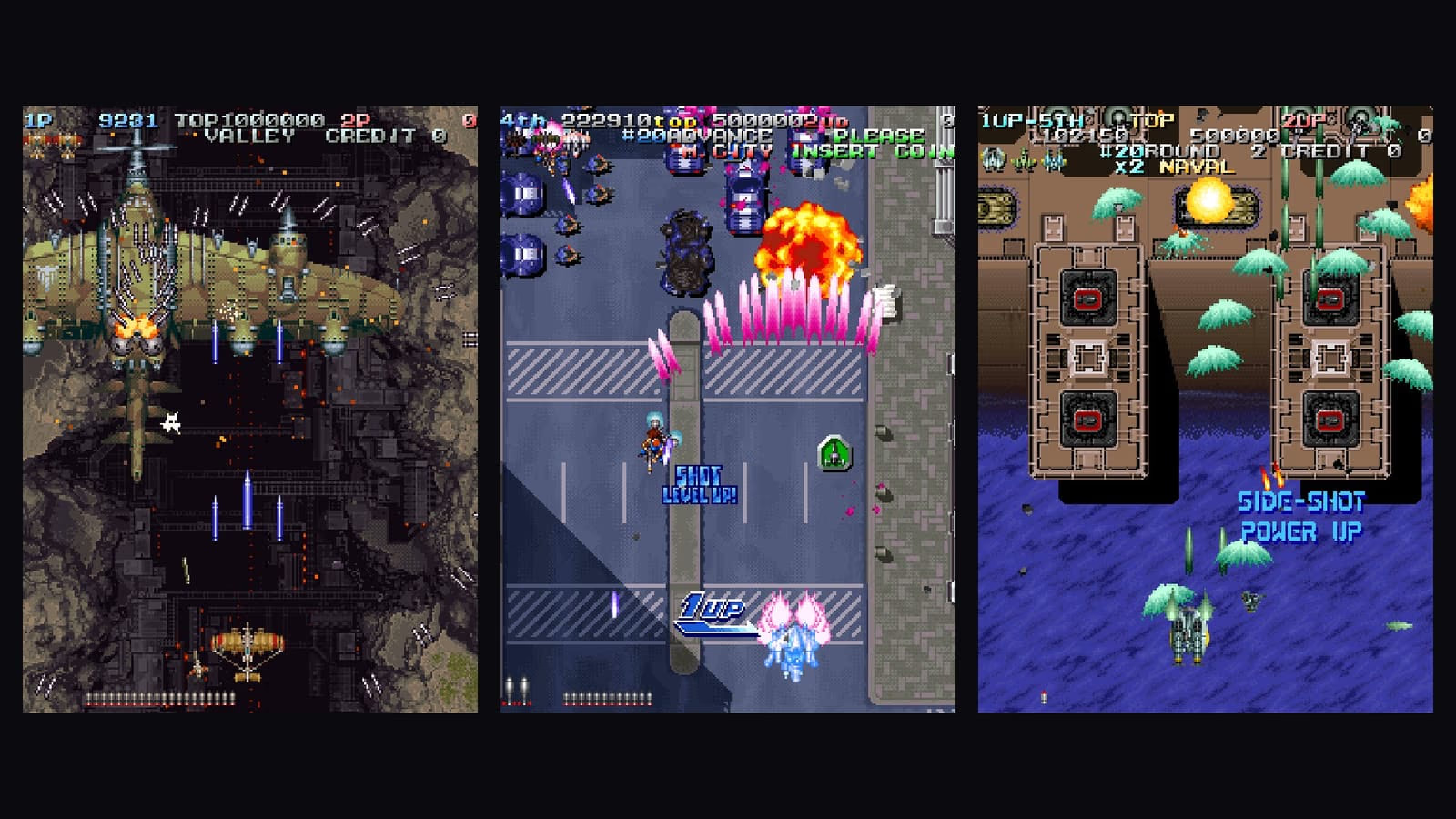
Arcade-RaizingMD Core Brings Battle Garegga and Batrider to MiSTer-devel
A rewritten open source core for Raizing's five Toaplan-based shooters, from Sorcer Striker to Battle Bakraid, was published to the MiSTer-devel organisation on 15 November. Its author says the old code was replaced and retuned against measurements from real boards.
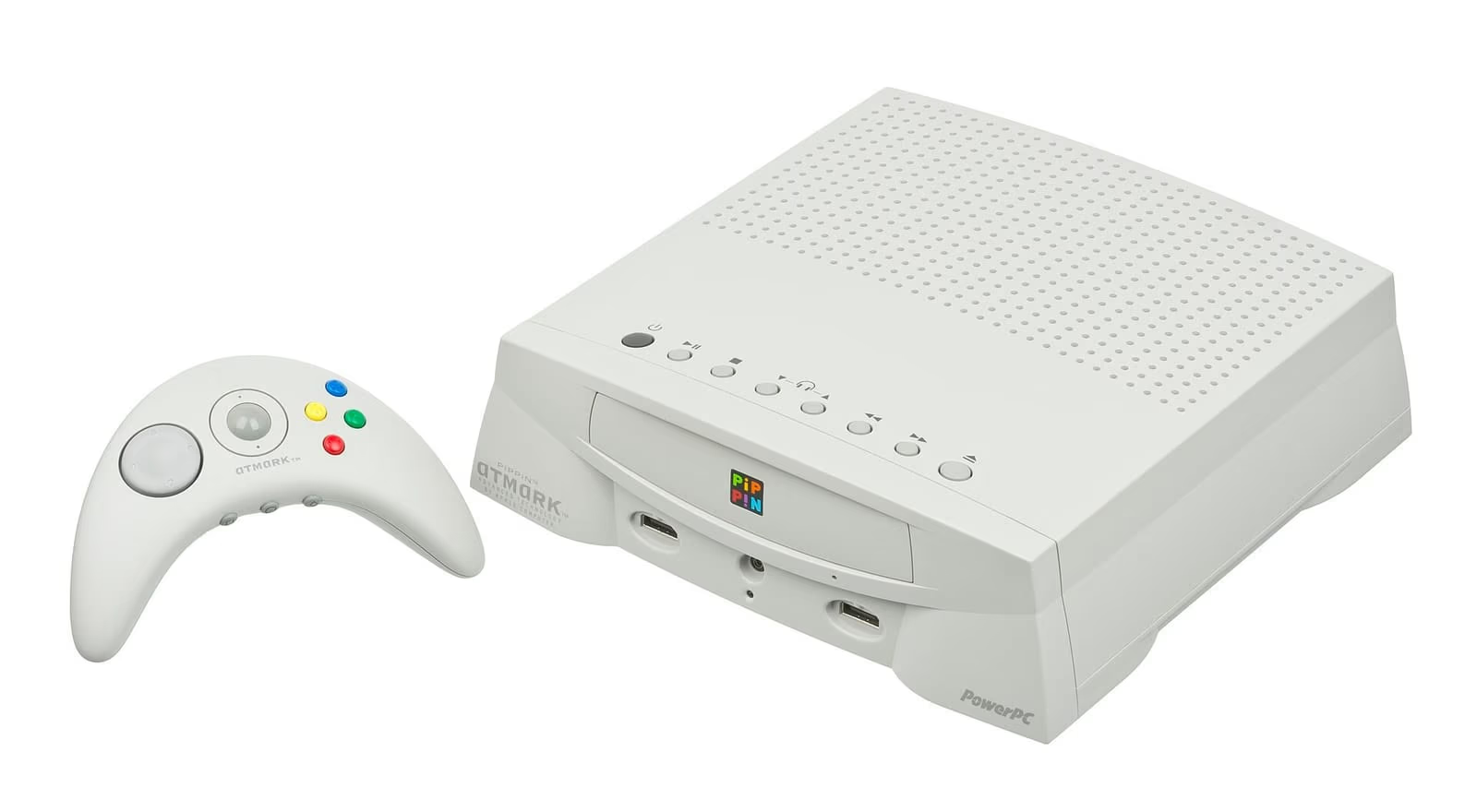
Bandai Pippin Gets a MiSTer Core
Dani Sarfati's BandaiPippin core, published to MiSTer-devel on 14 November, recreates Apple and Bandai's 1996 console down to its PowerPC 603. It boots the Pippin ROMs and four discs to their menus; playing titles through is not yet tested.
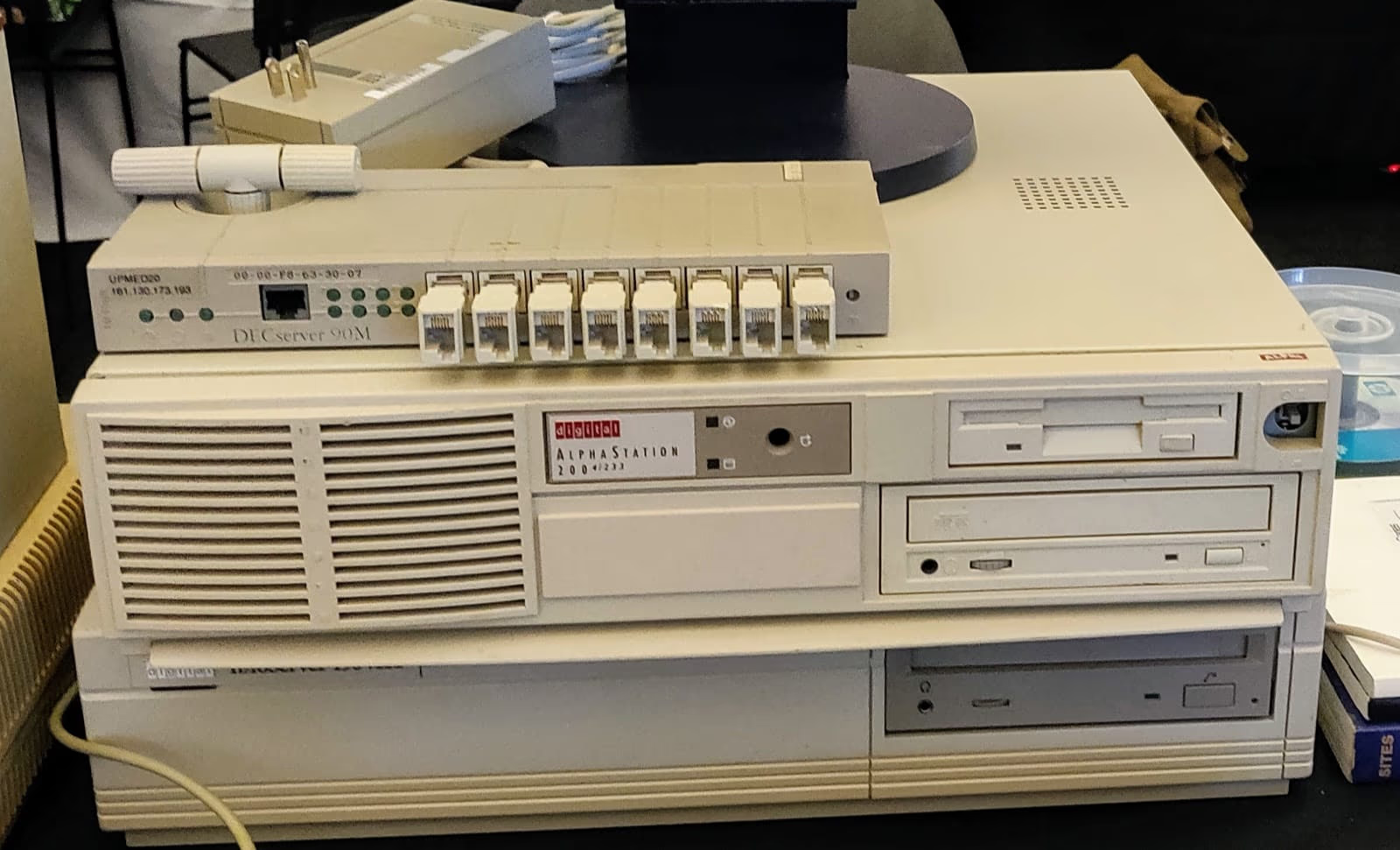
MiSTer Gets a DEC AlphaStation 200 Core That Runs OpenVMS, Tru64 and Windows NT
Dani Sarfati's DECAlphaStation200 core puts DEC's 1995 Alpha workstation on the MiSTer with its own SRM and ARC firmware, and boots OpenVMS, Tru64 UNIX, NetBSD, FreeBSD, Windows NT 4.0 and a Windows 2000 release candidate.