Fahrenheit (Indigo Prophecy)
Fahrenheit (Indigo Prophecy). Quantic Dream, 2005. Played on original PS2 hardware, 2026.
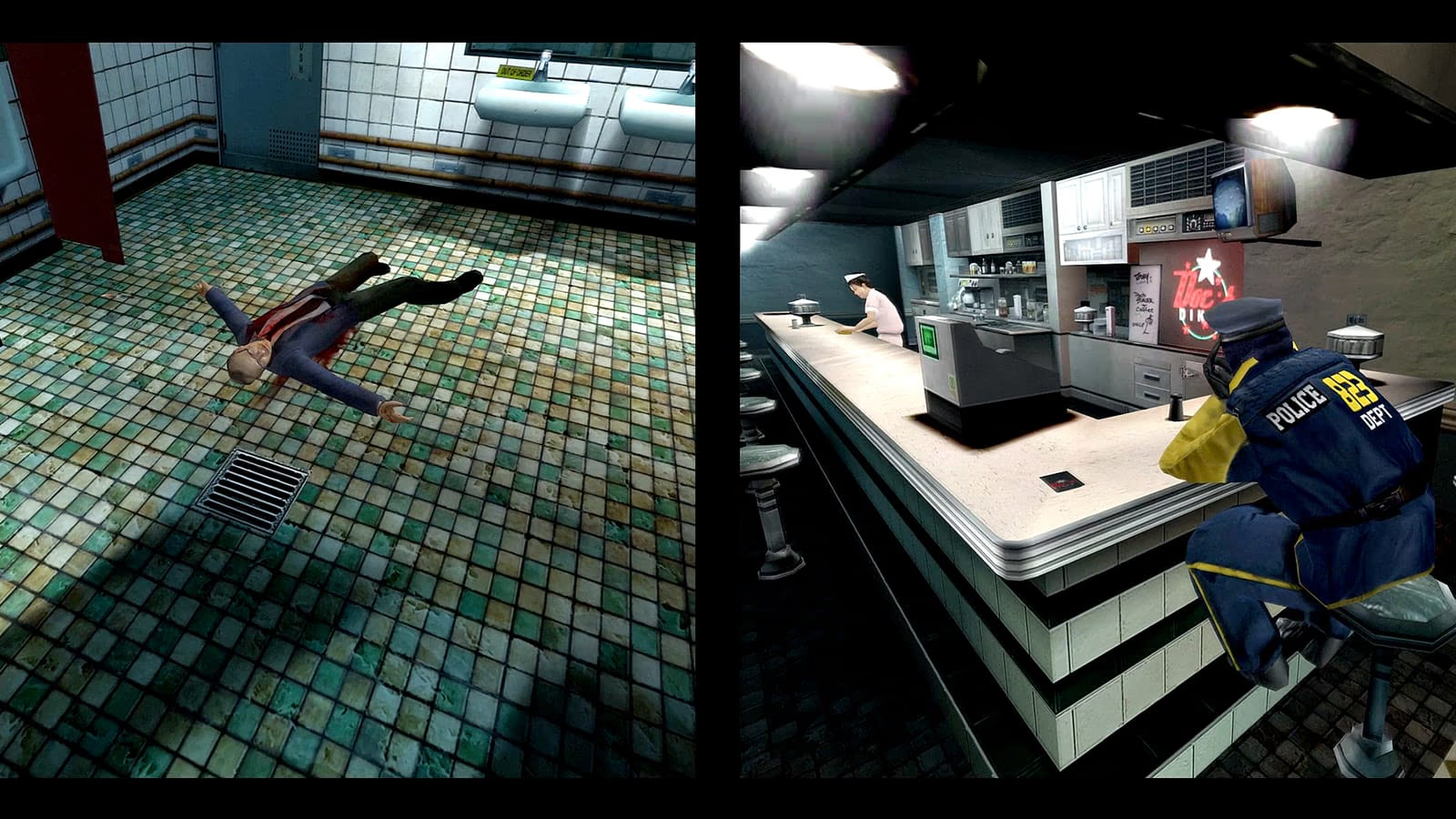
There's a man in the toilet of a New York diner, and he's just killed someone. He doesn't know why. Neither do you, and that's the problem, because you are him. You wake up mid-crime, knife in hand, a stranger dead on the floor, strange carvings up your own forearms, and the game quietly does the cruellest thing imaginable: it splits the screen. In one half, you're mopping blood off the tiles with shaking hands. In the other, a police officer sitting at the counter finishes his coffee, folds his newspaper, and stands up. He needs the toilet.
Nothing in games had ever done that to me before. Nothing has quite done it since. The diner scene from Fahrenheit, or Indigo Prophecy if you were on the other side of the Atlantic, isn't just a great opening. It's a machine for manufacturing pure dread, built from the language of cinema and bolted onto a controller, and in 2005 it announced that games could open like Blood Simple instead of like a tutorial. You hide the body or you don't. You wash your hands or you don't. You walk out past the cop, heart going, trying to act normal with an analogue stick. Then you pay your bill, because you're a murderer, but you're not a monster.

I first sat through that scene in 2007. I finished the game about three weeks ago. This is the story of the nineteen years in between.
A rainy night in 2007
Picture it: I'm twenty-one, in my first apartment, freshly off a run of shift work. It's raining properly outside, the kind of rain that makes staying in feel like an achievement rather than a defeat. I turn the lights off, sink into the sofa, and put Fahrenheit into the Xbox.
It hit hard. Harder than it had any right to. Playing that opening in the dark, alone, with rain on the windows, was a mistake of the very best kind. The diner sequence rattled me in a way horror games never had. Horror games announce themselves, and Fahrenheit didn't. It just handed me a dead body and a mop and let the panic do the rest. Lucas Kane stumbling out into the snow, Angelo Badalamenti's score doing its mournful Twin Peaks thing underneath, the whole city suddenly hostile. I was all in.
And then, not very long after (embarrassingly not very long after), I stopped. The police come knocking at Lucas's apartment, there's a snowy meeting with his brother in the park, and somewhere around there the momentum broke. I don't remember whether I was genuinely stuck or just stalled, but the disc went back in the case and never came out again. I was barely past the opening act. I'd witnessed one of the great first scenes in the medium, and then I'd walked away from it like a man leaving a cinema after the trailers.

Here's the thing though: it never left. The diner scene lodged itself somewhere permanent. For nineteen years, whenever the conversation turned to games that genuinely unsettled people, my mind went to that split screen, that cop, that mop. And underneath the memory sat a question that quietly nagged at me for two decades: what was it actually about? Why did Lucas kill that man? What was the true story?
The Azeroth-shaped hole
There's a reason the gap lasted nineteen years rather than nineteen months, and its name is World of Warcraft.
Fahrenheit turned out to be the last console game I played for a very long time. Shortly afterwards I went all in on WoW, and I mean all in: the raids, the grind, the guild politics, the lost weekends. It was tremendous fun at the time and I don't regret a minute of it, but it came at a cost I only understood much later: I missed an entire chapter of gaming. A huge one. The back half of the 2000s and beyond happened without me, a whole era of consoles and classics passing by while I was queueing for battlegrounds.
That missing chapter is exactly what I'm catching up on now, and honestly, it's one of the great joys of my gaming life. There's something wonderful about arriving at celebrated games with fresh eyes and no nostalgia to lean on; they have to earn it on merit. And it means my backlog isn't a chore; it's a treasure map. Fahrenheit sat on that map for years with a big red circle around it: the one I abandoned. The murder I left unsolved.
So a few weeks ago I finally went back, and in a move I'm retroactively very pleased with, I did it on original PS2 hardware. I bounced off this game on an Xbox in 2007 and finished it on a PS2 in 2026. I somehow managed to go more retro the second time around. CRT-era presentation, memory card saves, the works. If you're going to close a nineteen-year loop, close it properly.
Does the diner still hold up?
Short answer: completely. Longer answer: it holds up in ways that make you slightly cross with the last two decades.
Going in, my one fear was that the scene I'd been mythologising since 2007 would turn out to be a trick of memory: that the dread lived in my twenty-one-year-old nervous system rather than on the disc. It doesn't. The construction is still watertight. The split screen still generates that specific, horrible arithmetic in your head: he's standing up, I haven't hidden the body, how many seconds do I have? No health bar, no fail-state theatrics, just a countdown made of a stranger's bladder. The scene trusts you to feel the pressure rather than telling you about it, and modern games, for all their prestige-TV ambitions, still rarely trust the player that much.
What surprised me more was how much of the rest of the game operates at that level. The apartment scenes where you play both the hunter and the hunted, sweeping your own crime scene as Lucas and then combing it as Detective Carla Valenti minutes later. The heavy, oppressive weather that sits over the whole game. Cage's New York exists in a permanent unnatural winter, and the game makes the cold itself feel like part of the conspiracy. The mental health meter quietly ticking down as Lucas's life disintegrates, so that making him eat breakfast or play guitar becomes an act of genuine care. This was a game asking "what if the mundane bits were the point?" years before anyone coined the term walking simulator.

And the sound. Badalamenti's score is doing serious lifting throughout, all melancholy strings that make even the loading screens feel haunted, and the ambient design around it is superb for the era. It's a 9/10 soundtrack wrapped around a game that occasionally can't pronounce its own script, of which more shortly.
The ambition, the jank, and the executor in the room
Let's be honest about what it's like to actually play Fahrenheit in 2026, because this is where sincerity has to make room for comedy.
The controls are janky. They were janky in 2005 and two decades have not smoothed them. Lucas steers like a shopping trolley with opinions, the camera has a gift for pointing anywhere except where you're going, and every action is filtered through Cage's beloved motion-controlled analogue gestures: down-then-up on the right stick to open a drawer, as though operating furniture were a martial art. Then there are the QTEs. Oh, the QTEs. Fahrenheit is patient zero for the Simon Says sequence, endless left-right-up-down patterns overlaid on the action like a rhythm game gatecrashing a thriller. Some of them work brilliantly; your hands genuinely tense up in the big set pieces. But by the back third the game is flinging them at you during conversations, hallucinations, and at least one scene where you are, I promise, simply required to breathe. They become tiresome. Even when they're executed (pun very much intended) flawlessly.
Which brings me to the executor. If you've played Fahrenheit, you know. If you haven't: a certain word recurs throughout the plot, and the voice cast collectively decided that its pronunciation was a matter of personal conscience. "Executor" arrives in your ears as ex-eh-cutor, syllables rearranged with total confidence, repeatedly, in scenes of maximum solemnity. The first time, you assume you misheard. The fifth time, it's the funniest thing in the game. By the end I was looking forward to it the way you look forward to a catchphrase. Somewhere in a Paris recording studio in 2005, nobody said anything, and I love them for it.
And then there's the third act. I promised no spoilers and I'll keep it, so let me put it this way: Fahrenheit begins as one of the most grounded, disciplined supernatural noirs ever made: a man, a murder, two detectives, a city in winter. It does not end as one. The widely known behind-the-scenes story is that Cage's script was drastically compressed when time and money ran out, and you can feel the moment the game starts taking corners on two wheels. Plot threads accelerate, the tone lurches, and the grounded thriller you fell in love with goes somewhere considerably more... unhinged. Some players adore the madness. For me, the real-world material (the diner, the guilt, the police work, the ordinary lives buckling under extraordinary pressure) was genuinely 10/10, and watching the game trade it away stung a little. Had it stayed grounded to the end, I'd be writing about a masterpiece with no caveats. That's a personal preference, mind: if you like your thrillers to detonate, the back third might be exactly your poison.
But here's what I keep coming back to: even the collapse is interesting. This is a game failing in the way only something wildly ambitious can fail. Cage was trying to invent an entire genre, the cinematic interactive drama, with 2005 technology, a mid-tier budget, and no map. Heavy Rain, Detroit, Until Dawn, The Quarry: they're all descendants, and they're all glossier, safer, and less alive. Fahrenheit has the beautiful recklessness of a first attempt. They genuinely don't make them like this anymore, partly because nobody would let them.
Finishing a 2005 game with 2026 tools
Now for the part of this playthrough that would have been science fiction to the twenty-one-year-old on that sofa.
Fahrenheit is, in places, obtuse. There's a dialogue scene with a professor that quietly fails you if you pick the wrong conversational path. I kept assuming I was fluffing a stealth section when the game actually wanted different words. There's a military base stealth sequence that is pure trial-and-error cruelty, guards with sightlines apparently borrowed from a lighthouse. I tried these several times each, honestly and stubbornly, the old way. And then, when the frustration curdled, I did the very modern thing: I asked an AI. A quick back-and-forth with Claude or Gemini (what am I missing, no spoilers please) and I had exactly the nudge I needed, nothing more, and I was back in the game inside two minutes.
I want to dwell on this, because I think it's genuinely changed how retro gaming feels. In 2007 my options were a GameFAQs text file the length of a phone book, scrolling through someone's ASCII-art header and inevitably reading a spoiler three lines below the answer, or simply giving up. And I did simply give up; that's literally how this nineteen-year story started. The friction was part of the era, and a certain kind of purist will tell you it was character-building, but let's be honest: it mostly just killed playthroughs. Today you can get a spoiler-safe, precisely calibrated hint the moment you need one, and carry on enjoying the game the way its designers presumably hoped you would. Modern resources have quietly removed the single biggest reason old games went unfinished. The 2007 version of me abandoned Fahrenheit forever over a snowy park scene. The 2026 version got un-stuck twice in an evening and rolled credits.
And there is one delicious irony here that I'll gesture at without spoiling: among Fahrenheit's late-game ideas is a piece of technology that, in 2005, was comfortably the most far-fetched thing in a script featuring ancient prophecies. Playing it in 2026, having just asked an artificial intelligence to help me past the stealth section, that idea lands rather differently. David Cage, accidentally, was on to something. I'll say no more, but when you get there, you'll smile.
Verdict
Nineteen years is a long time to carry a question, and I can now report that the answer was worth the wait, not because the plot resolves elegantly (it, er, doesn't), but because the experience of finally inhabiting this strange, ambitious, broken, brilliant thing paid off the memory in full. The diner scene is still one of the greatest openings in the medium. The middle act is a masterclass in grounded tension. The controls fight you, the QTEs outstay their welcome, and the ending drives the whole thing off a cliff while mispronouncing "executor", and I finished it grinning anyway.
Fahrenheit is essential history even where it isn't essential gaming. If you've never played it, go in cold, play the diner scene with the lights off on a rainy night, and thank me later. Just maybe don't wait nineteen years to see how it ends.
Score Breakdown
Pros
- +The diner opening remains one of the greatest scenes in gaming history
- +Grounded first two acts deliver genuine, sustained dread
- +Angelo Badalamenti's haunting score elevates every moment
- +Wildly ambitious: the blueprint for every cinematic drama that followed
- +Playing both hunter and hunted in the same investigation still feels fresh
Cons
- -Janky controls and a camera with a mind of its own
- -QTE overload that grows tiresome by the final act
- -The story goes spectacularly off the rails in the last third
- -Some obtuse sequences (looking at you, military base) demand trial-and-error patience
You Might Also Like
Shadow of the Colossus
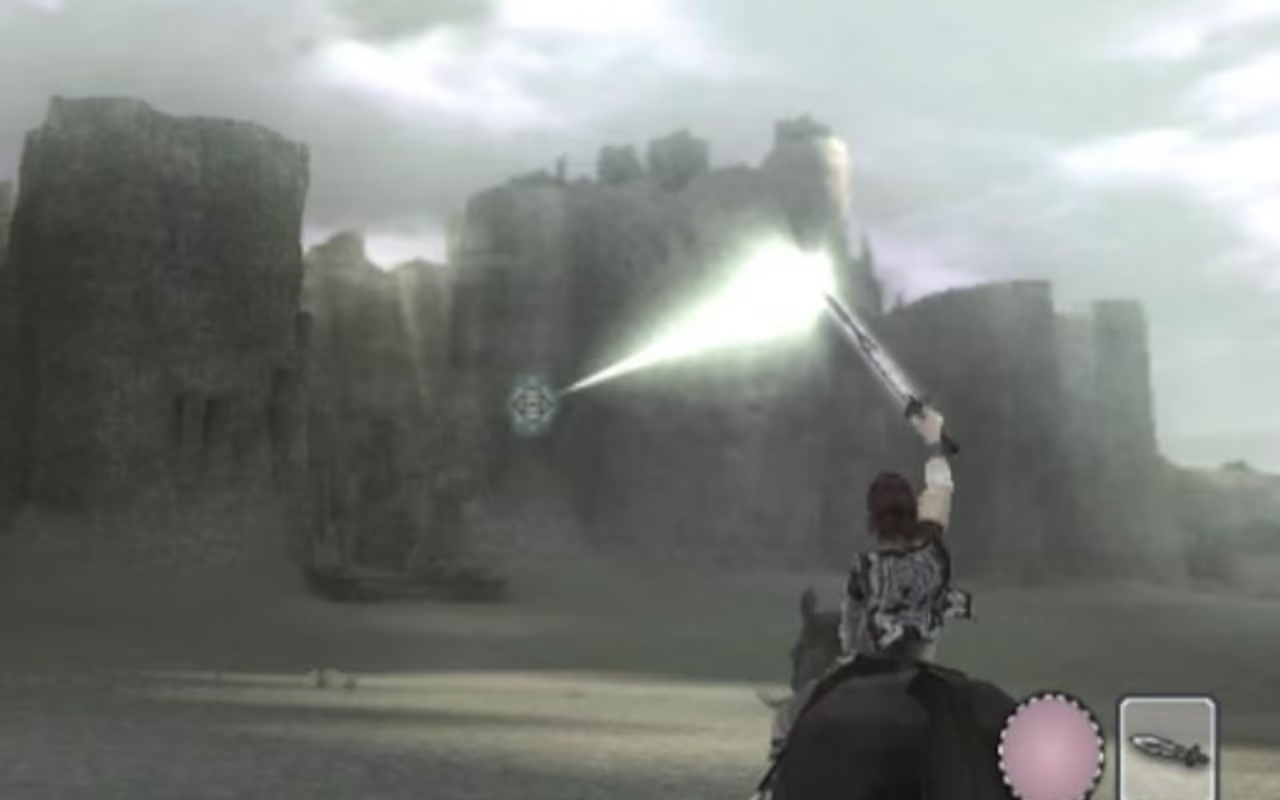
A game made entirely of boss fights, each a towering puzzle of scale and emotion. Fumito Ueda's minimalist masterpiece strips away everything unnecessary and leaves only wonder.
Sam & Max Hit the Road
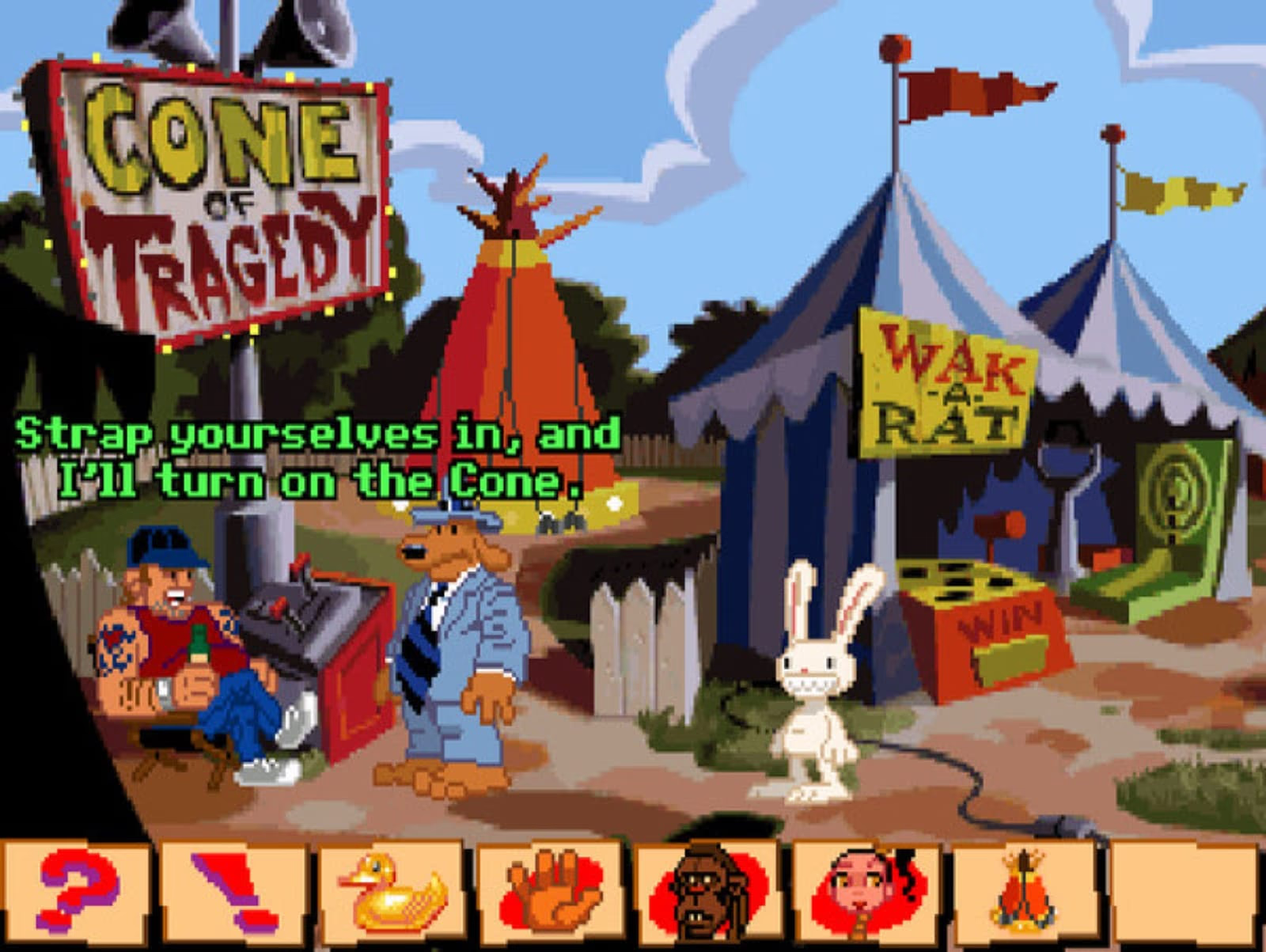
I finished it once in 1993, aged seven, and it took most of a summer. I finished it again last Sunday in a day. The DOS original, on an AO486 core, still one of the best written games ever made.
The Legend of Zelda: Link's Awakening DX
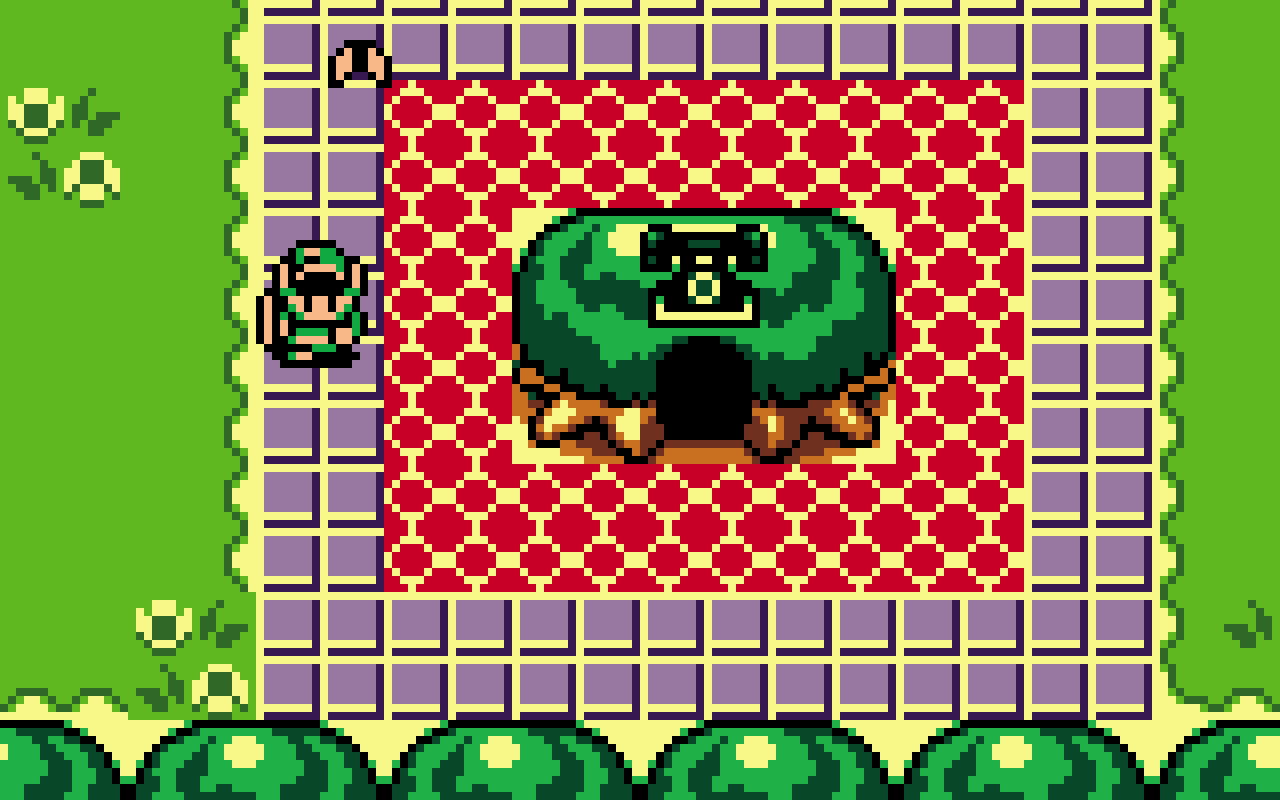
A surreal, heartfelt Zelda adventure on a tiny screen. Link's Awakening DX added color and a bonus dungeon to what was already one of the best handheld games ever made.