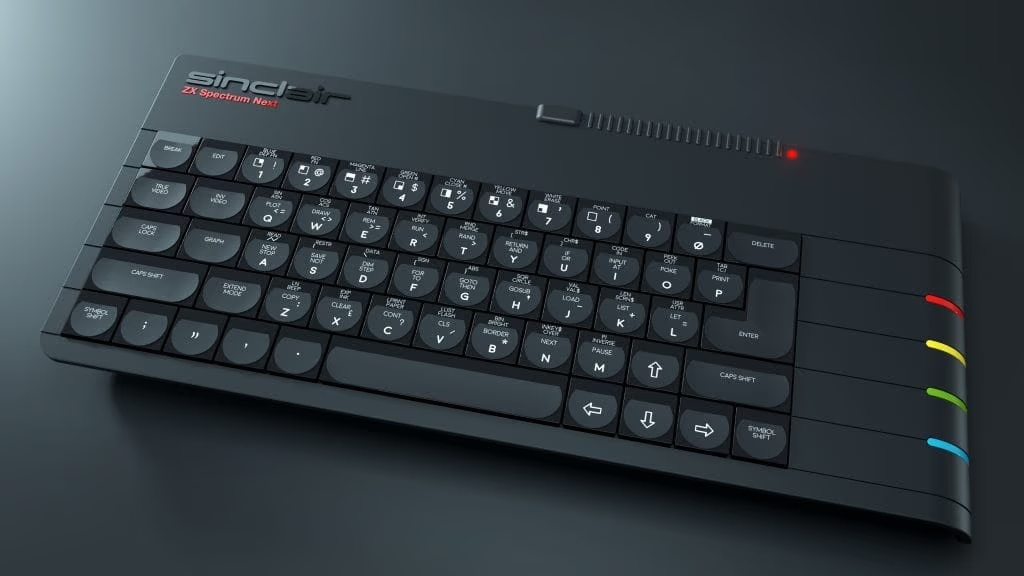
Image: SpecNext Ltd
ZX Spectrum Next Gets System/Next 26.11a With a Core 3.03 Blitter and Zero-Wait 28 MHz
SpecNext Ltd has released System/Next 26.11a, the official software distribution for the ZX Spectrum Next, pairing NextZXOS v2.10a with core 3.03.03 for all three production boards and bringing the machine a blitter, a 28 MHz mode without wait states and a fix for dropped audio on HDMI. The distribution's changelog dates 26.11 to 6 November 2026, the same day a run of "sync to 26.11" commits landed in the project's GitLab repository. The "a" revision followed on 8 November, when the repository took the 3.03.03 core, described in its commit as "Fixes audio glitches on some HDMI monitors", and Garry Lancaster's NextZXOS v2.10a. A new AlpineNext image for the Raspberry Pi accelerator, named alpinenext-0.5.8-2026-11-09, is linked from the same page.
What 26.11a contains
The release page lists NextZXOS v2.10a, the .ZED dot command as a text editor for NextBASIC programs, core 3.03.03 for Issues 2, 4 and 5 with "Zero Wait State 28MHz and zxnDimensionalDMA (zxnDDMA aka Blitter)", firmware 1.46, an updated Sinclair QL core with FAT32 drivers, a long list of new machine personalities, a 60 Hz option per personality that also works over RGB, an INFO screen at boot, a .guide reader that handles larger files and two fonts, and support for AlpineNext. The repository changelog adds two items the page leaves out: a new .playVID video player and an embedded .asm assembler. The differential update system is back, so the Update menu works again; SpecNext recommends a brand new SDHC card as a minimum and offers five downloads: a complete distribution with source, one without source, a lightweight version, the differential .dsu update it recommends, and a 1 GB image for emulators.
The personalities are the Next's way of booting as another machine from a ROM image, and the new set covers three Arabic Spectrum ROMs, French and Spanish +2s, a Swedish Spectrum, English and Spanish editions of the +2A/+3 v4.0 and +2B/+3B v4.1, and five Brazilian Microdigital machines: TK90X v1, TK90X v2 in Portuguese and Spanish, and TK95 in Portuguese and Spanish. The distribution's menu.def gives each of the Microdigital lines its own 60 Hz setting, which is why the page says they "start by default in 60Hz mode". Firmware 1.46 lets F3, or NMI plus 3 on the membrane keyboard, switch between 50 and 60 Hz in every personality, and config mode can give any menu line its own frequency with the H key.
The firmware's other visible change is the boot screen. According to the configuration documentation, which was revised through 30 October to 5 November for version 1.46, pressing "I" at boot opens an Info page listing the machine, its board and memory, the real-time clock, the WiFi module, a Pi Zero if present and whether it runs NextPi or AlpineNext, the video mode config.ini asks for, and each SD card with its partitions and the NextZXOS version it holds. Config mode now sets the video mode too, and the machine can boot straight into a NEX file.
NextZXOS v2.10 itself is dated 9 May 2026 in its changelog. Its additions include a SPRITE OVER command for a separate sprite transparency index, an OVER parameter on TILE BANK, OUT and REG commands that take a list of values, a %CODE option that keeps BEEP and PLAY at the same pitch regardless of CPU speed, layer-aware PLOT, DRAW and CIRCLE entry points in the 48K ROM, and some 30 bug fixes. It also switched the default editor from .QE to .ZED, by Chris Taylor. The v2.10a commit of 8 November replaced the NextZXOS ROM and system files; the changelog in the repository had no 2.10a entry as of 9 November, so what changed between 2.10 and 2.10a is not documented.
What the blitter does
The core's biggest addition is explained in a new zxnDDMA guide, dated 5 November 2026 and credited to SpecNext Ltd, based on a 2018 DMA document by Allen Albright and Mike Dailly. The guide starts from the problem. A Z80 copies memory one byte at a time and its fastest copying instruction, LDIR, takes 21 clock cycles per byte. The Next's existing zxnDMA, modelled on the Zilog Z80 DMA of the 1980s, copies a byte in 6 cycles with its usual settings and in 4 at its fastest, and it has a prescaler that paces transfers at 875,000 divided by a programmed value bytes per second, which is how the Next plays sampled sound through a DAC while the processor carries on.
Core 3.03.00 extends that DMA with what the guide calls DMA+, and the combination is the zxnDDMA, for Dimensional DMA. Everything the old zxnDMA did still works, and the new commands are only available in the DMA's own mode on port 0x6B, not in the Zilog-compatible mode on port 0x0B. The additions are the ones a blitter needs: a full physical address for either end of a transfer, so the DMA can reach any of the Next's memory without the program paging it into the Z80's 64K first; rectangles, defined by a row length, a row count and the stride at each end, so a 32 by 32 image can be lifted out of a sprite sheet and dropped on the screen; a transparent colour whose bytes are not written; a fill command that writes one value over an area without reading; and Layer 2 screen coordinates, in the 256 by 192 and 320 by 256 modes, so the DMA works out the address itself. It can also draw to the Layer 2 screen that is not being shown, so a game can build a frame off screen and swap. The guide names the Amiga and Atari STE as well-known machines with blitters and is plain about the Next's limits: "It copies whole bytes, which on Layer 2 are whole pixels. It does not shift a picture by part of a byte, combine the old and the new pictures, or draw lines (other than straight ones)." Eleven example programs for sjasmplus ship in the distribution's docs/zxnDDMA/examples folder, among them a Lemmings-style demo, a sprite test and a scroller.
Zero wait states at 28 MHz, and the HDMI fix
The 28 MHz mode arrived with core 3.0, but with a cost. The official wiki's page for the CPU speed register records that from core 3.0.5 the 28 MHz setting added "extra wait state to every instruction opcode fetch and memory read", so a NOP took five cycles instead of four and a DMA transfer configured for two-plus-two cycles took three-plus-two, adding that "there is some chance this may be improved in the future". The official core's own README still describes the processor as running at "3.5 MHz, 7 MHz, 14 MHz or 28 MHz with wait states". Core 3.03's "Zero Wait State 28MHz" removes that penalty. SpecNext has not published figures for how much faster real programs run, and the VHDL for 3.03 is not yet public: the official FPGA repository's changelog ends at 3.02.03, the issue 5 build committed on 6 November 2025, and the distribution's own source folder says the core sources "may lag a bit behind" while they are vetted.
The HDMI audio problem is described in two ways. The release page says the core "fixes dropped audio frames on HDMI"; the commit that added 3.03.03 says it "Fixes audio glitches on some HDMI monitors". Nothing in either repository documents what changed between 3.03.00, the version in the 6 November changelog, and 3.03.03.

How to update, and the Kickstarter 1 trap
The page maps the board issues to the three crowdfunding campaigns: Issue 2 is the first Kickstarter machine, Issue 4 the second and Issue 5 the third, and the N-Go and X-Berry Pi clones count as KS1 machines. That numbering can confuse, because SpecNext marketed the campaigns themselves as "Issue 2" and "Issue 3"; the distribution follows the circuit board revisions.
For Issue 4 owners the update is one file, the .dsu, run from Tools then Updater, followed by a reboot holding U to flash the core. Issue 5 owners, whose machines have two card readers, first run a new install.bas from a fresh FAT32 card to install an updater.bas that can update either card. Issue 2 owners get the warnings, in capitals. Since core 3.03.00 the KS1 core is split into an HDMI part and a VGA part; the official changelog had already said of 3.02.01 that "The issue 2 pcb must have separate cores for VGA/RGB and HDMI", while the Issue 4 board outputs both at once. The repository's README now lists three Issue 2 cores: 3.03.03, 3.03.03 vga and 3.03.03 hdmi. KS1 owners must download TBBLUE.TBU and TBBLUE.FW from GitLab, copy them with the .dsu to the card root and flash the core before updating the distribution. The new config.ini sets the display to test card mode, and if the distribution is updated first the old firmware looks for a test card core that is not there and "will make the system appear bricked". The page says it is not, since the anti-brick core is always available, and embeds a video from the Spectrum Next Stuff channel, "Flashing the new 3.03.00 core on Kickstarter 1 machines and derivatives", which it asks KS1 owners to watch before starting. Boot on a KS1 over VGA or RGB can also be slower.
The AlpineNext download is a separate matter. AlpineNext is an Alpine Linux distribution for the Next's Pi Zero accelerator, compatible with the existing NextPi for file uploads and TZX tape loading from the browser, with a web dashboard, Samba shares and an SPI mode that gives the Pi control of the Next's hardware. The page says the 0.5.8 image is "a must update" for Issue 2 and Issue 4 owners and for anyone fitting a Pi Zero or Zero W, needs a 16 GB microSD card and the Raspberry Pi Imager, and is not for the Pi Zero 2 W. It also brings pause, play and rewind to TZX playback. The repository's AlpineNext.md, written for v0.4 in March 2026, says the distribution targets the Zero and Zero 2W, so which boards the new image supports is worth checking against the page before buying one.
Who makes it, and the machine it runs on
The credits name Victor Trucco for the core from 2010 to 2018 and Allen Albright from 2019 to 2026, Garry Lancaster for NextZXOS and the CP/M BIOS, Theodoulos Liontakis for the QL core since 2024 (after Trucco and Till Harbaum's 2015 to 2019 version), and Michael "Flash" Ware, Phoebus R Dokos, SpecNext Ltd and the Alpine Linux team for AlpineNext. The repository credits David Banks with contributions to firmware 1.46, and Dokos made most of the November commits.
The Next began as TBBlue, Trucco and Fabio Belavenuto's FPGA replacement board for the Brazilian TK90X and TK95 Spectrum clones, started in 2010. Henrique Olifiers brought it to Britain, and the machine was revealed at PLAY Expo Blackpool on 30 April 2016 with a case by Rick Dickinson, the designer of the original Spectrum, and Phil Candy, who carried the design on after Dickinson's death in April 2018. The first Kickstarter closed in 2017 with £723,390 from 3,113 backers; boards shipped at the end of that year and cased machines in 2020. The second, in 2020, raised £1,847,106 from 5,236 backers, moved from the discontinued Spartan-6 to an Artix-7 when the component shortage hit, and shipped in late 2023 and early 2024. The third closed on 18 August 2025 with £2,612,335 from 7,524 backers, added a translucent magenta case and licensed QL and Commodore 64 cores, and SpecNext says backer fulfilment begins in November 2026. The zxnDDMA guide states the FPGA in each board: a Spartan-6 SLX16 in Issue 2, an Artix-7 15T in Issue 4 and a 35T in Issue 5, and the blitter is in every 3.03.00 build, including the oldest.
How it compares with MiSTer
The MiSTer ZXNext core is a port of the official core and its README is explicit about the differences: it uses SDRAM rather than the Next's SRAM, so "Some wait states are added in 14MHz and 28MHz modes", it cannot bootstrap other cores, and it uses MiSTer's own HDMI settings. Its latest release file is ZXNext_20260603.rbf, from 3 June 2026, which predates core 3.03. Whether and when the blitter and the zero-wait 28 MHz mode reach MiSTer, or the N-Go and X-Berry Pi clones beyond the KS1 build already covered, has not been announced. The FPGA explainer covers how these recreations differ from software emulation.
What is not known
SpecNext has not published a changelog for core 3.03.00 to 3.03.03 or the source for it, a note on what 2.10a changed, or performance figures for the zero-wait 28 MHz mode. The AlpineNext folder in the repository still carries VERSION 0.5.2 against the 0.5.8 image on the page. The QL core's "many enhancements" are summarised only as the FAT32 drivers. For the Issue 5 machines whose individual backer fulfilment SpecNext says begins in November 2026, 26.11a is the software they will meet first.
Sources
- SpecNext Ltd: System/Next 26.11a
- SpecNext Ltd on GitLab: tbblue: Official System Distribution repository for the ZX Spectrum Next computer
- SpecNext Ltd on GitLab: zxnDDMA guide (docs/zxnDDMA/zxnddma.gde)
- SpecNext Ltd on GitLab: System/Next CHANGELOG
- SpecNext Ltd on GitLab: The config.ini, menu.ini and menu.def files (docs/config/config.txt)
- SpecNext Ltd on GitLab: NextZXOS changelog (docs/nextzxos-changelog.txt)
- SpecNext Ltd on GitLab: AlpineNext.md
- Official SpecNext Wiki: CPU Speed Register (nextreg 0x07)
- SpectrumNext on GitLab: ZX Spectrum Next FPGA core: changelog and README
- Spectrum Next Stuff on YouTube: Flashing the new 3.03.00 core on Kickstarter 1 machines and derivatives. Also Blitter...
- SpecNext Ltd: The ZX Spectrum Next History (so far!)
- SpecNext Ltd: About
- Wikipedia: ZX Spectrum Next
- MiSTer-devel on GitHub: ZXNext_MISTer
More News
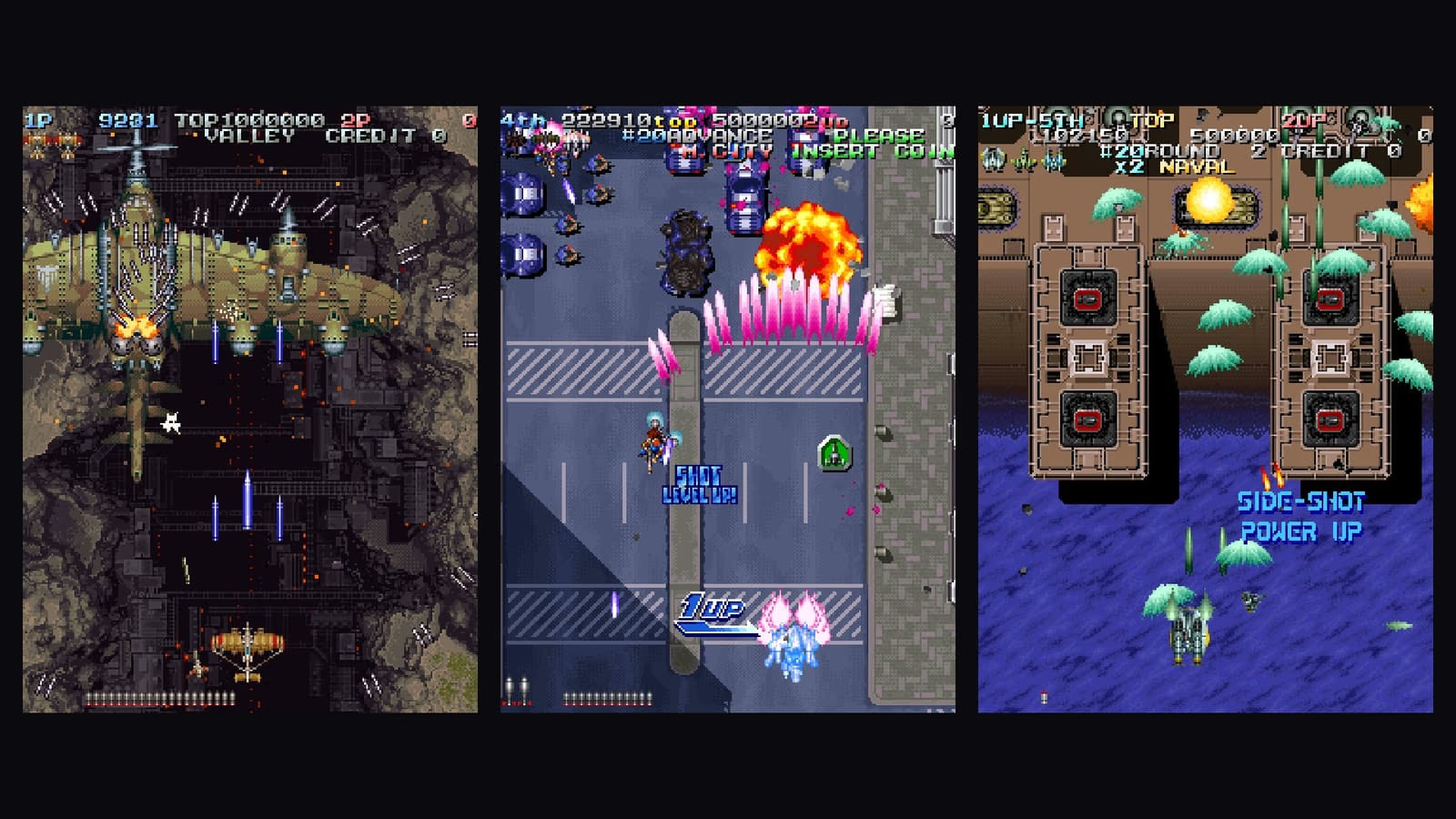
Arcade-RaizingMD Core Brings Battle Garegga and Batrider to MiSTer-devel
A rewritten open source core for Raizing's five Toaplan-based shooters, from Sorcer Striker to Battle Bakraid, was published to the MiSTer-devel organisation on 15 November. Its author says the old code was replaced and retuned against measurements from real boards.
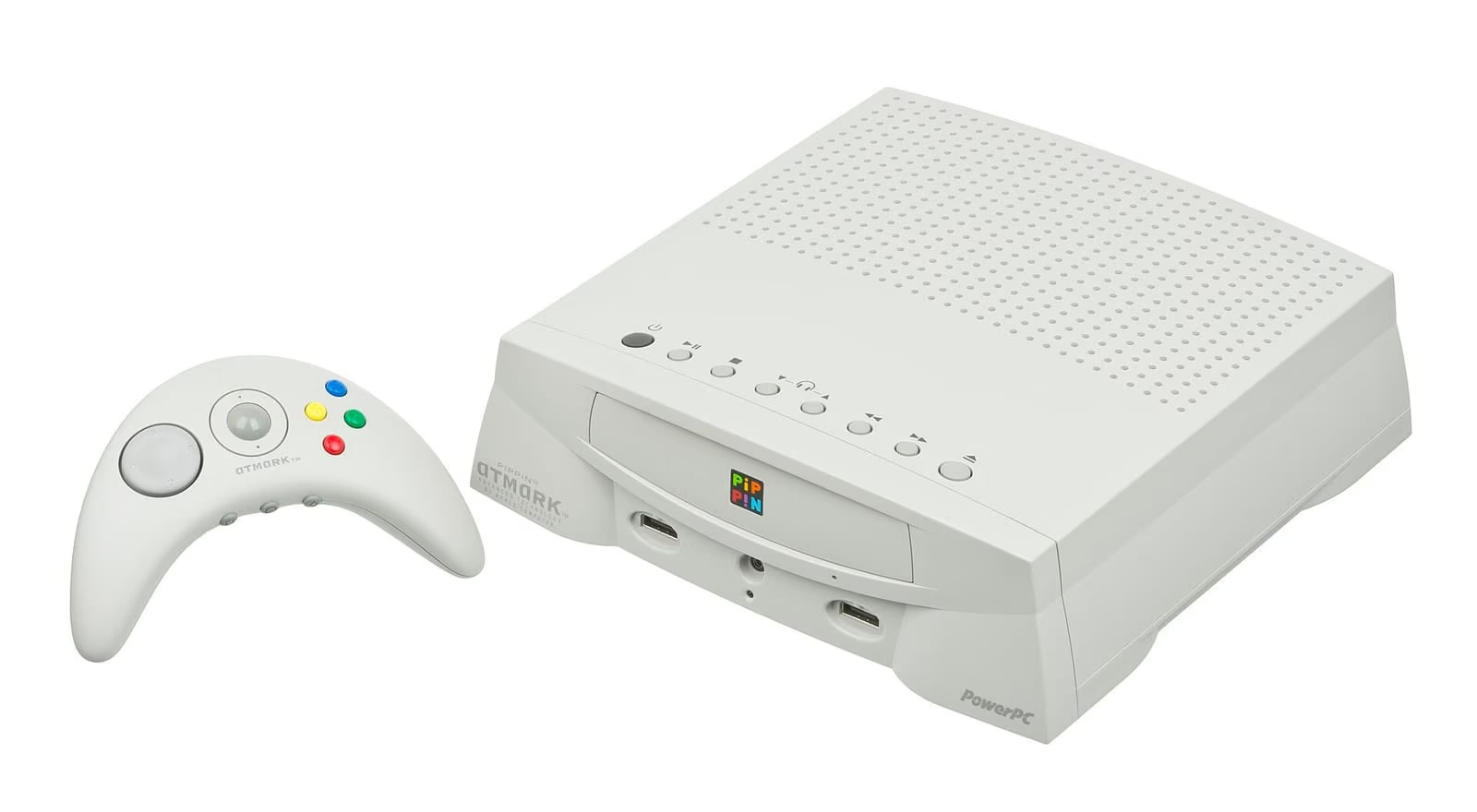
Bandai Pippin Gets a MiSTer Core
Dani Sarfati's BandaiPippin core, published to MiSTer-devel on 14 November, recreates Apple and Bandai's 1996 console down to its PowerPC 603. It boots the Pippin ROMs and four discs to their menus; playing titles through is not yet tested.
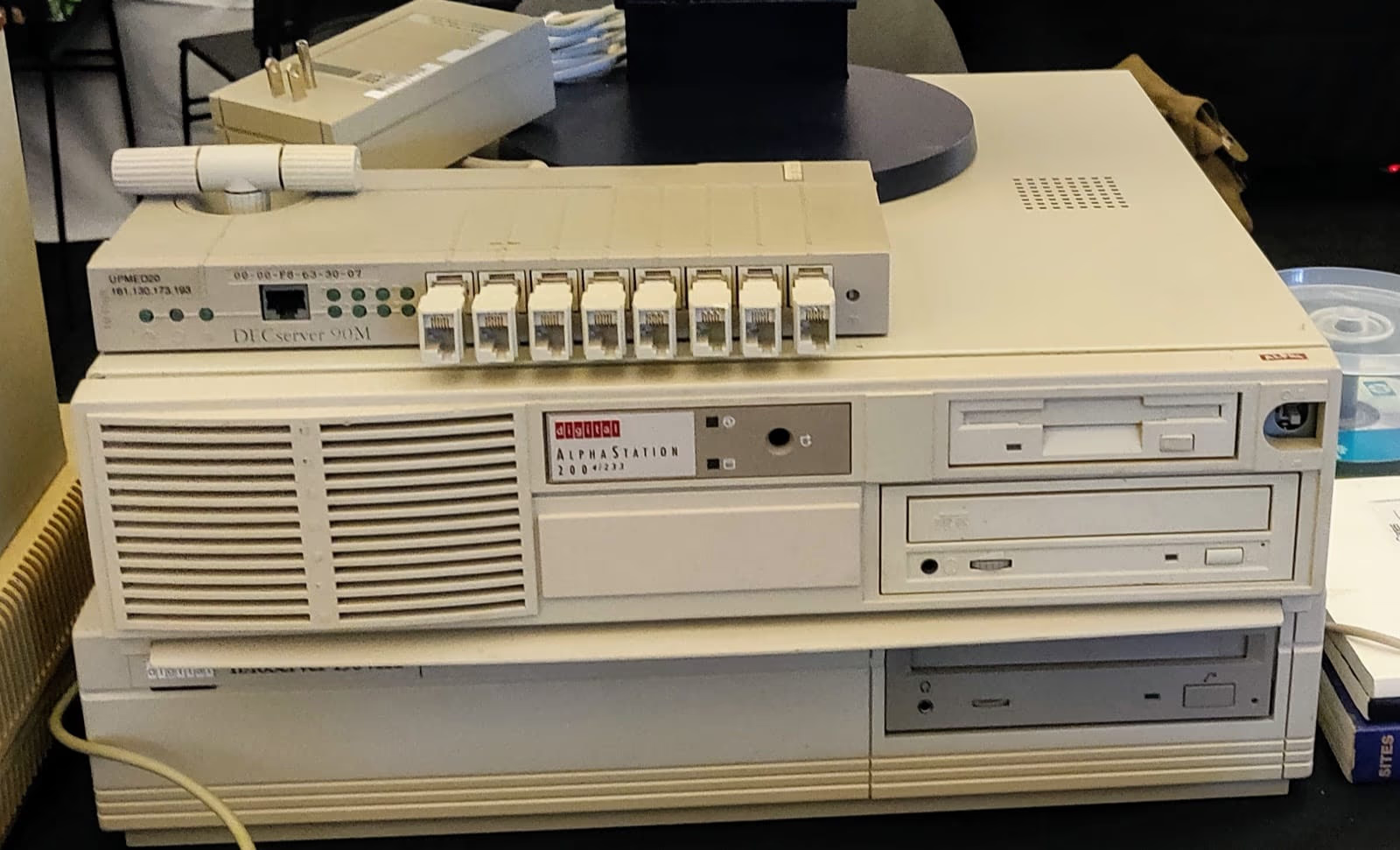
MiSTer Gets a DEC AlphaStation 200 Core That Runs OpenVMS, Tru64 and Windows NT
Dani Sarfati's DECAlphaStation200 core puts DEC's 1995 Alpha workstation on the MiSTer with its own SRM and ARC firmware, and boots OpenVMS, Tru64 UNIX, NetBSD, FreeBSD, Windows NT 4.0 and a Windows 2000 release candidate.