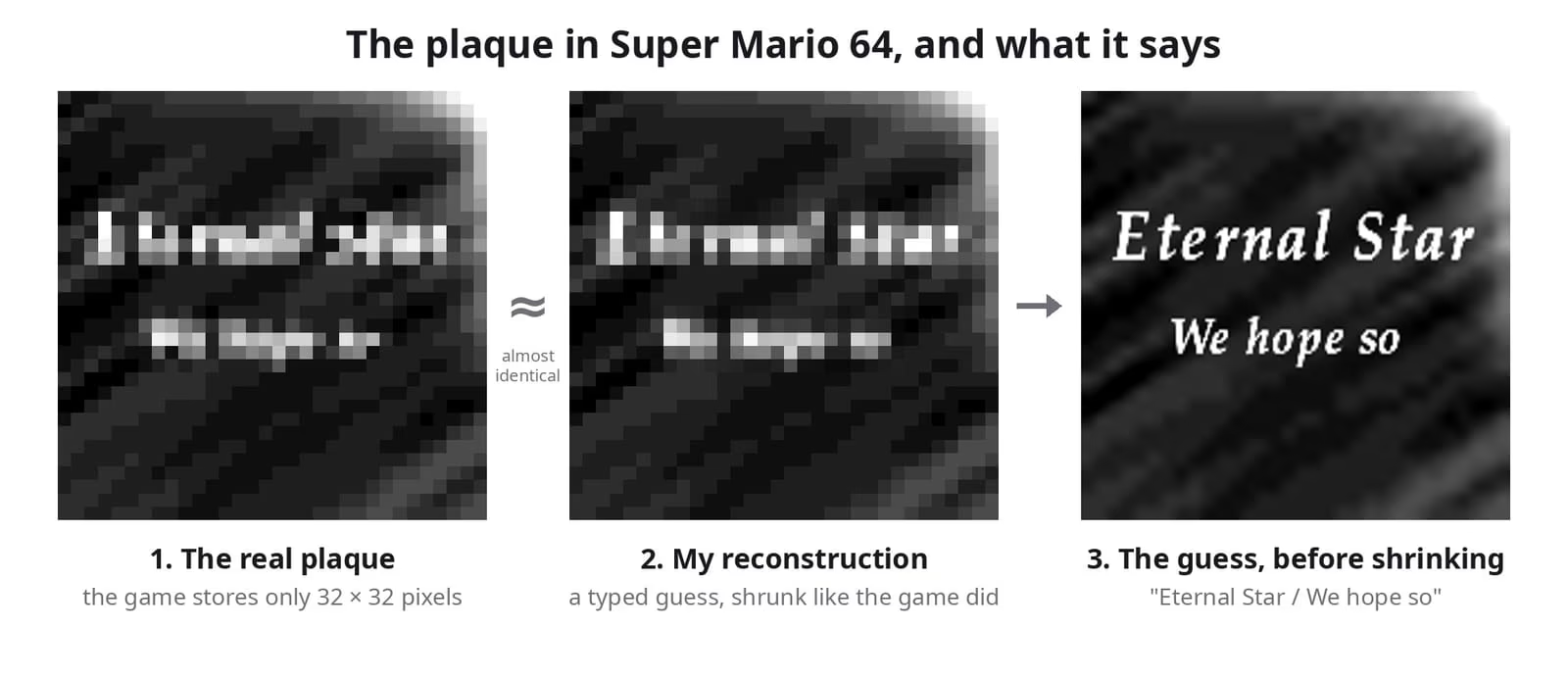
Image: mochi64, sm64-plaque-decode press kit (plaque texture from Super Mario 64, Nintendo)
Open-Source Analysis Says Super Mario 64's Courtyard Plaque Reads "Eternal Star / We Hope So"
A retro gaming channel called mochi64 has published what it presents as the answer to one of Super Mario 64's oldest mysteries: the blurry plaque on the star statue in Peach's castle courtyard, the source of the "L is real 2401" rumour, reads "Eternal Star / We hope so". The claim comes with open-source code, every result file and a 52-page report on GitHub, and on 18 October the author added a public challenge inviting anyone to beat the score or fool the method. Nintendo has not confirmed it, and the author is clear that this is an analysis of pixels, not a confirmation.
What mochi64 published
The repository, `sm64-plaque-decode`, first appeared on GitHub on 15 October. A long-form video, titled "L is Real 2401 SOLVED: What Mario 64's Plaque Really Says", was linked from it on 16 October. Work continued daily after that: a test against 4,583 modern fonts on 17 October, then on 18 October a blind test with 50 secret words, a plain-language press kit and the challenge. The code is MIT-licensed. No ROM data, texture or font is distributed; anyone who wants to rerun it extracts the texture from their own copy of the game.
The headline finding is the text, "Eternal Star" on the first line and "We hope so" on the second, set in Palatino Bold Italic. The report names the most likely file as Adobe's own 1990 PostScript version of the font.
How the method works
The problem is size. The plaque is a single 32 by 32 pixel grey texture, and its letters are 3 to 5 pixels tall, too small for anyone to read. The project does not try to read or upscale it. Instead it rebuilds the texture the way a 1996 artist might have made it: type a line of text in a period font on a canvas, shrink it to 32 by 32 with a standard filter, add blur and gamma, and lay it on the stone background. Each candidate is then compared with the real plaque pixel by pixel to produce a mismatch score, where lower is better.
Millions of combinations of font, process setting and text were scored on a GPU, and the method was calibrated on synthetic plaques with known text. The best fit uses 26 pixel type for line 1 and 19 pixel type for line 2 on a 190 by 160 canvas, with every letter nudged by hand, a bilinear resize, light blur and a gamma of 1.4. Inside the letters, the model is on average about one grey level away from the real plaque, out of 31.
The press kit answers the obvious question directly. Asked whether this is AI upscaling, it says no image AI or upscaler touched the plaque, and adds: "I used an AI coding assistant (Claude) to write the program; the program itself contains no AI." An issue opened on the repository on 17 October asks the author to remove the AI artefacts from the code, and is still open.
How the answer was tested
Most of the report is spent trying to break its own result. For the first word, the pipeline was run against 1,237,405 candidates, including dictionary entries and letter strings assembled blind with no dictionary. "Eternal" ranked first. The only near rivals were one-letter misspellings such as "Lternal", and the best other real English word, "Sternal", placed 13,217th.
To answer the charge that the method only found "Eternal" because it was looking for it, the author drew 50 random English words, sealed them with SHA-256 hashes before decoding, wrote each into the real plaque as "<word> Star" and ran the unchanged pipeline. The hidden word came back as the best real word in all 50 cases, and beat every one of the 1.2 million strings outright in 38.
The font search covered about 470 typefaces an artist could have owned between 1993 and 1996, from Silicon Graphics workstations, Macs, Windows PCs and design software of the time. The twelve best distinct faces were all versions of Palatino or close derivatives. The report argues the exact file was within reach: SGI's IRIX 5.3 could install fonts from Adobe's Type On Call disc, whose Palatino Bold Italic metrics are byte-identical to the 1990 file used. That fits what is known about the game's production: according to Wikipedia, its graphics were made with N-World, an SGI-based toolkit.
Japanese text was tested too, in kana and kanji, and fitted far worse. The texture is byte-identical in the Japanese, American and European releases and the 1997 Shindou rumble edition.
The rumour it set out to settle
Super Mario 64 launched in Japan in June 1996 and in North America that September, and became the best-selling Nintendo 64 game. Players soon fixed on the courtyard plaque as proof that Luigi was hidden in it. Super Mario Wiki records the theories built on the "2401", from running 2,401 laps of the statue to collecting 2,401 coins. IGN offered a $100 reward in November 1996 for a real way to unlock Luigi, and found none.
Nintendo played along in the April 1998 issue of Nintendo Power, whose April Fools' feature promised to discuss the message on a page that did not exist. The same year, a Nintendo game counselor, Michael D. Chandler, answered a fan's letter: "the programmers put it in there as a joke", and "It doesn't have any meaning at all." In July 2020 the large leak of Nintendo development files showed that Luigi had existed in early development, as part of a co-op mode cut from the game. As the press kit points out, the leak said nothing about the plaque's text.
"Eternal Star" itself is not a new reading. Super Mario Wiki notes that many players have interpreted the plaque that way, and that it is also the name of the final board in Mario Party. What is new is the method, a second line, and a score for every reading.

How the other readings score
The challenge page lists every reading the author could find, each given its own best size and position. On line 1, "Eternal Star" scores 788.7 and "L is real 2401" 2,031.3. A 2019 reading published by Nintendo Life, "A Secret star / lie here ~", scores 4,304.4 for the whole plaque against 1,128.7 for "Eternal Star / We hope so". According to the press kit, earlier attempts read the pixels by eye, from photos of a TV screen or from upscaled images, and "upscalers make up detail".
The author also offers an interpretation, labelled as such: the two lines read like a Japanese memorial wording, a name followed by a wish, which the press kit renders as "an eternal star, and we hope it truly is one". The press kit argues that would square with Nintendo's 1998 description of the plaque as a joke. Cart & Pixel covered the console's anniversary in The Nintendo 64 Turns 30, and the N64 emulation guide covers playing the game today.
What is still not known
The author's own confidence table rates "Eternal" and "hope" as very sure, "Star" and "We" as sure, and "so" as only fairly sure. "We hope as" (1,148.5) and "We hope he" (1,155.8) sit close behind on the whole-plaque score, and whether "Star" has a capital S cannot be told from the pixels. The press kit is plain about the limits: "This is not a Nintendo document."
The challenge sets two tests. To win the first, an entry in real English, from the project's 17,707-word list and in a font that existed before 1996, must beat 1,128.7 for the whole plaque or 788.7 for line 1. In the second, a player hides a word in the plaque, publishes the image and a hash, and the author promises to decode it in public within 24 hours. As of 21 October, no rounds had been played. The real test is whether anyone, including someone who worked on the game, comes forward with a better answer.
Sources
- supermochi64 on GitHub: sm64-plaque-decode: What does the Super Mario 64 courtyard plaque say?
- supermochi64 on GitHub: Super Mario 64's unreadable plaque, decoded (press kit)
- supermochi64 on GitHub: The plaque challenge: prove me wrong
- supermochi64 on GitHub: sm64-plaque-decode commit history
- Super Mario Wiki: List of rumors and urban legends: Luigi in Super Mario 64 / "L is real 2401"
- Super Mario Wiki: Eternal Star
- Nintendo Everything: Nintendo Game Counselor talks about the meaning of Super Mario 64's statue text in classic letter
- Wikipedia: Super Mario 64
More News
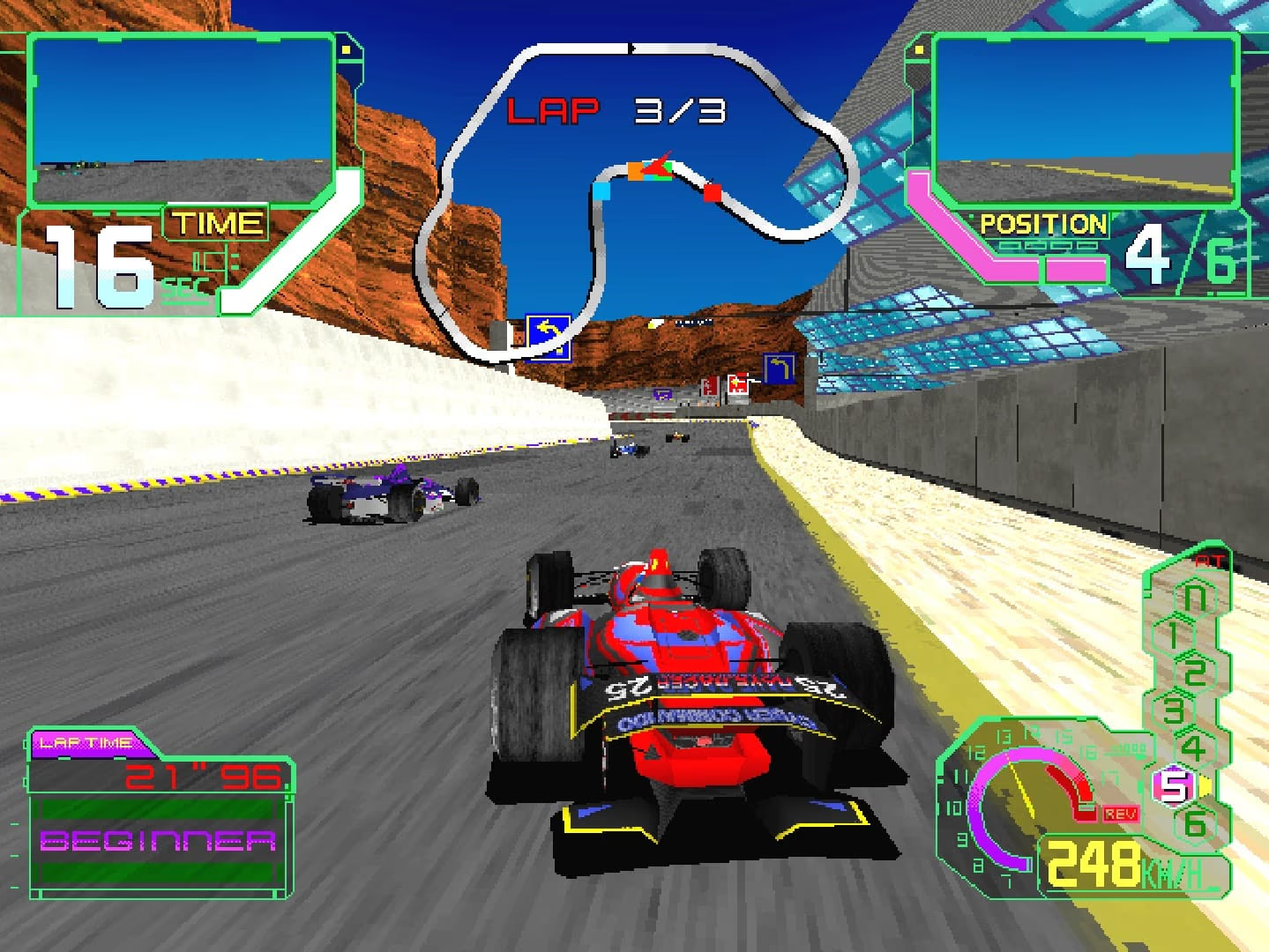
Namco's Ace Driver: Victory Lap Comes Home Through Arcade Archives, With Four Players on Newer Consoles
Hamster is releasing Namco's arcade sequel Ace Driver: Victory Lap on 22 October for Switch, PS4, Switch 2, PS5 and Xbox Series X|S, at $14.99 or $16.99, five months after the original Ace Driver.
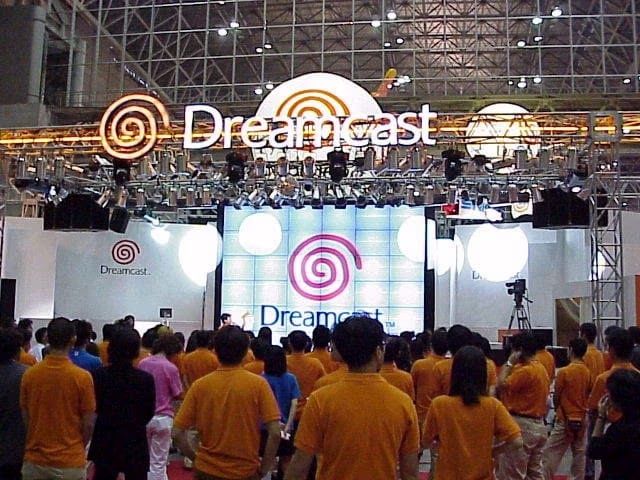
Video Game History Foundation Opens a Photo Archive of Japanese Game Culture From 1999 to 2005
The Colin Williamson photography collection, now free in the VGHF Digital Archive, documents Tokyo Game Show, Nintendo Space World and the streets of Akihabara at the turn of the millennium.
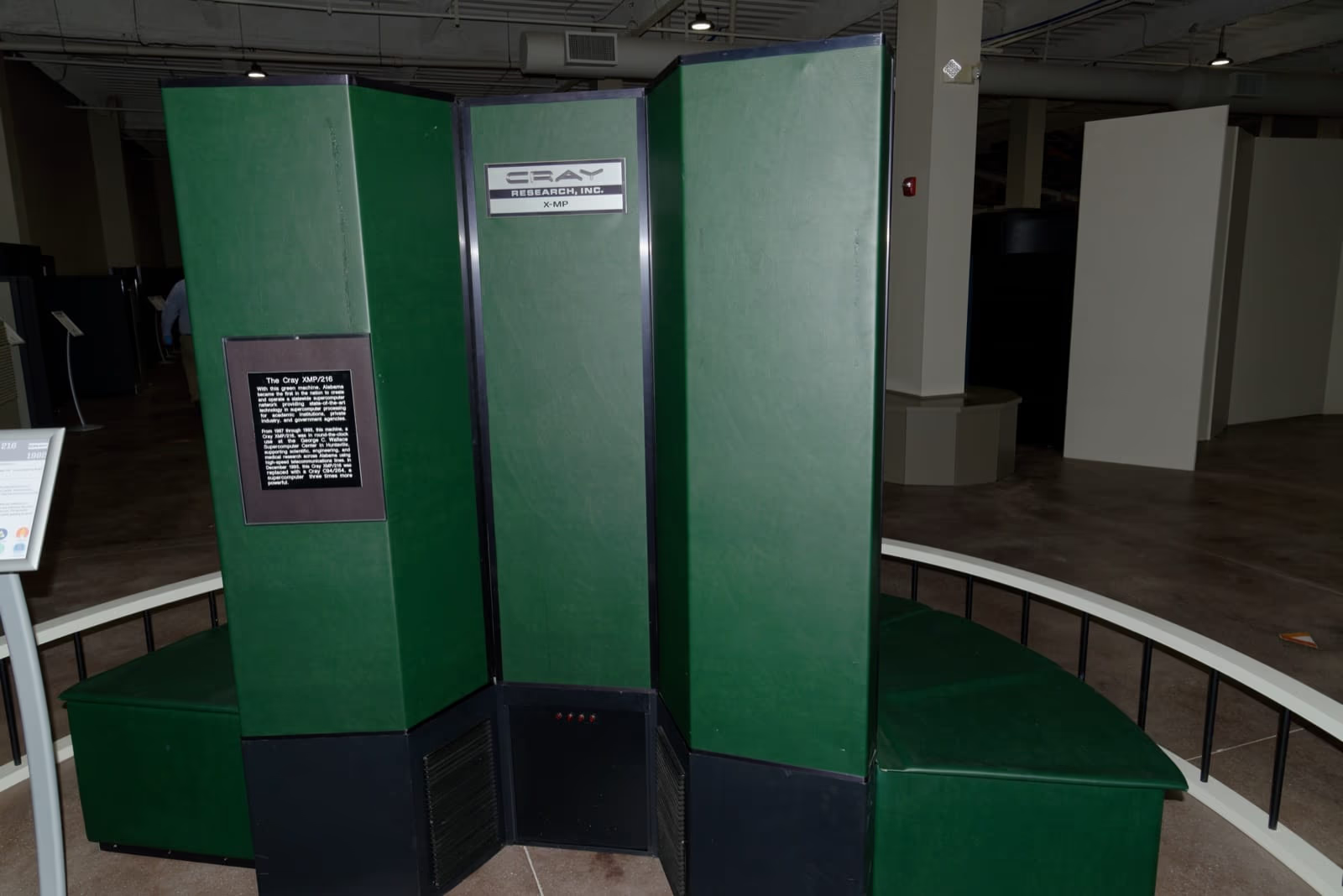
MiSTer Gets a Cray X-MP Core That Boots the Supercomputer's Own Operating System
A new MiSTer core recreates a one-processor Cray X-MP and boots COS 1.17, the only Cray operating system known to survive for the machine. It reached MiSTer's official distribution on 20 October, and a companion project runs Cray Blitz, the 1983 and 1986 world computer chess champion, on it.