Image: Umberto Parisi (rmonic79), Arcade-Darius_MiSTer repository (GPL-3.0)
MiSTer Darius Core 1.9 Runs on Its Author's Own 68000 and Z80
The MiSTer core for Taito's 1986 shooter Darius reached version 1.9 on 10 November, and every processor in it is now its author's own work. Umberto Parisi, who publishes as rmonic79, replaced the two Motorola 68000s, the two Zilog Z80s and the SDRAM controller with designs written from scratch, each released as a separate open source project. The same release lets the core run on any MiSTer SDRAM module, halves its system clock, adds a CRT Shrink mode for playing the triple-screen game on one CRT, and retunes the audio against MAME, sound by sound.
What changed in 1.9
The release notes put it plainly: "No third-party processor code is left in the core." Version 1.8, from 30 July, built its CPUs from the fx68k and t80 folders in its source tree. FX68K is Jorge Cwik's 68000 core, which its README describes as "cycle exact". In 1.9 those folders are gone, replaced by rm68000, rmZ80 and rmSdram.
The main and sub CPUs, both 68000s at 8 MHz, now run on rm68000. The README says it reproduces the 68000 "tick for tick": the same bus accesses, in the same order, on the same cycles. In Darius it carries a DTACK generator inside the CPU, so when the SDRAM is busy the bus cycle is stretched and the lost cycles are recovered, keeping the CPUs at the pace of the original board. The savestate for both 68000s is now rm68000's own, which pauses the CPUs and reads out their whole state without a debug port inside the processor.
The two sound CPUs, Z80s at 4 MHz that handle music and ADPCM sound effects, run on rmZ80, which the README says matches the chip "T-state for T-state", with the bus driven at half-T-state resolution and the undocumented behaviour included. To check that savestates and pausing do not disturb the sound, the author's audio bench runs the CPUs through 57 pauses, 57 state reloads and 57 resumes and gets the same sound-chip writes, on the same T-states, as a run without pauses.
The new SDRAM controller gives each graphics client its own port, so the three tile panels and the sprites read in parallel. It drives one chip with 9-bit columns, which is why the core now runs on 32, 64 and 128 MB SDRAM modules alike. With the new memory path the system clock drops from 96 MHz to 48 MHz while the CPU, audio and pixel clocks stay the same; the README reports 774,144 pixels compared between the two with no differences.
Several visual faults are fixed. Line 223, the last of the picture, is now visible on a CRT in the follow views; a VRAM arbitration bug that put a line glitch over the wireframe ships of the attract sequence is gone; and when both CPUs wrote sprite RAM in the same clock, the sub CPU's write is no longer lost. Savestates made with earlier versions cannot be loaded, because the 68000 savestate format changed.
Playing a triple-screen game on one display
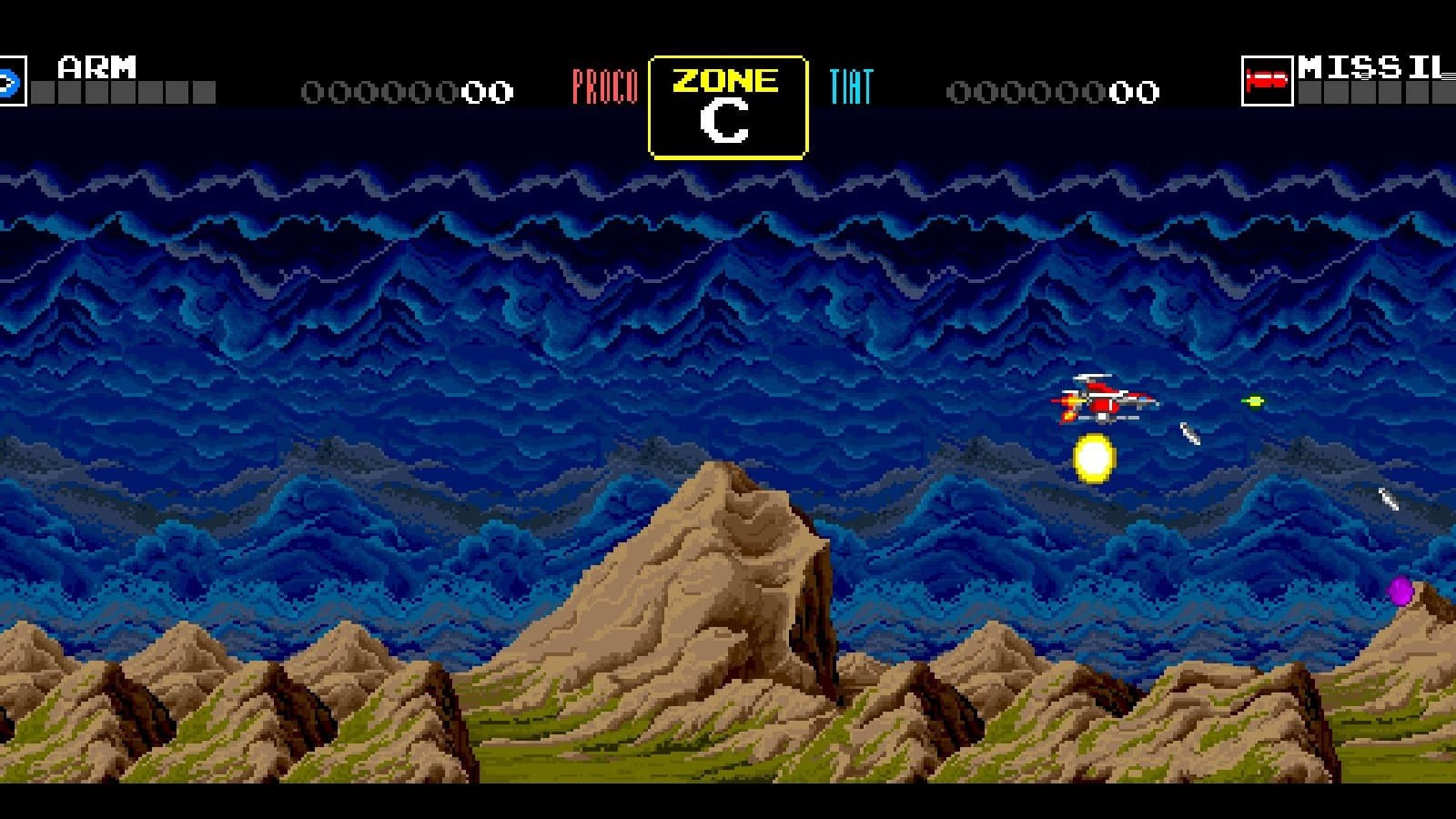
Darius was built for three monitors side by side. The README describes the board composing three horizontal panels into one continuous playfield 864 pixels wide and 224 lines tall, and lists the hardware behind it: two 68000s, two Z80s, two Taito PC080SN tile layers, a PC090OJ sprite chip, a PC060HA link between the CPUs, and two Yamaha YM2203s with an OKI MSM5205 for sound. The game itself has the Silver Hawk fighter picking a path through a branching tree of zones, against aquatic-themed mechanical bosses announced with "Warning!! A huge battleship is approaching".

Version 1.8 added ways to fit that onto one screen: Follow views that show a 288, 320 or 432-pixel window tracking the ship, a Screen Jump mode that hops between panels, and Triple CRT Wide, which squeezes the whole width into one 15 kHz line. The catch the README identifies is that the full width on one CRT leaves the picture three times too tall for its width.
CRT Shrink, new in 1.9, compresses the picture vertically to 1/2, 1/3 or 1/4 of its height. At 1/3 the proportions match the three-monitor cabinet. It is not a scaler and uses no frame buffer: for each line on screen the core asks the renderers to draw the matching source line, so the picture comes out already compressed and the sync signals never change. The plain shrink drops lines, so an interlaced mode alternates two fields, and with 1/2 it shows all 224 lines over two fields. At 1/2 and 1/4, sprite positions are rounded to the shrink grid so they do not bob between frames. CRT Adjust's horizontal controls also improve: the picture can move left without vanishing into the blanking, across a range of -64 to +63 steps of 4 pixels, and H-Size now stretches around the centre.
The audio was compared with MAME's output on all 47 of the game's sounds, by waveform and spectrum. Among the corrections, the PSG had been 11.5 dB and the ADPCM 5.9 dB louder than in MAME relative to the FM, and the mix lost 4 to 5 dB of bass. After the changes the README puts the mix within about 1 dB of MAME from 50 Hz to 16 kHz.
Who is behind it
AUTHORS.md names the core's author as Umberto Parisi. The first release of the core came on 11 April 2026, and the dated build Darius_20261110.rbf is now in the arcade cores folder of the official Distribution_MiSTer repository, beside two other multi-screen cores by the same author: one for Darius II and The Ninja Warriors on Taito's ninjaw board, released in May, and one for the dual-screen Darius II, Sagaia and Warrior Blade, from June.
The processors were written under strict rules. The rm68000 README says the only sources allowed were Motorola's manuals and the published die analysis in the original Motorola patent, US 4,325,121, and that "no source of any existing core or emulator" was used. Each block was documented, with sources, before its RTL was written, and the microcode and ALU tables are generated from transcribed die data rather than typed by hand. Its benches cover all 1,024 microcode addresses and all 65,536 possible instruction words. rm68000's repository went public on 21 September, rmSdram's on 29 September and rmZ80's on 7 November, all under GPL-3.0.
The core still relies on others for sound and framework. Jose Tejada's JT12 and JT5205 provide the Yamaha and OKI chips, Martin Donlon's savestate code is adapted from the Taito F2 core, and the MiSTer framework is Sorgelig's. A separate rm build carries a pause screen with the author's supporters list; the emulation is the same in both.
What is still unknown
The README says the core runs the full game on all five supported ROM sets (World, US, two Japanese revisions and the Japanese Extra Version) and was tested on real MiSTer hardware. It does not say whether the other Taito cores will move to rm68000 and rmZ80, though the rm68000 README calls it "in use" in "the author's MiSTer arcade cores, Darius among them". The screen views and savestates are still labelled experimental. ROMs are not included; the MRA expects a legally owned darius.zip.
New to MiSTer? Which MiSTer to buy and how to set it up covers the hardware, Update All and installing cores.
Sources
- MiSTer-devel on GitHub: Arcade-Darius_MiSTer: README
- MiSTer-devel on GitHub: Arcade-Darius_MiSTer: commit history (v1.9 and earlier releases)
- MiSTer-devel on GitHub: Arcade-Darius_MiSTer: AUTHORS.md
- MiSTer-devel on GitHub: Arcade-Darius_MiSTer v1.8 source tree
- MiSTer-devel on GitHub: Distribution_MiSTer: _Arcade/cores
- rmonic79 on GitHub: rm68000: an MC68000 in SystemVerilog
- rmonic79 on GitHub: rmZ80
- rmonic79 on GitHub: rmSdram_MiSTer
- ijor on GitHub: FX68K 68000 cycle accurate SystemVerilog core
- MiSTer-devel on GitHub: Arcade-Darius2NinjaWarriors_MiSTer
- MiSTer-devel on GitHub: Arcade-Darius2WarriorBlade_MiSTer
More News
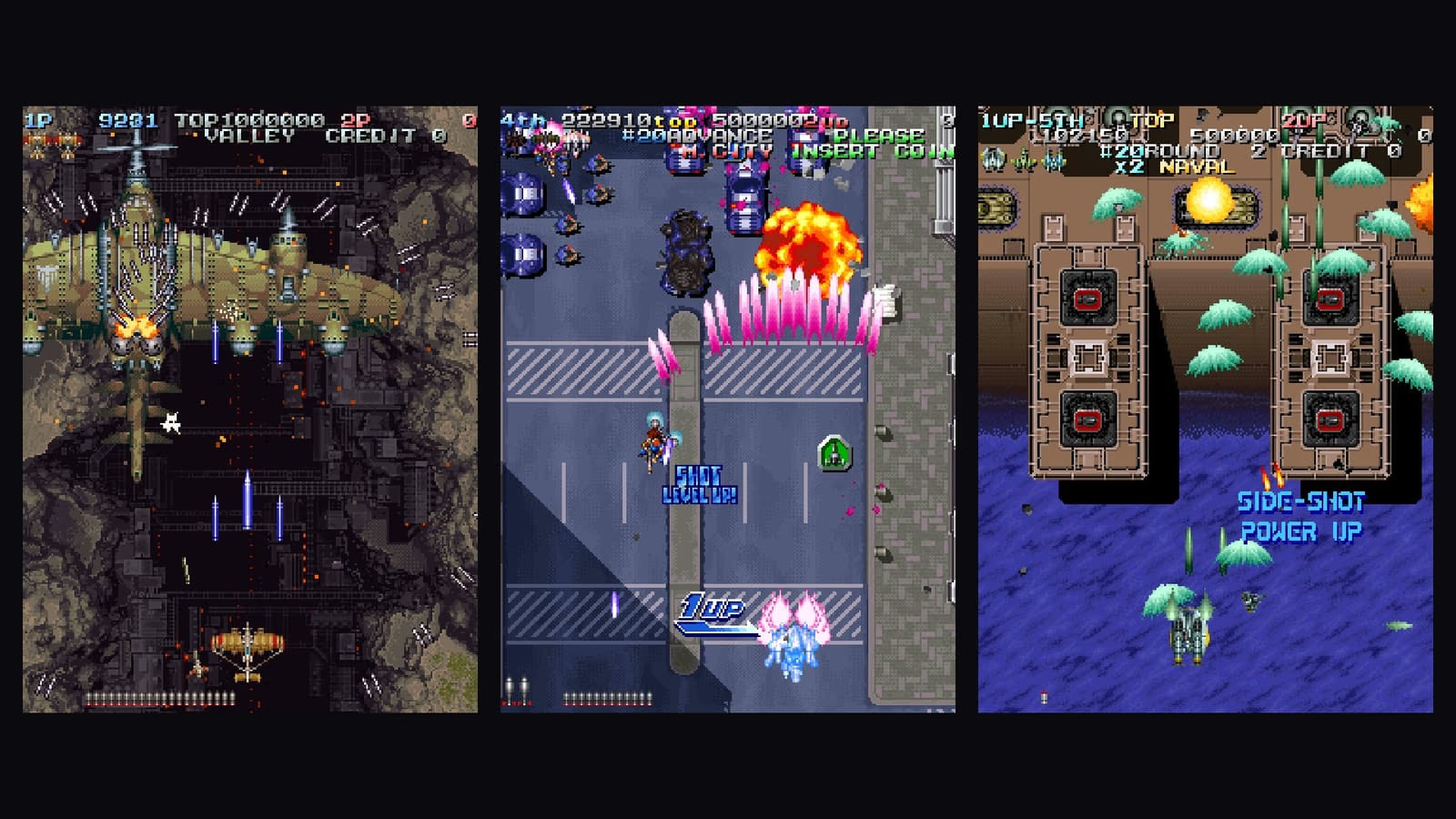
Arcade-RaizingMD Core Brings Battle Garegga and Batrider to MiSTer-devel
A rewritten open source core for Raizing's five Toaplan-based shooters, from Sorcer Striker to Battle Bakraid, was published to the MiSTer-devel organisation on 15 November. Its author says the old code was replaced and retuned against measurements from real boards.
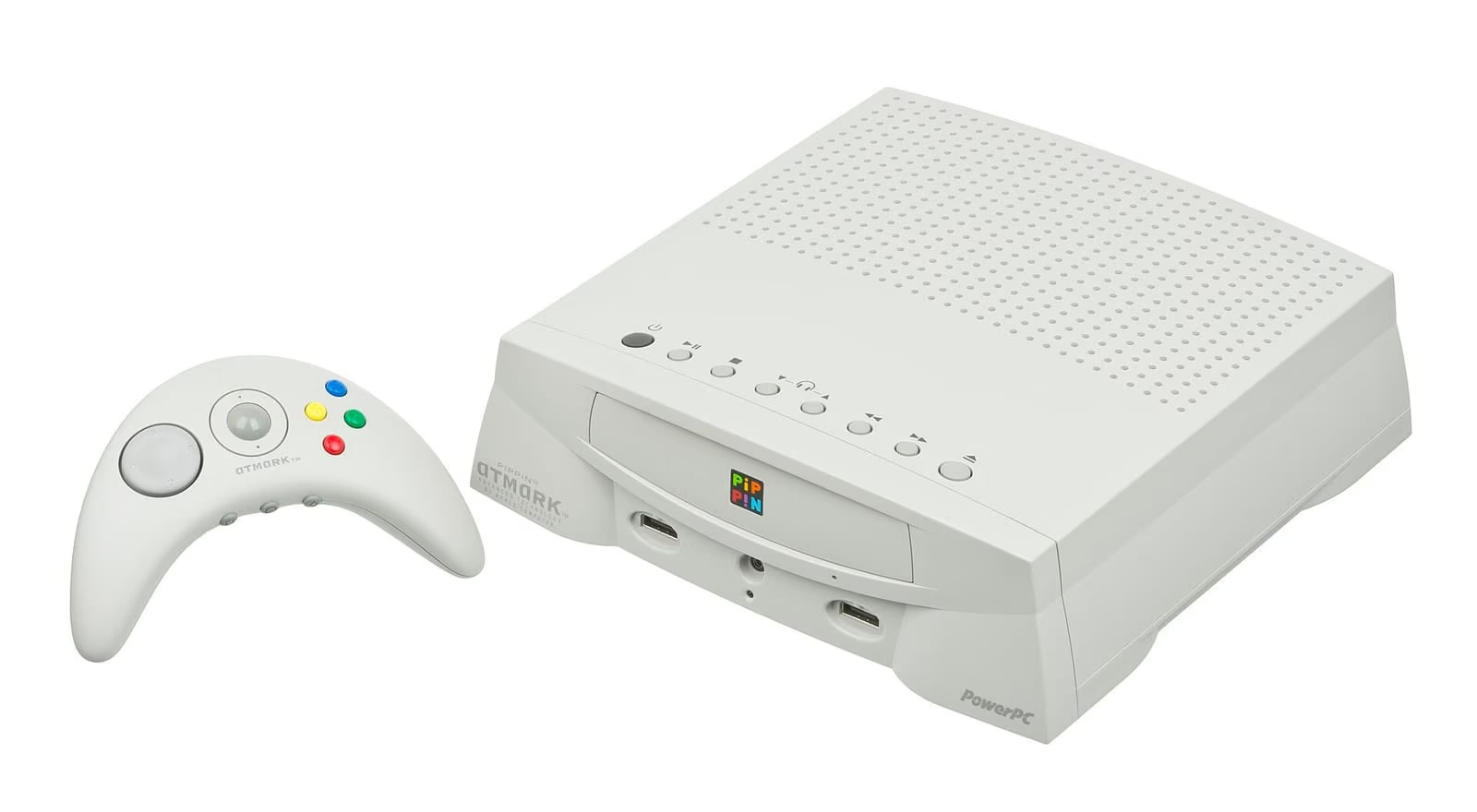
Bandai Pippin Gets a MiSTer Core
Dani Sarfati's BandaiPippin core, published to MiSTer-devel on 14 November, recreates Apple and Bandai's 1996 console down to its PowerPC 603. It boots the Pippin ROMs and four discs to their menus; playing titles through is not yet tested.
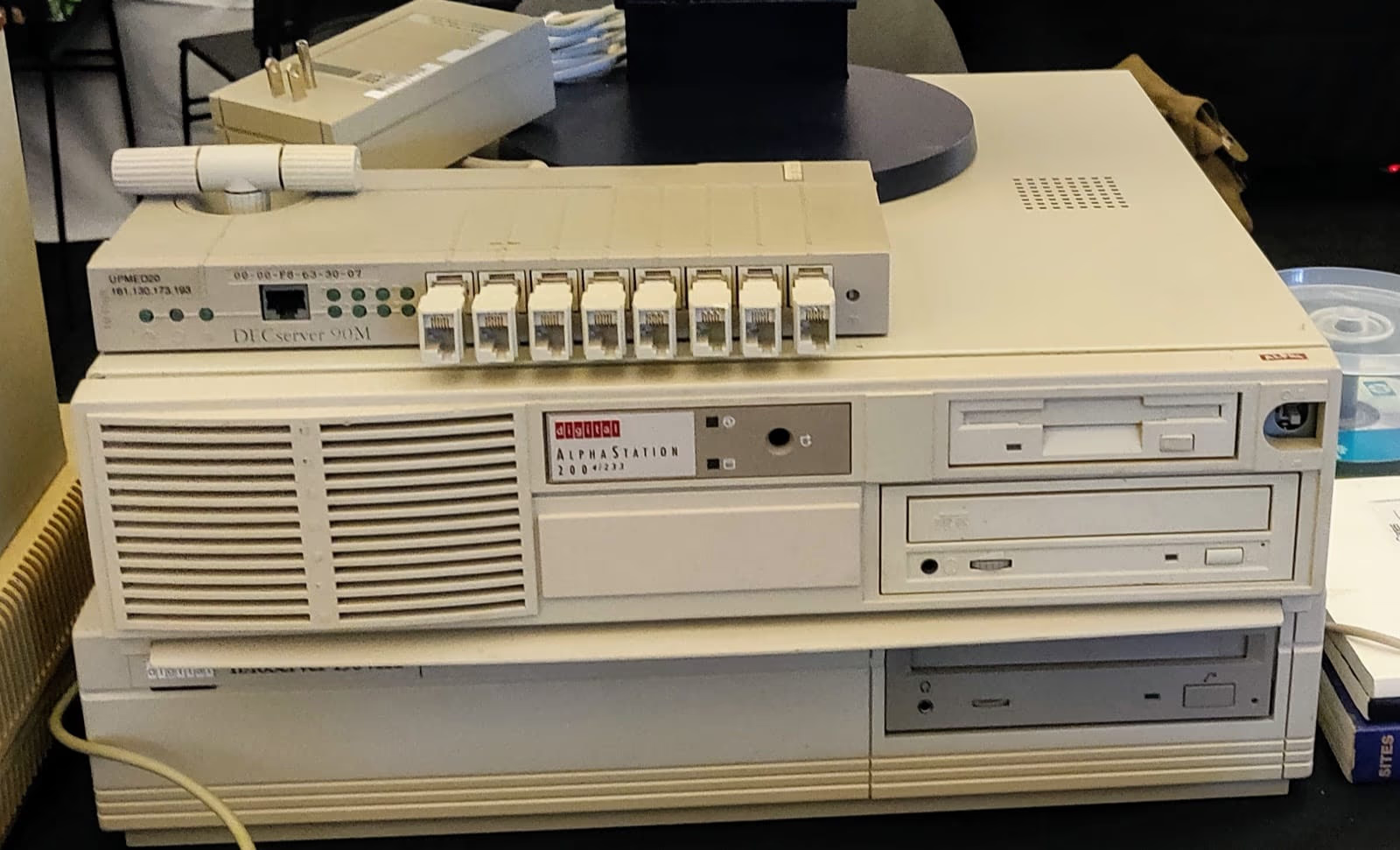
MiSTer Gets a DEC AlphaStation 200 Core That Runs OpenVMS, Tru64 and Windows NT
Dani Sarfati's DECAlphaStation200 core puts DEC's 1995 Alpha workstation on the MiSTer with its own SRM and ARC firmware, and boots OpenVMS, Tru64 UNIX, NetBSD, FreeBSD, Windows NT 4.0 and a Windows 2000 release candidate.