Image: Cart & Pixel
MiSTer Gets an Aztarac Core With 1080p Vectors and the Cabinet's Plexidome Artwork
Aztarac, the colour vector shooter Centuri built perhaps fewer than 200 of in 1983, now has a MiSTer core. Videodr0me's Arcade-Aztarac core is dated 6 November in its changelog, its single commit to the MiSTer-devel organisation on GitHub is dated 7 November, and it reached the main distribution's _Arcade folder on 8 November, so it arrives through the usual updater. It draws the game's vectors at up to 1440 by 1080 pixels, wraps them in a new recreation of the cabinet's transparent dome artwork, and, according to its author, runs the game at the 45 frames per second its ROM was written for, a speed the author says no emulation had matched before.
What Videodr0me released
The core recreates the whole board. Centuri's hardware paired a Motorola 68000 at 8 MHz with a Zilog Z80 at 2 MHz for sound, and the Z80 drove four AY-3-8910 sound chips, giving twelve tone channels plus noise. The FPGA version uses the FX68K 68000 and the T80 Z80 at the original clock rates, and four JT49 sound generators with filtering, mixed to mono on both outputs. Operator settings and high scores lived in an X2212 non-volatile chip holding 256 four-bit words; the core saves and reloads that memory through MiSTer, so the game's three All Time Champions entries (gold, silver and bronze, with initials) survive a power cycle.
The claim that will interest emulation watchers is in the changelog. The core runs the game at 45 frames per second, which the author describes as "to our knowledge, the first Aztarac emulation to reproduce the game's intended speed", adding that the rate "is supported by the original ROM's internal timing logic and the durations displayed in the operator setup menu, and falls within the range indicated by timed footage of original cabinets". For comparison, MAME's Aztarac driver sets its vector refresh at 40 Hz, so the FPGA version runs the game about an eighth faster than the reference emulator does.
Installation is standard. The release folder holds Arcade-Aztarac_20261106.rbf and Aztarac.mra; the MRA expects a MAME-style aztarac.zip in games/mame/, and the ROMs are not included. A DE10-Nano with a 32 MB or larger SDRAM module is required. The repository had no open issues at the time of writing.

Vectors at 1080p, or on a CRT
Centuri shipped Aztarac with a Wells-Gardner 19K6401 colour XY monitor, fed two bits per colour channel and eight bits of intensity per vector. Videodr0me replaces the monitor with a 125 MHz vector renderer that draws natively at 1080p or 720p, with an optional 120 Hz mode at 720p. The README's advice for an HD display is a core-specific block in MiSTer.ini with video_mode=8 for 1080p and the filter and mask entries left empty, so the core's own effects shape the image. It has a specific warning for RetroTINK owners: Direct Video limits the core to 480p, 480i or 240p, and upscaling that to 4K "cannot recover the vector detail available from native 1080p", so the README recommends switching Direct Video off for this core alone.
The effects are extensive. The Profiles document lists dot scale, tone mapping, two bloom controls, halo strength, curve, spread, grid and compression, inter-frame and intra-frame phosphor decay, a colour-space option, colour effects including negative and black and white, and a slot mask. Five presets package them: A Touch of CRT, 80s Cruise Control (the default), 80s Overdrive, Plasmarac and Negative Shield, plus two custom slots that start from Cruise Control and Overdrive. With the OSD closed, the two keys to the right of 0 on a US keyboard cycle through the profiles, and F6 and F7 copy the current look into the custom slots.
CRT owners are catered for too: 240p, 480i and 480p output, including Direct Video, with horizontal and vertical offsets that move the whole picture, artwork included. The suggested CRT settings are video_mode=720,240,60 for a 15 kHz set and 720,480,60 for 31 kHz.
Then there is the dome. Aztarac's cabinet is remembered for a transparent plexiglas lens over the monitor with printed labels around it. Videodr0me has drawn new artwork for it, with a reflective finish, that loads automatically from the MRA. It can be shown in full, reduced to the SCORE, CONDITION, POWER and ENERGY labels, or switched off, with brightness from 10 to 100 percent, and it rotates with the picture for a physically turned monitor.
Moving one way, shooting another
The original control panel had a proportional joystick with a trigger, a separate track wheel to turn the turret, and a radar button. The core's default is dual-stick: the left stick or D-pad moves the tank and the right stick points the turret, holding the last angle when released. Two alternative right-stick modes map stick travel to a full revolution or turn at a speed set by how far the stick is pushed, and the turret can instead be driven by a spinner or a mouse, with sensitivity from 0.25x to 3x. Two players alternate.
The cabinet's service side is in there as well. A menu entry stands in for the service switch, so the original diagnostics and operator setup can be reached from attract mode: free play and coinage, difficulty, target play time, attract sound, the Sagittarius free-game award and a high-score reset. There is a Slam/Tilt option that trips the anti-abuse switch and the game's "CUT THAT OUT!" message, and an audio low-pass filter at 4, 6 (the default) or 8 kHz for the full mix.
The game Centuri barely made
Aztarac was Centuri's only colour vector game and the last of four titles it developed in-house; the Hialeah, Florida company was better known for licensed hits such as Time Pilot, Gyruss and Track & Field, mostly from Japanese developers. Tim Stryker designed and programmed it, and wrote its vector graphics and its sound. The game casts the player as a tank with an independently rotating turret, defending outposts on a scrolling playfield from waves of ships. Wikipedia dates its North American release to October 1983.
It did not sell. Tony Temple of The Arcade Blogger wrote in 2017 that estimates of the production run often say 500, "but based on Centuri's 1983 annual report, it seems that perhaps less than 200 is a more likely figure". That scarcity made it a collectors' grail, and the story Temple told is why the game is remembered at all: a Florida collector bought an unidentified "grandfather's arcade game" listed at $975 in the summer of 2016, found the coin counter reading 000001, and learned that the cabinet had belonged to Stryker himself. It was repaired and unveiled at Free Play Florida on 18 November 2017, where Stryker's son played the first game. Stryker had left games after Aztarac, founded Galacticomm and wrote the MajorBBS bulletin board software, and died in 1996 at 41. Wikipedia records a 142,390-point world record on the game by Dennis Bartlett from February 1984.
MAME has run Aztarac for years in a driver by Mathis Rosenhauer, with hardware information from David Fish, and the core's credits acknowledge both, especially for the vector display-list format and interrupt acknowledgement. Original cabinets are, in practice, unobtainable, which makes a cycle-level FPGA version with the dome artwork the nearest most people will get.
Who is behind it
Videodr0me has spent 2026 on vector arcade hardware. Their GitHub account lists cores for Atari's Tempest, Star Wars and Major Havoc, a combined Asteroids, Asteroids Deluxe and Lunar Lander core, and a Cinematronics and Vectorbeam core covering Star Castle, Armor Attack, Rip Off, Starhawk, Warrior, Barrier, Space Wars and War of the Worlds, all of which are now in the MiSTer-devel organisation and the main distribution. Aztarac is the first of them from a maker other than Atari, Cinematronics or Vectorbeam.
The README credits Centuri's hardware team, Steve Zarzecki and Willie Maybohm, Wells-Gardner for the monitor and Wico for the joystick and track wheel, and lists the preserved service manual, schematics and a Wells-Gardner monitor evaluation as its references.
What is not known yet
The 45 frames per second figure rests on the author's reading of the ROM and footage of cabinets, and no independent measurement from an original board has been published alongside it. The artwork is Videodr0me's own design, "inspired by the original cabinet" in the changelog's words, rather than a scan of a surviving dome, and the core does not reproduce the physical lens itself. The Profiles document notes one known limitation: switching the halo grid at 1080p can briefly resynchronise the display.
New to MiSTer? Which MiSTer to buy and how to set it up covers the hardware, Update All and installing cores.
Sources
- MiSTer-devel on GitHub: Aztarac for MiSTer FPGA
- MiSTer-devel on GitHub: Aztarac for MiSTer: Changelog, Initial Release 2026-11-06
- MiSTer-devel on GitHub: Aztarac Video Profiles
- MiSTer-devel on GitHub: Distribution_MiSTer: _Arcade
- GitHub: Videodr0me's repositories
- MAME on GitHub: Centuri Aztarac hardware (MAME driver)
- The Arcade Blogger: Centuri Aztarac: Finding THE Holy Arcade Grail
- The Arcade Blogger: Tim Stryker's Aztarac: The Final Chapter
- Wikipedia: Aztarac
More News
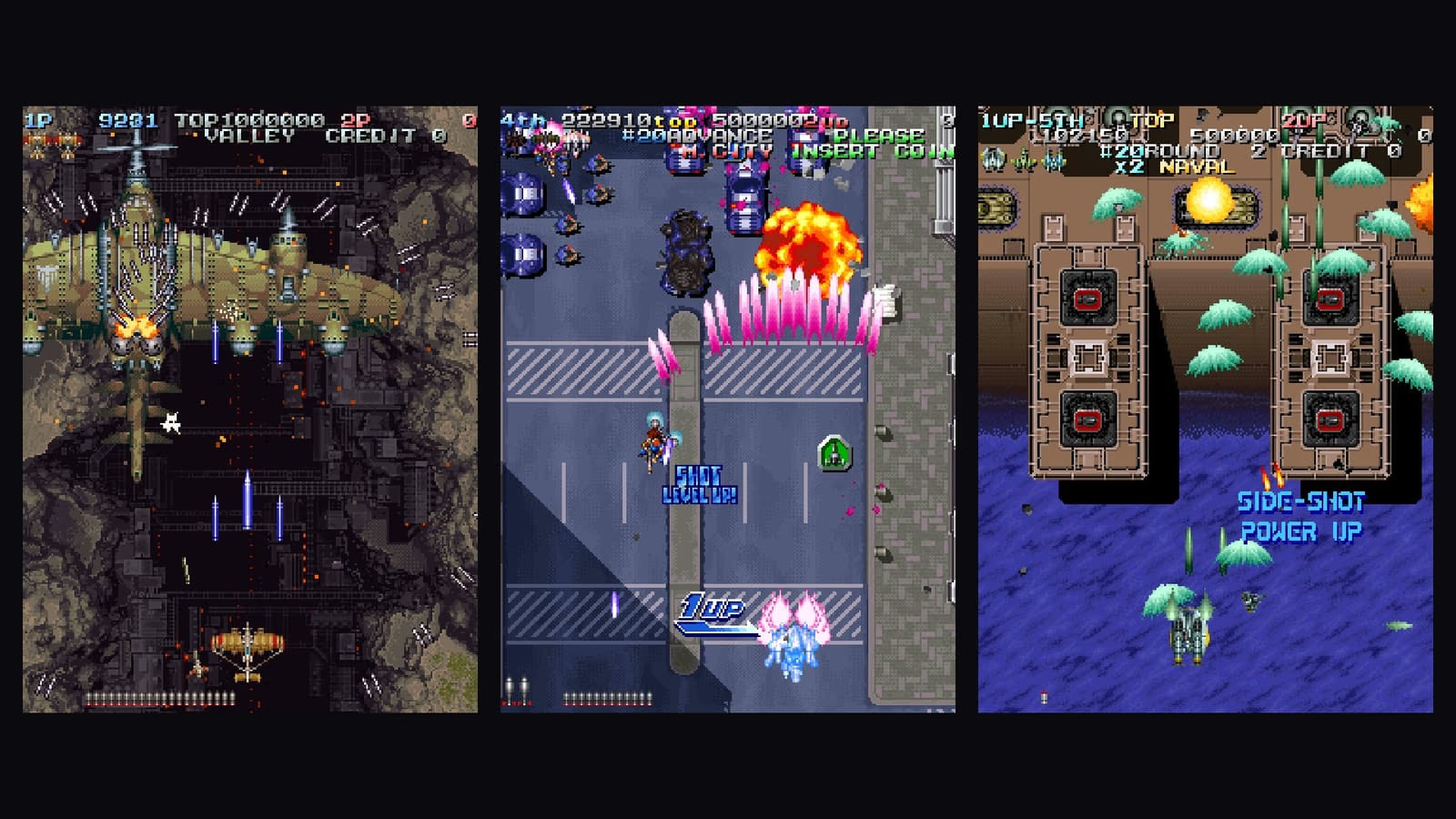
Arcade-RaizingMD Core Brings Battle Garegga and Batrider to MiSTer-devel
A rewritten open source core for Raizing's five Toaplan-based shooters, from Sorcer Striker to Battle Bakraid, was published to the MiSTer-devel organisation on 15 November. Its author says the old code was replaced and retuned against measurements from real boards.
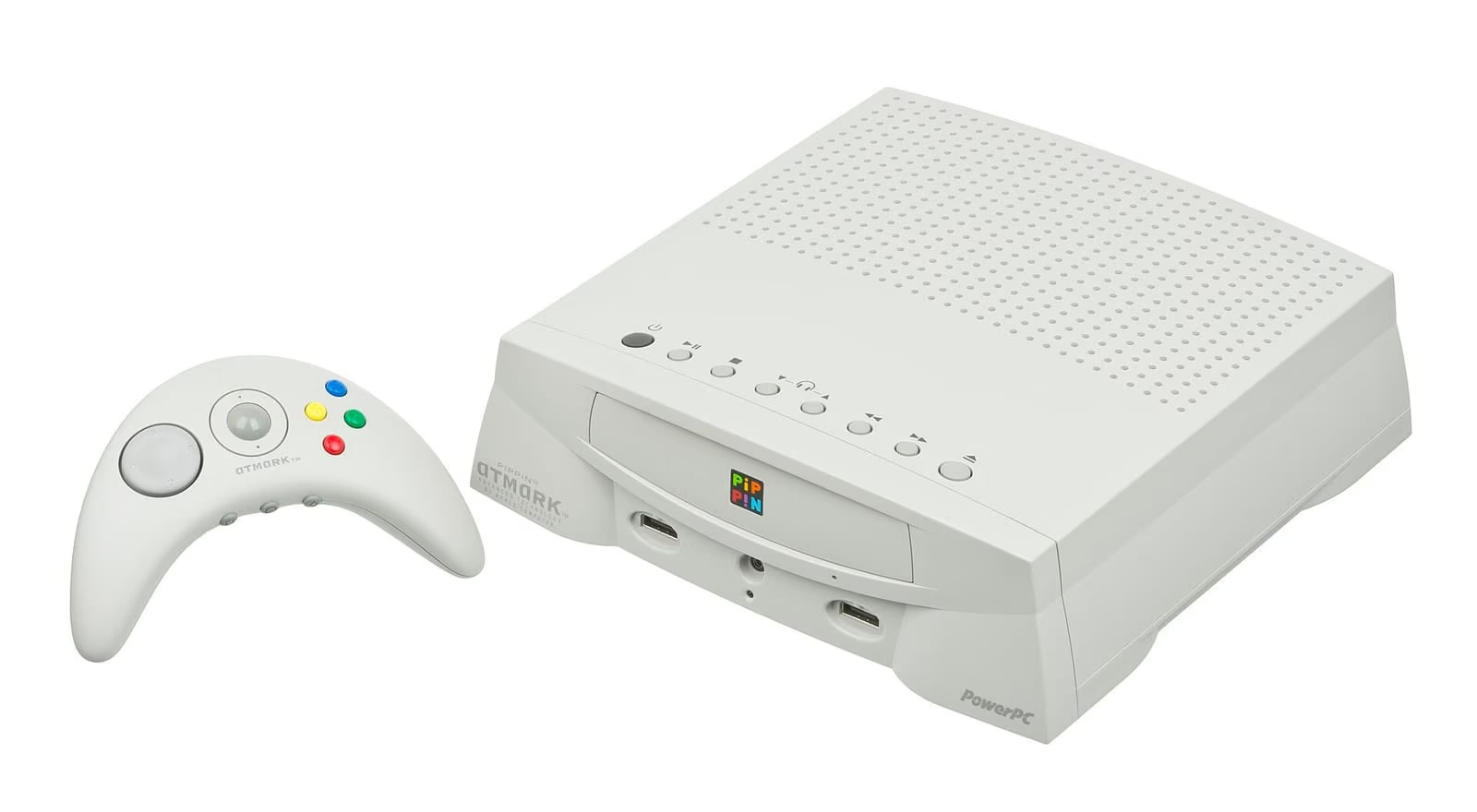
Bandai Pippin Gets a MiSTer Core
Dani Sarfati's BandaiPippin core, published to MiSTer-devel on 14 November, recreates Apple and Bandai's 1996 console down to its PowerPC 603. It boots the Pippin ROMs and four discs to their menus; playing titles through is not yet tested.
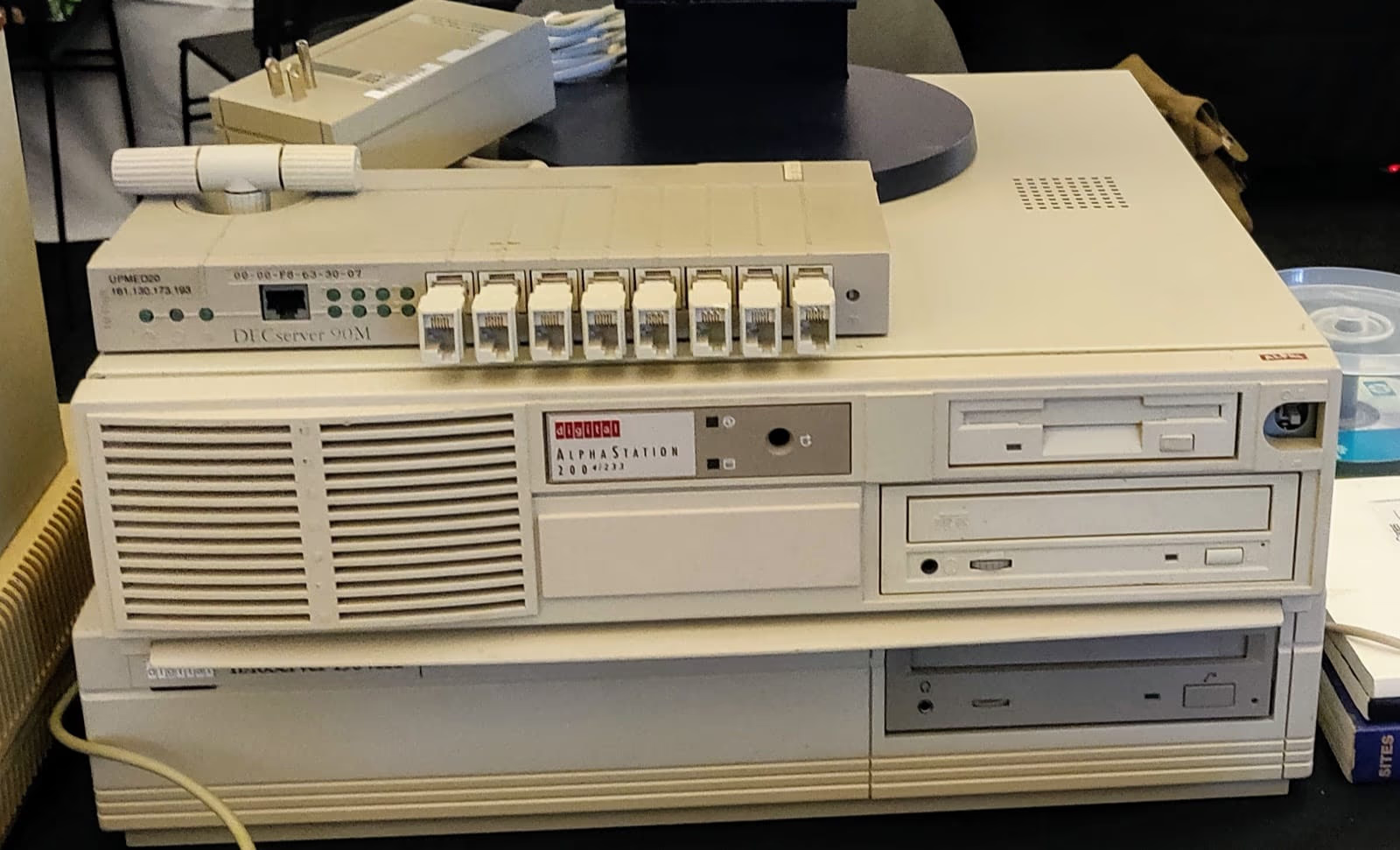
MiSTer Gets a DEC AlphaStation 200 Core That Runs OpenVMS, Tru64 and Windows NT
Dani Sarfati's DECAlphaStation200 core puts DEC's 1995 Alpha workstation on the MiSTer with its own SRM and ARC firmware, and boots OpenVMS, Tru64 UNIX, NetBSD, FreeBSD, Windows NT 4.0 and a Windows 2000 release candidate.