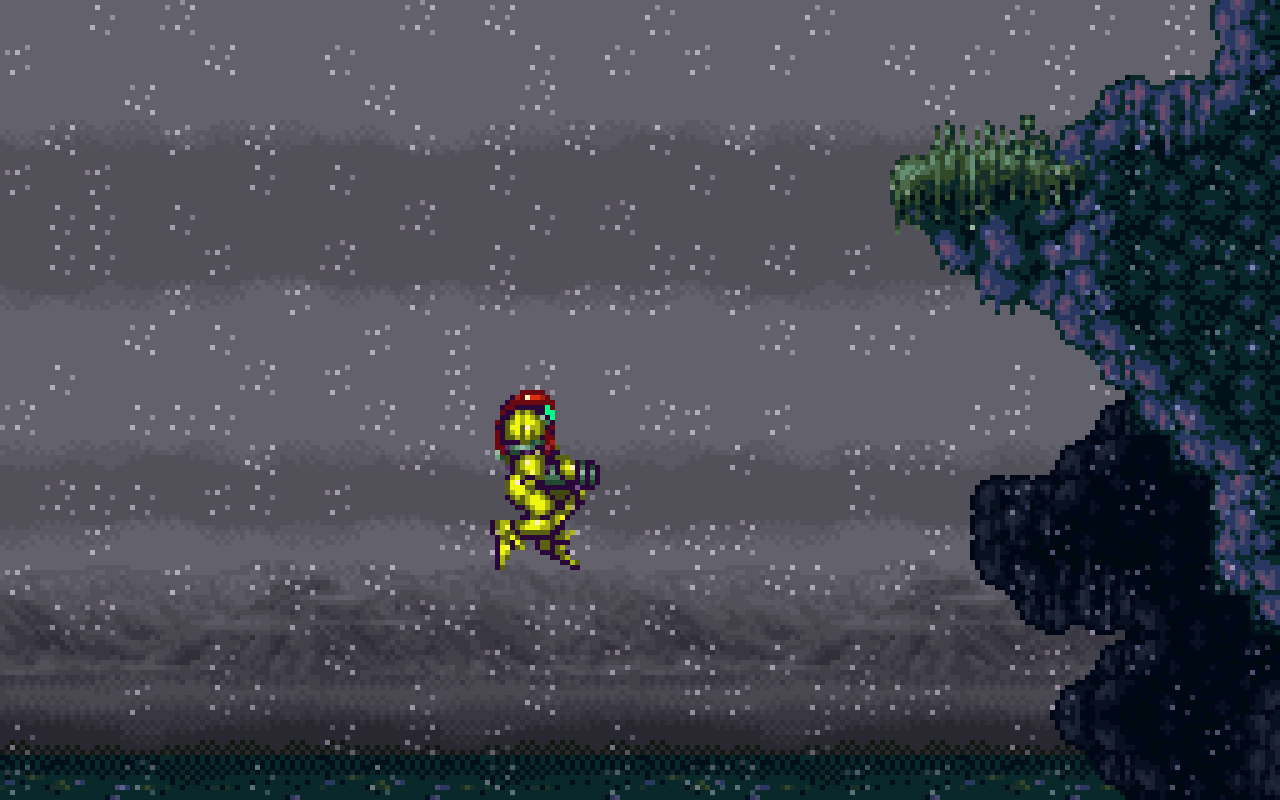
Super Metroid
Super Metroid opens with one of gaming's greatest intros: a recap of Samus's previous adventures, the theft of the last Metroid larva, and a self-destruct sequence on a space station. Within minutes, you're on the surface of Planet Zebes, rain falling, no enemies in sight, descending into the depths. The atmosphere is immediate and overwhelming.
What makes Super Metroid exceptional is how it teaches through environment rather than text. The game never tells you where to go. Instead, every room, every power-up placement, every subtle visual cue guides you forward while making you feel like you discovered the path yourself. The famous "Noob Bridge", where you need to run across a collapsing bridge, teaches you the dash mechanic without a single word of instruction.
The map design is arguably the best in gaming history. Zebes is divided into distinct regions, Brinstar's caves, Norfair's lava, Maridia's underwater ruins, the Wrecked Ship's haunted corridors, each with a unique visual identity, enemy set, and atmosphere. The regions interconnect in ways that reward backtracking with new abilities. Every power-up you find opens up previously inaccessible areas across the entire map.
Samus controls beautifully. The Space Jump, Screw Attack, Speed Booster, and Grapple Beam all feel fantastic. Advanced players can sequence-break using wall jumps and mockball techniques, adding enormous replay value for speedrunners, a community that Super Metroid essentially created.
The boss fights are spectacular. Kraid's massive sprite fills two screens. Phantoon's Ghost Ship encounter is genuinely creepy. Ridley is a relentless aerial assault. And the final Mother Brain battle, with its unexpected emotional twist, is one of the most memorable boss sequences in any game.
Visually, Super Metroid pushes the SNES hard. The use of Mode 7, transparency effects, and detailed sprite work creates environments that feel alive and dangerous. The soundtrack by Kenji Yamamoto and Minako Hamano perfectly complements the isolation and tension.
If there's any weakness, it's that the game's controls have a slight learning curve, wall jumping in particular can feel inconsistent. And at around 5-8 hours for a first playthrough, some might wish for more, though the speedrunning depth extends longevity enormously.
Super Metroid didn't just define a genre; it perfected it before anyone else had a chance to try.
Score Breakdown
Pros
- +Best non-linear map design in gaming history
- +Teaches through environment, not tutorials
- +Incredible boss fights with real spectacle
- +Spawned the entire speedrunning community
Cons
- -Wall jump mechanic can feel inconsistent
- -Relatively short first playthrough
- -Maridia navigation can frustrate without the map
You Might Also Like
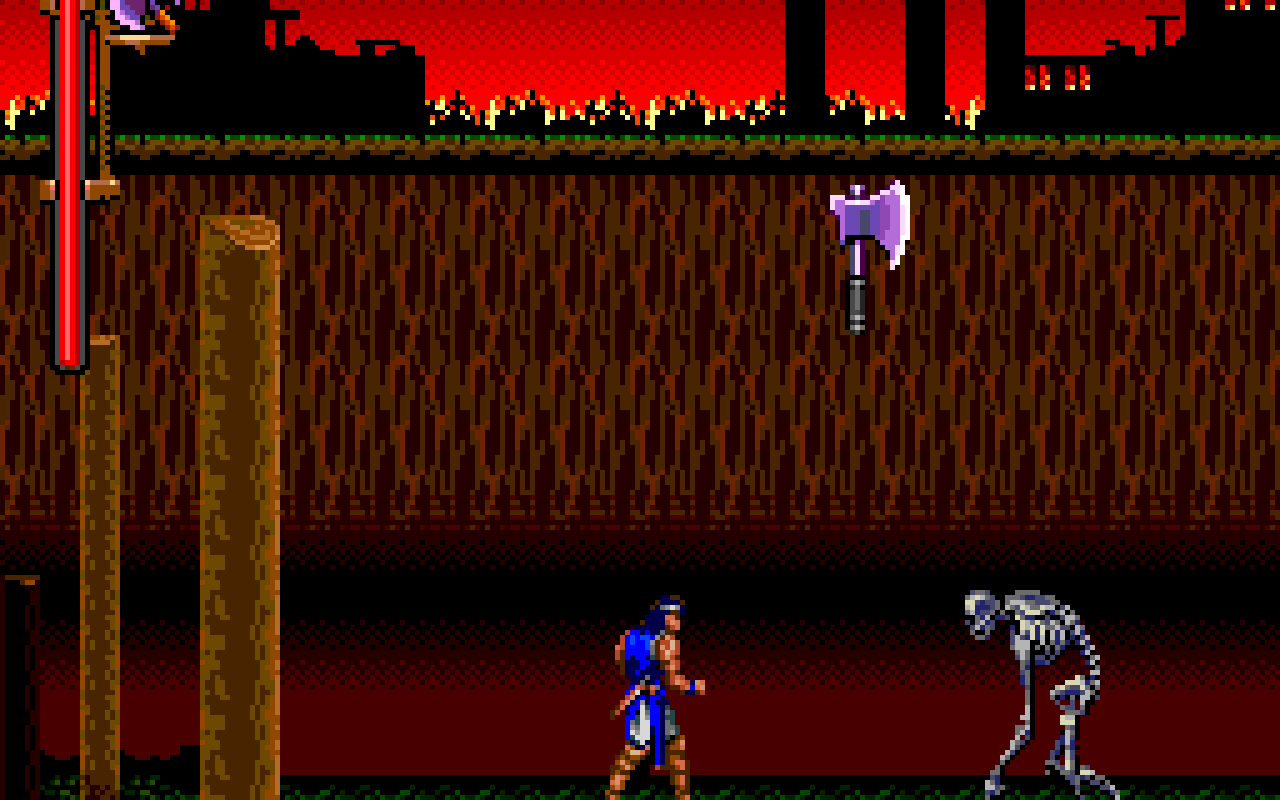
Castlevania: Rondo of Blood
The pinnacle of classic Castlevania. Rondo of Blood combines razor-sharp level design, gorgeous CD-ROM presentation, and two playable characters into what may be the finest action-platformer of the 16-bit era.
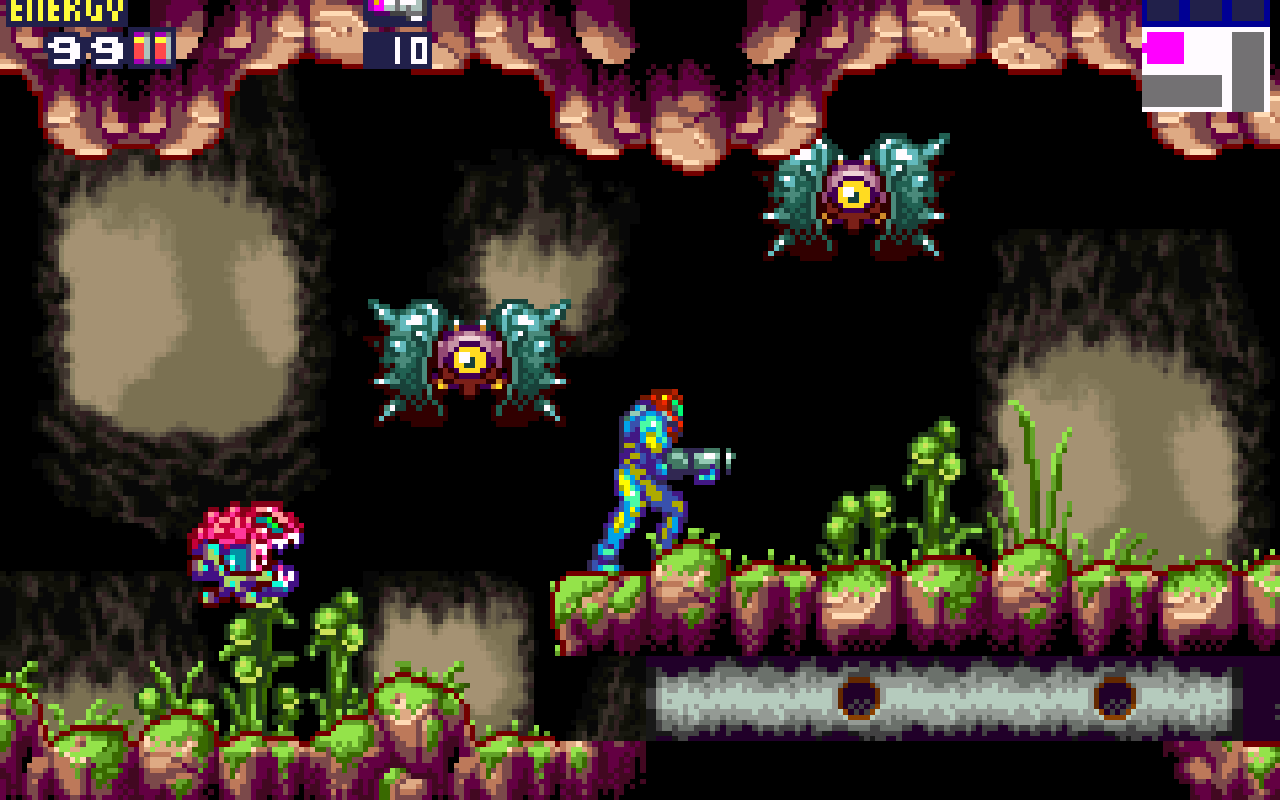
Metroid Fusion
A more linear, story-driven Metroid that trades open exploration for constant tension. The SA-X stalking you through BSL Station is one of gaming's greatest horror mechanics.
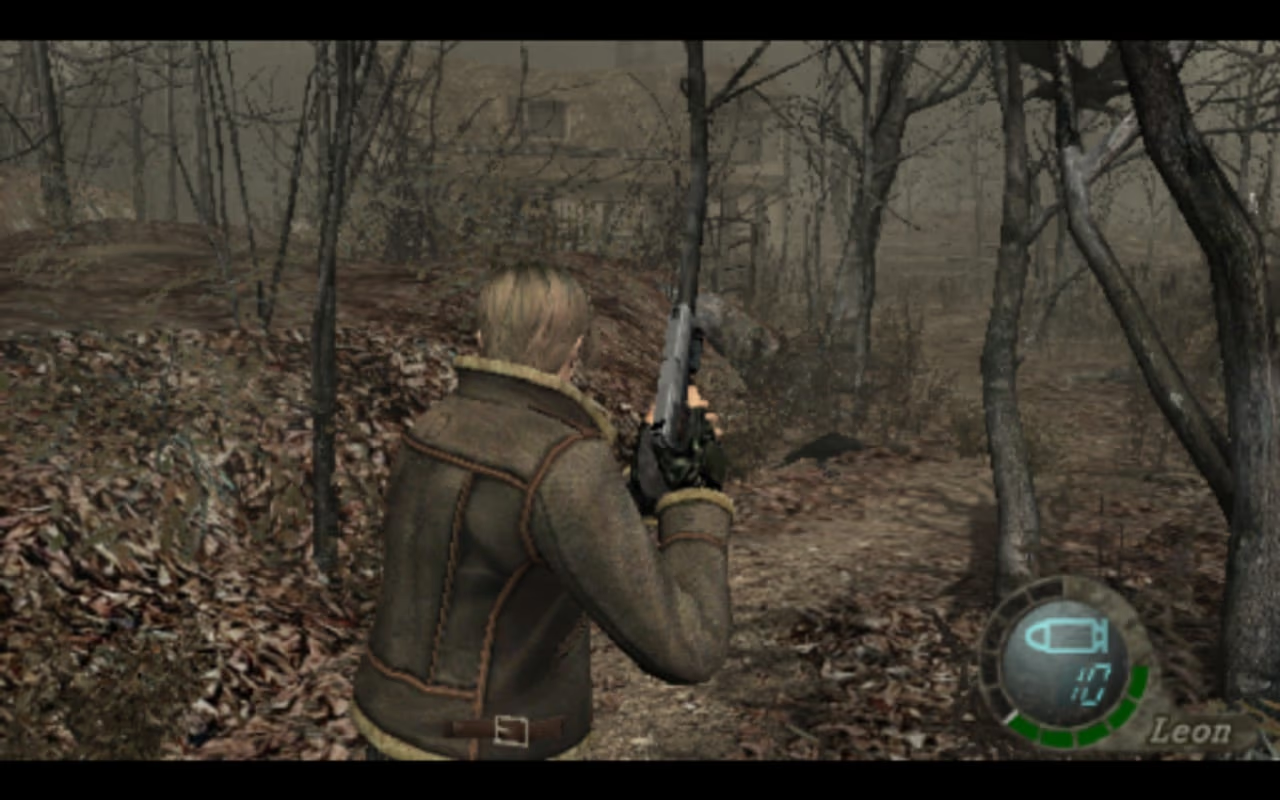
Resident Evil 4
Capcom reinvented survival horror with an over-the-shoulder camera, tight gunplay, and relentless pacing. RE4 on GameCube remains one of the most influential action games ever made.