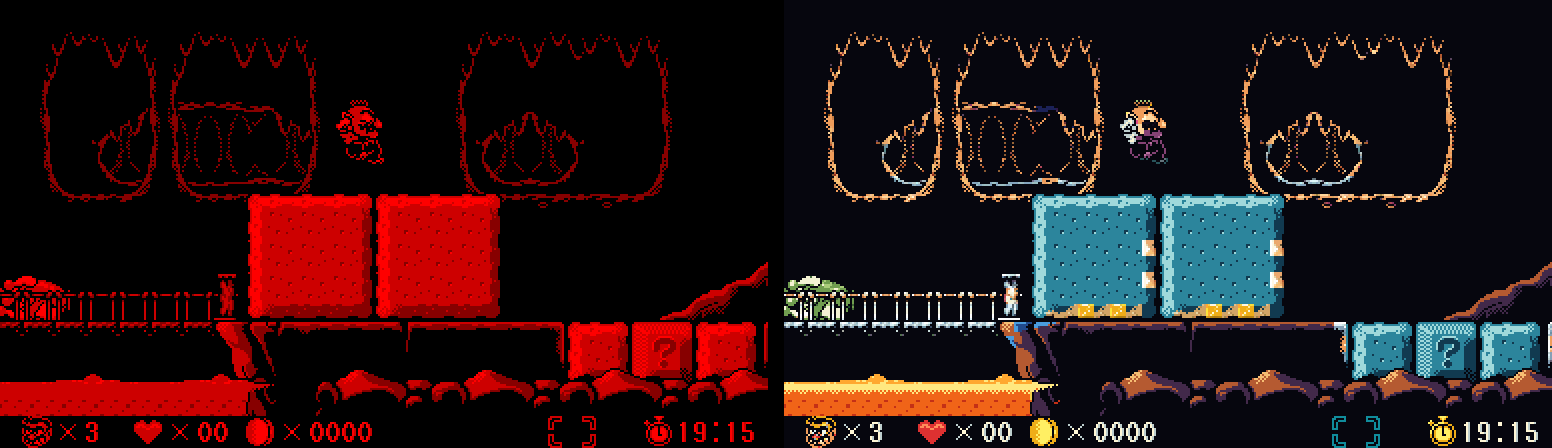
Image: VBoy Color project (yuk27), comparison image from its GitHub page
VBoy Color Emulator Plays Virtual Boy Games in Colour and in VR on Meta Quest
A new free and open-source Virtual Boy emulator, VBoy Color, plays the console's games in stereoscopic 3D on Meta Quest headsets, and in colour rather than the original's red on black. Its developer, who publishes on GitHub as yuk27, released the first public beta on 6 October and had reached beta 9 by 12 October. It also runs in a window on Windows and Linux, on Android phones and handhelds, and as a RetroArch core.
What it does
The headline feature is colour, and it comes in four modes. Auto, the default, colours each pixel according to what drew it: background layers by their depth, from dusk violet at the back through brick and amber to sand at the front, and characters by their palette. Graphics a game draws without tiles, such as the wireframe world of Red Alarm or the well in 3-D Tetris, are coloured by distance instead, measured as the gap between the two eyes' pictures, running from indigo far away to gold up close. Multicolor gives each of the Virtual Boy's four shades its own colour. Gradient maps brightness onto a ramp, with presets named Jade, Ocean, Sunset, Ember, Frost and Toxic. Tint keeps the classic look, in red or any mixed colour.
On top of that sit colour packs, painted by hand tile by tile. The README lists packs for Bound High, Dragon Hopper, Galactic Pinball, Innsmouth no Yakata, Jack Bros., Mario Clash, Mario's Tennis, Panic Bomber, Space Invaders Virtual Collection, Teleroboxer, Vertical Force, V-Tetris and Wario Land, plus the menus and HUD of Red Alarm and 3-D Tetris, Virtual Bowling's HUD and menus, and Golf's menus and hole maps. The project says the packs hold only colours, no game graphics, and no games are included: players supply their own `.vb` ROMs. A `.vbcp` file placed next to a ROM overrides the built-in pack, and packs can be painted on PC.
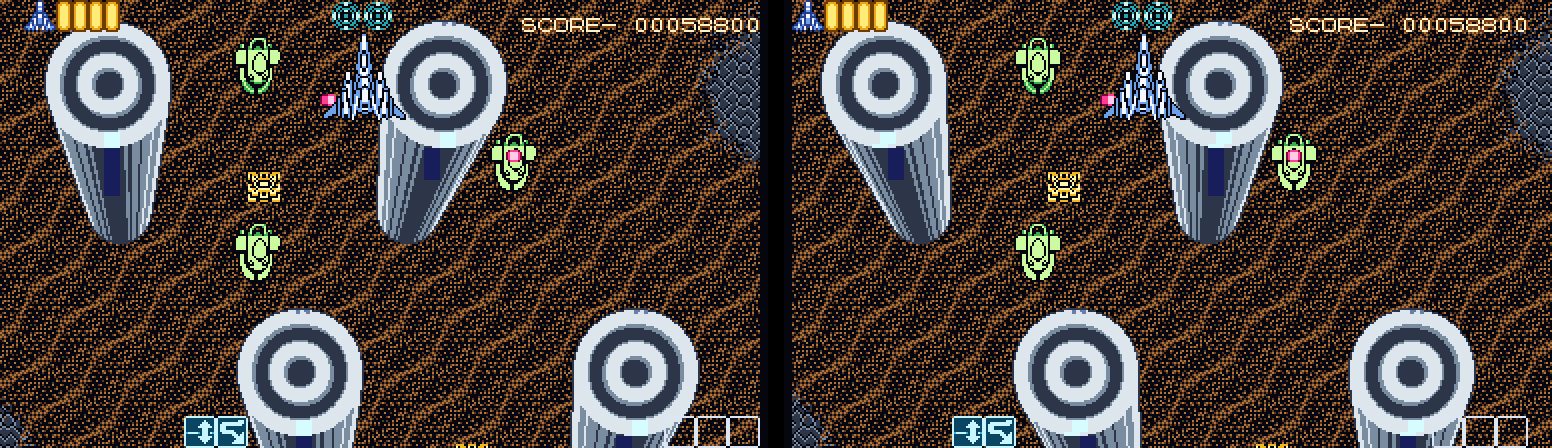
3D on a headset, and on a normal screen
On a Quest 2, 3, 3S or Pro, each eye gets its own picture, as on the original hardware, and both eyes always show the same colours. The game can float in the dark or, using the headset's passthrough, in the player's own room. Installing it takes a sideload, with SideQuest or `adb`, on a headset in developer mode. The README adds a tip for the Quest 3: the Virtual Boy draws 50 frames a second, and the headset can refresh at 100Hz, two refreshes per frame, but an app cannot select that rate itself, so it has to be set with a third-party tool or an `adb` command.
On PC, `VBoyColorVR.exe` drives a PC headset through Quest Link, Air Link, Virtual Desktop or SteamVR. Without a headset, the PC and Android versions offer side-by-side and top-and-bottom output for 3D TVs and cross-eyed viewing, and three kinds of coloured glasses: red and cyan, green and magenta, and amber and blue. The glasses modes are mixed using Dubois' method, which the README says keeps the colours as true as the glasses allow.
There are also screen looks called Sharp, Smooth (using the OmniScale scaler from the SameBoy emulator) and LED, which imitates the Virtual Boy's rows of light with a soft glow. Save states, per-game button mapping, RetroAchievements in softcore mode, screenshots and playback of tool-assisted speedruns from TASVideos round out the features.
How it was built
VBoy Color did not start from scratch. It began as a fork of VirtualBoyGo by CidVonHighwind, a Virtual Boy emulator first made for the Oculus Go in 2018 and since reworked around OpenXR and Vulkan. The README credits it for the VR app, renderer, menu, save states and button mapping.
The emulation itself is Beetle VB, libretro's fork of the Virtual Boy emulation in Mednafen. VBoy Color compiles it untouched except for one generated hook in its video code that reports which tile drew each pixel. That hook is what makes the Auto mode and the colour packs possible: the emulator knows not just what colour a pixel was, but which piece of the game's artwork put it there.
The idea of colouring the four shades came from Red Viper, the Virtual Boy emulator for the Nintendo 3DS, whose version 1.0.0 added a Multicolor mode on 21 July 2025, the 30th anniversary of the console's Japanese launch. VBoy Color credits the idea and says it uses no Red Viper code. The project is licensed under the GPL 3.0; Beetle VB is GPL 2.0 or later.
Development has been fast. Between 6 and 12 October the project published nine betas, adding Android phone support and RetroArch builds, RetroAchievements, colour packs for more games and fixes to individual sprites, such as a Wario whose nose stays pink when he dashes.
How it compares
RetroRGB, which covered the release on 12 October, pointed out that MiSTer owners already have colour options. The MiSTer Virtual Boy core offers anaglyph and side-by-side 3D and can load four-colour Game Boy palette files to colour 2D play. Cart & Pixel covered that core in its Virtual Boy MiSTer story. RetroRGB's Bob said the colour option "shows the advantage of software emulation" and that "having a new VR method of playing VB is always a good thing!"
Nintendo's own route is Virtual Boy - Nintendo Classics, launched for Nintendo Switch Online + Expansion Pack members on 17 February 2026 with seven games, played through a $99.99 replica headset or a $24.99 cardboard model. Version 1.3.0 of the app, released on 3 or 4 August, added a Change Screen Color option, which requires the lens cover of the replica headset to be removed and does not apply to the cardboard model.
The difference with VBoy Color is the hand-painted packs: rather than swapping one colour for another, they give individual sprites and backgrounds colours of their own. The Virtual Boy Wario Land review covers Wario Land, one of the games with a hand-painted pack.
What is not known yet
VBoy Color is a beta, and the developer asks players to report anything that looks wrong. There is no date for a full release. The README says a standalone macOS app does not exist yet (macOS is covered only by the RetroArch core), and that many Fire TV sticks run 32-bit Android, which is not supported yet. The Dragon Hopper pack was described as a work in progress when it arrived in beta 6, and support for the Super Bit Shader colour shaders is listed as work in progress too. The project describes itself as an independent fan project, not affiliated with or endorsed by Nintendo or Meta.
Sources
- yuk27 on GitHub: VBoyColor: Virtual Boy games in color, in 3D on Meta Quest, and on PC
- yuk27 on GitHub: VBoy Color releases
- RetroRGB: VBoy Color Virtual Boy Emulator
- CidVonHighwind on GitHub: VirtualBoyGo: VirtualBoy emulator for the oculus go
- libretro on GitHub: Beetle VB: standalone hard fork of Mednafen VB to libretro
- skyfloogle on GitHub: Red Viper releases
- MiSTer-devel on GitHub: VirtualBoy_MiSTer: The Nintendo Virtual Boy portable 3D console
- Nintendo: Virtual Boy - Nintendo Classics has landed on Nintendo Switch Online + Expansion Pack
- Perfectly Nintendo: Virtual Boy - Nintendo Classics: all the updates
More News
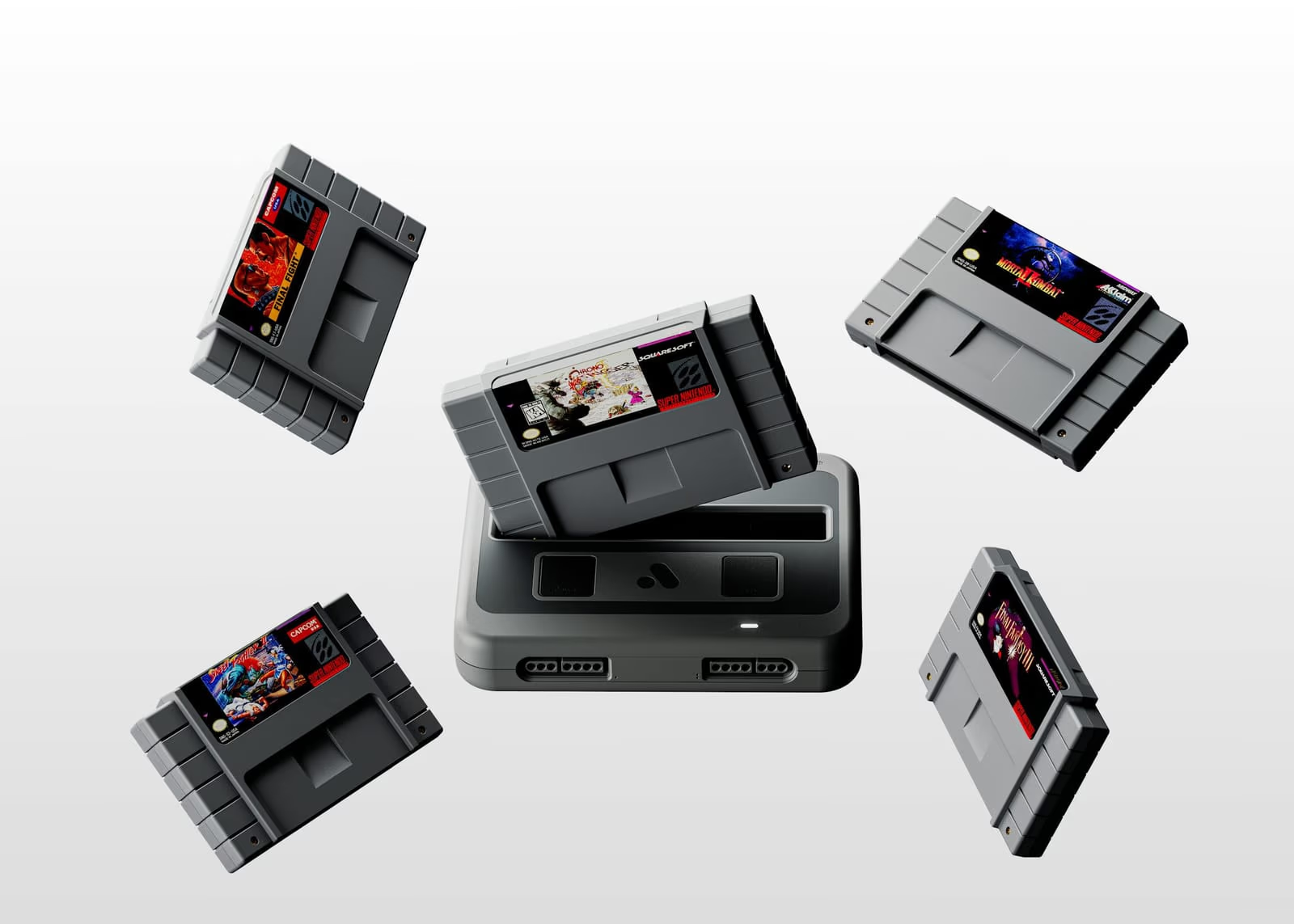
Analogue Announces Super Nt+ and Mega Sg+, With Wireless Controllers and USB-C, for $219.99
Analogue's FPGA Super Nintendo and Mega Drive consoles return as the Super Nt+ and Mega Sg+, adding Bluetooth and 2.4 GHz controllers, USB-C power and hot-swappable cartridges. Preorders open on 19 October at 8am PDT, and both ship in December.
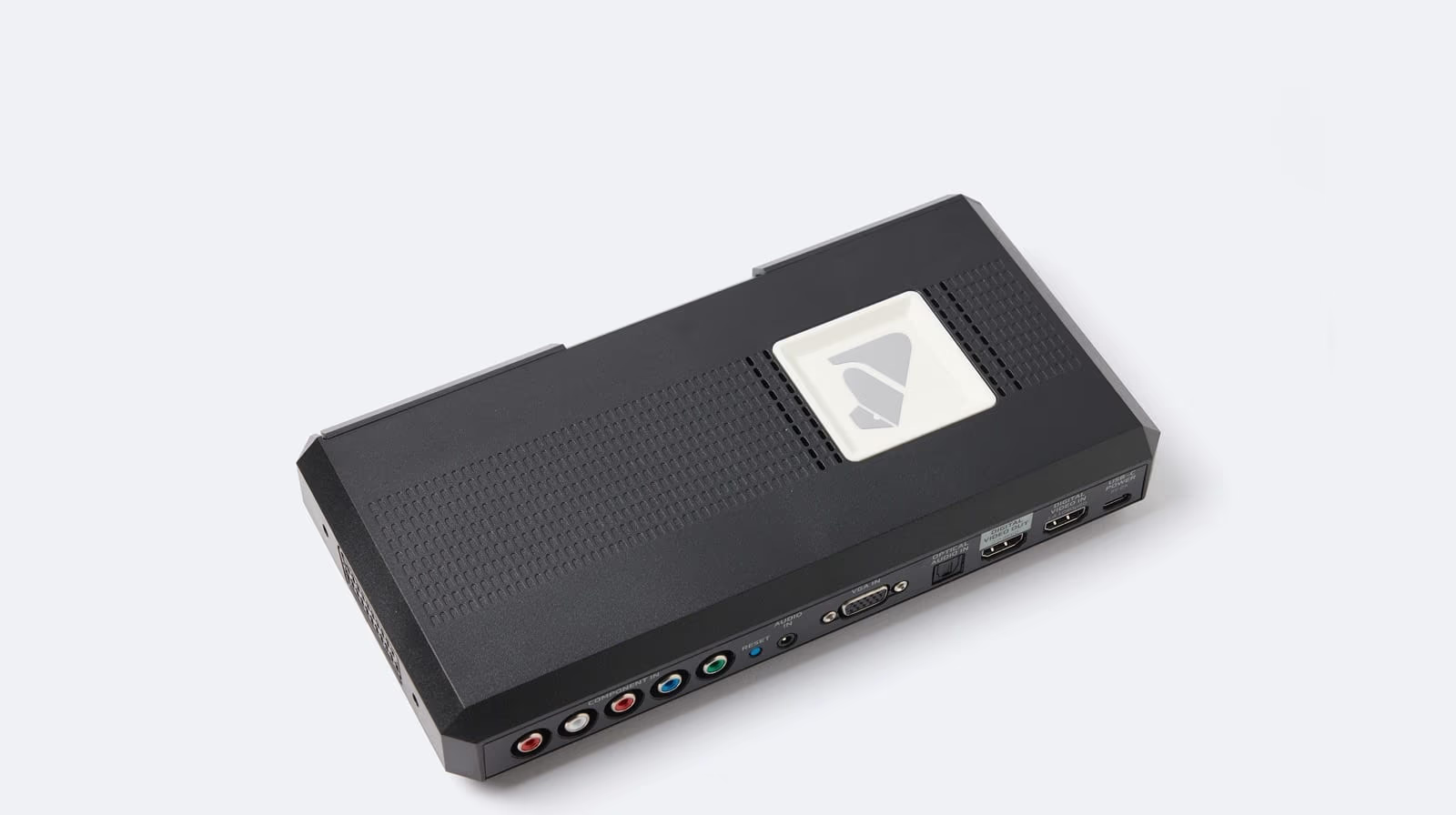
RetroTINK 4K Firmware 1.99 Brings Its CRT Beam Simulation in Line With Blur Busters' Reference Shader
Experimental firmware 1.99.0 and 1.99.1 for the RetroTINK 4K add a Multi-frame Glow option and a Motion Clarity control that match the open-source CRT beam simulator by Blur Busters and Timothy Lottes, capping a month of builds that also brought true VRR, a new inverse telecine engine and steadier Lumacode.
Kururin Paradise Reaches the West for the First Time as Switch Online Adds Three GBA Games
Nintendo added Kururin Paradise, Metal Slug Advance and Monster Rancher Advance to Game Boy Advance - Nintendo Classics on 14 October, giving the 2002 Kururin sequel its first release outside Japan.