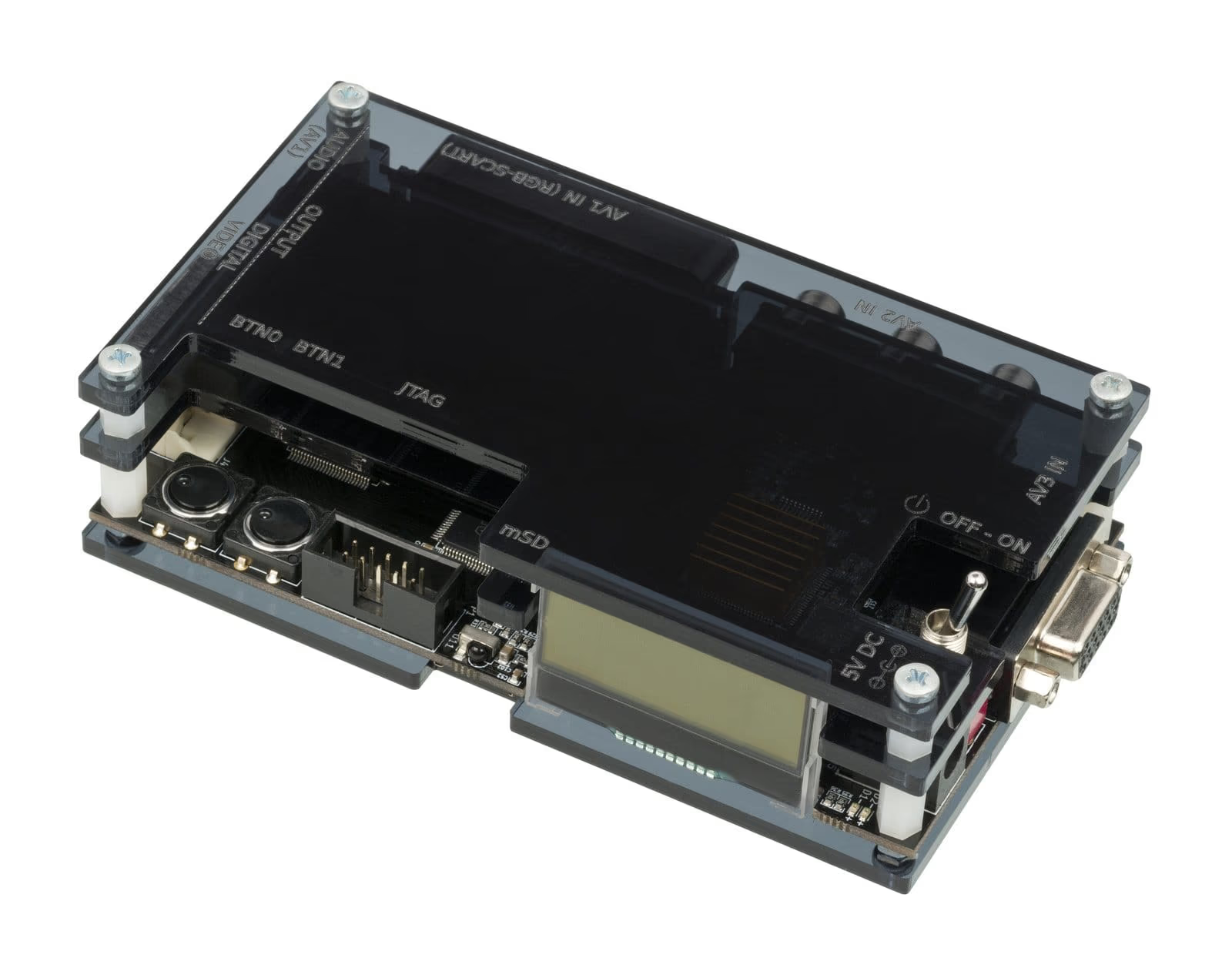
Image: The original Open Source Scan Converter, photo: Evan-Amos, public domain, Wikimedia Commons
OSSC Downscaler Firmware v1.5 Turns HD Sources Into 240p and 480i for CRTs
The original Open Source Scan Converter can now run in reverse. Version 1.5 of the OSSC Downscaler, an unofficial firmware by the developer Manfredi, was published on GitHub on 15 November. It takes HD and 31kHz video into the OSSC and sends out 15kHz 240p or 480i, the signal an RGB CRT television or a 15kHz monitor expects. RetroRGB covered it the next day.
What the firmware does
The stock OSSC firmware exists to take low-resolution analogue video from old consoles and multiply its lines for a modern display. The Downscaler, in its own description, "does the opposite": it accepts 720p, 1080p, 480p and a set of PC resolutions on the OSSC's VGA input (RGBHV) or its component inputs, and outputs 240p or 480i over HDMI. A CRT then needs that HDMI signal turned back into analogue, through an HDMI to VGA converter and a VGA to SCART cable. The OSSC generates composite sync for SCART and sends it on the horizontal sync line, with a choice of four sync types including a "Standard" option with equalising pulses and serrated vertical sync.
The output is frame locked to the input. There is no frame buffer, so the firmware adds no frame of lag; it works a line at a time. Each output line is built from a group of input lines, which can be blended (averaged) or not, and a "Line phase" setting shifts those groups by whole lines so they line up with content that has been integer scaled. Every source pixel is sampled and the output clock runs at an exact ratio of the input clock, which the README says keeps horizontal scrolling smooth.
What happens to a widescreen picture is the user's choice. For 720p and 1080p there are three formats: Full 16:9, which squeezes most of the picture into 4:3; Center 4:3, which crops the middle; and Wide, which keeps the whole width as a letterboxed 180-line (720p) or 216-line (1080p) image. The README notes that 1080p works best when the source has been scaled four times vertically, and that 1280x960 produces exactly 240 lines, which suits 320x240 content scaled by four.

What v1.5 adds
The first release, v1.0, arrived on 1 November and accepted only 720p, 480p and 640x480. Five releases in two weeks have widened that considerably. The changelog shows 1080p added in v1.1, 576p input with 288p or 576i output in v1.2, 1280x960 and the 216-line 1080p Wide mode in v1.3, and an HDMI range setting and a choice of test patterns in v1.4.
Version 1.5 adds two PC resolutions: 1024x768 at 60Hz, which uses three input lines per output line and a 960x720 window from the centre, and 1280x1024 at 60Hz, which uses four lines per output line and the middle 960 lines. Both are limited to VESA standard timing. The flicker filter for 480i output, previously only for 480p, 640x480 and 576p sources, now also works with the HD and PC inputs by averaging three or four input lines per field line instead of two. The OSSC's second front button now switches between 240p and 480i with a short press and steps through the HD formats when held for a second. The output PLL now runs at no less than 650MHz rather than the datasheet minimum of 600MHz, which the changelog says gives more margin without changing the output timings.
How it stays safe on a CRT
The README describes three separate safeguards that keep the output inside the 15kHz range. Every output mode is calculated to land between 15.6 and 15.9kHz for 240p, or at 15.7kHz for 480i. Anything the firmware cannot convert shows a 15.73kHz test pattern instead. And a hardware watchdog inside the FPGA, independent of the processor, blanks the video and all sync signals if the line rate goes above its threshold. The changelog puts that threshold at 16.4kHz since v1.1.
The firmware also never touches the official one. It installs through the stock firmware's update function into the OSSC's secondary firmware slot, is started from the menu with "Launch 2nd FW", and keeps its settings in its own sector of flash. Turning the OSSC off and on boots the official firmware again. That second slot is fairly new: official firmware 1.20, released on 21 December 2025, added "support for alternative FW stored on internal flash". The README lists testing on a revision 1.8 board with official firmware 1.22, and RetroRGB says the OSSC needs to be a revision 1.8 unit or have the single-wire mod to run the required firmware.
Where it comes from
The OSSC is Markus Hiienkari's open-source, low-latency digitiser and scan converter for retro consoles and computers, developed in public on GitHub since February 2016. The Downscaler is a fork of that firmware, licensed under GPLv3 like the original, and its README gives Hiienkari the credit for making it possible.
It is not the first firmware of its kind. RetroRGB reported in November 2025 that e8root's VoidScaler turned the OSSC into a 15kHz downscaler for 1080p and 720p sources, with the HD15 port as its only active input, tested on hardware revisions 1.6 and 1.8. The Downscaler's README says it was inspired by VoidScaler and describes that firmware as closed source. RetroRGB's Bob says VoidScaler "was completely abandoned" and that the new firmware appears a bit more stable.
The README is open about how it was made: "This project was made with the help of AI." It says the code was written together with Claude and that the firmware is unofficial and used at the owner's risk. Manfredi has also contributed to MiSTer, most recently a "Border" option for the Atari ST core, merged into MiSTer's Main on 14 November.
What is not known yet
The README lists no known issues, but it does name limits. 50Hz HD sources such as 720p50 and 1080p50 are not supported, because the line buffer cannot absorb the timing drift without a frame buffer. Not every HDMI to VGA converter handles 15kHz signals, and the README advises that converters that work with MiSTer's Direct Video mode are a good guide. RetroRGB adds that the aspect controls apply only to 720p and 1080p, not 480p input, and points out that a setup can need a digital to analogue converter on both the input and output sides. Hiienkari has not commented on the project, and there is no word on whether any of it might reach the official firmware.
Sources
- manfredi90 on GitHub: OSSC Downscaler: unofficial firmware, HD/31kHz VGA input to 15kHz 240p/480i output
- manfredi90 on GitHub: OSSC Downscaler v1.5 release
- manfredi90 on GitHub: OSSC Downscaler changelog
- RetroRGB: OSSC Downscaler Firmware
- marqs85 on GitHub: Open Source Scan Converter
- marqs85 on GitHub: OSSC firmware v1.20 release notes
- MiSTer-devel on GitHub: Atari ST: "Border" option in the system menu (#1421)
- RetroRGB: OSSC CFW For Downscaling: VoidScaler Released
More News
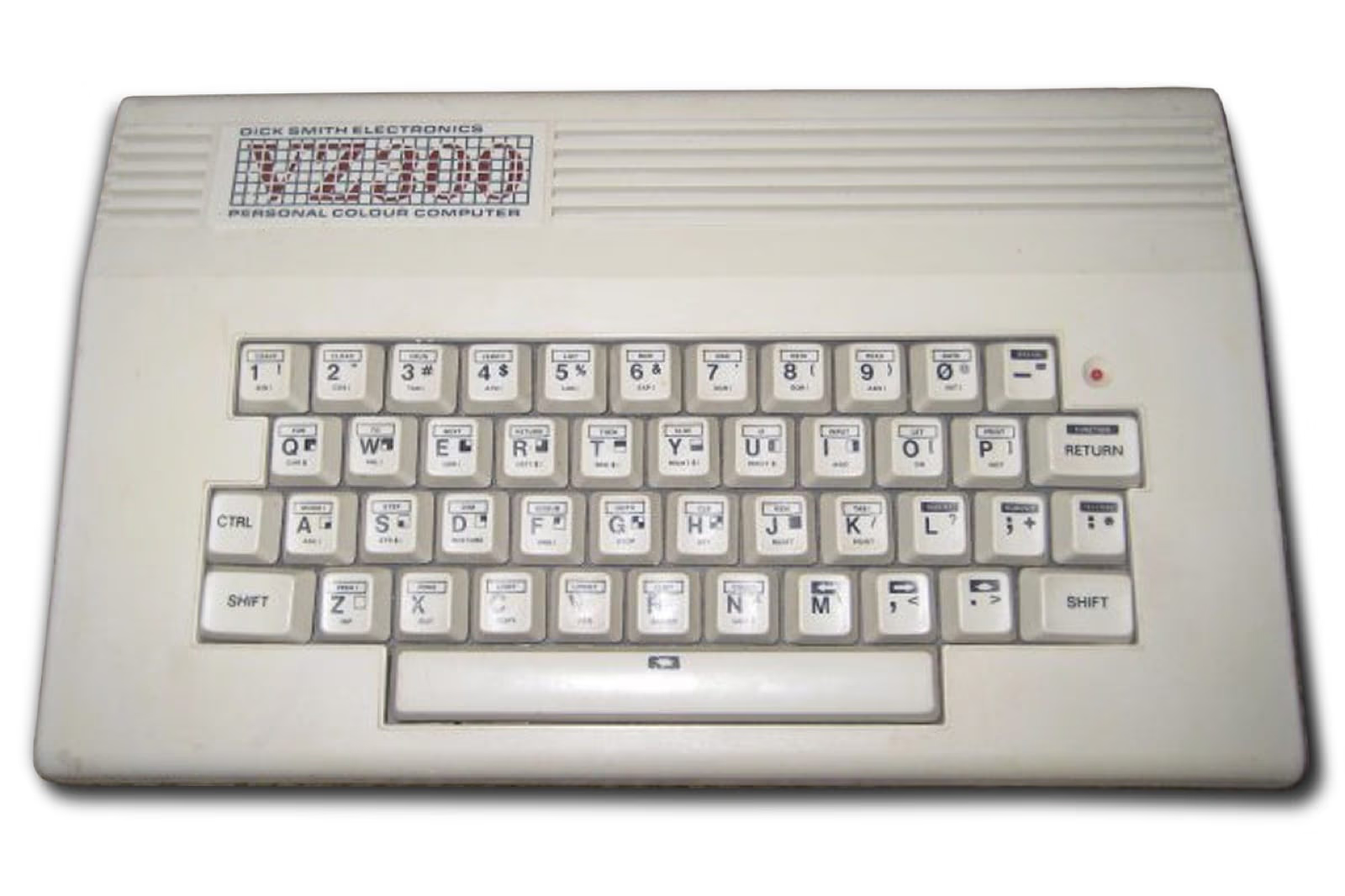
VTech Laser 310 MiSTer Core Gets Tapes, VZ DOS Disks and a Boot Fix
Release 20261118 of MiSTer's VTech Laser 310 core, by Alan Steremberg, adds a tape deck for WAV and CAS files, the VZ DOS floppy interface with two drives, PAL and NTSC timing, and a fix for a bug that kept the previous release from booting on a MiSTer at all.
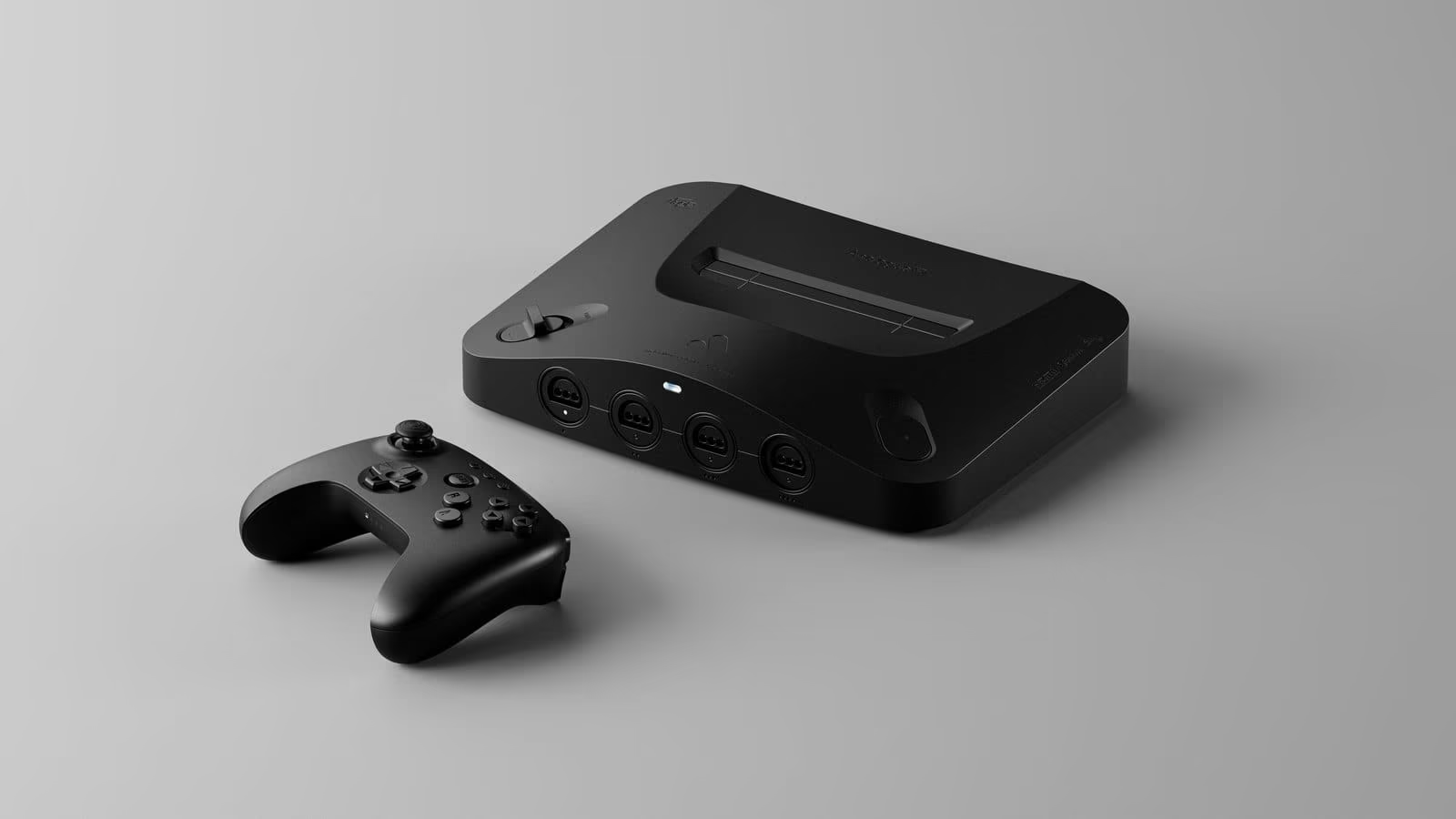
Analogue 3D Firmware 1.6.0 Adds Wi-Fi and Automatic Updates
3Dos 1.6.0, released on 18 November, switches on the Analogue 3D's dual-band Wi-Fi a year after launch, bringing over-the-air updates, network time and opt-in usage analytics.
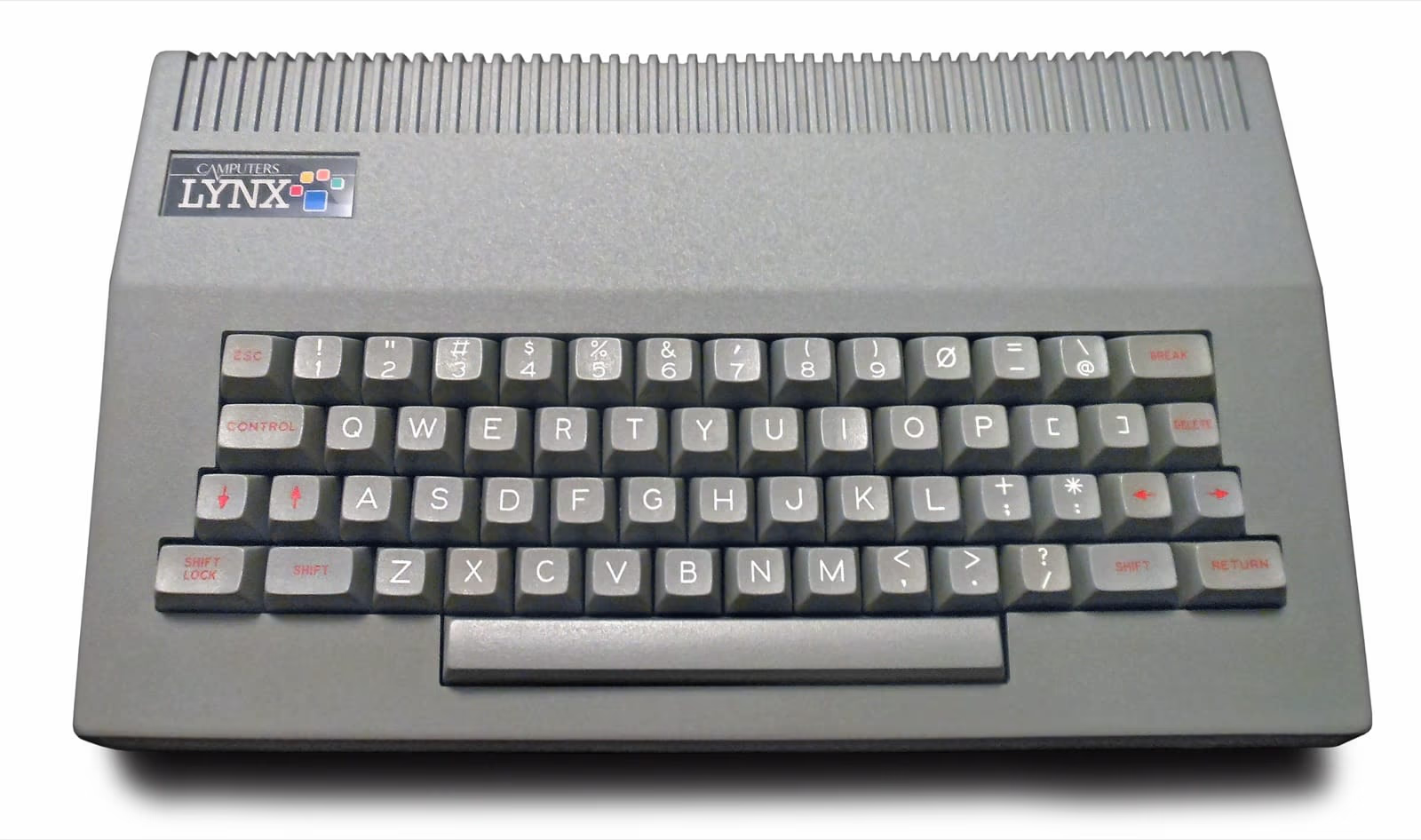
Camputers Lynx MiSTer Core Rebuilt With Disks, TZX Tapes and the 128K
Release 20261118 of MiSTer's Camputers Lynx core moves it onto Kyp's FPGA Lynx machines, covering the 48K, 96K, 96K Scorpion and 128K, and adds the LynxDOS disk interface, TZX and WAV tapes, a 4x tape turbo and on-screen loading hints.