Retro Game Prices in Freefall: Inside the Market Correction Collectors Saw Coming
The Bubble Bursts
The numbers do not lie, and they are telling a story that many retro game collectors have been expecting for years. According to data from PriceCharting and multiple auction tracking services, average prices for retro video games across all major platforms have declined between 30 and 50 percent from their pandemic-era peaks. Some individual titles have fallen even further. A complete copy of EarthBound, which routinely sold for over $500 in 2021, now changes hands for around $200. Sealed and graded games, which were the most aggressively speculative segment of the market, have seen even steeper declines. The correction is real, it is broad, and it is reshaping the retro gaming hobby in fundamental ways.
How We Got Here
The retro game market experienced an unprecedented surge between 2020 and 2022, driven by a confluence of factors that had little to do with organic collector demand. Pandemic lockdowns gave people time and stimulus money to revisit childhood hobbies. The grading company WATA Games and auction house Heritage Auctions generated enormous media attention with record-breaking sealed game sales that made mainstream news. Speculators and investors who had no inherent interest in gaming entered the market, treating cartridges like stocks. Prices for common games doubled or tripled, and rare titles reached prices that bore no relationship to actual collector demand. It was a classic speculative bubble, and like all bubbles, it was unsustainable.
The WATA Factor
The WATA Games controversy accelerated the correction significantly. Investigative reporting and a subsequent FTC complaint revealed conflicts of interest between WATA Games and Heritage Auctions, with allegations that key figures in both organizations had coordinated to inflate prices through strategic consignment and aggressive marketing. While WATA disputed the findings, the reputational damage was severe. Confidence in the graded game market collapsed, and prices for sealed and graded items fell disproportionately. The broader cultural narrative shifted from "retro games are valuable investments" to "retro games were manipulated by speculators," and that shift in perception has had a lasting impact on the entire market.
Who Benefits
The market correction is unambiguously positive for one group: people who actually want to play retro games. Collectors who were priced out of the market during the boom are finding that games they could not justify purchasing two years ago are now within reach. Complete-in-box copies of excellent games across every major platform are available at prices that would have seemed like bargains even before the pandemic. The PlayStation 1, Sega Saturn, and Nintendo 64 libraries in particular have seen dramatic price reductions, making this an excellent time for anyone looking to build a playing collection rather than an investment portfolio.
Who Suffers
On the other side of the equation are collectors and resellers who bought at or near the peak. Online forums and social media groups are filled with posts from individuals sitting on inventory they purchased at inflated prices, facing the choice between selling at a significant loss or holding and hoping for a recovery that may never come. Professional resellers who expanded their operations during the boom are being hit particularly hard, with some reporting that their inventory has lost half its value in under 18 months. The emotional toll is real, and the retro gaming community has had to navigate difficult conversations about financial loss, sunk cost fallacy, and the difference between collecting and investing.
The Role of Re-Releases
The proliferation of high-quality retro game re-releases has also contributed to the correction. When excellent compilations like the Castlevania Advance Collection, Mega Man Legacy Collection, and various Arcade Archives releases make classic games available for a few dollars on modern hardware, the premium that physical copies command inevitably erodes. Emulation quality has also improved dramatically, and devices like the Analogue Pocket and MiSTer FPGA provide hardware-accurate ways to play retro games without original cartridges. The more accessible retro games become through legal channels, the less the physical market can sustain premium pricing for anything other than genuinely rare items.
The New Normal
Industry analysts who track the collectibles market suggest that prices are approaching a new baseline that is likely sustainable over the long term. Common games have returned to roughly their pre-pandemic values, while genuinely rare titles retain significant value but at levels well below their speculative peaks. The graded and sealed market has contracted dramatically and may never return to its former prominence, as buyer confidence in the grading ecosystem has been permanently damaged. What remains is a healthier market driven by genuine collector demand rather than speculative investment, which is exactly what long-time collectors have been hoping for.
Lessons Learned
The retro game market correction offers a cautionary tale about the intersection of nostalgia, speculation, and media hype. The same dynamics that inflated prices could and likely will appear in other collectible markets, and the pattern is not new. What makes the retro gaming case instructive is how quickly and visibly the correction unfolded, and how the availability of detailed pricing data made it impossible to ignore. For the hobby itself, the correction is ultimately a return to normalcy. Retro games are meant to be played, shared, and enjoyed, not sealed in acrylic cases and traded like commodities. A market that reflects that reality is a healthier market for everyone.
More News
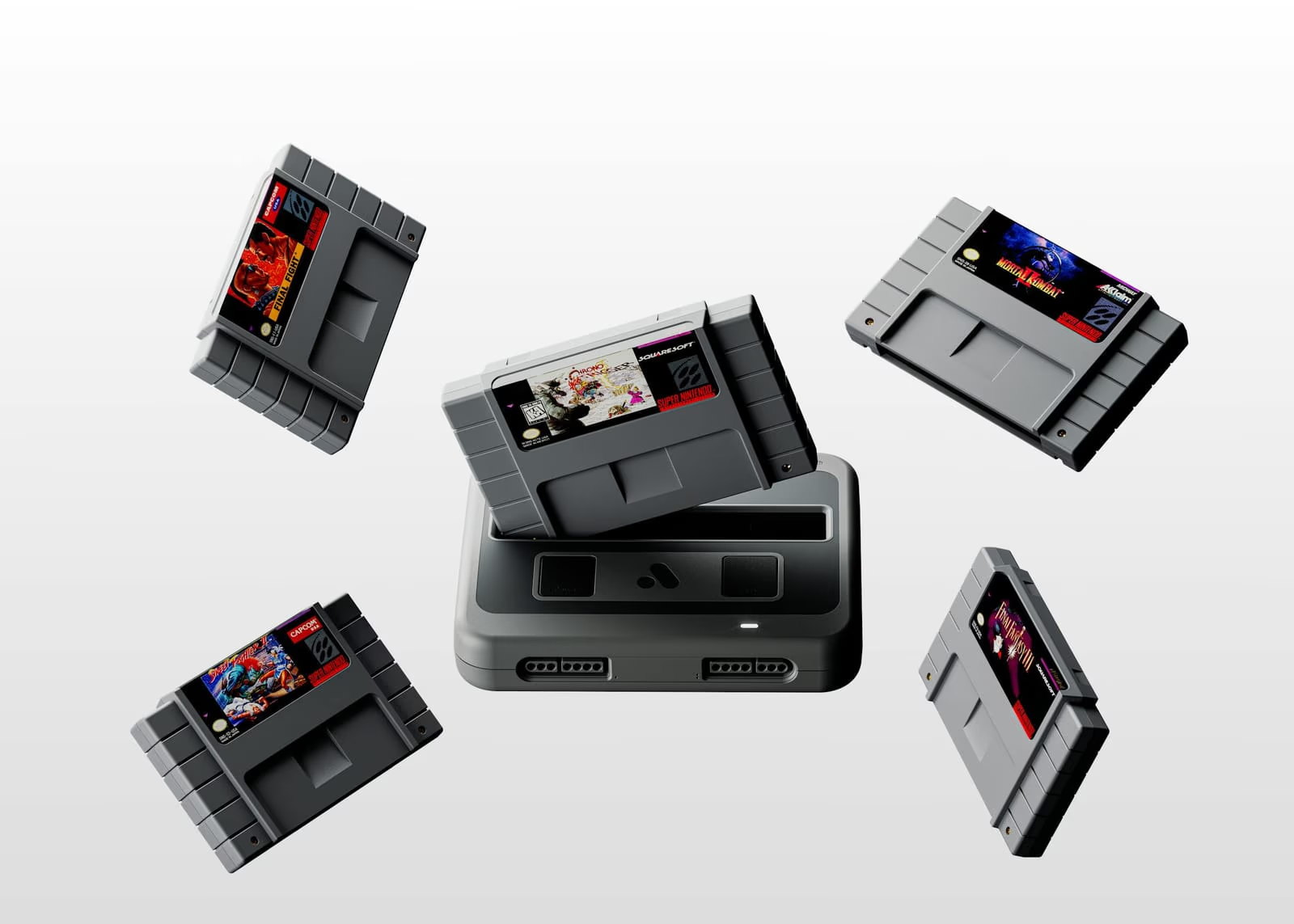
Analogue Announces Super Nt+ and Mega Sg+, With Wireless Controllers and USB-C, for $219.99
Analogue's FPGA Super Nintendo and Mega Drive consoles return as the Super Nt+ and Mega Sg+, adding Bluetooth and 2.4 GHz controllers, USB-C power and hot-swappable cartridges. Preorders open on 19 October at 8am PDT, and both ship in December.
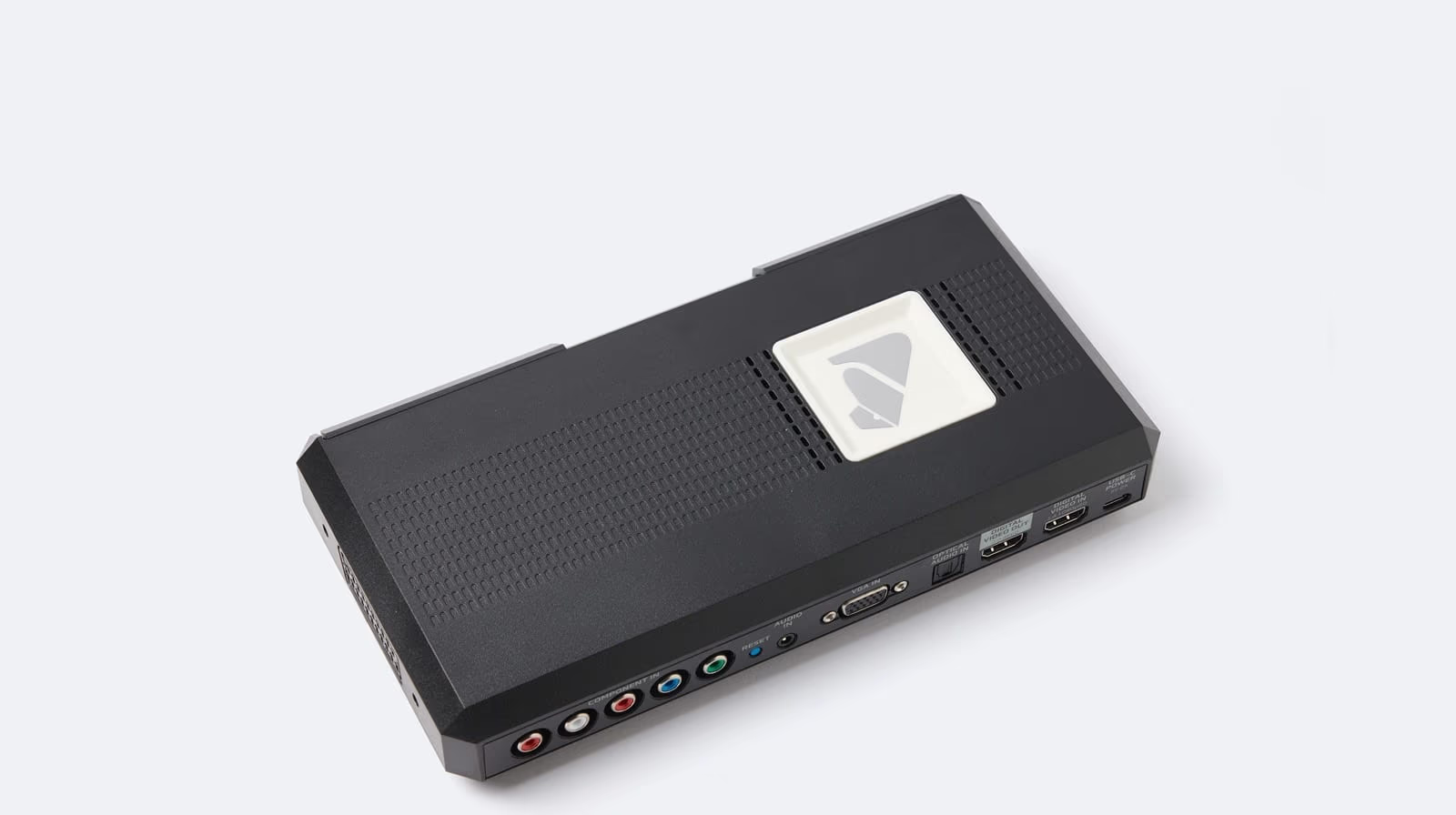
RetroTINK 4K Firmware 1.99 Brings Its CRT Beam Simulation in Line With Blur Busters' Reference Shader
Experimental firmware 1.99.0 and 1.99.1 for the RetroTINK 4K add a Multi-frame Glow option and a Motion Clarity control that match the open-source CRT beam simulator by Blur Busters and Timothy Lottes, capping a month of builds that also brought true VRR, a new inverse telecine engine and steadier Lumacode.
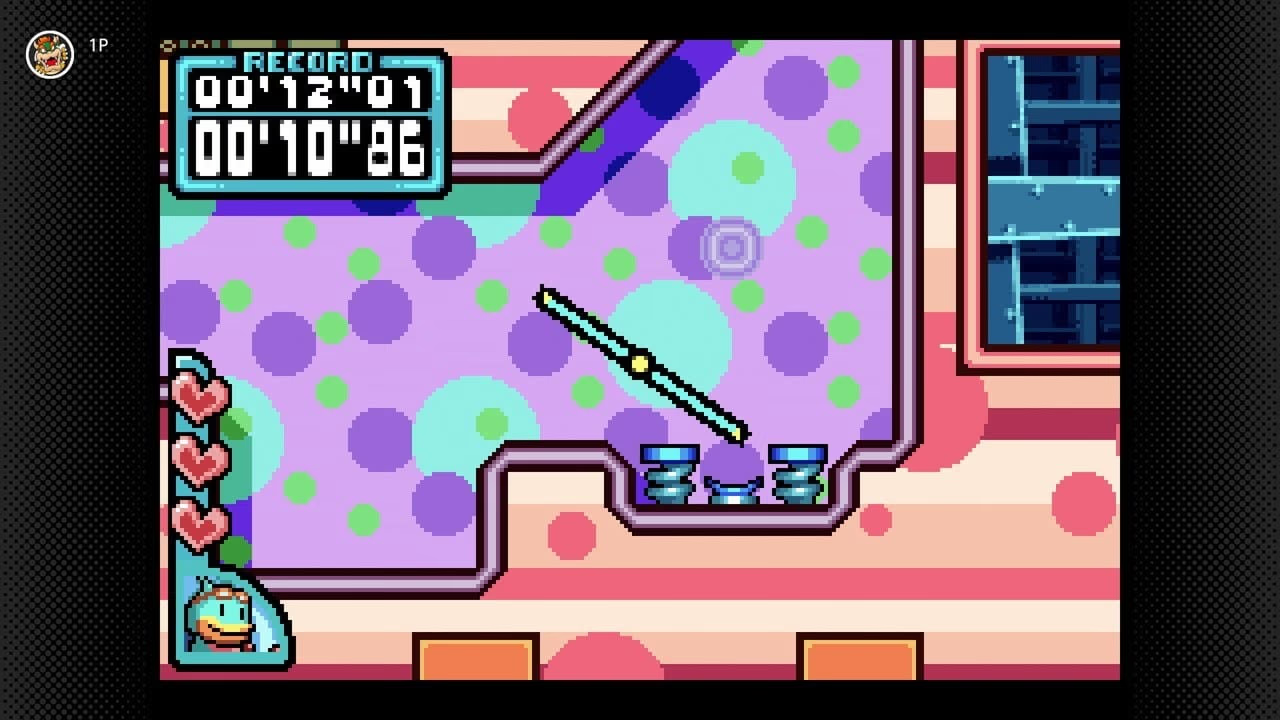
Kururin Paradise Reaches the West for the First Time as Switch Online Adds Three GBA Games
Nintendo added Kururin Paradise, Metal Slug Advance and Monster Rancher Advance to Game Boy Advance - Nintendo Classics on 14 October, giving the 2002 Kururin sequel its first release outside Japan.