Physical Retro Game Prices Continue to Decline as Collectors Shift Priorities
The Bubble Deflates
The retro game collecting market is in the middle of a significant correction, and the data is hard to argue with. According to price tracking sites like PriceCharting and GameValueNow, average loose cart prices for the NES, SNES, and N64 have fallen between 25% and 40% from their peaks in 2021 and 2022. Complete-in-box prices have dropped even further for mid-tier titles, and only the rarest grail games have maintained anything close to their pandemic-era valuations. What we are witnessing is not a crash in the apocalyptic sense, but rather a market returning to something closer to historical norms after a speculative bubble inflated prices beyond what actual demand could sustain.
What Caused the Decline
Multiple factors are converging. The pandemic-era surge in retro gaming interest brought a wave of new buyers into the market, many of whom were speculators rather than collectors. WATA Games and Heritage Auctions generated headlines with million-dollar sealed game sales that created an artificial sense of investment potential. When that hype evaporated, partly due to investigative reporting that exposed conflicts of interest in the graded game market, speculative money left quickly. At the same time, the proliferation of high-quality emulation options, FPGA devices, and official re-release compilations has given players legitimate alternatives to owning original cartridges. Why pay $150 for a loose copy of Mega Man X when you can play it through a dozen different legal and semi-legal channels?
Who Benefits
The price correction is unambiguously good for people who actually want to play these games. Titles that were prohibitively expensive two years ago are now within reach for average collectors. Saturn and TurboGrafx-16 games have seen some of the steepest declines, with formerly $200-plus titles like Panzer Dragoon Saga and Magical Chase dropping to prices that, while still high, no longer require a financial plan. The N64 library has been particularly affected, likely due to the Analogue 3D and recompilation projects providing compelling alternatives to original hardware. Even Game Boy and GBA prices have softened, despite the Analogue Pocket driving renewed interest in those platforms.
The Long View
Veteran collectors who have been through previous market cycles are largely unsurprised by this correction. Retro game prices have always moved in waves, driven by nostalgia cycles, media attention, and the age demographics of buyers. The current generation of collectors grew up with the N64 and PS1, and their peak buying years may already be behind them as mortgage payments and childcare costs take priority. The games themselves have not changed. A good game is still a good game regardless of its market price, and for those of us who collect because we love the medium rather than because we see it as an investment vehicle, the current market is the best it has been in years.
More News
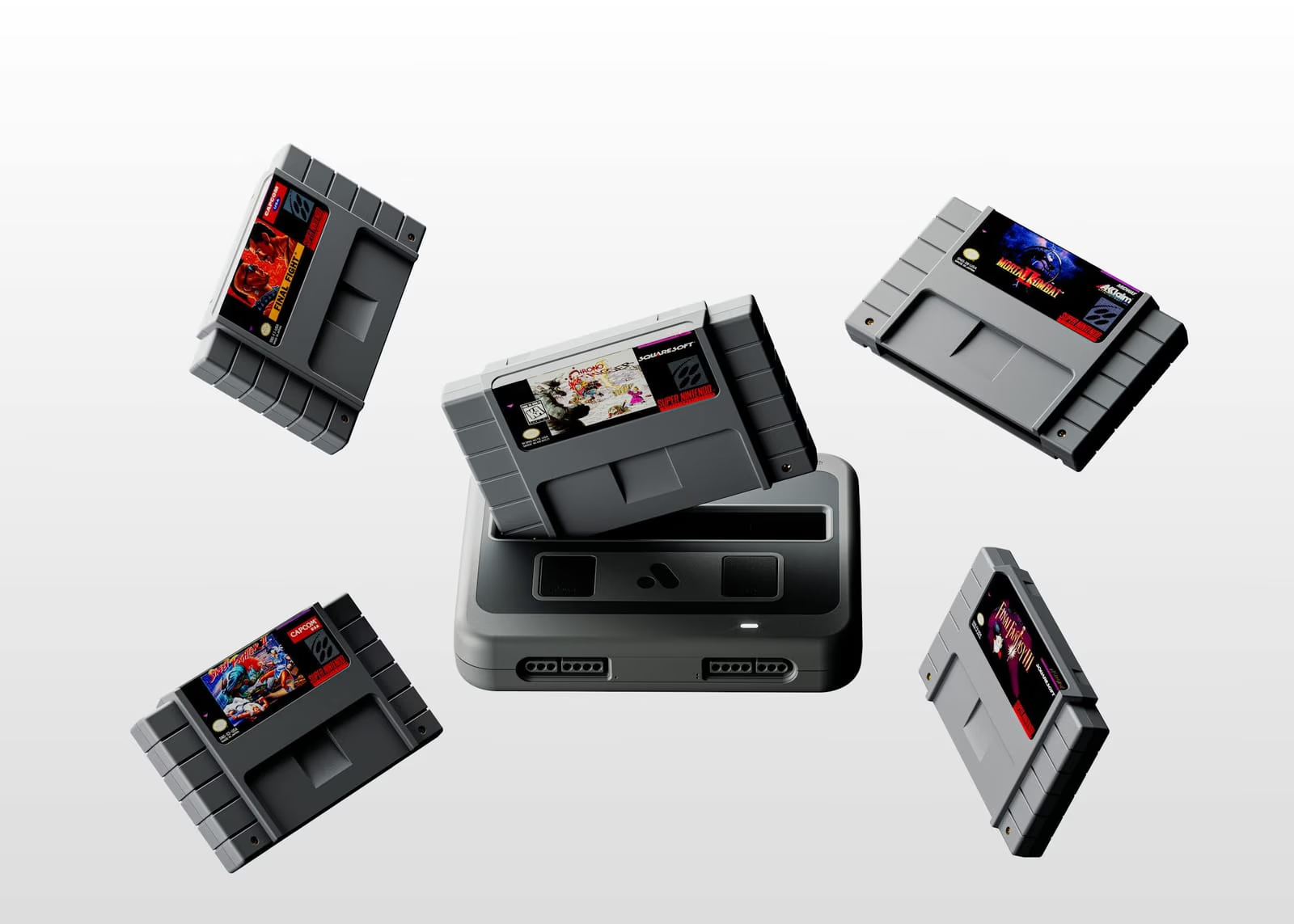
Analogue Announces Super Nt+ and Mega Sg+, With Wireless Controllers and USB-C, for $219.99
Analogue's FPGA Super Nintendo and Mega Drive consoles return as the Super Nt+ and Mega Sg+, adding Bluetooth and 2.4 GHz controllers, USB-C power and hot-swappable cartridges. Preorders open on 19 October at 8am PDT, and both ship in December.
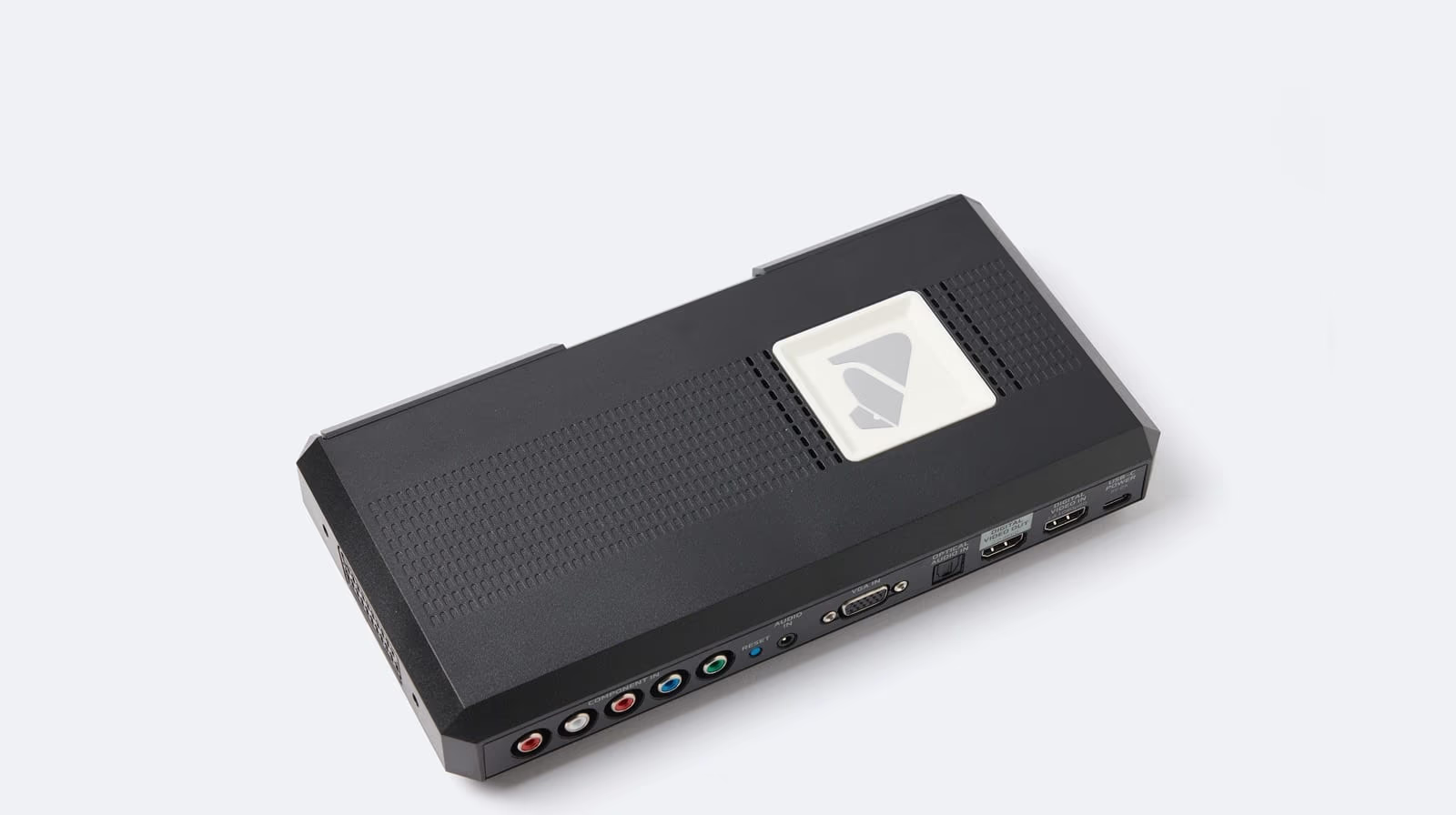
RetroTINK 4K Firmware 1.99 Brings Its CRT Beam Simulation in Line With Blur Busters' Reference Shader
Experimental firmware 1.99.0 and 1.99.1 for the RetroTINK 4K add a Multi-frame Glow option and a Motion Clarity control that match the open-source CRT beam simulator by Blur Busters and Timothy Lottes, capping a month of builds that also brought true VRR, a new inverse telecine engine and steadier Lumacode.
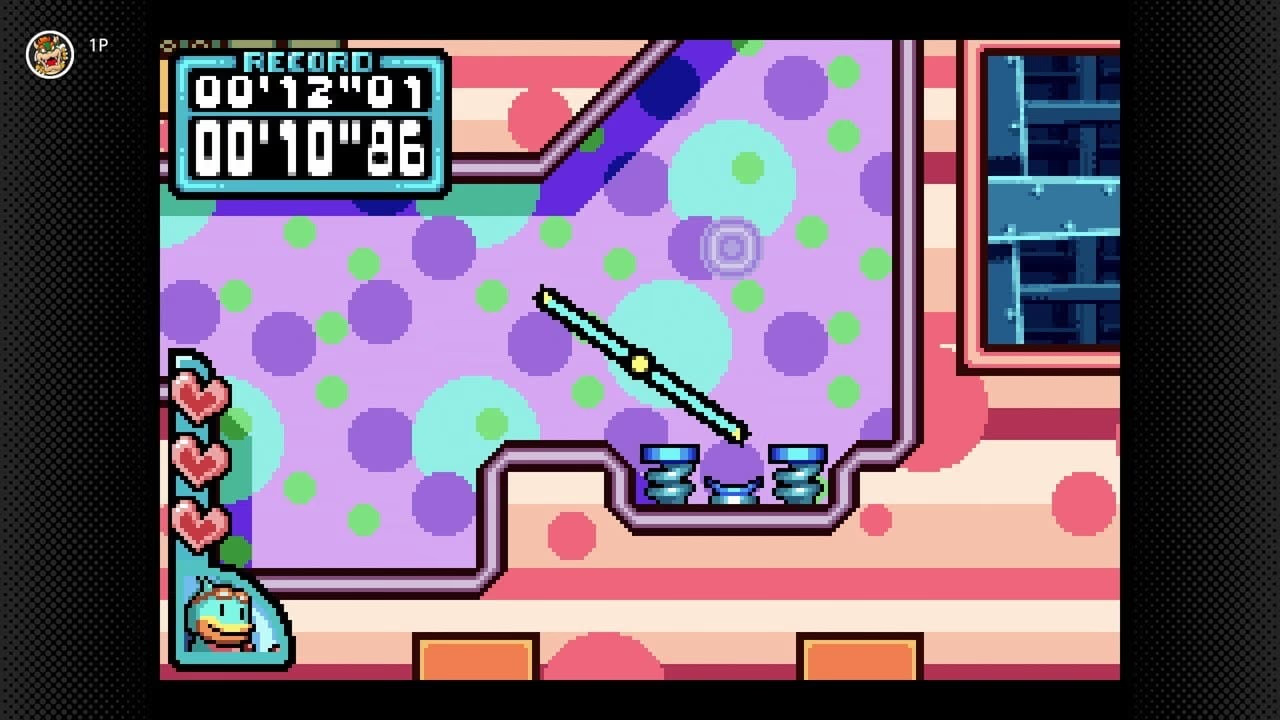
Kururin Paradise Reaches the West for the First Time as Switch Online Adds Three GBA Games
Nintendo added Kururin Paradise, Metal Slug Advance and Monster Rancher Advance to Game Boy Advance - Nintendo Classics on 14 October, giving the 2002 Kururin sequel its first release outside Japan.