Pixel FX Unveils Morph 4K: The Next Generation of Retro Console Upscaling
A New Contender Enters the Ring
The retro gaming hardware market has a new heavyweight. Pixel FX, the company behind the acclaimed line of internal HDMI modification kits for retro consoles, has officially announced the Morph 4K, a standalone video upscaler designed from the ground up for retro gaming. The device promises to deliver the kind of low-latency, high-quality upscaling that enthusiasts have been chasing for years, and early demonstrations suggest it may represent a genuine leap forward in the category. Pre-orders open next month, with an expected retail price of $349.
What Makes It Different
The retro upscaler market is not exactly lacking in options. The RetroTINK line, particularly the 4K model, has been the gold standard for several years, and Mike Chi's work on that product set a bar that many thought would take years to surpass. The Morph 4K is not attempting to simply match the RetroTINK but to push the category in new directions. The device features a custom FPGA-based processing pipeline that handles scaling, deinterlacing, and shader processing in a single pass, with a claimed input latency of under one millisecond. It accepts analog video through a comprehensive array of inputs including RGB SCART, component, S-Video, and composite, and outputs over HDMI 2.1 at up to 4K120.
The Shader Engine
Perhaps the most ambitious feature of the Morph 4K is its integrated shader engine. While previous upscalers have offered basic scanline overlays and smoothing filters, the Morph 4K includes a fully programmable shader processor that can run complex CRT simulation algorithms in real time. Pixel FX has partnered with several well-known shader developers from the RetroArch community to provide a curated library of preset configurations at launch, with an open SDK that will allow the community to develop and share their own shaders. The company demonstrated a CRT simulation running on the device at a recent expo that drew audible gasps from attendees, with shadow mask, phosphor glow, and screen curvature effects that approached the look of an actual consumer CRT.
Input Flexibility
The Morph 4K has been designed to handle virtually any analog video signal that a retro console can output. Beyond the standard input array, the device includes an expansion slot that will accept optional modules for additional input types, including a planned module for Japanese-standard JP21 SCART and another for direct VGA input for Dreamcast and classic PC gaming. Automatic signal detection and input switching mean that users can leave multiple consoles connected and the device will identify and optimize for each signal as it becomes active. This kind of convenience may sound minor, but anyone who has dealt with the cable management nightmare of a multi-console retro setup will appreciate the thoughtfulness.
The Competitive Landscape
The announcement has inevitably drawn comparisons to the RetroTINK 4K, which has dominated the premium upscaler market since its release. Mike Chi, the RetroTINK creator, has been characteristically gracious about the competition, noting on social media that more high-quality options benefit the entire community. The two devices appear to target slightly different priorities, with the RetroTINK 4K emphasizing reference-grade accuracy and the Morph 4K leaning into its shader capabilities and input flexibility. For consumers, the competition is unambiguously positive, as it drives innovation in a product category that did not meaningfully exist five years ago.
Pixel FX's Track Record
Pixel FX has earned considerable goodwill in the retro gaming community through its line of internal HDMI mods, which provide digital video output for consoles that originally shipped with only analog connections. Their kits for the PlayStation 1, Nintendo 64, Sega Saturn, and other consoles are widely regarded as best-in-class solutions, and the engineering quality has been consistently praised by reviewers and installers. The Morph 4K represents the company's first standalone consumer product, and the transition from internal modification kits to a full upscaler is a significant step up in complexity. However, the underlying expertise in video processing and FPGA design translates directly.
Availability and Pricing
At $349, the Morph 4K is positioned competitively against the RetroTINK 4K, which retails for $750. Pixel FX has stated that the lower price point is possible because of efficient FPGA utilization and a streamlined hardware design that reduces component costs without sacrificing performance. The company plans to sell directly through its website with regional distributors handling international orders. Initial production runs will be limited, a common reality for niche hardware products, but Pixel FX has committed to ongoing production rather than the limited-batch model that has frustrated buyers of other retro gaming hardware. The first units are expected to ship in early 2026.
More News
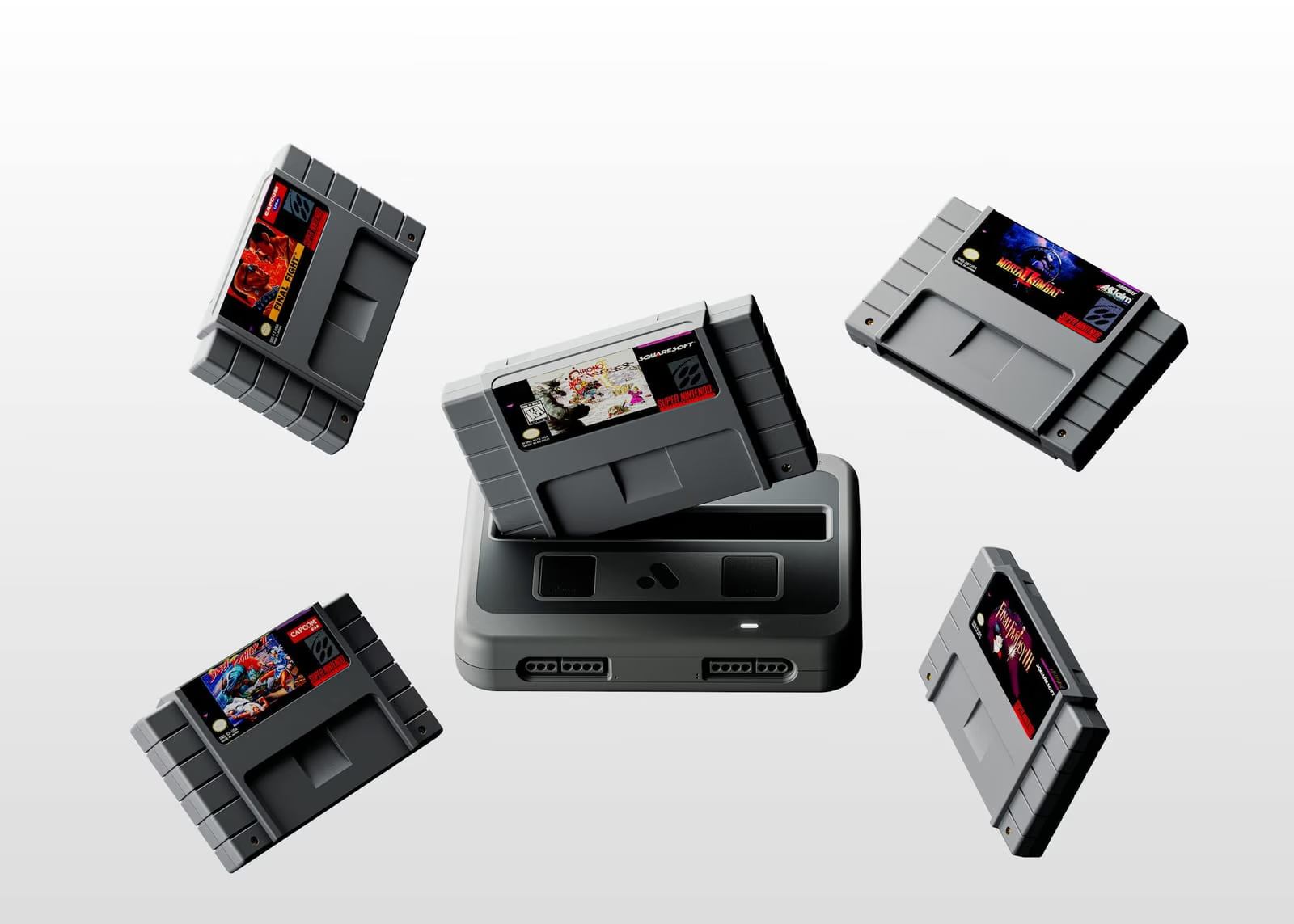
Analogue Announces Super Nt+ and Mega Sg+, With Wireless Controllers and USB-C, for $219.99
Analogue's FPGA Super Nintendo and Mega Drive consoles return as the Super Nt+ and Mega Sg+, adding Bluetooth and 2.4 GHz controllers, USB-C power and hot-swappable cartridges. Preorders open on 19 October at 8am PDT, and both ship in December.
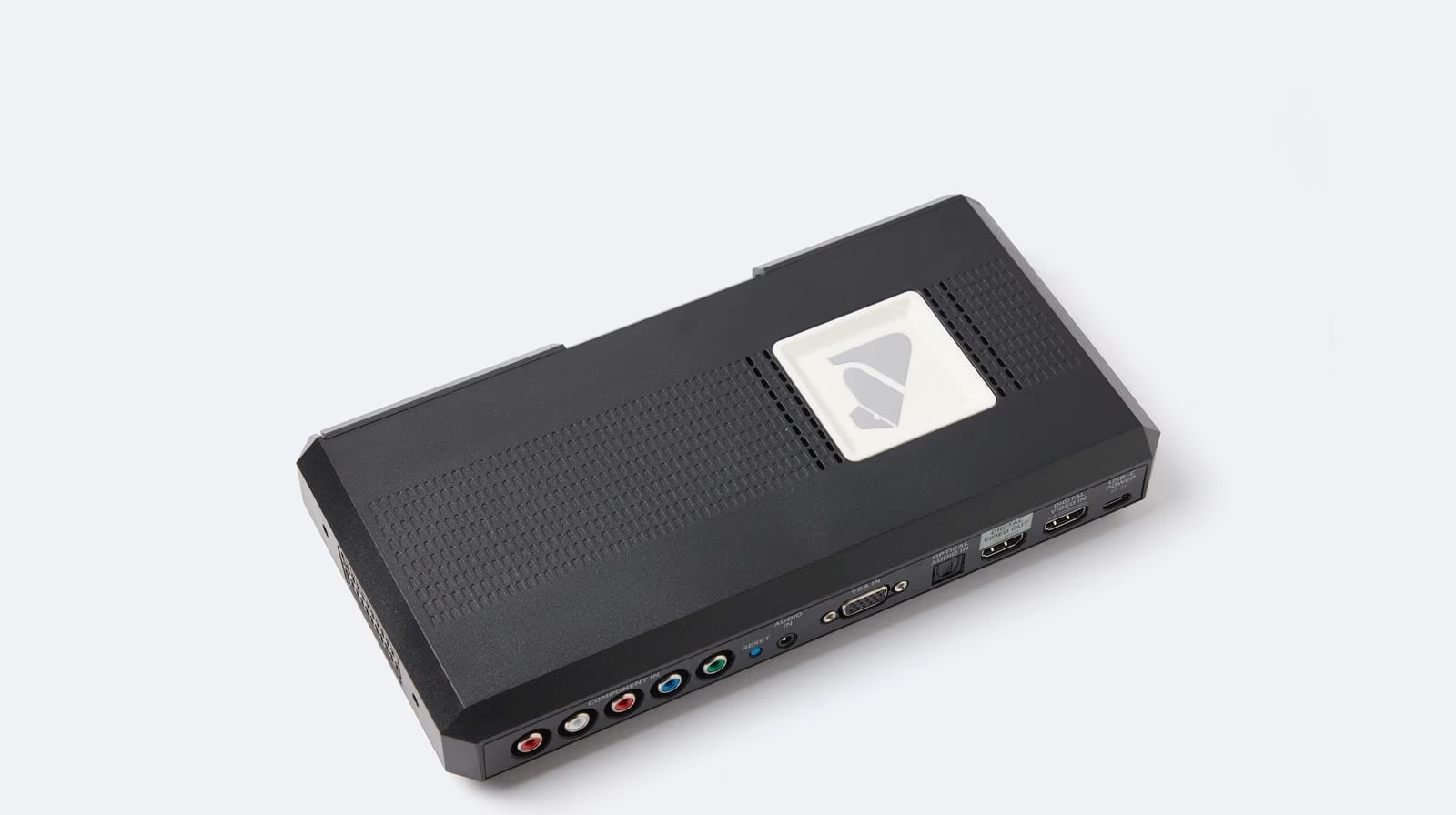
RetroTINK 4K Firmware 1.99 Brings Its CRT Beam Simulation in Line With Blur Busters' Reference Shader
Experimental firmware 1.99.0 and 1.99.1 for the RetroTINK 4K add a Multi-frame Glow option and a Motion Clarity control that match the open-source CRT beam simulator by Blur Busters and Timothy Lottes, capping a month of builds that also brought true VRR, a new inverse telecine engine and steadier Lumacode.

Kururin Paradise Reaches the West for the First Time as Switch Online Adds Three GBA Games
Nintendo added Kururin Paradise, Metal Slug Advance and Monster Rancher Advance to Game Boy Advance - Nintendo Classics on 14 October, giving the 2002 Kururin sequel its first release outside Japan.