Myrient ROM Archive Goes Dark After Sustained Legal Pressure From Major Publishers
The End of an Era
Myrient, widely regarded as the last major publicly accessible ROM archive on the open internet, has gone offline following months of escalating legal pressure from a coalition of game publishers. The site, which had served as a critical resource for preservationists, researchers, and retro gaming enthusiasts, displayed a brief farewell message before its servers went dark last Tuesday. The shutdown marks the end of an era for digital preservation efforts that have operated in a legal gray area for decades.
What Myrient Meant to Preservation
Unlike many ROM sites that catered primarily to piracy, Myrient positioned itself as a preservation-first archive. The site hosted verified, no-intro ROM sets for dozens of platforms, many of which included games that had never been commercially re-released and had no legal avenue for purchase. Researchers and archivists relied on Myrient as a reference library, and its datasets were frequently cited in academic work on digital preservation. The archive maintained meticulous metadata and verification standards that rivaled institutional efforts, all operated by a small volunteer team with no commercial motive.
The Legal Campaign
The legal campaign against Myrient was spearheaded by a joint effort from Nintendo, Sega, and several other publishers operating through the Entertainment Software Association. Court filings obtained by several news outlets reveal that the ESA issued DMCA takedown notices beginning in late 2025, followed by cease-and-desist letters that escalated to threats of direct litigation in early 2026. The operators of Myrient attempted to negotiate, offering to remove any titles that were currently available for commercial purchase, but the publishers reportedly rejected any compromise short of a complete shutdown.
Community Reaction
The reaction from the retro gaming and preservation communities has been swift and emotional. Social media platforms and retro gaming forums have been flooded with posts mourning the loss, with many users expressing frustration at what they see as a short-sighted approach by publishers. Several prominent game historians have spoken out publicly, arguing that the vast majority of titles hosted on Myrient were abandoned works with no commercial future and that their removal from public access represents a genuine cultural loss.
The Broader Implications
The shutdown of Myrient arrives at a particularly sensitive time for game preservation. The Video Game History Foundation has been vocal about the inadequacy of current copyright exemptions for preserving interactive media, and proposed legislation that would have expanded those exemptions stalled in committee last year. Without archives like Myrient, thousands of titles from the 1980s and 1990s exist only on deteriorating physical media, with no institutional mandate to preserve them. The Library of Congress has acknowledged the problem but lacks the resources and legal framework to address it at scale.
What Happens Next
Several mirror sites and torrent distributions of Myrient's datasets appeared within hours of the shutdown, underscoring the practical reality that determined archivists will always find ways to preserve data. However, these decentralized alternatives lack Myrient's curation standards and accessibility, making them poor substitutes for researchers and casual users alike. The preservation community is now rallying around calls for legislative action, with multiple petitions circulating that urge Congress to create meaningful safe harbors for non-commercial archival of out-of-print software.
A Familiar Pattern
The Myrient shutdown follows a depressingly familiar pattern in the history of game preservation. From the original ROM site purges of the early 2000s to the EmuParadise shutdown in 2018, each wave of legal action removes a major resource while doing little to address the underlying demand or the preservation crisis that drives it. Publishers have every right to protect their intellectual property, but the absence of any viable alternative for preserving the vast majority of gaming history means that each enforcement action creates a genuine and potentially permanent cultural gap. Until the legal framework catches up with the reality of digital preservation, this cycle seems destined to repeat.
More News
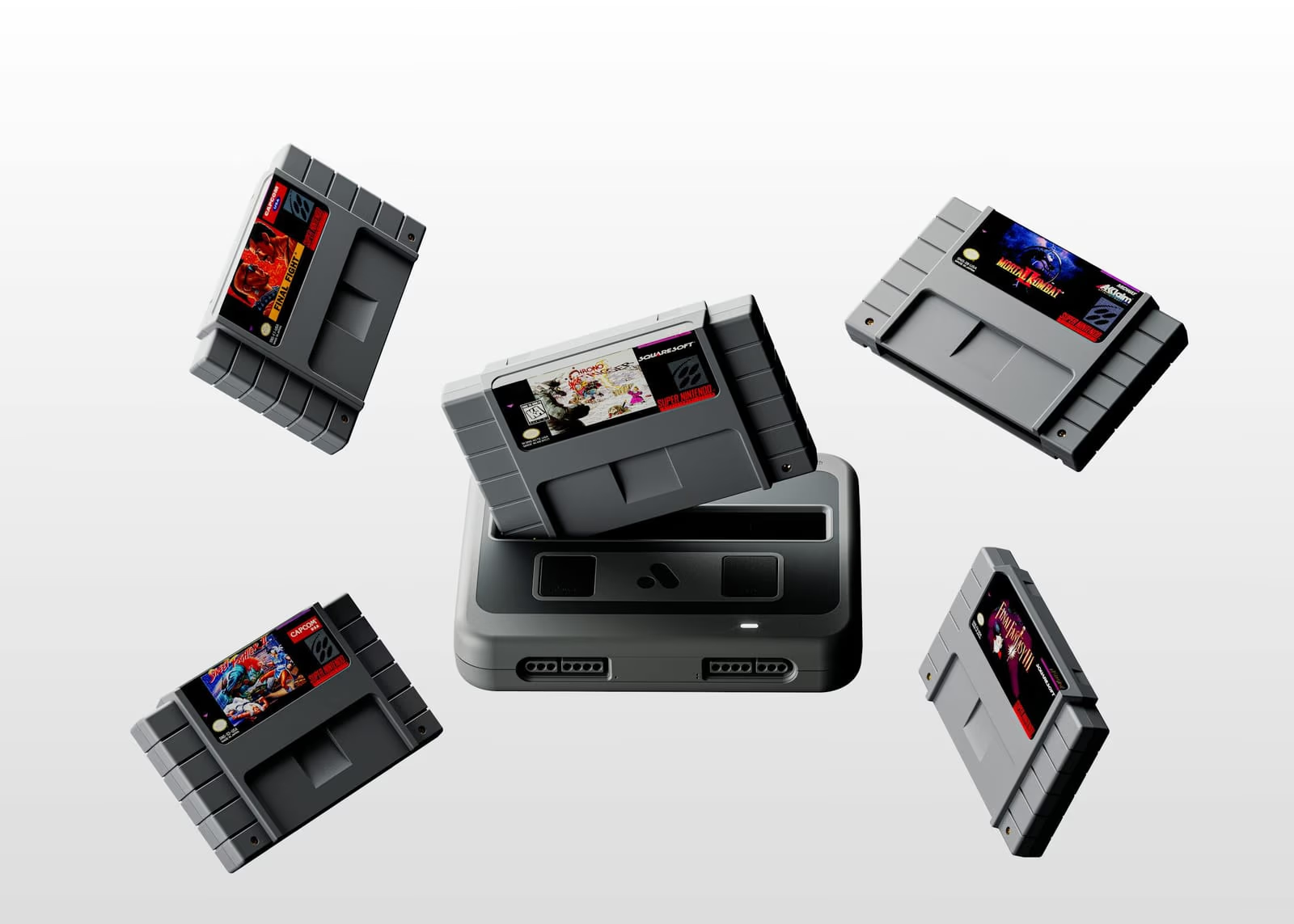
Analogue Announces Super Nt+ and Mega Sg+, With Wireless Controllers and USB-C, for $219.99
Analogue's FPGA Super Nintendo and Mega Drive consoles return as the Super Nt+ and Mega Sg+, adding Bluetooth and 2.4 GHz controllers, USB-C power and hot-swappable cartridges. Preorders open on 19 October at 8am PDT, and both ship in December.
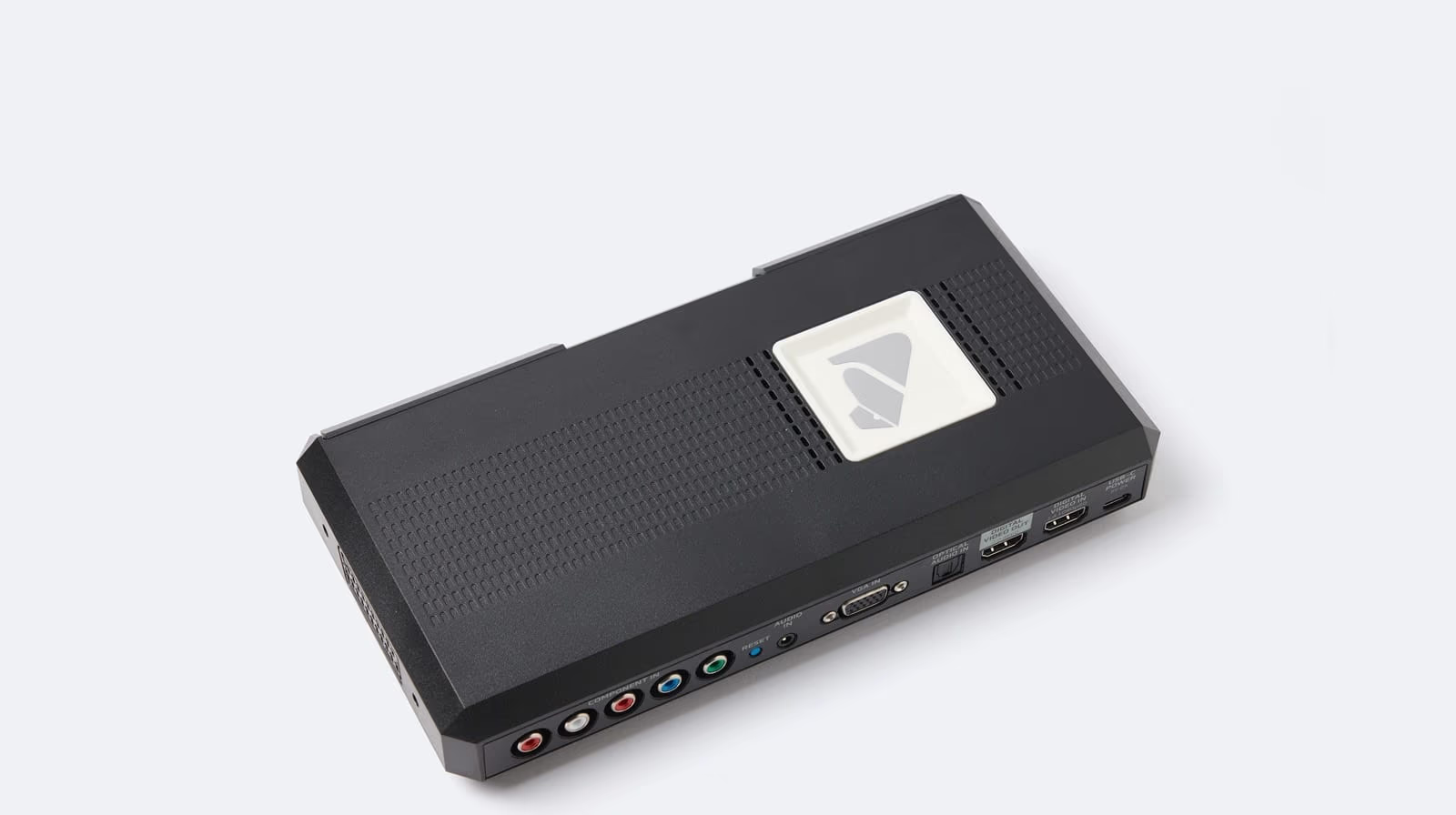
RetroTINK 4K Firmware 1.99 Brings Its CRT Beam Simulation in Line With Blur Busters' Reference Shader
Experimental firmware 1.99.0 and 1.99.1 for the RetroTINK 4K add a Multi-frame Glow option and a Motion Clarity control that match the open-source CRT beam simulator by Blur Busters and Timothy Lottes, capping a month of builds that also brought true VRR, a new inverse telecine engine and steadier Lumacode.
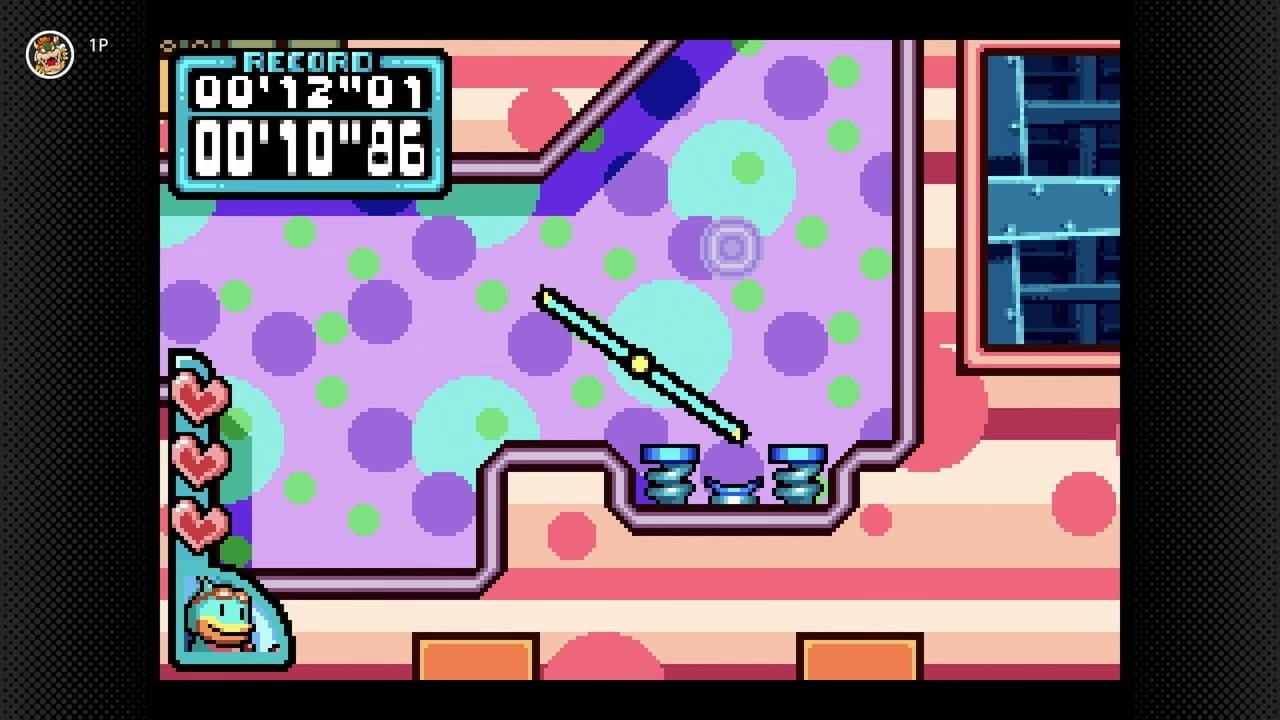
Kururin Paradise Reaches the West for the First Time as Switch Online Adds Three GBA Games
Nintendo added Kururin Paradise, Metal Slug Advance and Monster Rancher Advance to Game Boy Advance - Nintendo Classics on 14 October, giving the 2002 Kururin sequel its first release outside Japan.