MiSTer FPGA Gets Major Core Updates: N64 and Saturn Take Huge Leaps Forward
A Banner Month for MiSTer
The MiSTer FPGA community has been on a tear lately, and November brought what might be the most significant batch of core updates in the platform's history. The headline additions are dramatically improved Nintendo 64 and Sega Saturn cores, two systems that have long been considered the final frontier for the DE10-Nano-based platform. These are not minor incremental patches. Both cores have seen ground-up rewrites of critical components that push compatibility and performance to levels that seemed impossible on MiSTer hardware just a year ago.
N64 Core Matures
The N64 core, developed primarily by Robert Peip, now handles the vast majority of the commercial library with only minor glitches in a handful of titles. The Reality Display Processor implementation has been substantially rewritten, fixing longstanding rendering issues in games like Rogue Squadron and Indiana Jones and the Infernal Machine that previously ranged from broken to unplayable. Frame pacing has also improved significantly, eliminating the micro-stutters that plagued earlier builds. While it still does not match the Analogue 3D in raw compatibility, the gap has narrowed considerably, and the MiSTer core has the advantage of being free and open source.
Saturn Finally Gets Its Due
The Saturn core might be the bigger story here. Sega's notoriously complex dual-CPU, dual-VDP architecture has been a white whale for FPGA developers, and previous MiSTer Saturn efforts were largely proof-of-concept. The latest build from the core development team supports a substantial portion of the Saturn library with playable performance. Games like Panzer Dragoon Saga, Radiant Silvergun, and Guardian Heroes now run with impressive accuracy. There are still gaps, particularly with titles that make heavy use of the VDP2 rotation and scaling features, but the trajectory is unmistakable.
The Value Proposition Strengthens
These updates reinforce what makes MiSTer such a compelling platform. For the cost of a DE10-Nano board and some accessories, roughly $200 to $350 depending on your setup, you get access to an ever-growing library of FPGA cores spanning dozens of systems. The open-source model means development never stops, and the community around MiSTer remains one of the most active and generous in the retro gaming space. Commercial FPGA products from Analogue and others have their place, but MiSTer continues to prove that the community-driven approach can achieve remarkable things.
More News
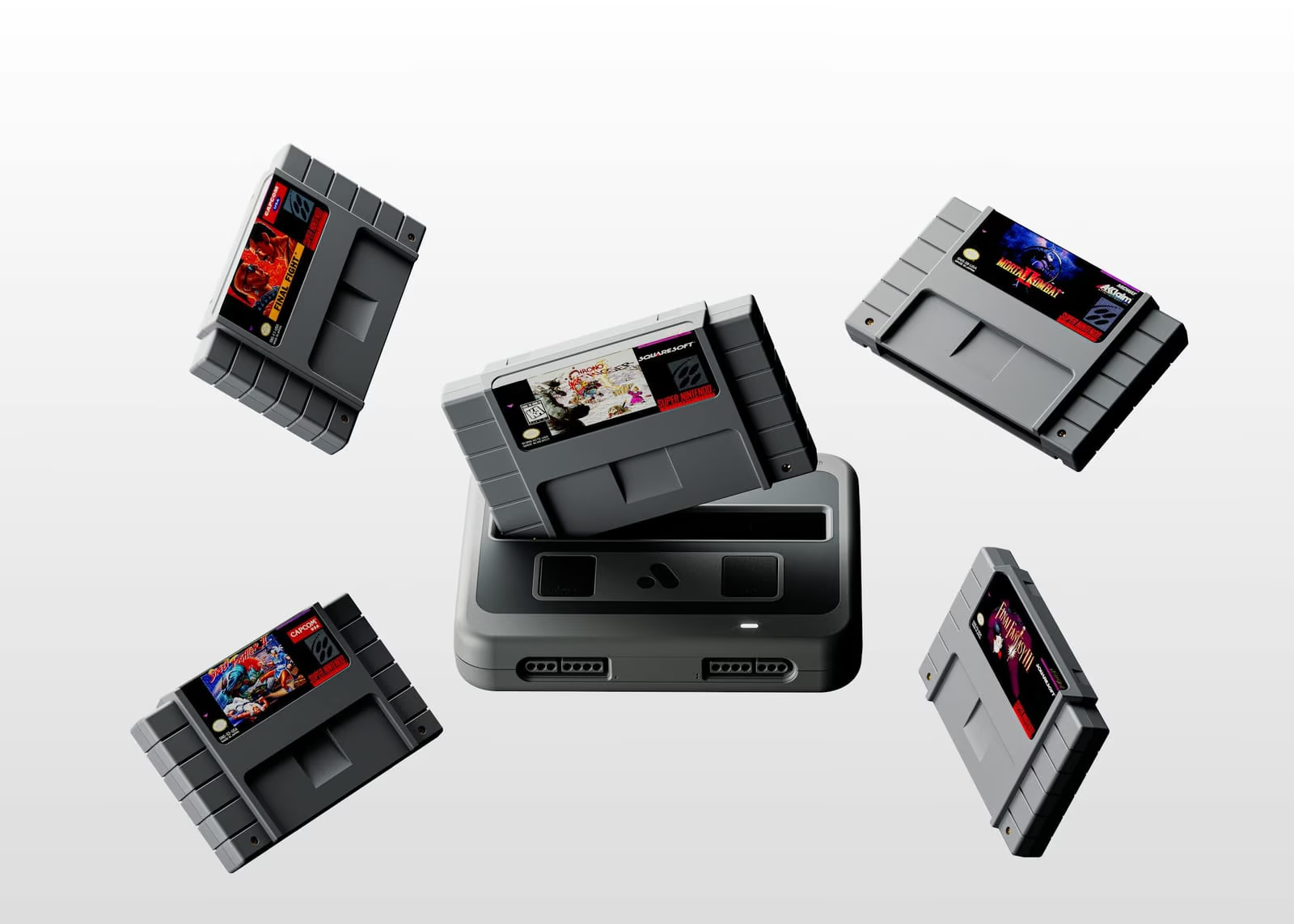
Analogue Announces Super Nt+ and Mega Sg+, With Wireless Controllers and USB-C, for $219.99
Analogue's FPGA Super Nintendo and Mega Drive consoles return as the Super Nt+ and Mega Sg+, adding Bluetooth and 2.4 GHz controllers, USB-C power and hot-swappable cartridges. Preorders open on 19 October at 8am PDT, and both ship in December.
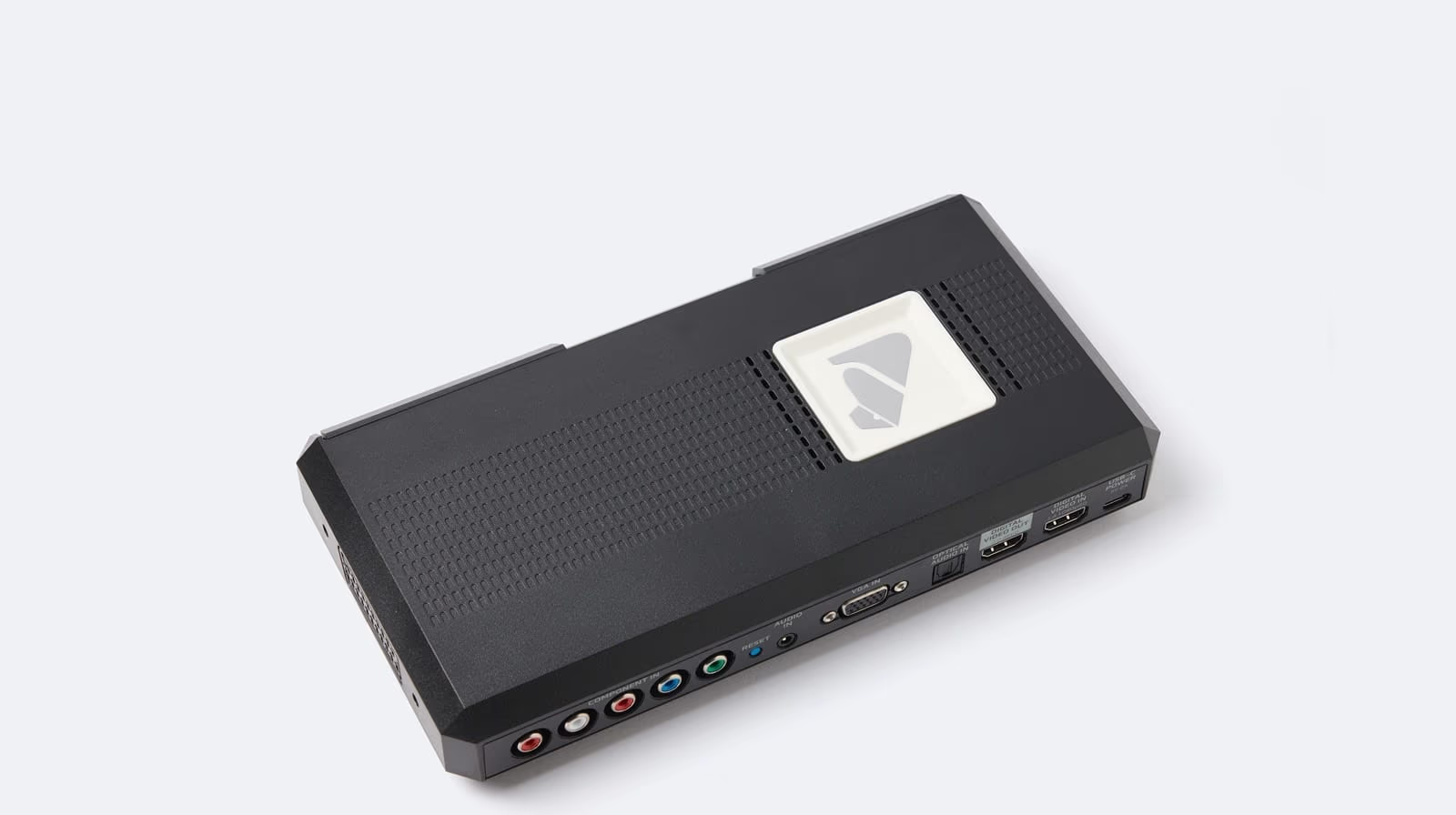
RetroTINK 4K Firmware 1.99 Brings Its CRT Beam Simulation in Line With Blur Busters' Reference Shader
Experimental firmware 1.99.0 and 1.99.1 for the RetroTINK 4K add a Multi-frame Glow option and a Motion Clarity control that match the open-source CRT beam simulator by Blur Busters and Timothy Lottes, capping a month of builds that also brought true VRR, a new inverse telecine engine and steadier Lumacode.
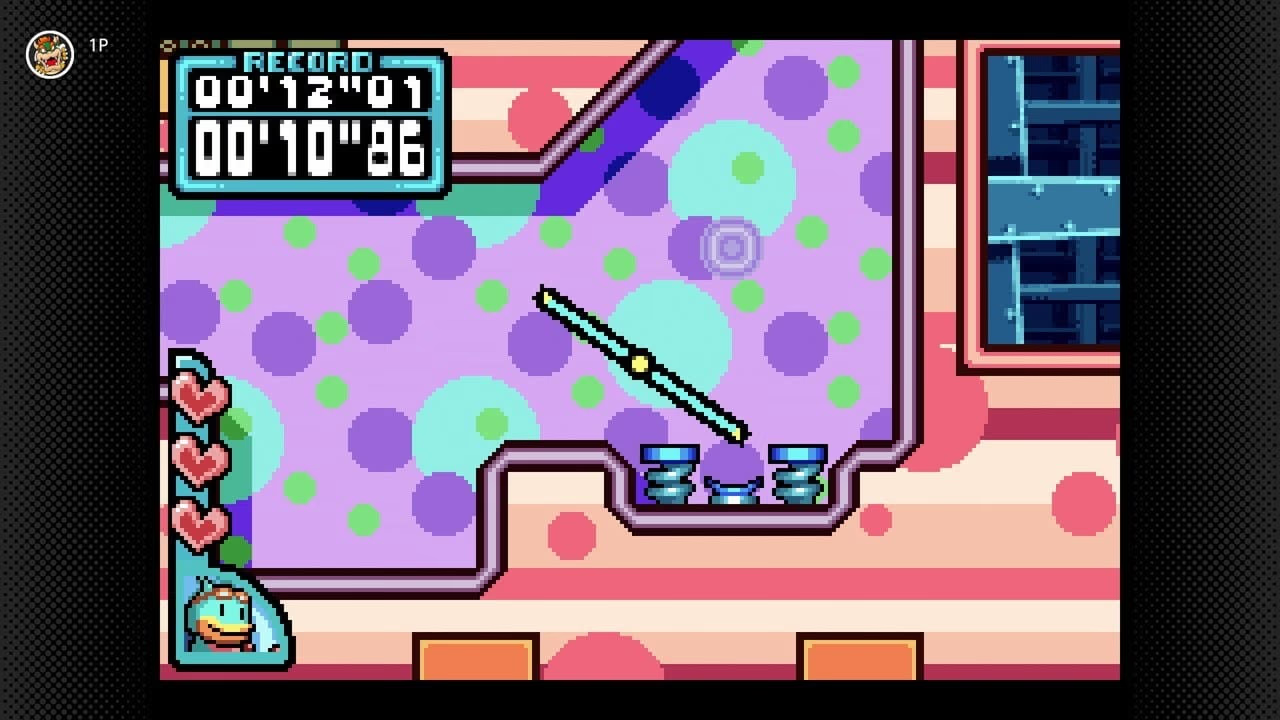
Kururin Paradise Reaches the West for the First Time as Switch Online Adds Three GBA Games
Nintendo added Kururin Paradise, Metal Slug Advance and Monster Rancher Advance to Game Boy Advance - Nintendo Classics on 14 October, giving the 2002 Kururin sequel its first release outside Japan.