
GOG.com Launches Formal Preservation Program to Save Classic PC Games From Extinction
A Mission Made Official
GOG.com has always been synonymous with classic PC gaming, but this week the company made its preservation mission formal. In a detailed announcement on its blog, GOG unveiled the GOG Preservation Program, a dedicated initiative designed to identify, license, restore, and maintain classic PC games that are at risk of disappearing entirely. The program will operate with its own team, its own budget, and a transparent public roadmap that invites community input on which titles should be prioritized. It is the most ambitious institutional commitment to PC game preservation that the commercial sector has ever seen.
How the Program Works
The Preservation Program operates on three tiers. The first tier focuses on restoring games that GOG has already licensed but that require significant engineering work to function on modern hardware. This includes addressing compatibility issues with current versions of Windows, replacing deprecated middleware and DRM systems, and in some cases rebuilding installer frameworks from scratch. The second tier targets games that are currently unavailable on any digital storefront, with GOG's team actively tracking down rights holders and negotiating licenses. The third and most ambitious tier involves what GOG calls "rescue operations," where the company works to preserve games whose source code and assets are at genuine risk of being lost due to studio closures, server shutdowns, or deteriorating storage media.
The Initial Lineup
GOG announced an initial batch of 30 titles that have been restored through the program, including several that generated immediate excitement in the PC gaming community. Among the highlights are No One Lives Forever and its sequel, games that have been trapped in a licensing quagmire for over a decade. Also included are several Sierra On-Line adventure games that had never received proper digital releases, a handful of obscure but beloved late-1990s RPGs, and a complete restoration of the original Westwood Studios Command and Conquer games with modern network play support. Each restored title includes historical documentation, developer commentary where available, and GOG's standard DRM-free guarantee.
The Technical Challenge
Preserving PC games presents unique challenges that console preservation does not face. While a Super Nintendo game will run identically to how it did in 1994 if you have the right emulator, a PC game from the same era may depend on specific hardware configurations, operating system behaviors, sound card APIs, and middleware libraries that no longer exist. GOG's preservation team includes engineers who specialize in reverse-engineering these dependencies and creating compatibility layers that allow the games to run natively on modern systems without resorting to emulation. When emulation is necessary, GOG has partnered with DOSBox and ScummVM developers to create optimized configurations for each title.
Community Involvement
A key component of the Preservation Program is community engagement. GOG has launched a public nomination system where users can vote on which games they most want to see preserved, and the company has committed to publishing quarterly transparency reports detailing its progress, the challenges it has encountered, and the games it has been unable to secure. This level of openness is unusual for a commercial entity and reflects GOG's understanding that preservation is a community endeavor as much as a commercial one. The company has also established a bounty program for community members who can provide technical assistance, documentation, or leads on rights holders for particularly elusive titles.
Industry Implications
The GOG Preservation Program carries implications beyond its immediate catalog additions. By creating a formal, funded, and transparent framework for game preservation, GOG is establishing a model that other companies could adopt or build upon. The Video Game History Foundation has already praised the initiative as a "landmark moment" for the industry, and several independent developers have reached out to GOG about contributing their own back catalogs to the program. If the initiative proves commercially viable, it could shift the industry conversation around preservation from abstract concern to concrete action.
The Bigger Picture
PC gaming has a preservation problem that is arguably more severe than any other platform. The sheer diversity of hardware and software configurations, combined with the rapid pace of operating system evolution, means that games can become unplayable within a decade of their release. Thousands of titles from the DOS and early Windows eras exist in a precarious state, preserved only by the efforts of individual enthusiasts and community projects. GOG's Preservation Program does not solve this problem entirely, but it represents the most significant commercial investment in addressing it to date. For anyone who believes that the history of PC gaming matters, this week's announcement is cause for genuine optimism.
More News
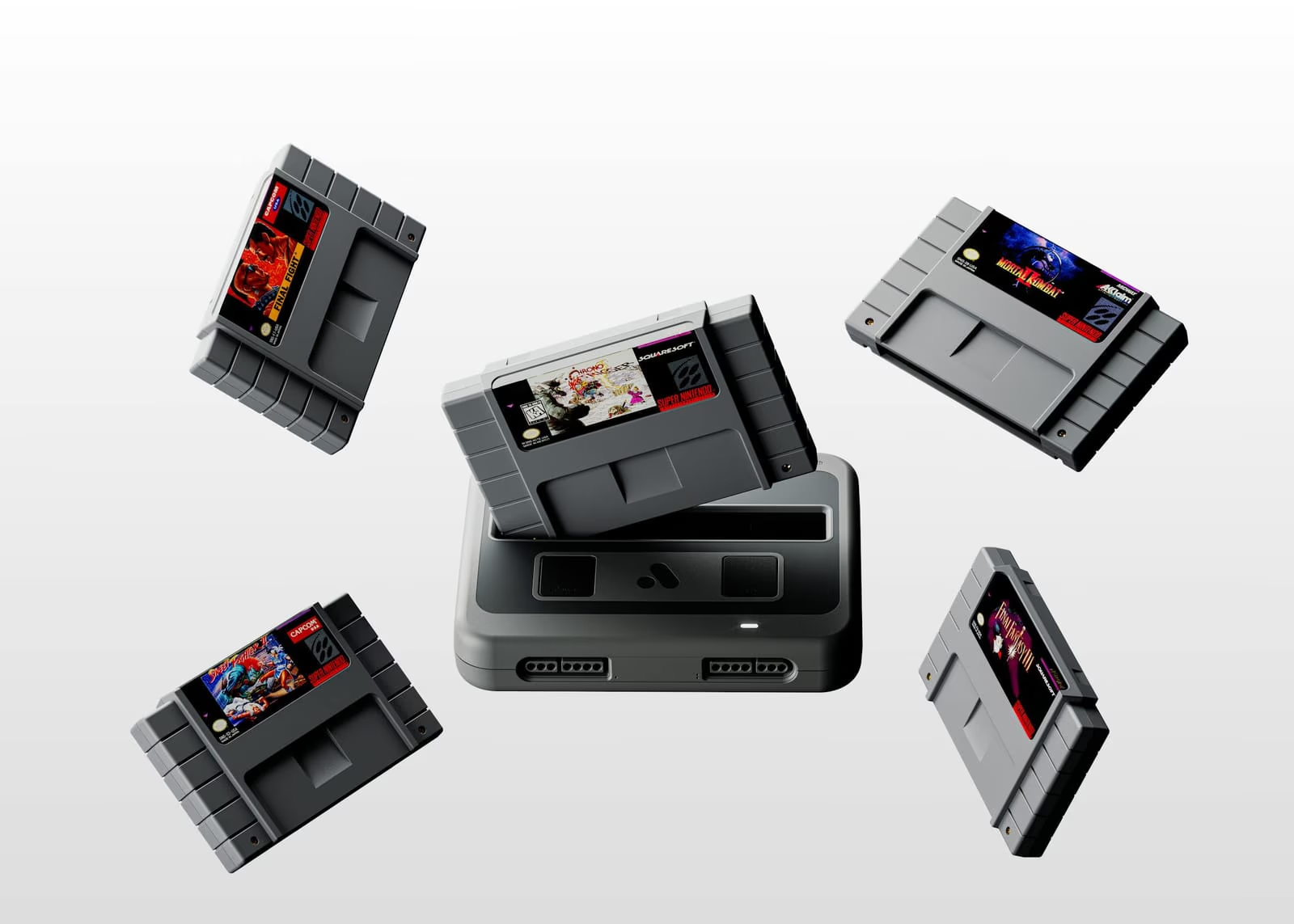
Analogue Announces Super Nt+ and Mega Sg+, With Wireless Controllers and USB-C, for $219.99
Analogue's FPGA Super Nintendo and Mega Drive consoles return as the Super Nt+ and Mega Sg+, adding Bluetooth and 2.4 GHz controllers, USB-C power and hot-swappable cartridges. Preorders open on 19 October at 8am PDT, and both ship in December.
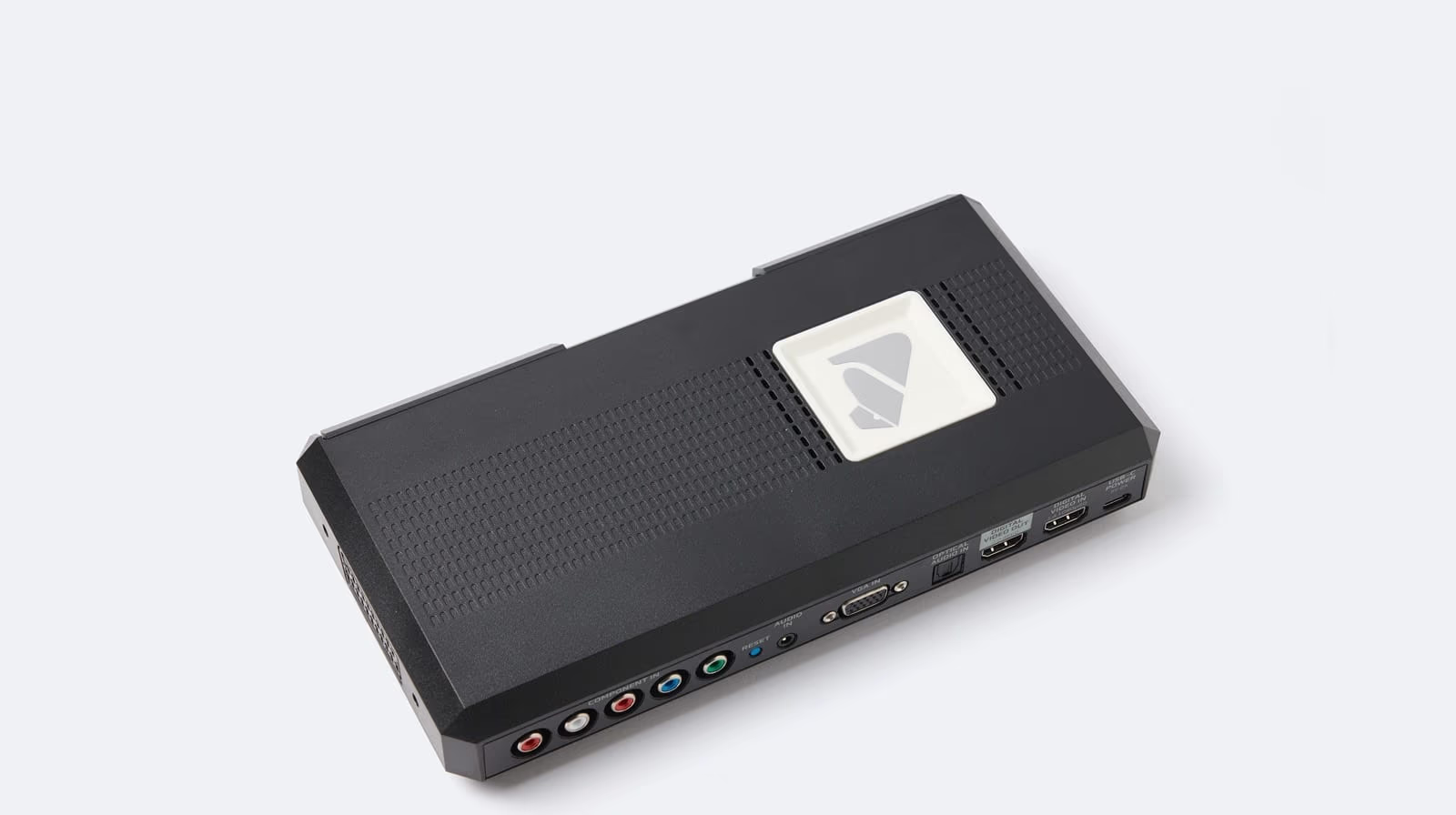
RetroTINK 4K Firmware 1.99 Brings Its CRT Beam Simulation in Line With Blur Busters' Reference Shader
Experimental firmware 1.99.0 and 1.99.1 for the RetroTINK 4K add a Multi-frame Glow option and a Motion Clarity control that match the open-source CRT beam simulator by Blur Busters and Timothy Lottes, capping a month of builds that also brought true VRR, a new inverse telecine engine and steadier Lumacode.
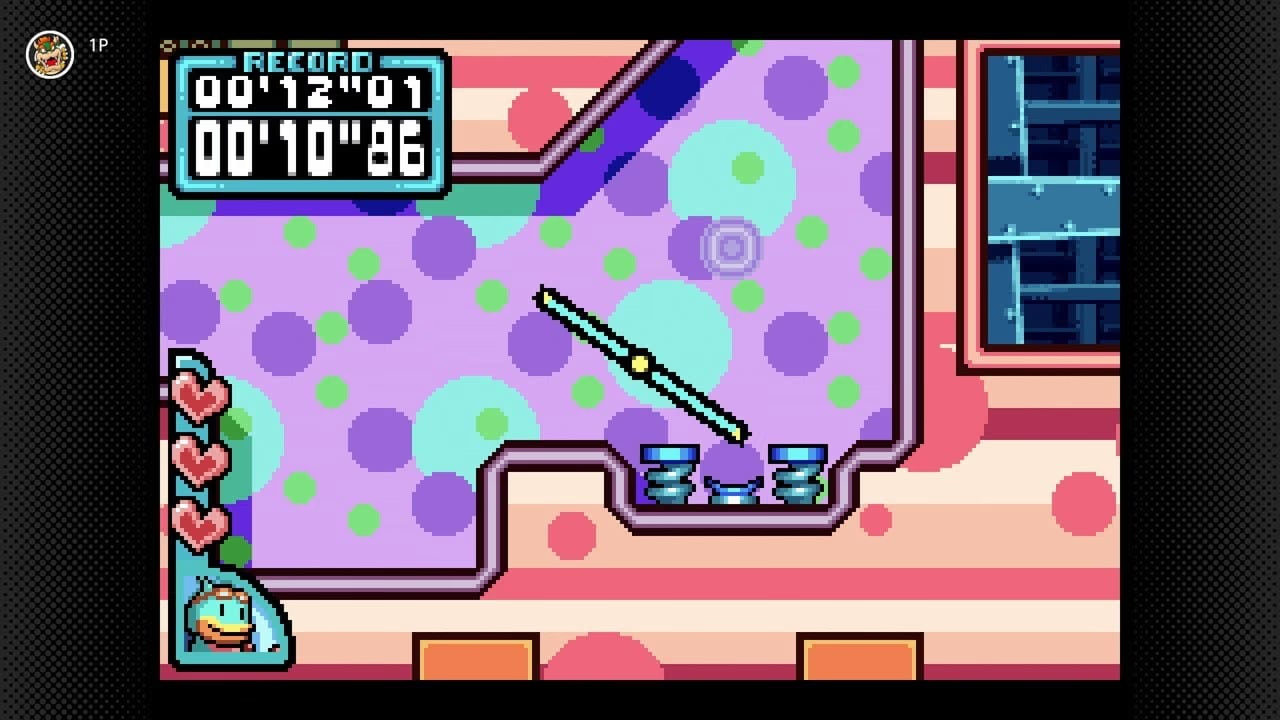
Kururin Paradise Reaches the West for the First Time as Switch Online Adds Three GBA Games
Nintendo added Kururin Paradise, Metal Slug Advance and Monster Rancher Advance to Game Boy Advance - Nintendo Classics on 14 October, giving the 2002 Kururin sequel its first release outside Japan.