
The FPGA Handheld Market Heats Up as Competitors Challenge Analogue Pocket
No Longer a One-Horse Race
For the better part of three years, the Analogue Pocket has been essentially the only game in town if you wanted an FPGA-based handheld gaming device. That era is ending. Multiple new entrants have either launched or announced FPGA handhelds in recent months, each taking a slightly different approach to the concept. The result is a nascent market segment that is starting to look genuinely competitive, which is great news for consumers who have been frustrated by the Pocket's limited availability and premium pricing.
The Contenders
The most talked-about challenger is the Replay Pocket from the team behind the MiSTer FPGA project. Built around a Cyclone V FPGA similar to the DE10-Nano, the Replay Pocket promises native compatibility with the extensive MiSTer core library in a portable form factor. The device supports cartridge adapters for Game Boy, GBA, and Game Gear, and its open-source ethos means community-developed cores are a first-class feature rather than an afterthought. Meanwhile, the RetroSpark handheld takes a different approach entirely, pairing a smaller Lattice FPGA with a software emulation fallback for systems that exceed its FPGA capabilities. It is a pragmatic compromise that sacrifices purity for broader system coverage at a lower price point.
Where Analogue Still Leads
The Analogue Pocket remains the polish benchmark. Its build quality, screen, and industrial design are a cut above what any competitor has shown so far, and the openFPGA ecosystem has matured into a robust library of community cores. The Pocket also benefits from Analogue's established relationships with accessory manufacturers, which means a healthy ecosystem of docks, cases, and cartridge adapters. But Analogue's limited production runs and premium pricing have always left room for competitors willing to trade some fit-and-finish for better availability and lower costs.
What This Means for Buyers
Competition in the FPGA handheld space is unambiguously good for consumers. Prices are likely to come down, features will improve faster, and the increased attention will drive more core development across all platforms. The key differentiator going forward will likely be ecosystem openness. Devices that embrace community core development and make it easy to load and manage cores will have a significant advantage over those that try to maintain walled gardens. The Analogue Pocket got the FPGA handheld concept into the mainstream. Now the market is ready to grow beyond a single product.
More News
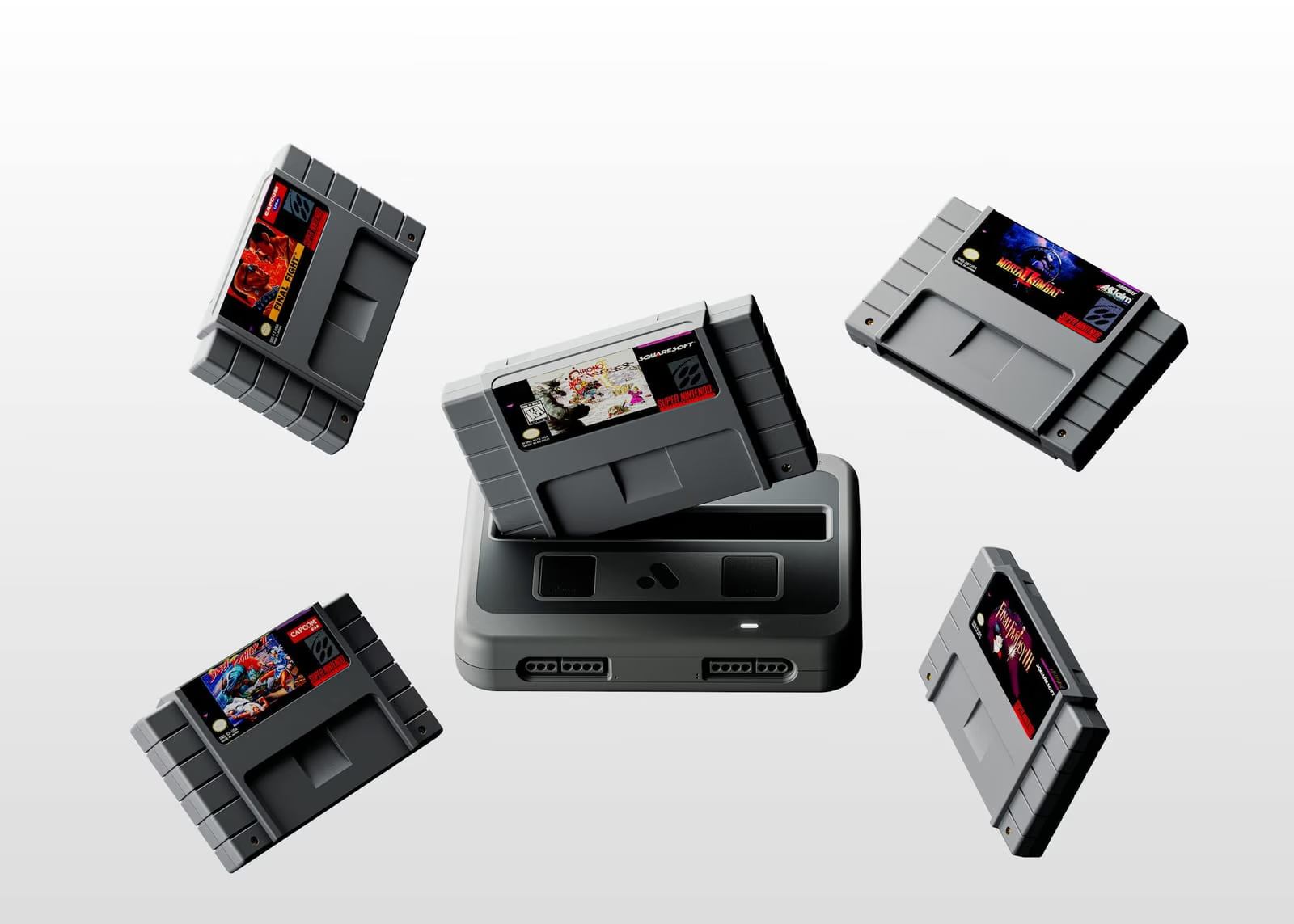
Analogue Announces Super Nt+ and Mega Sg+, With Wireless Controllers and USB-C, for $219.99
Analogue's FPGA Super Nintendo and Mega Drive consoles return as the Super Nt+ and Mega Sg+, adding Bluetooth and 2.4 GHz controllers, USB-C power and hot-swappable cartridges. Preorders open on 19 October at 8am PDT, and both ship in December.
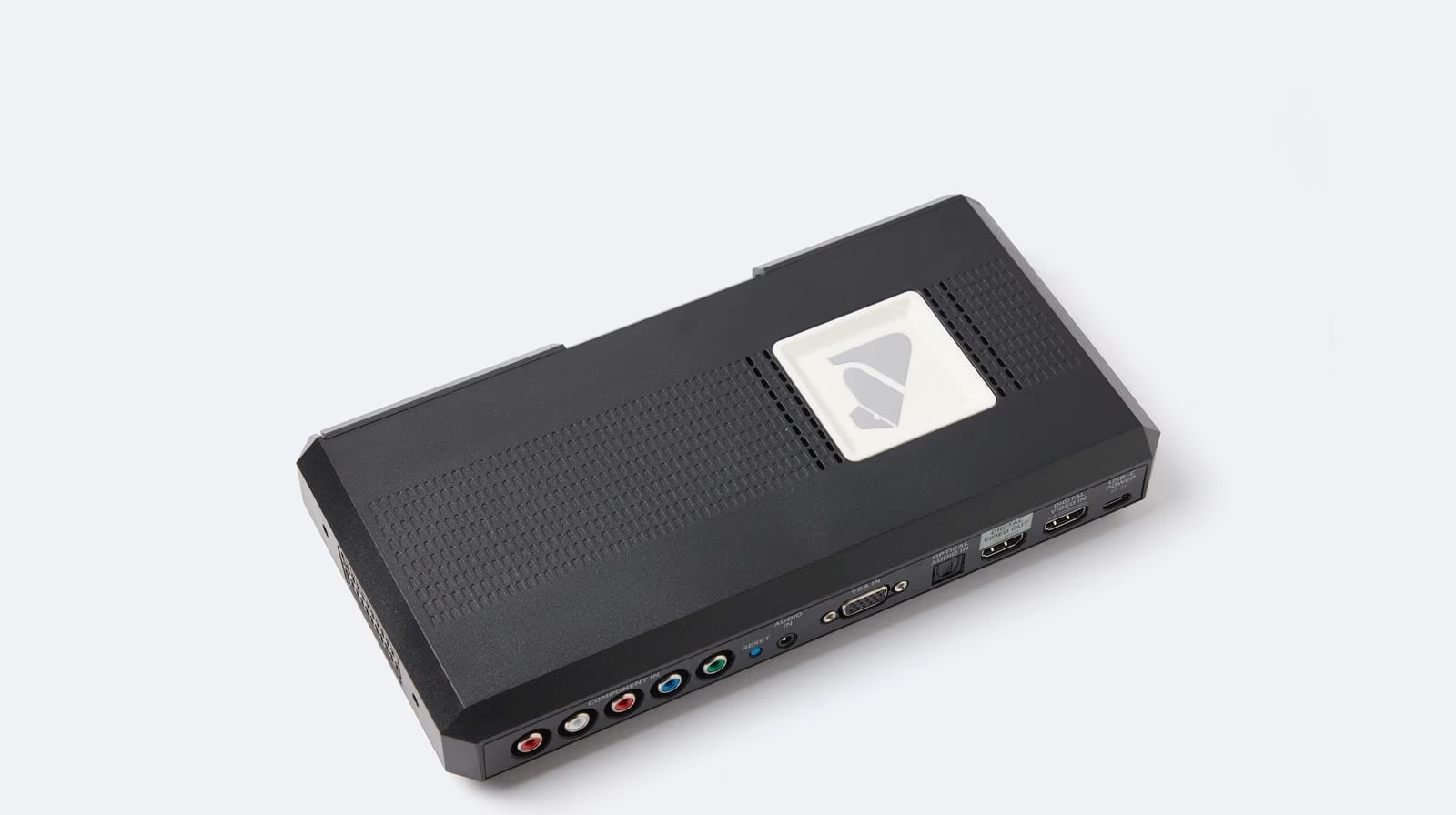
RetroTINK 4K Firmware 1.99 Brings Its CRT Beam Simulation in Line With Blur Busters' Reference Shader
Experimental firmware 1.99.0 and 1.99.1 for the RetroTINK 4K add a Multi-frame Glow option and a Motion Clarity control that match the open-source CRT beam simulator by Blur Busters and Timothy Lottes, capping a month of builds that also brought true VRR, a new inverse telecine engine and steadier Lumacode.
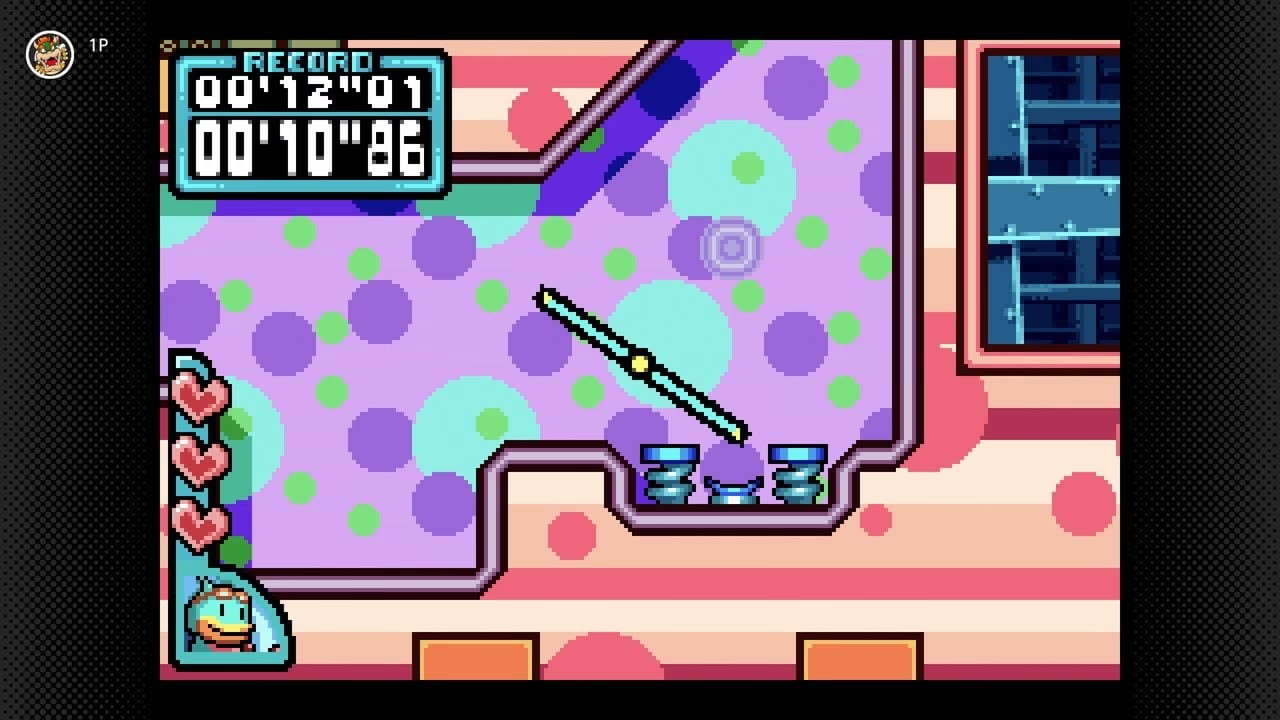
Kururin Paradise Reaches the West for the First Time as Switch Online Adds Three GBA Games
Nintendo added Kururin Paradise, Metal Slug Advance and Monster Rancher Advance to Game Boy Advance - Nintendo Classics on 14 October, giving the 2002 Kururin sequel its first release outside Japan.