Indie Developers Breathe New Life into the Dreamcast with Wave of Homebrew Releases
The Console That Refuses to Die
The Sega Dreamcast was discontinued in 2001, but someone apparently forgot to tell the developers. The past year has seen a surge of new homebrew releases for the console that goes well beyond the typical proof-of-concept demos and simple ports that characterize most retro homebrew scenes. We are talking about full, polished games that would have been commercially competitive during the Dreamcast's original lifespan. The scene has reached a critical mass of talent, tools, and community support that is producing results unlike anything we have seen on a legacy platform.
Standout Releases
The highlights are genuinely impressive. Xenocider, a spiritual successor to Space Harrier and Star Fox, has been in development for years and recently saw its definitive physical release on GD-ROM. The game pushes the Dreamcast hardware with fluid 3D graphics and a thumping electronic soundtrack. Tormentium is an original survival horror title that channels the atmosphere of early Resident Evil while taking advantage of the Dreamcast's VGA output for crisp, clean visuals. And on the 2D side, several new fighting games and shoot-em-ups have emerged from the Japanese indie scene, where the Dreamcast's reputation as an arcade platform has always carried special weight.
Why the Dreamcast
Several factors make the Dreamcast uniquely suited to a homebrew revival. The console's architecture, centered around the Hitachi SH-4 processor and PowerVR2 GPU, is well-documented and relatively approachable compared to the exotic hardware designs of competitors like the Saturn and PS2. The KallistiOS development library provides a mature, open-source SDK that handles much of the low-level hardware interaction. Crucially, the Dreamcast can run unsigned code without any hardware modification, meaning anyone with a console and a CD burner can play homebrew games. That low barrier to entry has been fundamental to keeping the community alive.
Physical Releases and Community
The physical release scene is thriving in parallel. Small publishers like WAVE Game Studios, Retro Sumus, and JoshProd produce professional-quality disc releases complete with full-color manuals, jewel cases, and spine cards that sit comfortably alongside original commercial releases on a shelf. These runs are typically limited to a few hundred or thousand copies and sell out quickly, creating a micro-economy that sustains developers and incentivizes continued production. It is a remarkable ecosystem, one where a console that its own manufacturer abandoned a quarter century ago continues to receive new software on a regular basis. The Dreamcast community has always been passionate to the point of defiance, and right now, that passion is producing some of its best work.
More News
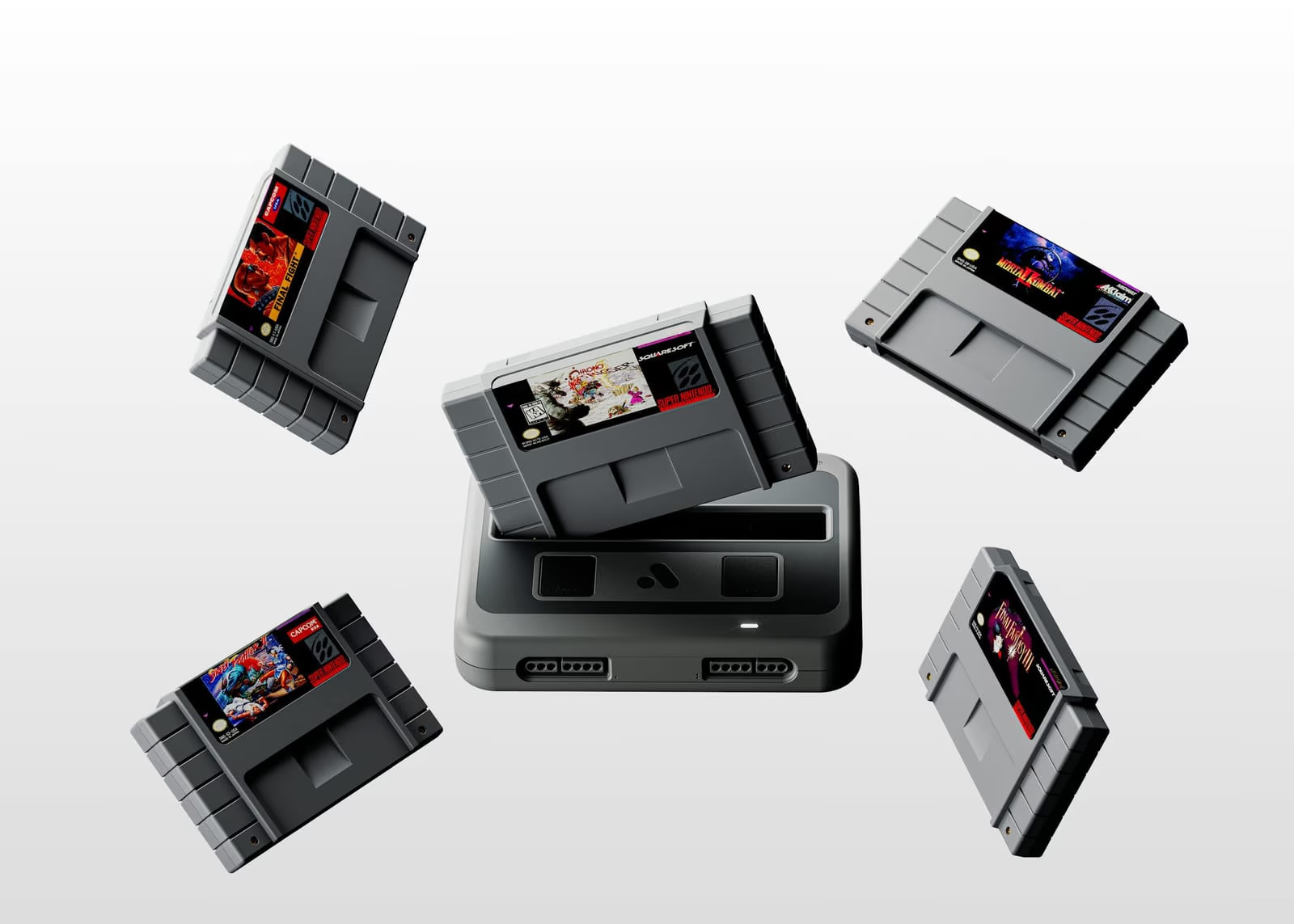
Analogue Announces Super Nt+ and Mega Sg+, With Wireless Controllers and USB-C, for $219.99
Analogue's FPGA Super Nintendo and Mega Drive consoles return as the Super Nt+ and Mega Sg+, adding Bluetooth and 2.4 GHz controllers, USB-C power and hot-swappable cartridges. Preorders open on 19 October at 8am PDT, and both ship in December.
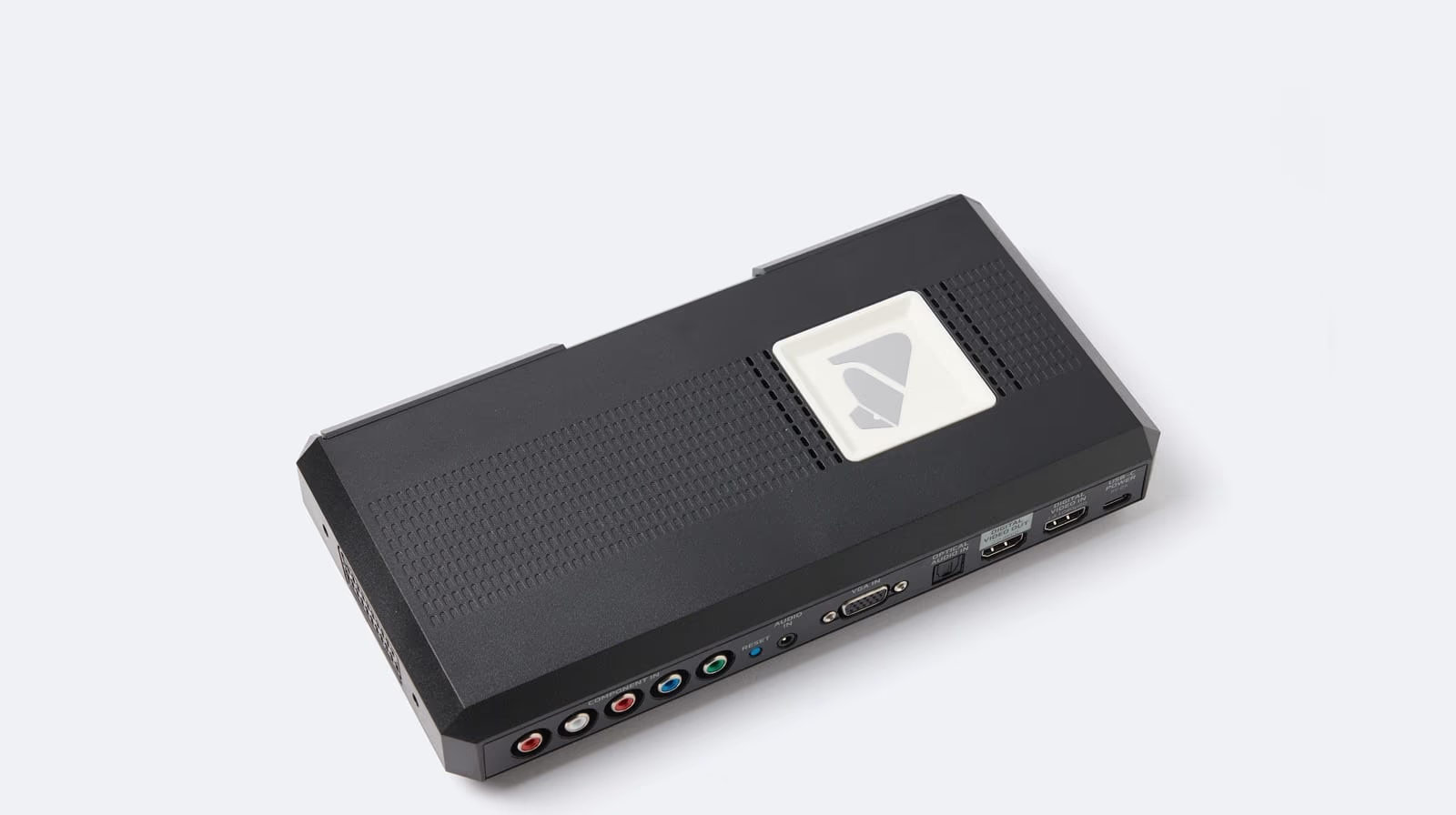
RetroTINK 4K Firmware 1.99 Brings Its CRT Beam Simulation in Line With Blur Busters' Reference Shader
Experimental firmware 1.99.0 and 1.99.1 for the RetroTINK 4K add a Multi-frame Glow option and a Motion Clarity control that match the open-source CRT beam simulator by Blur Busters and Timothy Lottes, capping a month of builds that also brought true VRR, a new inverse telecine engine and steadier Lumacode.
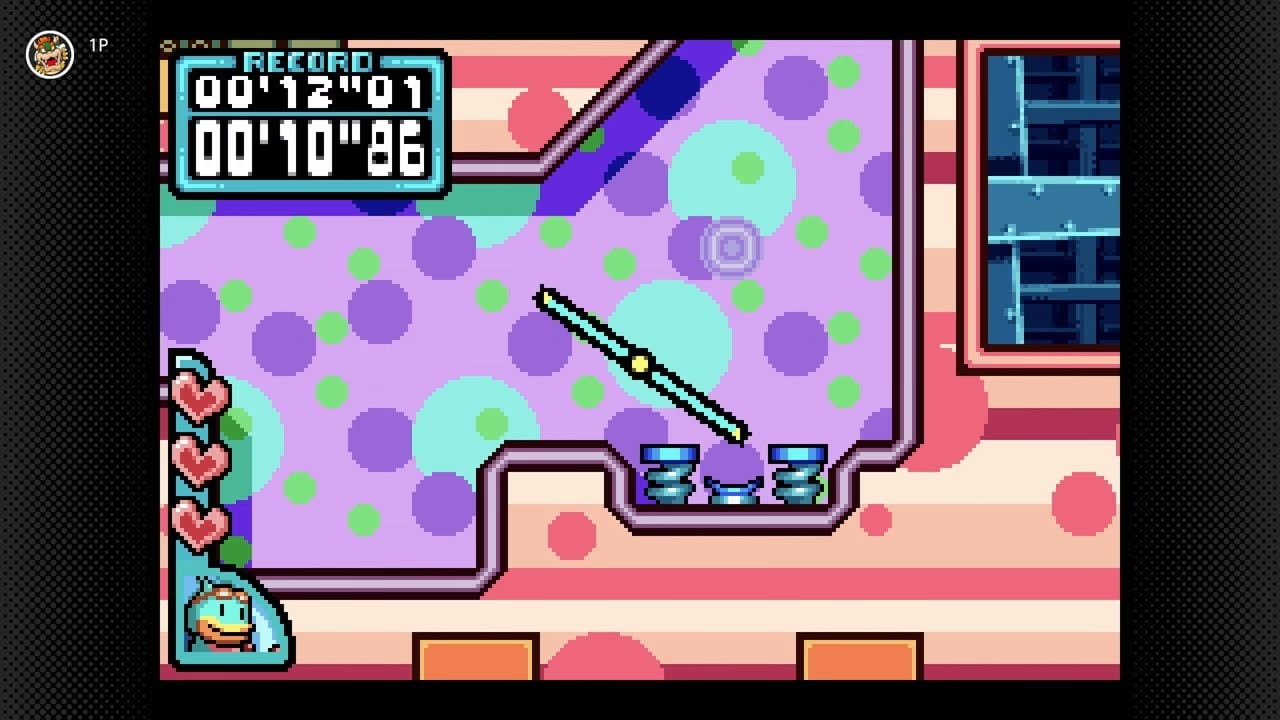
Kururin Paradise Reaches the West for the First Time as Switch Online Adds Three GBA Games
Nintendo added Kururin Paradise, Metal Slug Advance and Monster Rancher Advance to Game Boy Advance - Nintendo Classics on 14 October, giving the 2002 Kururin sequel its first release outside Japan.