New CRT Shader Technology Achieves Photorealistic Display Emulation on Consumer Hardware
Closing the Gap
For years, the retro gaming community has treated CRT displays as irreplaceable. The warm phosphor glow, the subtle scanline structure, the natural anti-aliasing of an electron beam scanning across a curved glass surface: these qualities defined how an entire generation of games were meant to be seen, and no amount of digital processing on a flat panel could fully replicate the experience. That consensus may need to be revisited. A new open-source shader package called PhosphorGlow, developed by a small team of graphics engineers and CRT enthusiasts, has produced results so convincing that blind comparison tests are consistently fooling even experienced CRT purists.
The Technical Breakthrough
What makes PhosphorGlow different from previous CRT shaders is its approach to modeling the physical behavior of a cathode ray tube at the subpixel level. Rather than applying post-processing effects to approximate the look of a CRT, the shader simulates the actual physics of electron beam interaction with phosphor coatings, including bloom characteristics, phosphor decay rates, and the subtle color fringing that occurs at the edges of bright objects. The team reverse-engineered the phosphor patterns of several popular consumer CRT models, including the Sony Trinitron, JVC D-Series, and Panasonic Tau, creating accurate profiles that replicate the specific visual character of each display. The result is not a generic CRT look but a faithful recreation of specific real-world displays.
Performance and Accessibility
Previous attempts at high-fidelity CRT simulation have typically required powerful GPU hardware, limiting their audience to enthusiasts with expensive gaming PCs. PhosphorGlow achieves its results through a novel optimization approach that leverages temporal reprojection and perceptual shortcuts to dramatically reduce computational cost. The shader runs at full speed on current-generation console hardware and mid-range GPUs, and the team has confirmed compatibility with the Steam Deck and several popular handheld gaming PCs. A simplified variant has even been demonstrated running on the Nintendo Switch at 1080p, though with some compromises to the full simulation model. This accessibility is crucial because it means the technology can reach the broad audience that stands to benefit most from it.
Community Validation
The retro gaming community is famously particular about display quality, and the reception of PhosphorGlow has been remarkable. Several prominent YouTubers and retro gaming commentators who have historically advocated strongly for real CRT usage have published comparison videos in which they struggled to identify which display was genuine and which was the shader running on an OLED panel. The RetroRGB community, one of the most technically rigorous groups in the retro display space, conducted a controlled study with over 200 participants and found that identification accuracy was only marginally better than chance when viewing PhosphorGlow output on a high-quality OLED display. The results have sparked intense and largely good-natured debate within the community.
Integration and Adoption
PhosphorGlow has already been integrated into RetroArch as an optional shader preset, making it immediately available to the millions of users on that platform. The MiSTer FPGA project is working on a hardware-optimized variant, and several standalone emulator developers have expressed interest in incorporating the technology. Pixel FX and other hardware upscaler manufacturers are reportedly in discussions with the PhosphorGlow team about potential integration into their firmware, which would bring the shader's benefits to users who play on original hardware through upscalers rather than through software emulation. The open-source license ensures that the technology can be freely adopted and adapted without commercial restrictions.
The OLED Factor
A critical element of PhosphorGlow's success is the maturation of OLED display technology. CRT shaders have always been limited by the characteristics of the displays they run on, and traditional LCD panels with their backlighting, limited contrast ratios, and slower pixel response times imposed a ceiling on how convincing any CRT simulation could be. OLED panels, with their per-pixel illumination, effectively infinite contrast ratios, and fast response times, provide a foundation that is far more amenable to CRT simulation. The combination of PhosphorGlow's physical modeling approach with a high-quality OLED display creates a result that addresses virtually every criticism previously leveled at CRT shaders.
What This Means for CRT Hardware
The practical implications for the CRT hardware market are significant. Real CRT displays are aging, failing, and becoming increasingly difficult to maintain. The professional video monitor market, dominated by models like the Sony PVM and BVM lines, has seen prices rise to absurd levels as supply dwindles and demand from retro gaming enthusiasts remains strong. If PhosphorGlow and similar technologies can genuinely replicate the CRT experience on modern displays, the pressure to acquire and maintain aging CRT hardware diminishes substantially. This does not mean CRTs will disappear from the enthusiast community overnight, but it does provide a viable path forward for a hobby that was on a collision course with hardware attrition.
The Future of Display Emulation
The PhosphorGlow team has indicated that CRT simulation is only the beginning. They are already working on profiles for other legacy display technologies, including vector displays like those used in Asteroids and Tempest, plasma screens, and the unique LCD characteristics of handheld consoles like the Game Boy and Game Gear. If the same level of fidelity can be achieved for these display types, the implications for preservation and accessibility are enormous. Games designed for specific display technologies could be experienced as their creators intended, regardless of what hardware the player has available. It is a vision of preservation that extends beyond the software itself to encompass the complete audiovisual experience, and PhosphorGlow has demonstrated that it is technically achievable.
More News
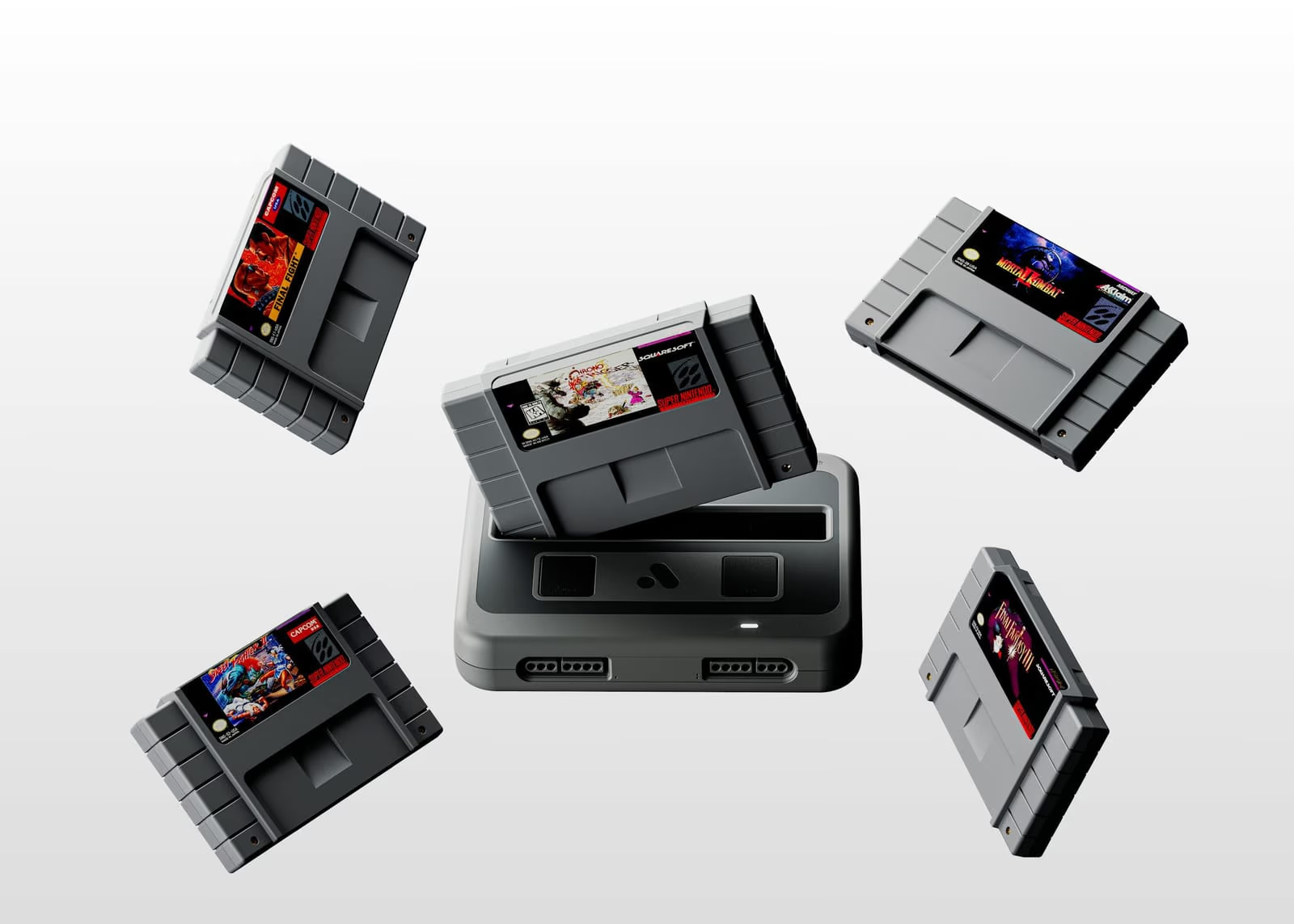
Analogue Announces Super Nt+ and Mega Sg+, With Wireless Controllers and USB-C, for $219.99
Analogue's FPGA Super Nintendo and Mega Drive consoles return as the Super Nt+ and Mega Sg+, adding Bluetooth and 2.4 GHz controllers, USB-C power and hot-swappable cartridges. Preorders open on 19 October at 8am PDT, and both ship in December.
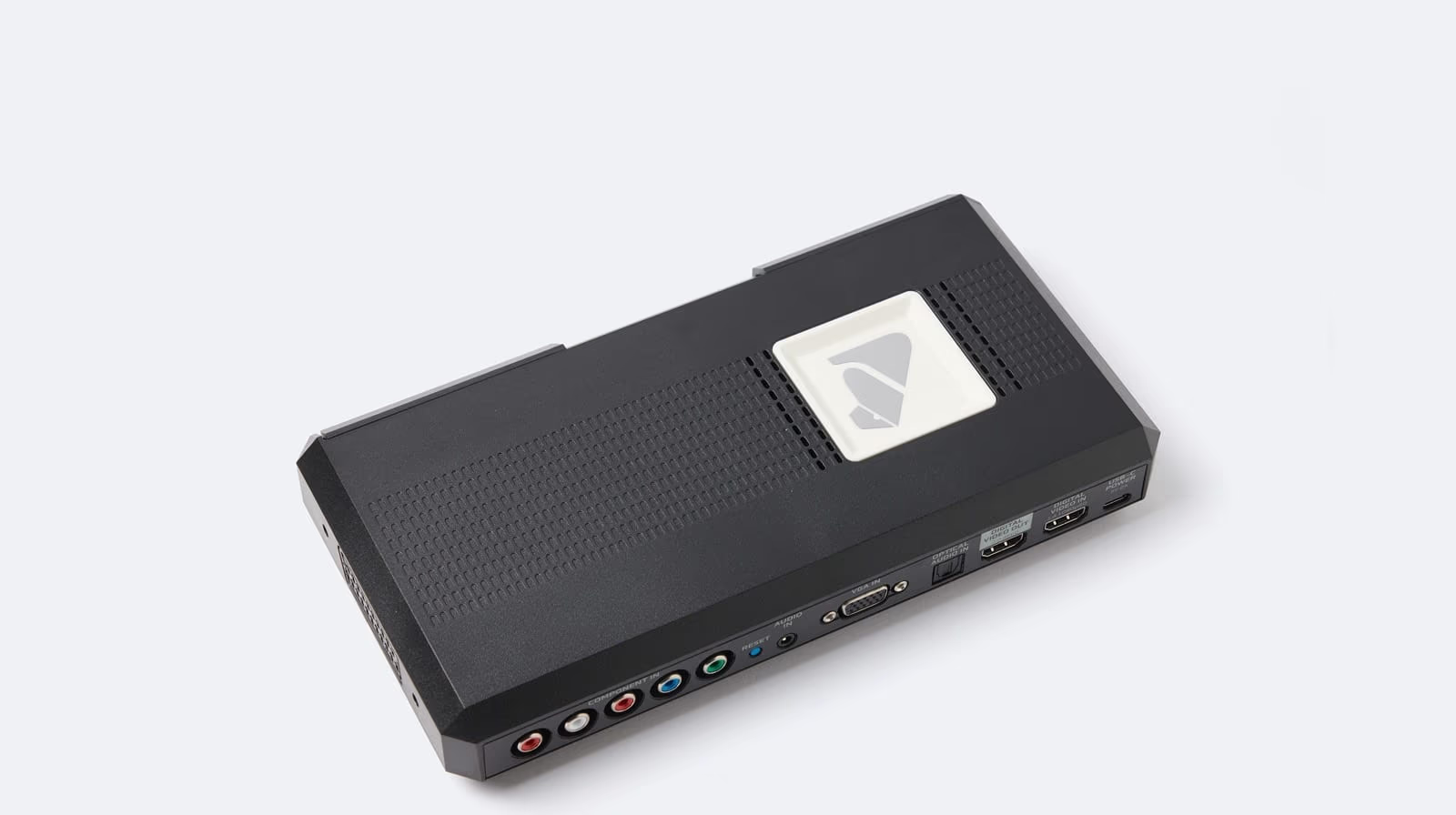
RetroTINK 4K Firmware 1.99 Brings Its CRT Beam Simulation in Line With Blur Busters' Reference Shader
Experimental firmware 1.99.0 and 1.99.1 for the RetroTINK 4K add a Multi-frame Glow option and a Motion Clarity control that match the open-source CRT beam simulator by Blur Busters and Timothy Lottes, capping a month of builds that also brought true VRR, a new inverse telecine engine and steadier Lumacode.
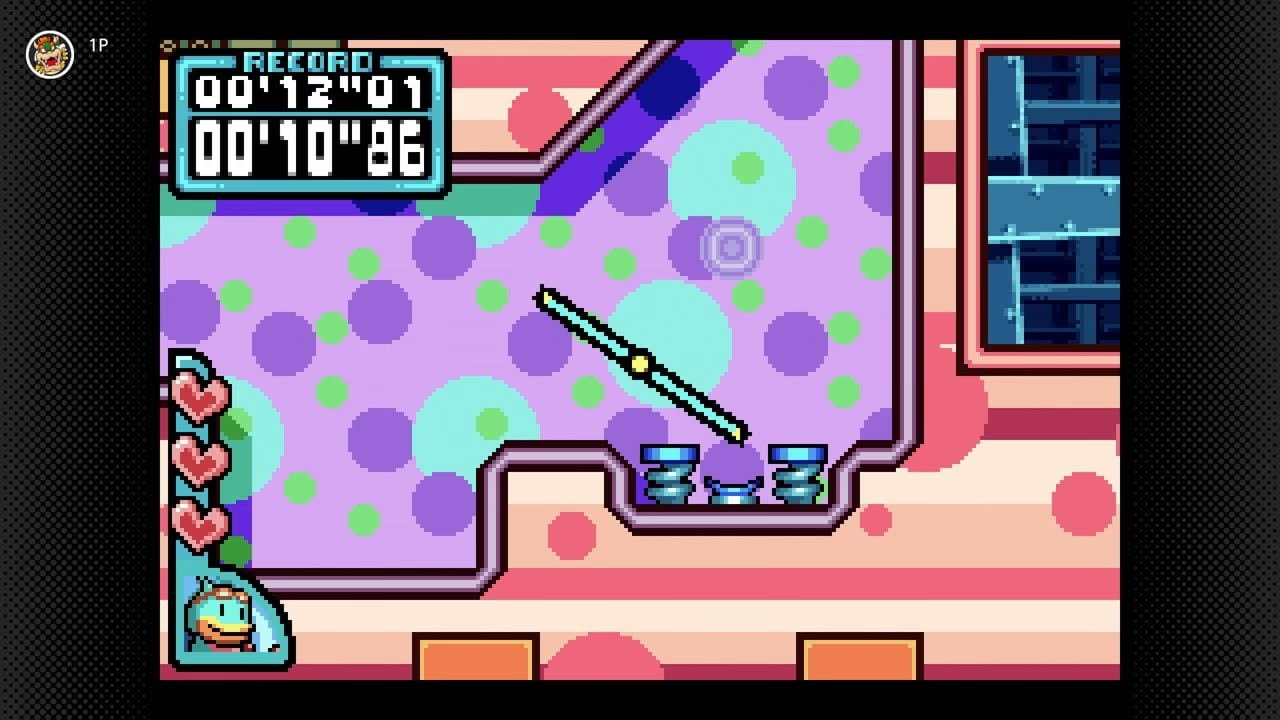
Kururin Paradise Reaches the West for the First Time as Switch Online Adds Three GBA Games
Nintendo added Kururin Paradise, Metal Slug Advance and Monster Rancher Advance to Game Boy Advance - Nintendo Classics on 14 October, giving the 2002 Kururin sequel its first release outside Japan.