Professional CRT Monitors Hit Record Prices as Retro Gaming Demand Surges
The New Gold Rush
If you have been shopping for a professional CRT monitor lately, you already know the situation is out of control. Sony PVM-20M4U units that sold for $200-300 five years ago are now regularly clearing $1,500 on eBay. The coveted BVM-D20F1U has crossed the $3,000 threshold for clean examples. Even consumer Trinitrons, once abundant enough to be found on any given curb on trash day, are becoming scarce in desirable sizes. The retro gaming community's love affair with CRT displays has collided with the reality of a finite supply that shrinks every day as tubes fail and units are scrapped, and the economics are brutal.
Why CRTs Still Matter
The appeal is not purely nostalgic, though nostalgia certainly plays a role. CRT displays handle the output of retro consoles in ways that modern flat panels fundamentally cannot replicate without significant processing. The phosphor response, the natural scanline structure, the zero-latency analog signal path, and the way the electron beam blends dithering patterns into smooth gradients are all characteristics that defined how these games were meant to look. Sprite artists of the 8-bit and 16-bit eras designed their work with CRT characteristics in mind, using techniques like dithering and color blending that only resolve correctly on tube displays. Playing these games on a sharp LCD can actually be less accurate to the original experience, not more.
The Sustainability Problem
The uncomfortable truth is that CRT collecting is a hobby with a built-in expiration date. No major manufacturer has produced CRT displays in over a decade, and the specialized components needed to repair them are becoming increasingly scarce. Capacitor kits can extend the life of existing units, but flyback transformers, yokes, and tube assemblies are essentially irreplaceable once they fail. The community has done admirable work documenting repair procedures and sharing knowledge, but the long-term trajectory is clear: there will be fewer working CRTs every year, and prices will continue to rise until the supply effectively reaches zero.
Alternatives and Compromises
The good news is that the market has responded with alternatives. High-quality CRT shaders for emulators and FPGA devices have improved dramatically, and products like the RetroTINK line of scalers do an excellent job of presenting retro console output on modern displays. GBS-Control boards offer a budget-friendly scaling option for the technically inclined. None of these solutions perfectly replicate the CRT experience, but they get closer every year. For most players, the practical advice is clear: if you already own a good CRT, maintain it carefully. If you do not, the shader and scaler ecosystem is good enough that you should not feel compelled to take out a second mortgage for a Sony broadcast monitor.
More News
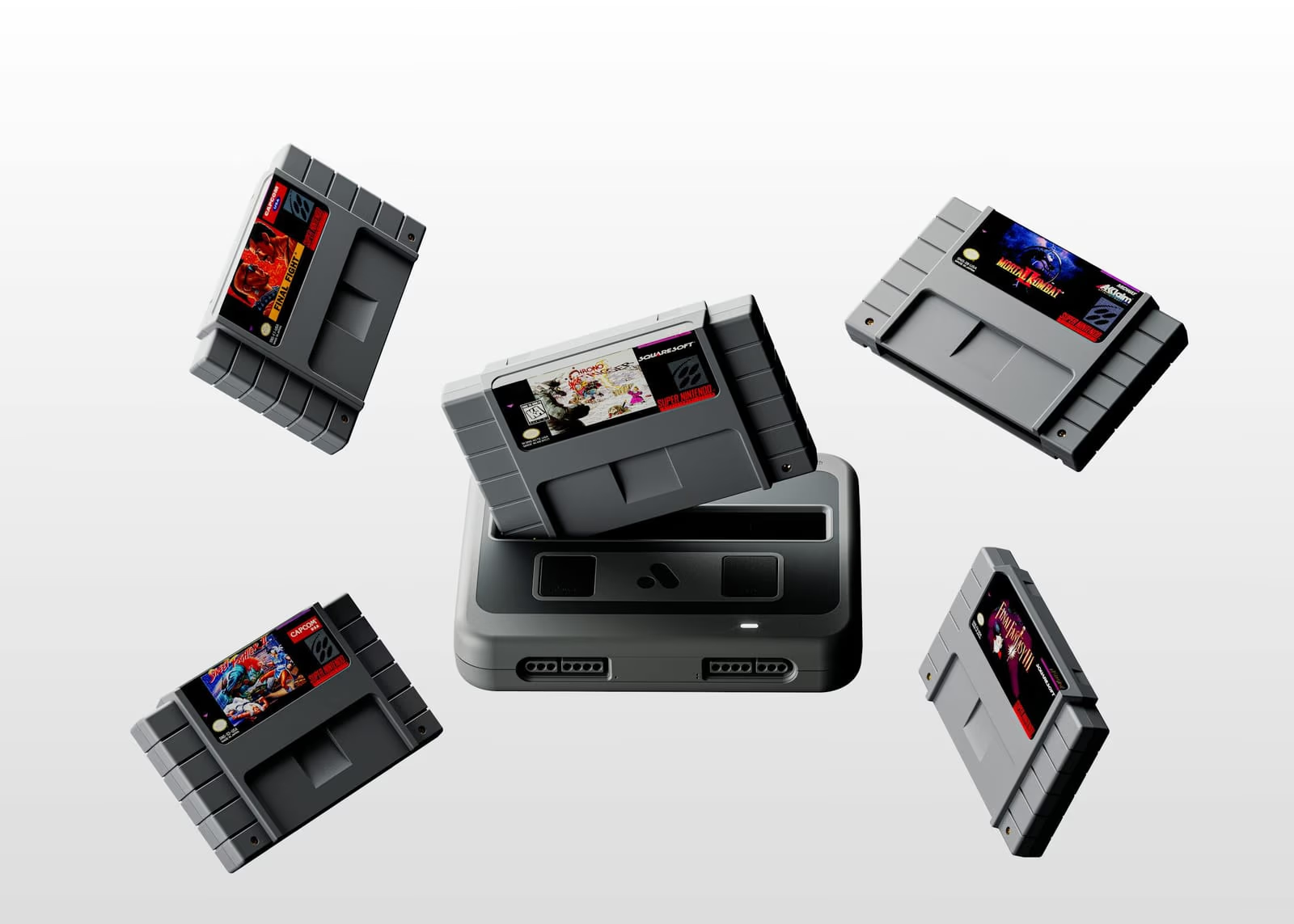
Analogue Announces Super Nt+ and Mega Sg+, With Wireless Controllers and USB-C, for $219.99
Analogue's FPGA Super Nintendo and Mega Drive consoles return as the Super Nt+ and Mega Sg+, adding Bluetooth and 2.4 GHz controllers, USB-C power and hot-swappable cartridges. Preorders open on 19 October at 8am PDT, and both ship in December.
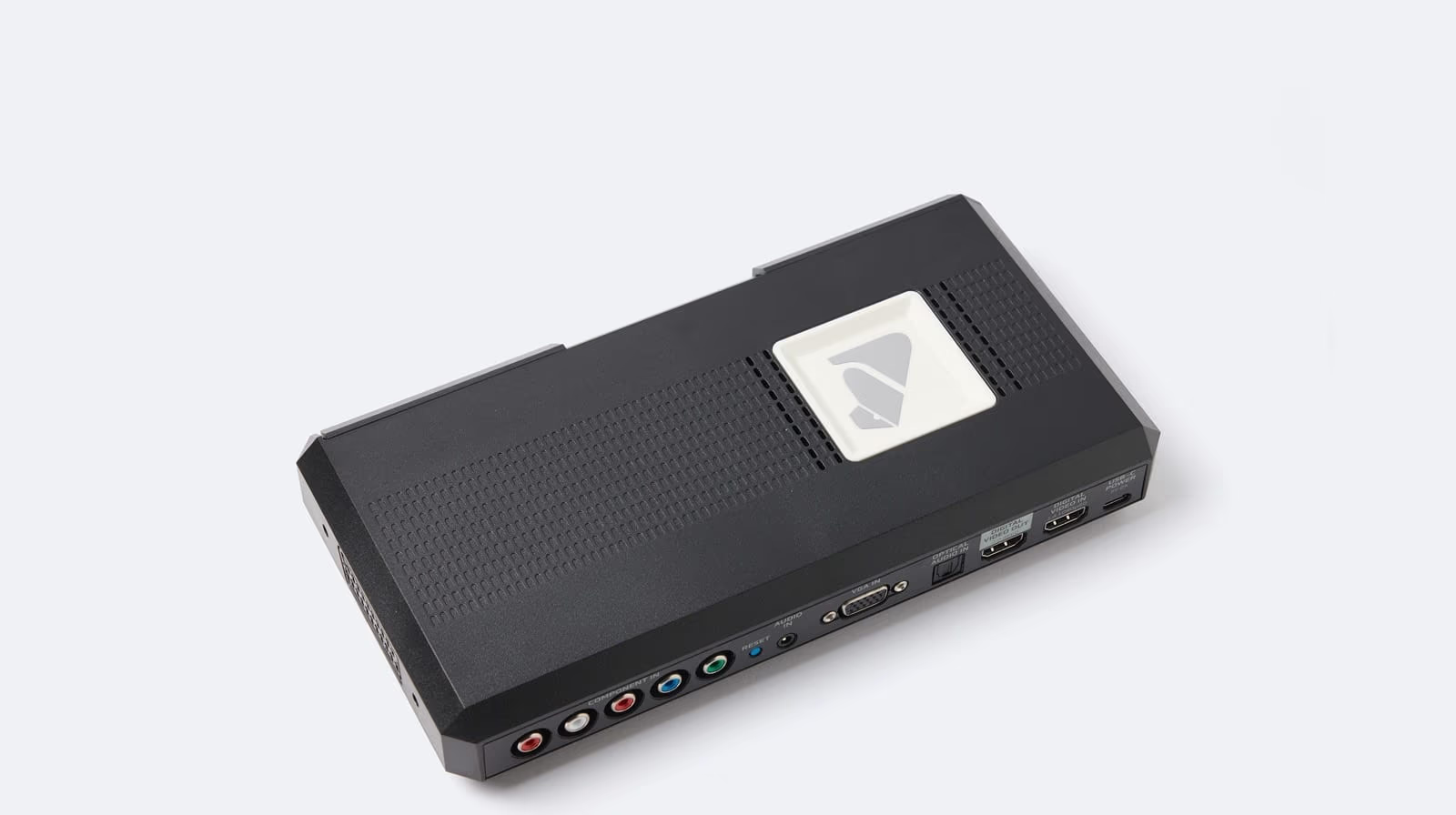
RetroTINK 4K Firmware 1.99 Brings Its CRT Beam Simulation in Line With Blur Busters' Reference Shader
Experimental firmware 1.99.0 and 1.99.1 for the RetroTINK 4K add a Multi-frame Glow option and a Motion Clarity control that match the open-source CRT beam simulator by Blur Busters and Timothy Lottes, capping a month of builds that also brought true VRR, a new inverse telecine engine and steadier Lumacode.
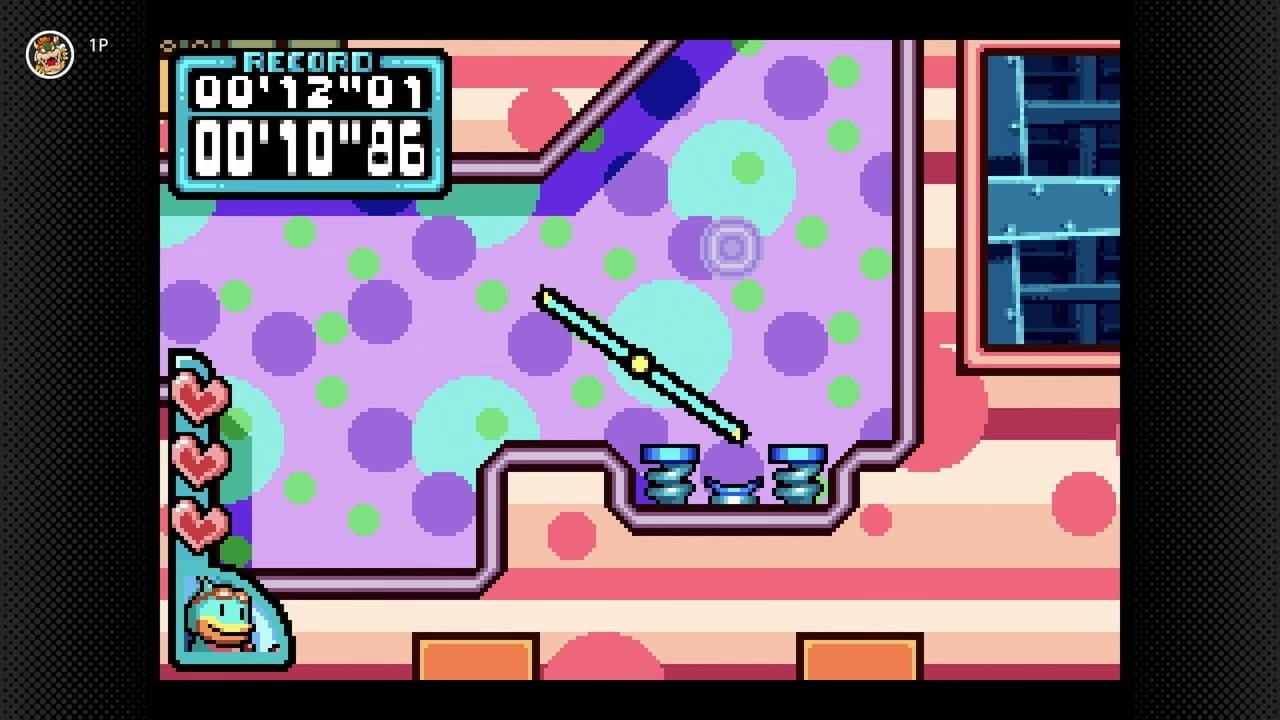
Kururin Paradise Reaches the West for the First Time as Switch Online Adds Three GBA Games
Nintendo added Kururin Paradise, Metal Slug Advance and Monster Rancher Advance to Game Boy Advance - Nintendo Classics on 14 October, giving the 2002 Kururin sequel its first release outside Japan.