Atari Acquires Wizardry IP in Bold Push Into Classic RPG Territory
A Dungeon-Crawling Giant Changes Hands
Atari has announced the acquisition of the Wizardry intellectual property from its previous rights holders in a deal reportedly valued at $8.5 million. The purchase adds one of the most historically significant RPG franchises in gaming history to Atari's rapidly expanding portfolio of classic properties. Wizardry, which debuted in 1981 on the Apple II, is widely credited as one of the foundational pillars of the role-playing game genre, influencing everything from Ultima to Final Fantasy to modern dungeon crawlers like Etrian Odyssey.
Atari's Acquisition Strategy
The Wizardry deal fits neatly into the strategy that Atari CEO Wade Rosen has been executing since taking the helm in 2021. The company has systematically acquired classic gaming IP, including Nightdive Studios, Digital Eclipse, and the rights to franchises like Intellivision and Berzerk. Rosen has been open about his vision for Atari as a curator and steward of gaming history, and the Wizardry acquisition represents perhaps the most prestigious addition to that portfolio yet. In a press release accompanying the announcement, Rosen described Wizardry as "one of the most important and influential game franchises ever created."
The Complicated Rights History
Wizardry has had one of the most tangled rights histories in gaming. The original series was created by Andrew Greenberg and Robert Woodhead, and the franchise eventually passed through the hands of Sir-Tech Software, which shuttered in 2003. The IP subsequently bounced between several Japanese companies, where the franchise maintained a dedicated following long after its Western popularity waned. The most recent mainline entry, Wizardry: Proving Grounds of the Mad Overlord, received a well-regarded remake in 2024 from Digital Eclipse, which is itself now an Atari subsidiary. That connection likely smoothed the path to this acquisition.
What This Means for the Franchise
Atari has outlined a multi-pronged plan for the Wizardry property. The company intends to continue supporting the 2024 remake while exploring development of an entirely new entry in the series. Additionally, Atari plans to bring the original Wizardry trilogy to modern platforms through its Digital Eclipse label, likely as part of the Gold Master Series of archival collections that have earned critical acclaim. The prospect of a definitive, historically contextualized collection of the original Wizardry games is particularly exciting for RPG historians who have long lamented the difficulty of legally accessing these foundational titles.
Industry Reactions
The announcement has drawn mixed reactions from the gaming community. RPG enthusiasts have largely welcomed the news, noting that Atari's track record with Digital Eclipse suggests the IP will be treated with respect and historical awareness. The 2024 remake demonstrated that there is still an audience hungry for the punishing, grid-based dungeon crawling that Wizardry pioneered. However, some fans remain cautious, pointing to Atari's uneven history of capitalizing on its acquisitions and questioning whether the company has the development resources to deliver a truly ambitious new Wizardry title.
The Japanese Connection
One of the most interesting wrinkles in the deal is how it affects Wizardry's substantial Japanese fanbase. The franchise has enjoyed enduring popularity in Japan, spawning numerous spinoffs, mobile games, and even anime adaptations. Atari has indicated that it will honor existing licensing agreements in the Japanese market while seeking to reunify the global brand under a single creative vision. Balancing Western and Japanese expectations for the franchise will be one of the most delicate challenges facing Atari as it stewards the property forward.
A Bet on Gaming Heritage
At its core, the Wizardry acquisition represents a bet that gaming heritage has tangible commercial value. Atari is positioning itself not just as a game publisher but as something closer to a museum with a business model, an entity that derives revenue from preserving and contextualizing the history of the medium. Whether that model can sustain the kind of investment needed to develop new entries in classic franchises remains an open question, but the ambition is undeniable. For fans of Wizardry, the news is cautiously hopeful: one of gaming's most important series finally has an owner with both the means and the apparent motivation to do it justice.
More News
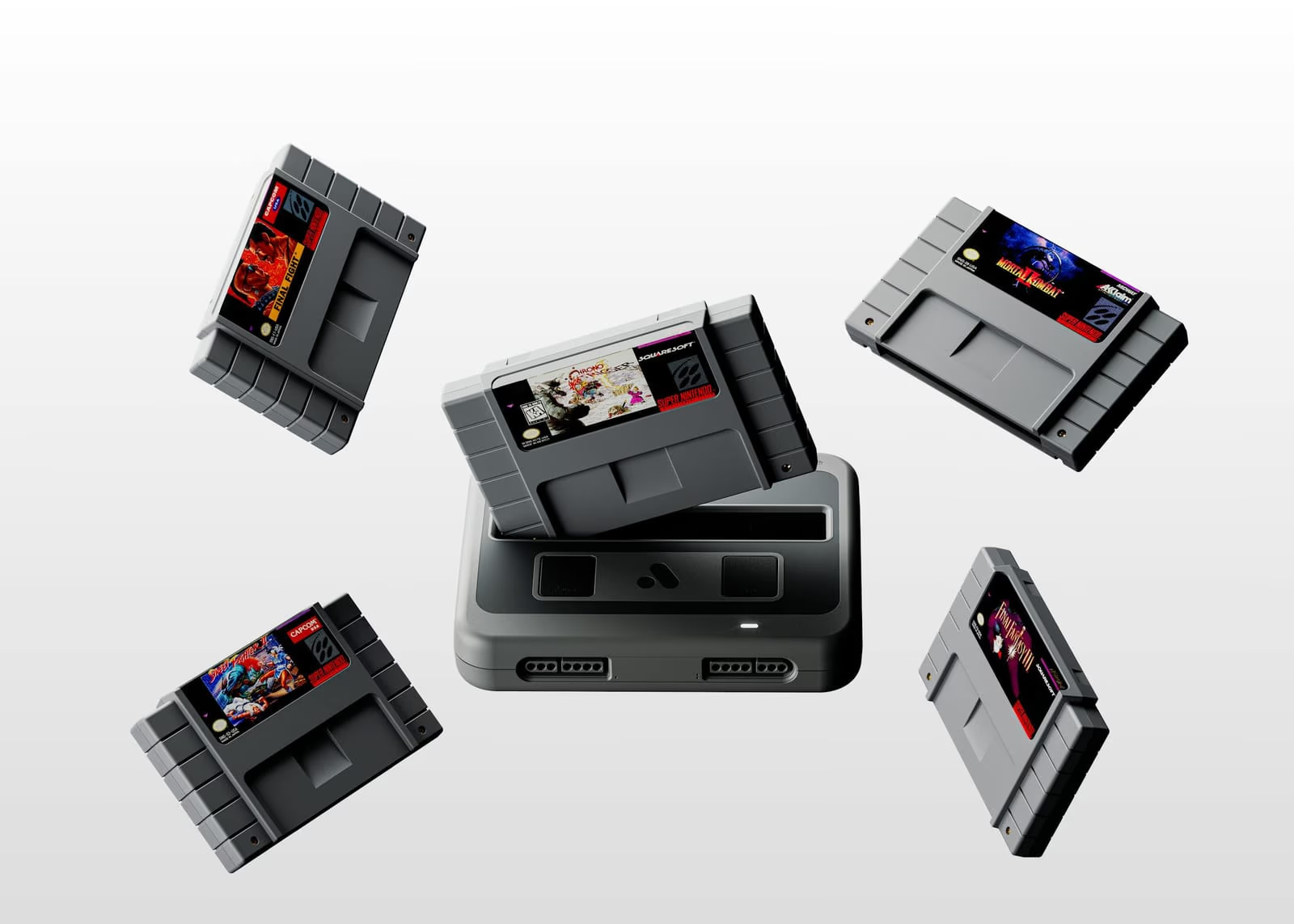
Analogue Announces Super Nt+ and Mega Sg+, With Wireless Controllers and USB-C, for $219.99
Analogue's FPGA Super Nintendo and Mega Drive consoles return as the Super Nt+ and Mega Sg+, adding Bluetooth and 2.4 GHz controllers, USB-C power and hot-swappable cartridges. Preorders open on 19 October at 8am PDT, and both ship in December.
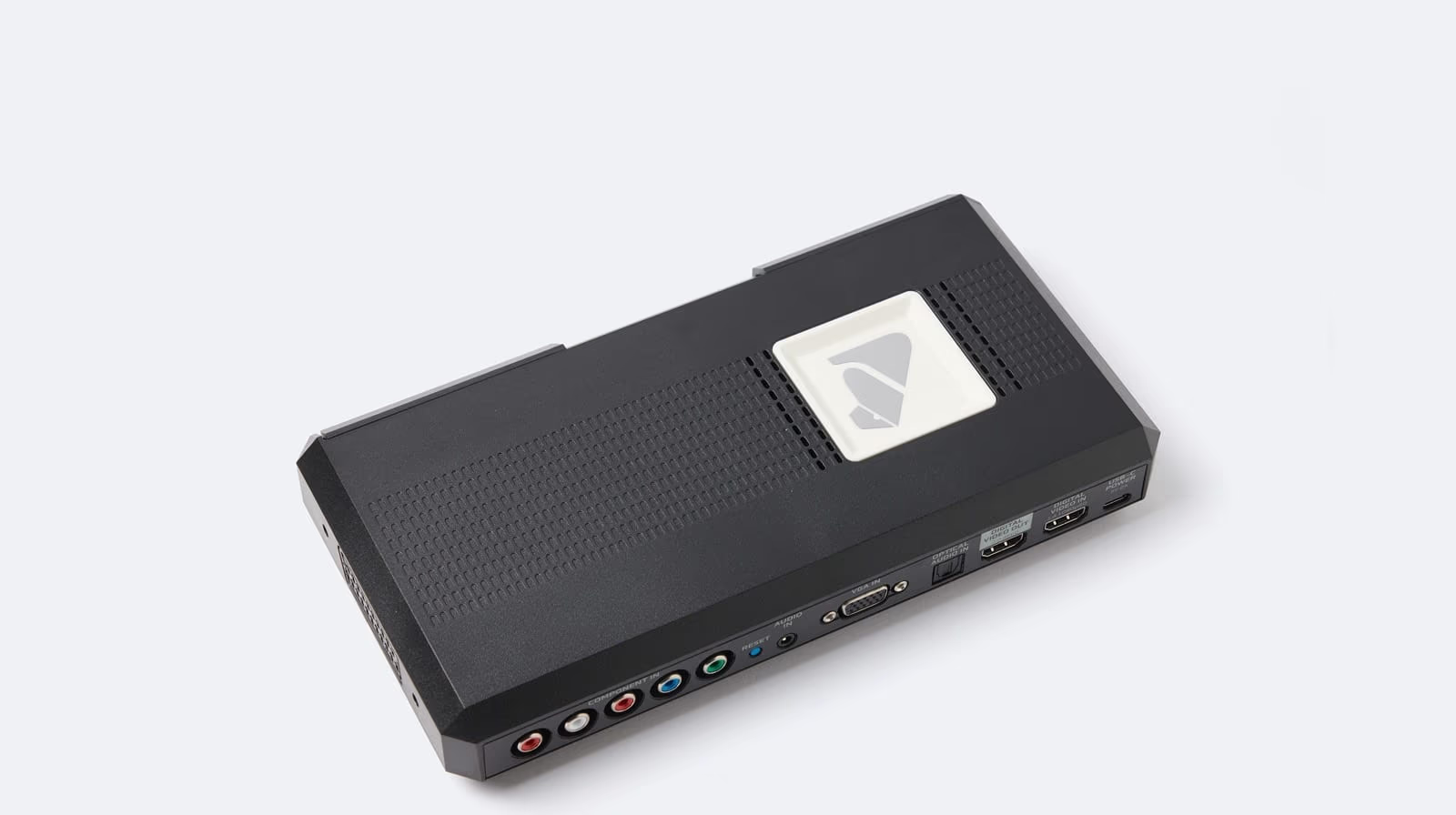
RetroTINK 4K Firmware 1.99 Brings Its CRT Beam Simulation in Line With Blur Busters' Reference Shader
Experimental firmware 1.99.0 and 1.99.1 for the RetroTINK 4K add a Multi-frame Glow option and a Motion Clarity control that match the open-source CRT beam simulator by Blur Busters and Timothy Lottes, capping a month of builds that also brought true VRR, a new inverse telecine engine and steadier Lumacode.
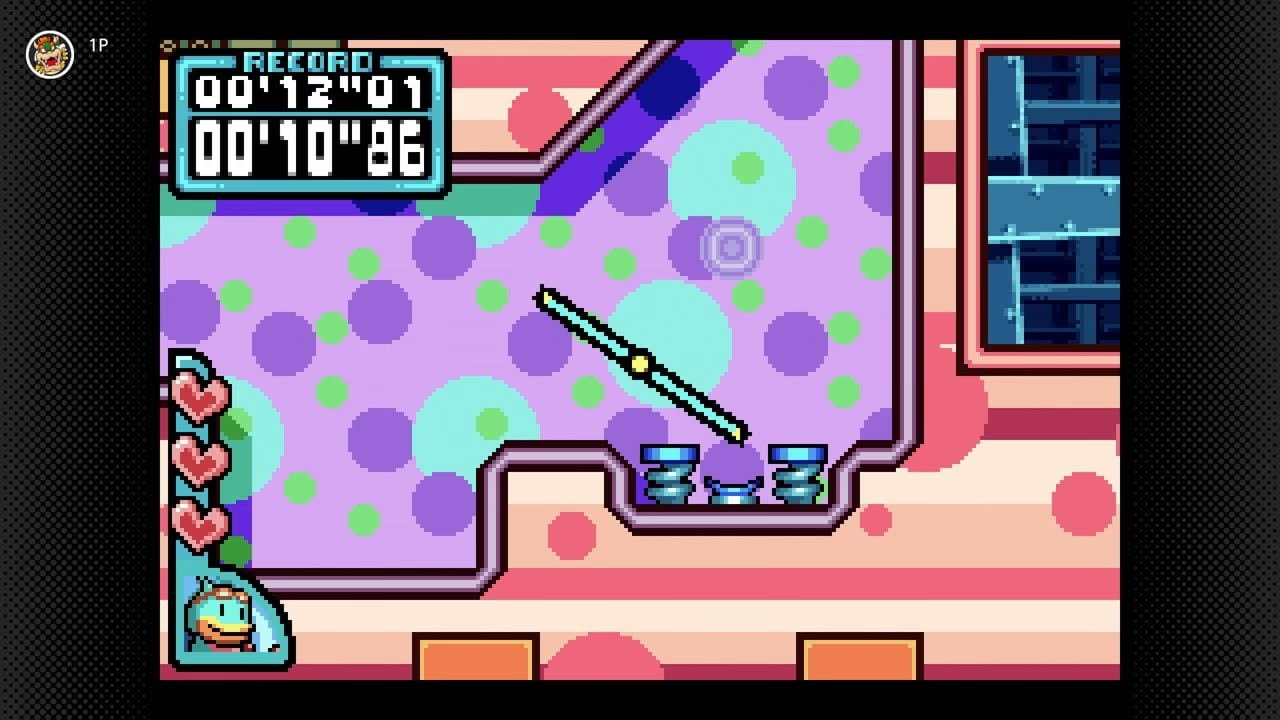
Kururin Paradise Reaches the West for the First Time as Switch Online Adds Three GBA Games
Nintendo added Kururin Paradise, Metal Slug Advance and Monster Rancher Advance to Game Boy Advance - Nintendo Classics on 14 October, giving the 2002 Kururin sequel its first release outside Japan.