Arcade Archives Hits 500 Releases on Switch, Cementing Its Legacy as Gaming's Quiet Preservation Powerhouse
A Milestone Worth Celebrating
Hamster Corporation has quietly accomplished something remarkable. With the release of Konami's Salamander this week, the Arcade Archives series has officially reached 500 individual titles on the Nintendo Switch eShop. That number is staggering by any measure. No other retro re-release initiative on any platform comes close to that volume, and the consistency of quality across such a massive library makes the achievement all the more impressive. What started as a modest drip-feed of classic arcade titles has grown into arguably the most important commercial preservation effort in gaming history.
The Hamster Way
For those unfamiliar with the series, Arcade Archives is a weekly release program that brings classic arcade games to modern platforms with faithful emulation, display options, and online leaderboards. Each title is sold individually for a modest price, typically around seven or eight dollars, and the releases have maintained a remarkably consistent standard of quality since the series began on PlayStation 4 in 2014 before expanding to Switch in 2017. Hamster Corporation, the Tokyo-based company behind the effort, operates with minimal marketing fanfare, preferring to let the games speak for themselves. The company's president, Satoshi Hamada, has spoken in interviews about his deep personal commitment to preserving arcade history, and that sincerity is evident in every release.
The Library in Context
Scanning the full catalog of 500 releases is like reading a history of the arcade industry itself. The collection spans from the golden age classics of the early 1980s through the fighting game and shooter boom of the 1990s and into the twilight years of the arcade era. SNK's Neo Geo library is particularly well represented, with dozens of titles from franchises like Fatal Fury, Art of Fighting, and Metal Slug. Namco, Konami, Irem, Tecmo, Jaleco, and numerous other publishers have contributed titles, creating a breadth of coverage that no physical arcade collection could reasonably match. Many of these games had never received any form of home release before their Arcade Archives debut, making Hamster's work genuinely archival in nature.
More Than Just ROMs
What separates Arcade Archives from a simple ROM dump is the care put into each release. Every title includes multiple display options, including various CRT shader simulations and aspect ratio settings. The Japanese and international versions of each game are typically included, allowing players to experience regional differences firsthand. Online leaderboards with a one-credit high score mode add a competitive dimension that keeps the community engaged, and Hamster regularly hosts online tournaments that draw dedicated players from around the world. The company also provides historical context for each title, treating the games as cultural artifacts worthy of documentation rather than mere content.
The Economics of Preservation
One of the most remarkable aspects of the Arcade Archives program is that it has proven commercially viable. Hamster has sustained weekly releases for nearly a decade, suggesting that the modest per-title revenue adds up to a workable business model. This stands in stark contrast to the prevailing industry narrative that retro re-releases are niche products with limited commercial appeal. Hamster has demonstrated that consistent quality, fair pricing, and genuine respect for the source material can sustain a preservation-focused business over the long term. The model is not going to rival blockbuster game sales, but it does not need to. It needs to be sustainable, and by all appearances, it is.
Challenges and Limitations
The program is not without its limitations. Some notable publishers remain absent or underrepresented in the library, with Sega and Capcom being the most conspicuous gaps. Licensing negotiations for arcade titles can be extraordinarily complex, particularly for games that involved hardware partnerships or have disputed rights histories. The Switch's aging hardware also presents challenges, with some later arcade titles from the mid-1990s pushing the limits of what the console's emulation can handle cleanly. Hamster has begun releasing titles on PlayStation 5 and Xbox Series platforms as well, which may help address performance concerns as the library continues to expand.
Looking Ahead
Hamster has shown no signs of slowing down. The company has stated publicly that it intends to continue the Arcade Archives program for as long as there are games to preserve, and given the enormous breadth of the arcade library, that could mean years or even decades of additional releases. The upcoming transition to Nintendo's next hardware platform will be a critical moment for the series, and fans are hopeful that the existing library will carry forward. For now, 500 releases is a milestone that deserves recognition not just from retro gaming enthusiasts but from anyone who cares about the preservation of interactive entertainment as a cultural form.
More News
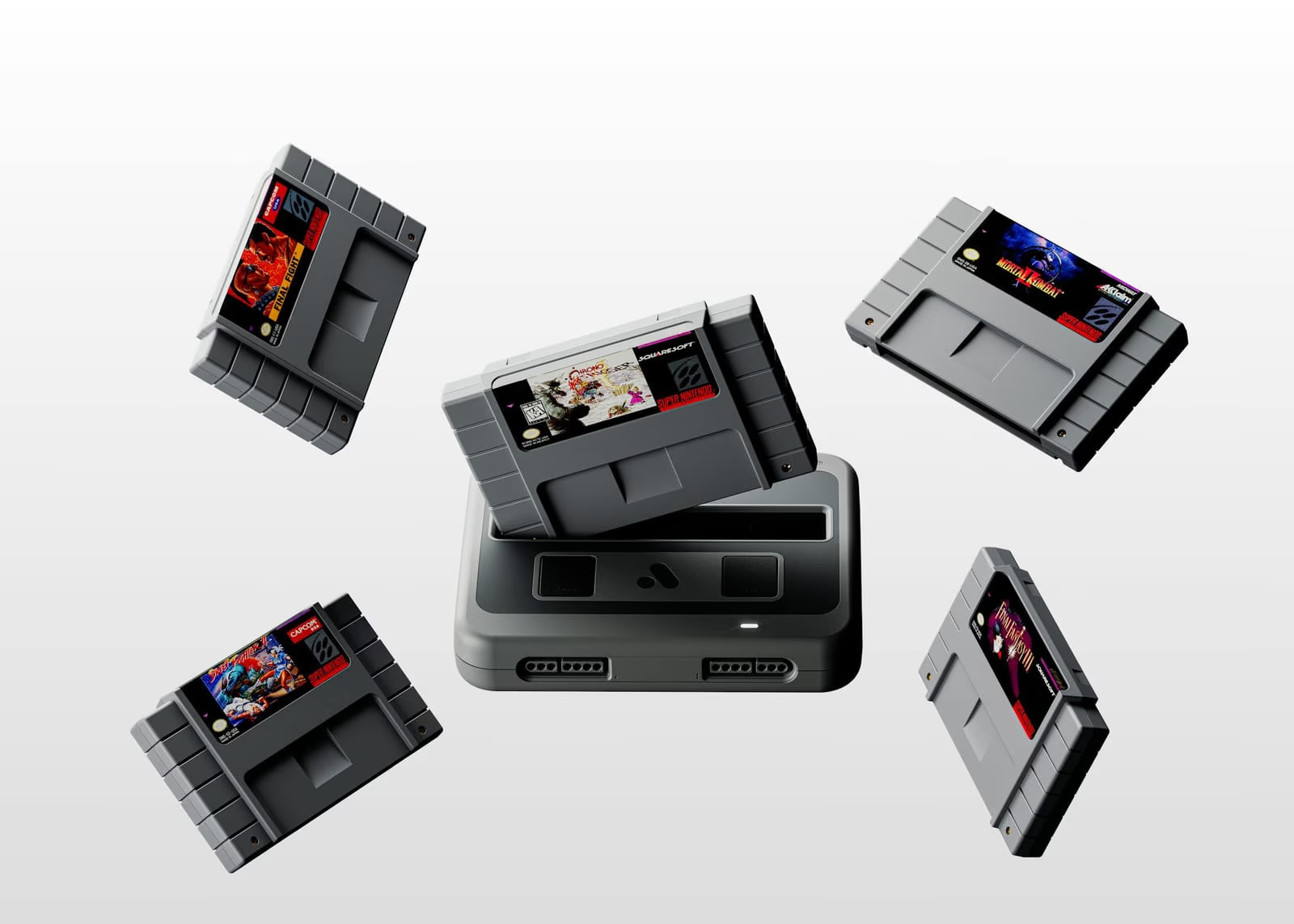
Analogue Announces Super Nt+ and Mega Sg+, With Wireless Controllers and USB-C, for $219.99
Analogue's FPGA Super Nintendo and Mega Drive consoles return as the Super Nt+ and Mega Sg+, adding Bluetooth and 2.4 GHz controllers, USB-C power and hot-swappable cartridges. Preorders open on 19 October at 8am PDT, and both ship in December.
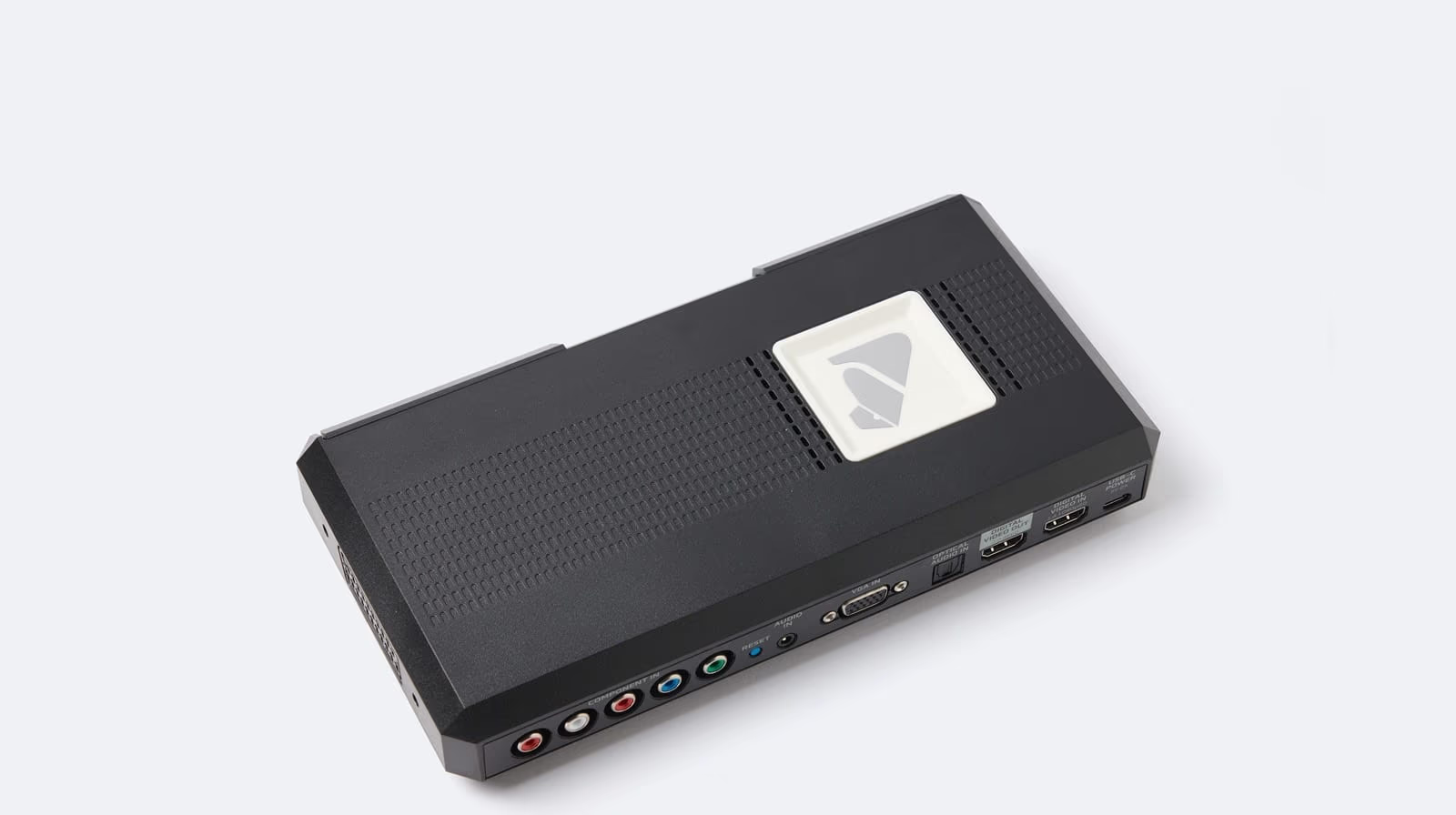
RetroTINK 4K Firmware 1.99 Brings Its CRT Beam Simulation in Line With Blur Busters' Reference Shader
Experimental firmware 1.99.0 and 1.99.1 for the RetroTINK 4K add a Multi-frame Glow option and a Motion Clarity control that match the open-source CRT beam simulator by Blur Busters and Timothy Lottes, capping a month of builds that also brought true VRR, a new inverse telecine engine and steadier Lumacode.
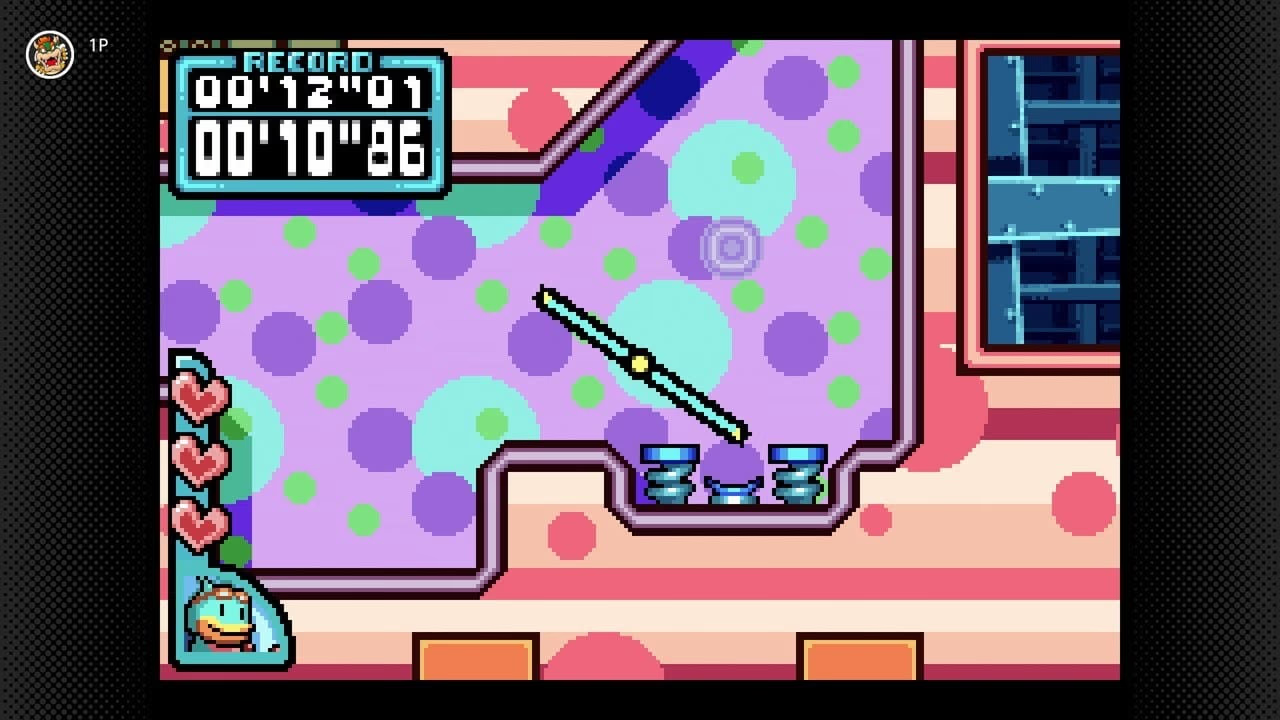
Kururin Paradise Reaches the West for the First Time as Switch Online Adds Three GBA Games
Nintendo added Kururin Paradise, Metal Slug Advance and Monster Rancher Advance to Game Boy Advance - Nintendo Classics on 14 October, giving the 2002 Kururin sequel its first release outside Japan.