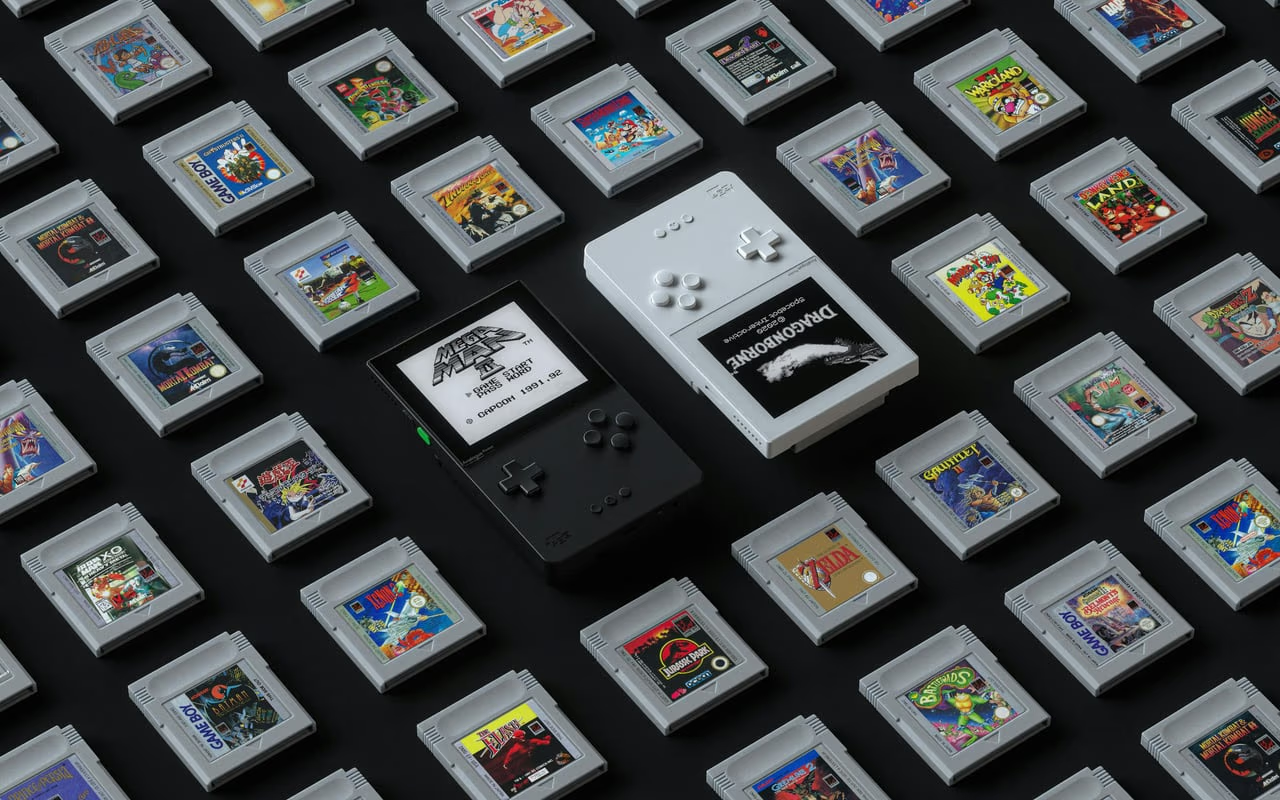
Analogue Pocket: The Ultimate Handheld Retro Gaming Device
The Analogue Pocket is the device that Game Boy fans have dreamed about since the day they put down their last original hardware. It plays Game Boy, Game Boy Color, and Game Boy Advance cartridges with FPGA-level accuracy on a display so sharp it makes the original hardware look like it was viewed through frosted glass. And with the openFPGA platform, it plays far more than just Nintendo handhelds.

The Display
The headline specification is the screen: a 3.5-inch, 1600x1440 IPS LCD, exactly ten times the resolution of the original Game Boy in each dimension. Every pixel of the original 160x144 display maps to a perfect 10x10 block on the Pocket's screen, meaning games render with zero interpolation artifacts. The result is Game Boy games that look exactly as you remember them, which is to say, better than they ever actually looked.
The display supports adjustable color profiles for each platform, including an "Original DMG" mode that recreates the green-tinted palette of the original Game Boy and a "Game Boy Light" mode that mimics the backlit Japanese variant. For GBA games, the screen switches to a 1920x1280 mode (also a perfect integer scale) with similarly pristine results.
Brightness, contrast, and color temperature are all adjustable. Outdoors, the display holds up reasonably well in shade but struggles in direct sunlight, an inevitable trade-off for an IPS panel.
FPGA and Compatibility
The Pocket uses an Altera Cyclone V FPGA to recreate the original Game Boy, Game Boy Color, and Game Boy Advance hardware at the gate level. Compatibility across all three libraries is exceptional. Games boot instantly, save files work correctly (including battery-backed saves and real-time clock games like Pokemon), and audio reproduction is accurate down to the quirks of the original hardware.
Cartridge adapters (sold separately) add support for Game Gear, Neo Geo Pocket Color, Atari Lynx, and TurboGrafx-16 HuCards, expanding the Pocket's native capabilities to cover most of the significant handheld libraries of the 8-bit and 16-bit eras.
openFPGA
The openFPGA platform is what transforms the Pocket from a premium Game Boy player into a comprehensive retro gaming handheld. Community-developed cores, downloadable FPGA implementations of additional systems, add support for NES, SNES, Genesis, TurboGrafx-16, Neo Geo, and more, all running with the same FPGA accuracy as the built-in cores.
The openFPGA ecosystem has grown rapidly, with high-quality cores for dozens of systems now available. The quality varies, some cores are near-perfect, others are still in development, but the breadth of coverage is remarkable. The Pocket can legitimately serve as a portable retro gaming library spanning the entire 8-bit and 16-bit eras.
Build Quality and Ergonomics
The hardware is beautiful. The Pocket's design echoes the original Game Boy's proportions while modernizing every detail. The d-pad is precise and responsive. The face buttons have a satisfying click. The shoulder buttons (for GBA) are well-positioned. The USB-C port handles charging and data. A 3.5mm headphone jack is included: a nod to the handheld tradition that modern devices often neglect.
Battery life sits at approximately six to eight hours depending on the system being emulated and screen brightness. It's adequate for portable sessions but falls short of the original Game Boy's legendary stamina.
The optional Dock accessory connects to a TV via HDMI, transforming the Pocket into a home console with controller support. It's a premium add-on but a valuable one for players who want to share the experience on a larger screen.
Verdict
The Analogue Pocket is the finest way to play Game Boy, Game Boy Color, and Game Boy Advance games ever created. The display is extraordinary, the FPGA accuracy is unimpeachable, and the openFPGA platform extends its capabilities far beyond its original mandate. It's expensive, it's frequently sold out, and it's worth every penny and every wait. For anyone who cares about portable retro gaming, this is the gold standard.
Score Breakdown
Pros
- +Stunning 1600x1440 display, 10x Game Boy resolution
- +FPGA accuracy with zero input lag
- +Plays GB, GBC, and GBA cartridges natively
- +openFPGA platform supports dozens of additional systems
Cons
- -Premium price may exceed casual interest
- -Battery life is moderate at 6-8 hours
- -Limited availability due to demand
- -Dock sold separately for TV output
More Hardware Reviews
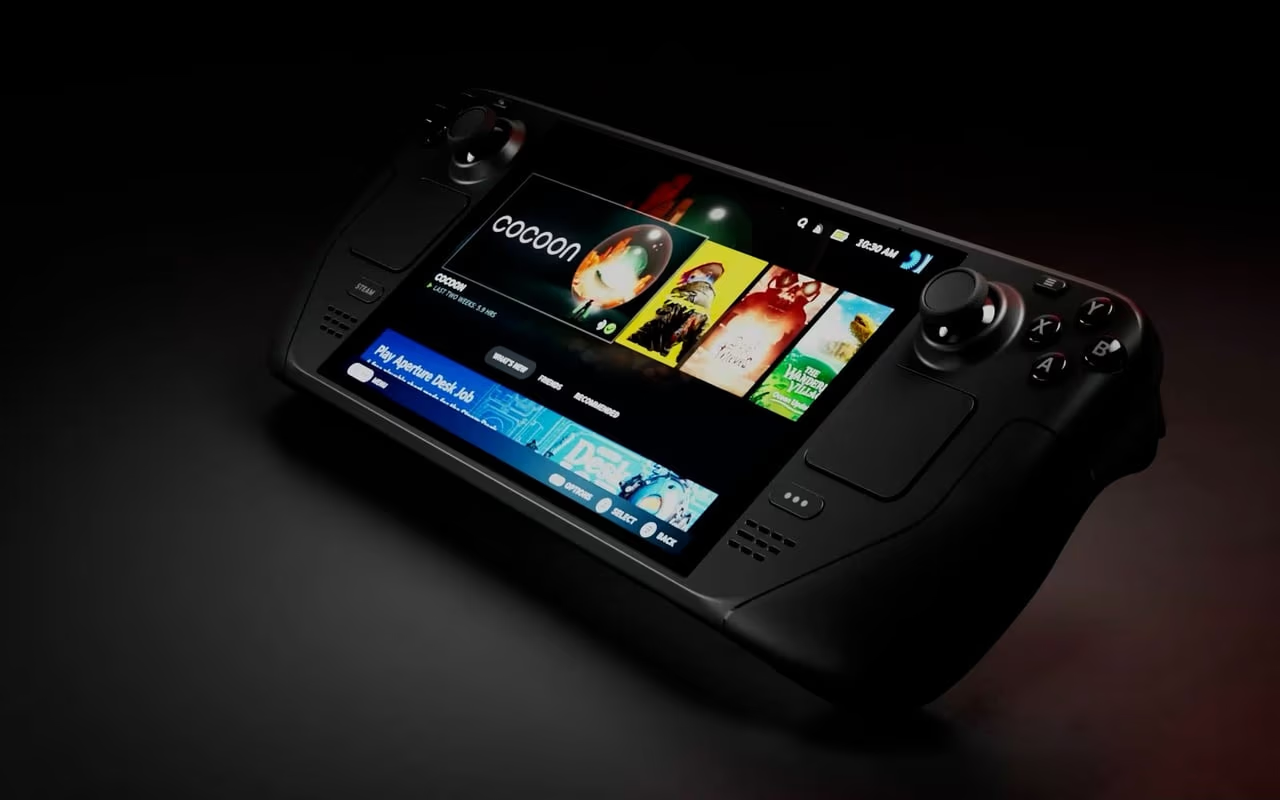
Steam Deck as a Retro Gaming Machine: An EmuDeck-Powered Review
Valve's handheld PC becomes the ultimate retro gaming device with EmuDeck. From Atari 2600 to PS2 and GameCube, it handles decades of gaming history with power to spare, and the setup is easier than you'd expect.
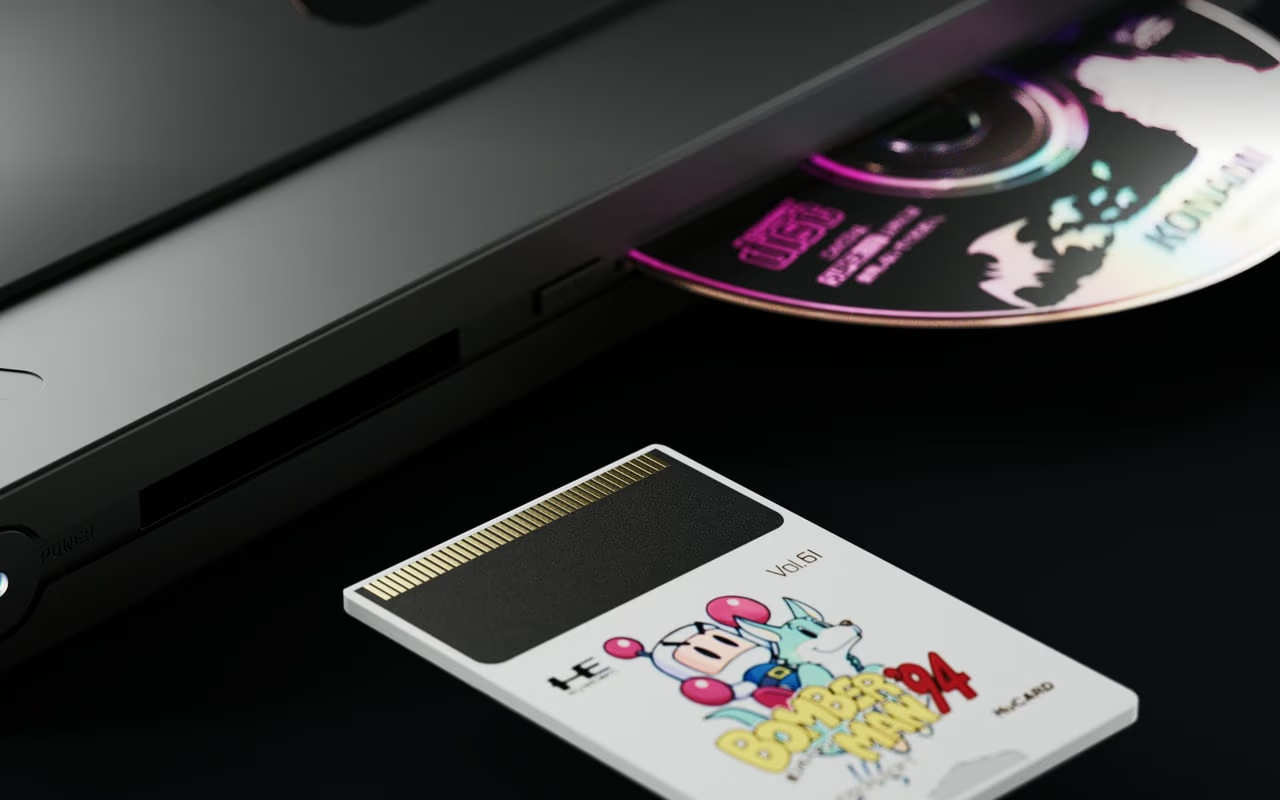
Analogue Duo: The Definitive TurboGrafx-16 and PC Engine Experience
Analogue's FPGA-based Duo plays every TurboGrafx-16, PC Engine, and CD-ROM² format on modern displays via HDMI. For fans of NEC's underappreciated console family, this is the ultimate hardware.
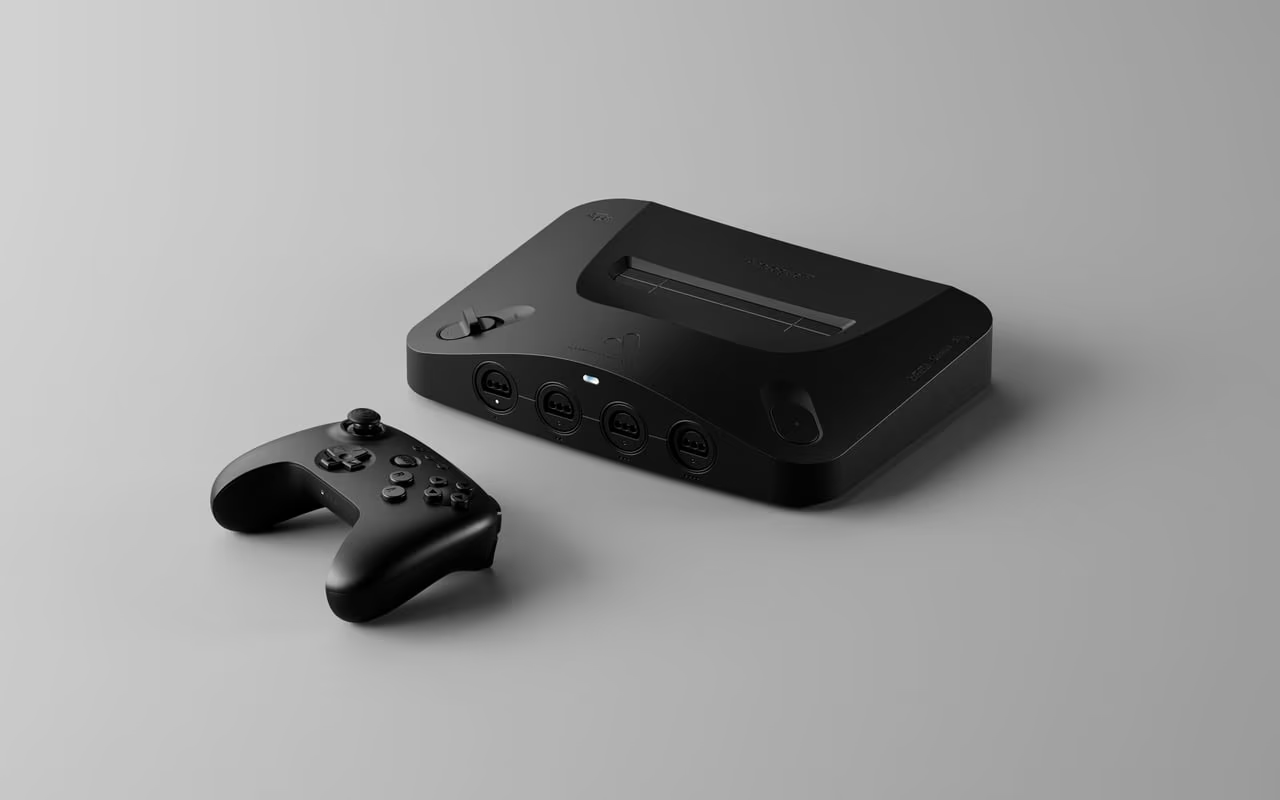
Analogue 3D: The Definitive Way to Play N64 in 2025
Analogue's FPGA-based N64 console plays original cartridges at 4K via HDMI with zero input lag. It's the most faithful, and most expensive, way to experience the N64 library on modern displays.